The survey, published on Thursday, November 12, 2026, points to a changing political landscape ahead of the next General Election, with Sifuna recording a significant rise in popularity while Ruto also registers an increase in support.
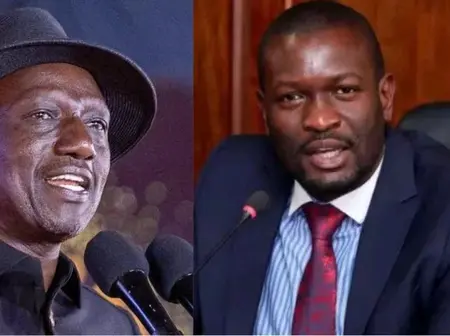
According to the findings, Ruto's support has risen from 24 per cent in June 2026 to 31 per cent in November. Sifuna, on the other hand, has experienced a sharp increase, moving from 15 per cent in June to match the President at 31 per cent.
The results mark a notable shift for the Nairobi senator, who recorded no support in TIFA's presidential preference surveys conducted between August 2022 and November 2025. His growing popularity has placed him among the leading figures being considered in discussions about the 2027 presidential contest.
Former Vice-President Kalonzo Musyoka came third with nine per cent, followed by former Interior Cabinet Secretary Fred Matiang'i at five per cent. Former Deputy President Rigathi Gachagua recorded four per cent, while Kiharu MP Ndindi Nyoro received one per cent.
The survey also found that 15 per cent of respondents were undecided about their preferred presidential candidate, while four per cent declined to give an answer.
A comparison with previous surveys shows that several established opposition figures have experienced declining support. Kalonzo, who recorded 25 per cent in November 2025, has since dropped to nine per cent. Matiang'i, who previously led the rankings with 32 per cent in August 2022, now stands at five per cent.
Gachagua's support has also declined from seven per cent in June 2026 to four per cent in the latest survey.
The findings could intensify political discussions within the opposition, particularly over the possibility of agreeing on a single candidate to challenge Ruto in 2027. Sifuna's performance is likely to attract attention among opposition supporters as leaders consider their political strategies ahead of the election.
However, TIFA cautions against assuming that support for other opposition figures would automatically shift to Sifuna if a coalition arrangement were reached. Political loyalties, party interests and negotiations could influence voters' eventual decisions.
The research firm also noted that the figures represent respondents' preferred presidential winner rather than a direct prediction of how they will vote on election day.
With the 2027 General Election approaching, the findings offer an early indication of public political preferences. However, the figures could change as campaigns develop, candidates are formally identified and political alliances take shape.
For now, the equal ratings place Ruto and Sifuna at the centre of the latest national presidential popularity debate.
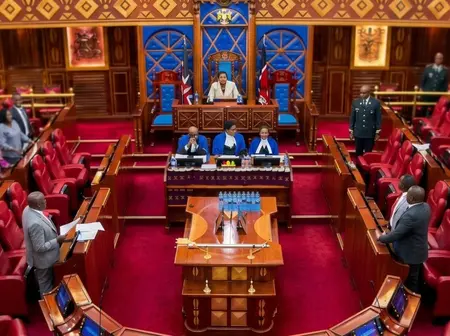
The Senate has welcomed back one of its most familiar figures today, as Siaya Senator and ODM Party Leader Dr. Oburu Odinga has returned to the chamber after weeks away.
According to a report shared by A.M Media on X, lawmakers have risen to their feet in warm applause the moment he has walked in.
The cheers have filled the House, and the mood has turned openly celebratory, with senators showing how much they have missed his presence after weeks of ailing.
The welcome has come after a long illness that has kept the veteran leader away from his duties. Reports indicate that he has now recovered, and his return has given colleagues and supporters a reason to celebrate.
For many in the House, seeing him back at his place has felt like a quiet relief.
Oburu has not returned to a quiet House, however. The Senate has been in session today, and he has joined proceedings as senators have taken up requests for statements under Standing Order 53(1).
Among the matters before the House has been the situation at Mosoriot Teachers Training College in Nandi County, where students have raised concerns over their examination results and have staged protests.
His reappearance has also stirred attention beyond the chamber. As the leader of the Orange Democratic Movement, Oburu has carried significant political weight, and his absence has left many wondering when he will return.
Party members and Kenyans following the Senate have now watched his comeback with keen interest, and the clip of the ovation has begun circulating widely online.
For a House that has spent recent weeks without him, the moment has offered a human break from the usual business of debate and procedure.
Colleagues have shown that, beyond party lines and political rivalry, they have welcomed his return with genuine warmth.
The footage of the moment has been shared online, and it has given Kenyans a rare glimpse of the Senate at its warmest.
For the people of Siaya, whom he has represented in the House, his return has brought good news, and many have waited a long time for it.
Media personality and comedian Dr. Ofweneke has sparked political debate after sharing his views on the leadership and intentions of individuals associated with the Linda Mwananchi Movement.
According to his observation, the two personalities stand out from other individuals associated with the political movement because their involvement does not appear to be driven by ulterior motives.
His statement has opened another conversation about the people behind Linda Mwananchi and what they hope to achieve through their political involvement.
The Linda Mwananchi Movement has attracted considerable public attention, particularly because of its growing association with political change, accountability and the future of Kenya's leadership.
Edwin Sifuna has emerged as one of its most recognisable figures. His outspoken political positions and criticism of the current administration have continued to attract supporters and critics alike.
Willis Raburu, on the other hand, is widely recognised for his media career and public engagement. His association with the movement has also attracted interest from Kenyans who are keen to understand the different personalities supporting the initiative.
However, Ofweneke's comments raise a broader question about political movements in Kenya: do people join such initiatives because they genuinely believe in their objectives, or are some pursuing personal ambitions?
In Kenyan politics, questions about hidden interests are not unusual. Political alliances frequently bring together individuals with different backgrounds, ambitions and expectations.
For Linda Mwananchi, maintaining public confidence will depend on its ability to demonstrate transparency, consistency and commitment to the issues affecting ordinary citizens.
Ultimately, Kenyans will judge the movement not only by the personalities associated with it but also by its actions, policies and ability to deliver meaningful political change.
What is your opinion of Dr. Ofweneke's remarks? Do you agree that Willis Raburu and Edwin Sifuna stand out within Linda Mwananchi? Share your views in the comment section.
President William Ruto and Nairobi Senator Edwin Sifuna are tied at 31 per cent in the latest opinion poll tracking Kenyans’ preferred candidate for the 2027 presidential election, signalling a shift in the political landscape.
The findings, released by Trends and Insights for Africa (TIFA), show both leaders gaining ground compared with the previous survey in June. Ruto’s support has risen from 24 per cent to 31 per cent, while Sifuna has more than doubled his rating, moving from 15 per cent to the same level as the incumbent.
The two politicians are ahead of other potential contenders. Wiper leader Kalonzo Musyoka is at nine per cent, followed by former Interior Cabinet Secretary Fred Matiang’i at five per cent and former Deputy President Rigathi Gachagua at four per cent.
The poll also points to changes in political party support. The United Democratic Alliance (UDA), led by Ruto, has regained the top position with 25 per cent, up from 17 per cent in June. The Linda Mwananchi movement, associated with Sifuna, is second with 17 per cent, while the Orange Democratic Movement (ODM) has fallen to 10 per cent from 20 per cent.
The findings suggest a changing balance among political formations, with Linda Mwananchi registering substantial national support while ODM records a decline. However, 28 per cent of respondents said they were undecided or did not identify with any party, indicating that many voters remain politically unattached.
TIFA conducted the survey between October 26 and November 5, 2026, interviewing 2,036 adults across all 47 counties through face-to-face interviews.
The results offer a snapshot of public preference at the time of the survey, rather than a prediction of the eventual election outcome. Political alliances, campaign platforms and voter priorities may shift before Kenyans head to the ballot in August 2027.
The Linda Mwananchi Movement has emerged as the most popular political formation in Nairobi, attracting 26 per cent support, according to a new opinion poll released by Trends and Insights for Africa (TIFA) Research on November 12, 2026.
The findings mark a significant development in Kenya's changing political landscape as emerging political movements compete with established parties ahead of the 2027 General Election.
According to the survey, Linda Mwananchi recorded 26 per cent support in Nairobi, placing it ahead of other political formations in the capital. The results highlight the movement's growing influence in a county that plays a significant role in shaping national political debates.
The survey placed the Democracy for the Citizens Party (DCP) at 11 per cent, ODM at nine per cent and the United Democratic Alliance (UDA) at eight per cent. Wiper Patriotic Front and Jubilee Party each recorded seven per cent.
However, 31 per cent of Nairobi respondents said they did not identify with any political party. This indicates that a significant section of the electorate remains undecided, presenting an opportunity for political formations seeking to expand their support.
The strong showing by Linda Mwananchi is particularly important because Nairobi has a diverse electorate with competing political interests. Its popularity could strengthen the movement's position as politicians begin preparing for the next general election.
The movement is associated with Nairobi Senator Edwin Sifuna, Embakasi East MP Babu Owino and other leaders who have been advocating for a different political direction.
Nationally, however, the survey presented a different picture. UDA maintained the lead with 25 per cent support, followed by Linda Mwananchi at 17 per cent. ODM recorded 10 per cent, while DCP attracted nine per cent.
The findings also highlighted a decline in ODM's national popularity. The party had recorded 20 per cent support in TIFA's June 2026 survey, but its rating dropped to 10 per cent in the latest poll.
Linda Mwananchi's performance in Western Kenya was also notable, with the movement attracting 40 per cent support. In Nyanza, it recorded 18 per cent, while ODM maintained a stronger position with 33 per cent.
These regional differences demonstrate that political support remains uneven across the country, with established parties retaining considerable influence in some areas.
TIFA conducted the survey between October 26 and November 5, 2026. It involved face-to-face interviews with 2,036 randomly selected Kenyan adults aged 18 and above across all 47 counties.
The findings provide an important indication of voter preferences as political competition intensifies ahead of the 2027 elections. However, opinion polls reflect public sentiment at the time of the survey and do not necessarily predict actual election results.
For Linda Mwananchi, securing the highest support among political formations in Nairobi is a significant achievement. The challenge now will be maintaining that popularity, attracting undecided voters and expanding its support beyond the regions where it has performed strongly.
As the 2027 General Election approaches, the latest TIFA findings have placed the movement among the political formations attracting considerable attention. Its ability to turn the reported support into votes will be determined by how effectively it builds its national presence.
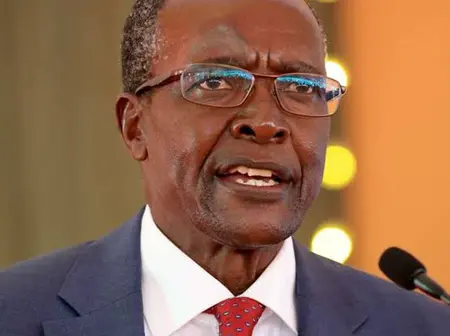
In a statement issued on Thursday, November 12, 2026, Maraga questioned why the government had defended plans to establish a quarantine centre for foreign nationals before announcing that Kenya would not serve as an isolation destination for other countries.
His remarks followed an announcement by Health Cabinet Secretary Aden Duale that Kenya would not allow foreign governments to use its territory as a quarantine destination for travellers exposed to Ebola.
Maraga argued that the latest position contradicted the government's earlier actions when Kenyans raised concerns about the proposed facility at Laikipia Air Base.
The project, which was linked to the United States, was intended to provide a 50-bed isolation centre for American citizens who might be exposed to Ebola while in the region.
The disagreement sparked demonstrations in Laikipia, with police action leaving several people dead and others injured. The project also faced legal challenges, with the High Court issuing orders stopping construction activities.
Maraga questioned why the administration had previously defended the arrangement despite public opposition and legal concerns, only to adopt a position that appeared to agree with the protesters months later.
He also criticised the government's handling of the demonstrations, accusing it of using police force against citizens who were demanding protection of national sovereignty and public safety.
The former Chief Justice challenged the President to explain why the arrangement had been signed and defended if Kenya had no obligation to host quarantine facilities for foreign governments.
Meanwhile, Duale declined to give further details about the future of the Laikipia facility, saying the matter was still before the courts.
The Ministry of Health recently announced that the last Ebola patient had been discharged, starting the mandatory 42-day countdown towards a possible declaration that Kenya is Ebola-free.
Maraga's criticism has therefore reopened the debate over the government's handling of the quarantine project, police response and responsibility to protect Kenyan citizens.
Analysts say the results could reshape alliances and force opposition unity talks, while Ruto’s team will push harder to consolidate its base. With the August 2027 election still months away, this nail-biting tie guarantees a fierce, unpredictable battle for State House.
According to the latest Opinion Poll released by Politrack Africa on Thursday, November 12, 2026, Arama is leading the race with 22.6%. Atieno Achieng follows in second place with 18.2%, while Dr. Michael Cheruiyot follows with 15.3%. Eng. Victor Ngatia comes in fourth at 13.1%, trailed by CPA Robinas Makana with 11.6%.
Hon. Samuel Arama has established a reputation as a resilient political survivor in Nakuru County, consistently winning elections by navigating complex party shifts.
He first clinched the Nakuru Town West parliamentary seat in the 2013 general election on an Orange Democratic Movement (ODM) party ticket when The National Alliance (TNA) and the United Republican Party (URP) were very strong in Nakuru.
He then successfully defended his seat in the 2017 general election after switching allegiance to the Jubilee Party. In the 2022 general election, which was heavily defined by a massive United Democratic Alliance (UDA) wave across Nakuru County, Arama swam against the tide to retain his seat on a Jubilee Party ticket, securing 34,904 votes.
Arama is an ally of former Interior Cabinet Secretary Dr. Fred Matiang'i, openly backing him as a presidential contender. However, the legislator maintains a highly critical stance against former Deputy President Rigathi Gachagua.
Arama vehemently fired back, rejecting Gachagua's attempts to influence local voting patterns. Denouncing the DCP boss as a political bully, the MP asserted that Gachagua has absolutely no authority to control how the people of Nakuru Town West vote.
He told the DCP leader to restrict his political management to the voters of the Central Kenya region and leave Nakuru Town West to determine its own leadership.
The survey, conducted online and released on Thursday, November 12, 2026, indicates that the two politicians are enjoying equal support among respondents, each attracting 31 per cent of the votes.
The findings present an interesting picture of the country's political landscape, particularly for Ruto, who is seeking another term in office. Despite the advantages of incumbency, the President has not managed to pull ahead of Sifuna in the latest survey.
Sifuna's performance reflects his growing influence in national politics, largely driven by his involvement in the Linda Mwananchi movement. The Nairobi senator has increasingly attracted attention beyond his political stronghold, positioning himself as one of the figures to watch ahead of the 2027 General Election.
Previous TIFA surveys conducted earlier this year had placed Ruto at 24 per cent, while Sifuna's support rose from 10 per cent in May to 15 per cent in June. The latest figures therefore point to a considerable change in the standings of the two politicians.
However, the reported 31 per cent support for each candidate does not establish who would ultimately win the presidency. The outcome could depend on the strength of political alliances, regional voting patterns and the choices of undecided voters.
With the August 2027 elections drawing closer, the latest findings are likely to generate fresh debate about the direction of Kenya's presidential contest and whether the opposition can mount a serious challenge against Ruto.