Category: Politics

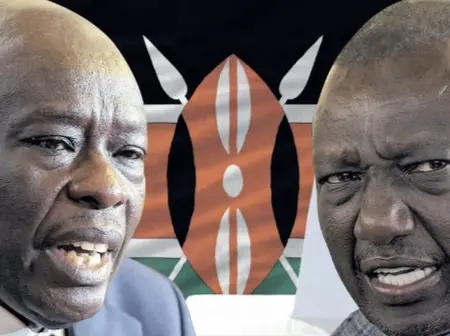
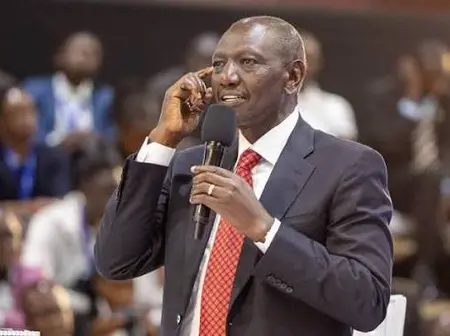
  • Ruto’s Biggest Fear Revealed as Sifuna Emerges as His Toughest 2027 Rival

    Ruto’s Biggest Fear Revealed as Sifuna Emerges as His Toughest 2027 Rival

    The LMM Deputy Party Leader reportedly argued that Ruto is not particularly worried about other potential opposition presidential candidates but would face a serious political test if Sifuna challenged him directly.

    The official compared dealing with Sifuna's aggressive political campaign to handling a hot sufuria with bare hands, suggesting that the senator possesses the ability to put immense pressure on the incumbent.

    Sifuna has increasingly emerged as a prominent opposition figure following his political fallout with the Orange Democratic Movement (ODM), where he previously served as Secretary General before establishing himself within the Linda Mwananchi political movement.

    The movement has positioned Sifuna at the centre of its political activities ahead of the 2027 elections, with its leadership seeking to establish grassroots structures and expand its influence across the country's 47 counties.

    His growing political profile has also been reflected in opinion polls, although different research organisations have produced varying results. A Research 8020 survey published in October placed Ruto at 26 per cent and Sifuna at 25 per cent.

    Other surveys have shown different levels of support, highlighting the uncertainty surrounding the emerging presidential contest. Nevertheless, Sifuna's supporters believe his political message could attract voters dissatisfied with the government's economic policies.

    The senator has consistently focused his political messaging on taxation, unemployment and the rising cost of living, issues that continue to dominate public discussions. His outspoken approach has also helped him attract attention among younger and urban voters.

  • OBURU IS BACK: Fireworks at the Senate as ODM Leader Returns Healthy and Strong

    OBURU IS BACK: Fireworks at the Senate as ODM Leader Returns Healthy and Strong

    ODM Party Leader and Siaya Senator Oburu Oginga has given Kenyans a reason to smile after a difficult period marked by health challenges that kept him away from active political engagements.

    The veteran politician's latest appearance has attracted attention among Kenyans, particularly ODM supporters who have been following updates about his recovery.

    On Thursday, November 12, 2026, a fresh Facebook post shared by his sister, Wenwa Akinyi, offered another glimpse of the senator looking cheerful and in good spirits during a family visit.

    The photograph has sparked excitement among supporters, with many expressing relief at seeing the veteran politician looking better after months of concern over his health.

    Oburu had been receiving treatment locally and abroad before being discharged from hospital in October. He has since been recovering at his Nairobi residence.

    On November 4, National Assembly Speaker Moses Wetang'ula informed Parliament that the ODM leader was making good progress and had continued performing his parliamentary duties from home despite his illness.

    During a visit by Wetang'ula, Senate Speaker Amason Kingi and other legislators, Oburu expressed confidence that he would soon return to active political engagements.

    He also dismissed reports that had circulated on social media claiming he had died while undergoing treatment, saying the rumours had instead strengthened his determination to recover.

    The latest photograph shared by Wenwa has added to the positive messages surrounding his recovery, with supporters welcoming the visible improvement in his condition.

    Oburu's return to full public and parliamentary duties will be closely watched, particularly as ODM continues navigating political developments ahead of the 2027 General Election.

  • UDA Retains Top Position as Linda Mwananchi Surges Past ODM in TIFA Survey

    UDA Retains Top Position as Linda Mwananchi Surges Past ODM in TIFA Survey

    The Linda Mwananchi Movement (LMM) has emerged as Kenya’s second most popular political formation, attracting 17 per cent support in the latest TIFA survey, according to the figures released.

    The movement, which was not featured in previous party rankings, now trails the United Democratic Alliance (UDA), which has reclaimed the top position with 25 per cent support.

    UDA’s backing rose from 17 per cent in June to 25 per cent in November 2026, placing it ahead of other political parties in the latest survey.

    The Orange Democratic Movement (ODM), which previously held the lead, dropped to third place after its support declined from 20 per cent to 10 per cent over the same period.

    The Democracy for Citizens Party (DCP), associated with former Deputy President Rigathi Gachagua, recorded 9 per cent support. Wiper attracted 5 per cent, while Jubilee stood at 4 per cent.

    Despite the changes in party rankings, a significant number of Kenyans remain undecided. The survey found that 28 per cent of respondents had not settled on a political party, leaving a sizeable section of the electorate without a clear political preference.

    Regionally, UDA recorded its strongest support in Northern Kenya at 60 per cent and Central Rift at 56 per cent. Its backing was lower in Nairobi, where it stood at 8 per cent, and Mt Kenya at 10 per cent.

    LMM, meanwhile, registered its strongest showing in Western Kenya, where it attracted 40 per cent support. The movement also recorded 26 per cent in Nairobi and 18 per cent in Nyanza.

    ODM retained its strongest support in Nyanza at 33 per cent, while DCP's backing was highest in Mt Kenya at 27 per cent. Wiper dominated Lower Eastern with 50 per cent, while Jubilee's strongest showing was in Nyanza at 10 per cent.

    The survey also showed that indecision remained high in Coast and Mt Kenya, where 38 per cent of respondents had yet to identify with a political party.

    The findings come amid political realignments ahead of the August 2027 General Election, with LMM leader Edwin Sifuna recently receiving several politicians who defected from UDA and ODM.

    LINK: https://www.kenyans.co.ke/news/129325-linda-mwananchi-overtakes-odm-second-uda-still-leads-latest-tifa-survey?fbclid=IwZXh0bgNhZW0CMTEAcGRvZgRzcnRjBmFwcF9pZA80MDk5NjI2MjMwODU2MDkAAR9GKdLWUQ_AUp-neMeapL__T8UVHnmzAxBPwhotWetIiDx_7aaiuYeaSlT5aQ_aem_6Q3zrHPuq2tydoCKUUidng

  • “Riggy G is Not The Alpha and Omega,” Willis Raburu Turns Heat on Gachagua Eliciting Mixed Reactions

    “Riggy G is Not The Alpha and Omega,” Willis Raburu Turns Heat on Gachagua Eliciting Mixed Reactions

    Willis Raburu has sparked political debate after declaring that Riggy G is not the Alpha and Omega. His remarks have attracted attention, particularly at a time when political influence, leadership and individual contributions continue to shape conversations ahead of the 2027 General Election.

    In politics, popularity and influence are important, but they do not automatically make someone indispensable. Every political figure operates within a wider environment involving supporters, elected leaders, grassroots networks and competing interests.

    Raburu's remarks can therefore be understood as a reminder that no politician should be considered bigger than the people or the political movement they represent.

    Riggy G, a popular political figure, has maintained a significant presence in Kenya's political conversations. His supporters value his leadership style, political experience and ability to mobilise a section of the electorate.

    However, political influence is never permanent. Leaders must continuously demonstrate their relevance through their actions, decisions and ability to connect with ordinary citizens.

    The statement also raises an important question about political loyalty. Should supporters remain committed to an individual regardless of circumstances, or should they evaluate leaders based on their performance and political direction?

    Kenya's political history shows that alliances change, powerful figures lose influence, and new leaders emerge. This makes it important for political movements to build strong institutions rather than depend entirely on individual personalities.

    Ultimately, Raburu's message is a reminder that no single politician owns the political space. Leadership requires public trust, accountability and the ability to work with others.

    What is your opinion about Willis Raburu's remarks? Do you agree that Riggy G should not be treated as the most important figure in every political discussion?

    **Share your views in the comments and remember to follow for more political updates.**

    https://www.facebook.com/share/1KVgfBXJLb/

  • Natembeya Declares Sifuna as Western’s Political Kingpin as Regional Political Debate Intensify

    Natembeya Declares Sifuna as Western’s Political Kingpin as Regional Political Debate Intensify

    The political debate surrounding the leadership of Western Kenya is gaining momentum following a strong declaration by Trans Nzoia Governor George Natembeya, who has openly endorsed Nairobi Senator Edwin Sifuna as the region's political leader.

    The governor's statement is particularly significant because Western Kenya has remained an important political battleground in previous elections. The region commands considerable voting strength, making its political leadership an important factor in determining the direction of national politics.

    Sifuna has increasingly attracted attention through his political activities, public statements and association with the Linda Mwananchi Movement. His outspoken approach to national issues has helped him connect with sections of the population, particularly young people who are demanding accountability and better leadership.

    Natembeya's endorsement could therefore strengthen Sifuna's political standing as the country moves closer to the 2027 General Election. It also suggests that some regional leaders are becoming more comfortable openly associating themselves with his political ambitions.

    However, political recognition does not automatically translate into electoral support. Sifuna will still need to demonstrate that his popularity can extend beyond political rallies and public discussions into a wider national support base.

    He will also face the challenge of bringing together different political interests, regional leaders and voters who may have competing expectations.

    Ultimately, the question is whether Sifuna can transform the growing political attention into a powerful movement capable of influencing the country's political future.

    Western Kenya's political direction will remain an important subject of discussion as different leaders compete to establish their influence.

    Do you agree with Governor Natembeya that Edwin Sifuna should be recognised as Western Kenya's political leader? Share your views in the comments.

    https://www.facebook.com/share/18g8sqQmM2/

  • Natembeya Sends Wamalwa a Strong Message Over Sifuna and Luhya Leadership in United Opposition

    Natembeya Sends Wamalwa a Strong Message Over Sifuna and Luhya Leadership in United Opposition

    Speaking during a public address, Natembeya questioned why the Luhya community appeared to have competing figures seeking recognition at the United Opposition's top negotiation table while other political communities had relatively clear leadership arrangements.

    The governor pointed to former Deputy President Rigathi Gachagua, former Interior Cabinet Secretary Fred Matiang'i and Wiper leader Kalonzo Musyoka, noting that each attends opposition negotiations while seeking to represent their respective political constituencies.

    However, he argued that Western Kenya's situation was different, with two influential politicians allegedly competing for the opportunity to speak on behalf of the Mulembe community.

    Although he did not directly mention Wamalwa throughout his remarks, Natembeya appeared to direct his criticism at the former Defence Cabinet Secretary over his reported disagreements with Nairobi Senator Edwin Sifuna during opposition engagements.

    He urged Wamalwa to support Sifuna's position rather than engage in a contest over political recognition, maintaining that the Nairobi senator had earned the confidence of a section of Western Kenya residents to represent their interests at the coalition's leadership level.

    Natembeya further cautioned that continued disagreements among regional leaders could undermine efforts to build a strong opposition ahead of the 2027 General Election.

    His intervention comes amid growing political manoeuvres in Western Kenya, where influential figures are seeking to establish their positions within the emerging opposition alliance.

    The question of who will represent the Luhya community in high-level negotiations is increasingly becoming an important issue as political leaders prepare for the next electoral contest.

    Link;

    https://www.facebook.com/share/v/1CjFxEFKfk/

  • UDA Reclaims Top Spot As Linda Mwananchi Storms Into Second Place While ODM Support Plunges By Half

    UDA Reclaims Top Spot As Linda Mwananchi Storms Into Second Place While ODM Support Plunges By Half

    The United Democratic Alliance has emerged as Kenya’s most popular political party with 25 per cent support. This is according to the latest TIFA opinion poll.

    The emerging Linda Mwananchi Movement associated with Nairobi Senator Edwin Sifuna follows at 17 per cent. ODM’s popularity has dropped by half to 10 per cent.

    The poll says Linda Mwananchi came from nowhere to take second position. It adds that the movement is clearly stealing many ODM supporters. ODM’s rating has fallen from 20 per cent in June to 10 per cent.

    In Nairobi the movement is the most popular outfit with 26 per cent support. The Democracy for the Citizens Party follows at 11 per cent while ODM has 9 per cent and UDA 8 per cent. Wiper and Jubilee each command 7 per cent in Nairobi.

    Nationally DCP follows the three leading outfits with 9 per cent. Wiper stands at 5 per cent nationally while Jubilee has 4 per cent.

    The survey shows that parties still draw much of their support from regions linked to their leaders. UDA enjoys its strongest backing in Northern Kenya at 60 per cent and Central Rift at 56 per cent.

    Linda Mwananchi records its strongest support in Western Kenya at 40 per cent. It is followed by Nairobi at 26 per cent and Nyanza at 18 per cent and the Coast at 16 per cent.

    ODM maintains its strongest support in Nyanza at 33 per cent. Wiper commands 50 per cent in its Lower Eastern stronghold.

    About 28 per cent of Kenyans do not identify with any political party. TIFA notes that party support stayed relatively stable between August last year and June this year before the latest shifts.

    https://x.com/Eastleighvoice/status/2120841823954292804?a=jGQIFccHiR8dS_qATXo&s=19

  • Ruto Faces 2027 Political Challenge as Ademba Makes Surprising Claims About Sifuna

    Ruto Faces 2027 Political Challenge as Ademba Makes Surprising Claims About Sifuna

    In his remarks, Ademba claimed that Sifuna represents more than 10 million Kenyans who are ready to challenge President William Ruto's leadership in the next election. According to him, the senator has become a representation of citizens who want a different political direction for the country.

    Ademba further pointed to August 10, 2027, as a significant date for the country's political future, suggesting that Kenyans who share his views are prepared to use the ballot to send Ruto home. His statement reflects the growing political conversations surrounding the opposition's efforts to build a strong movement capable of challenging the current administration.

    Sifuna has increasingly attracted attention because of his outspoken criticism of government policies and his involvement in the ongoing political discussions within the Orange Democratic Movement (ODM). His position on national issues has earned him support among some Kenyans, particularly those who believe the country needs stronger political accountability and a different approach to governance.

    However, his political journey has also attracted criticism and disagreements, especially as different leaders continue to position themselves ahead of the 2027 elections. The question of who should lead the opposition remains one of the major issues shaping political conversations.

    Ademba's remarks could therefore add another dimension to the debate about Sifuna's political influence. By describing him as a representation of millions of Kenyans rather than an individual, he appears to suggest that the senator's influence goes beyond his official position.

    Meanwhile, President Ruto and his allies are expected to face increased political pressure as the country gradually moves towards the next General Election. Leaders from different political formations are already engaging in activities aimed at strengthening their support bases.

    Nevertheless, whether Sifuna can translate the support claimed by Ademba into actual votes remains to be seen. Political popularity, party structures, coalitions and the ability to mobilise voters will all play important roles in determining the outcome of the 2027 contest.

    For now, Ademba's statement has added to the growing debate about Sifuna's political future and the possibility of a major political contest against President Ruto in 2027.

    https://www.facebook.com/100064070589041/posts/1601409475338057/?app=fbl

  • ODM Boss Oburu Gives Maiden Speech in Senate After His Return, Praises Gachagua Man For Visting Him

    ODM Boss Oburu Gives Maiden Speech in Senate After His Return, Praises Gachagua Man For Visting Him

    Siaya Senator and ODM Party Leader Dr. Oburu Odinga has addressed the Senate for the first time since his return, using the moment to reflect on his illness and thank a colleague who has stood by him.

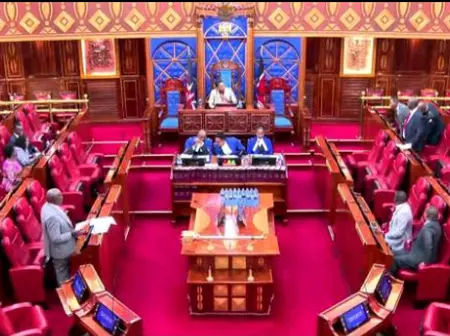
    According to posts shared by A.M Media on X, the veteran politician has risen to speak shortly after the standing ovation that greeted him in the chamber.

    Members have listened closely as he has described how he has coped through a long stay in hospital, and the House has stayed unusually attentive throughout.

    Oburu has told senators that, while lying in his hospital bed, he has felt a firm assurance that he would not die before finishing his business.

    He has spoken with calm conviction, and the remark has drawn quiet murmurs of approval across the benches.

    For a man who has been away for months, the words have carried a weight that many in the House have clearly felt.

    He has also turned his attention to Nyandarua Senator John Methu, whom he has thanked for checking on him during his recovery. Methu who is a political ally of former Deputy President Rigathi Gachagua's camp, has been singled out for a gesture that Oburu has described as kind and sincere.

    The acknowledgement has stood out because it has crossed political lines, and it has shown that personal goodwill can survive even the sharpest rivalry in Kenyan politics.

    The moment has landed differently with different people. Supporters of the ODM leader have welcomed his words as a sign of strength and determination, and many have taken to social media to share the clip.

    Others have noted how rare it is to see a senior opposition figure publicly praise a member from a rival political corner, and the exchange has already started conversations online about civility in politics.

    Oburu's return has settled quickly into the rhythm of the House. Colleagues have exchanged greetings with him, and the chamber has gone back to its business with a lighter mood than usual.

    After months of uncertainty about his health, party members and Kenyans following the Senate have finally watched him speak, and the sight has reassured many who have waited for it.

    His first words back have made clear that he has returned with purpose, and that the work he left behind has remained very much on his mind.

    https://x.com/a_m_media_ke/status/2120855641061249168?s=19

  • Latest TIFA Poll Reveals The Most Supported Side Between Broad-Based Gvnt and The United Opposition

    Latest TIFA Poll Reveals The Most Supported Side Between Broad-Based Gvnt and The United Opposition

    The survey conducted by Trends and Insights for Africa (TIFA) between October 26 and November 5, 2026, found that 43 per cent of Kenyans oppose the political arrangement involving President William Ruto's United Democratic Alliance (UDA) and the Orange Democratic Movement (ODM). Meanwhile, 32 per cent expressed support for the partnership.

    The findings provide an indication of the political environment facing the ruling arrangement as opposition leaders continue positioning themselves for the next General Election. However, the survey measured public attitudes towards the Broad-Based Government and did not directly compare it with the United Opposition in a head-to-head presidential contest.

    The research also established that 15 per cent of respondents had not settled on a position regarding the arrangement, while 10 per cent said they did not know about it. This brings the proportion of Kenyans without a clear position or knowledge of the partnership to 25 per cent.

    Regional responses revealed considerable differences in public opinion. Northern Kenya recorded the highest level of support for the Broad-Based Government at 68 per cent, followed by Central Rift at 57 per cent and Nyanza at 38 per cent. Western registered 37 per cent.

    The arrangement received its weakest backing in Mt Kenya, where only 12 per cent supported it. Nairobi followed at 13 per cent, while Lower Eastern, Coast and South Rift recorded 21, 25 and 26 per cent respectively.

    TIFA's previous surveys also indicate that opposition to the arrangement has gradually reduced from 56 per cent to the current 43 per cent. Despite this decline, support has remained relatively low, presenting a challenge for the political partnership as the country approaches the 2027 elections.

    The latest survey involved 2,036 respondents interviewed across nine regions through face-to-face household interviews and had a margin of error of plus or minus 2.16 per cent.

    Source: https://www.the-star.co.ke/news/2026-11-12-tifa-43-of-kenyans-against-broad-based-government?fbclid=IwZXh0bgNhZW0CMTEAcGRvZgNzcnRjBmFwcF9pZA8yNzUyNTQ2OTI1OTgyNzkAAR_EYBERmYA1pf-Tnf9V2iTYKsXAk2Aao2PshFwQu1_Akkt43OnGFExl96CvKA_aem_2YzfzOcUfbvC7XbDqTRAUw