Category: Politics

  • “We Are Not Enemies”: Oburu Sets the Record Straight on His Relationship With This Opposition Figure

    “We Are Not Enemies”: Oburu Sets the Record Straight on His Relationship With This Opposition Figure

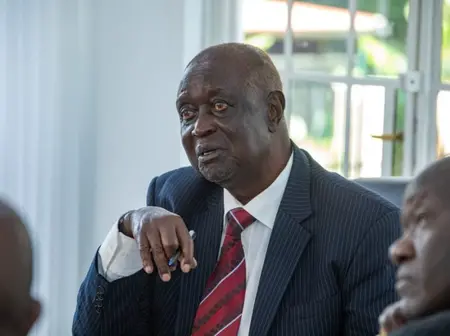
    Oburu expressed his appreciation for Methu's gesture, which came at a time when the Siaya Senator continues to recover and gradually prepare for a return to active political engagements.

    "We are not enemies," Oburu said, acknowledging the senator's visit and the importance of maintaining good relations across political divides.

    The meeting has also drawn attention because Methu belongs to the United Democratic Alliance (UDA), the ruling party associated with President William Ruto.

    Oburu's remarks come amid growing political disagreements surrounding the Orange Democratic Movement (ODM), particularly over its leadership and the party's direction ahead of the 2027 General Election.

    The ODM leader also turned his attention to Senator Dan Maanzo over the controversy surrounding the party's certificate, accusing him of running away with the important document.

    The disagreement adds another chapter to the political tensions surrounding ODM as different leaders continue taking positions on the party's internal affairs.

    Maanzo has been mentioned in the dispute over the certificate, although the circumstances surrounding the document and the competing claims require further clarification.

    Oburu's comments also come after several senior political leaders visited him following his hospital discharge.

    On November 4, National Assembly Speaker Moses Wetang'ula and Senate Speaker Amason Kingi led a delegation of legislators to his Nairobi residence.

    During that visit, Oburu thanked the leaders for their support and said he was recovering well. He also expressed his desire to return to parliamentary debates and active politics.

    The latest remarks highlight the continuing political discussions within ODM as the country moves closer to the 2027 elections.
  • Hassan Joho Explains Reasons Behind Scoring D in KCSE Exam

    Hassan Joho Explains Reasons Behind Scoring D in KCSE Exam

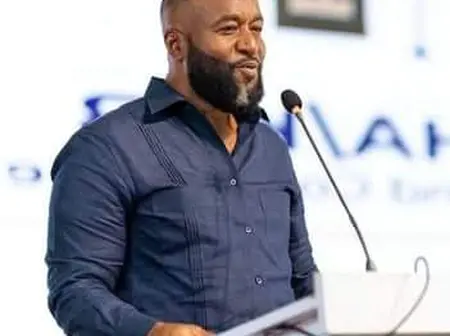
    Mining Cabinet Secretary Hassan Joho has explained the reasons behind his poor performance in secondary school, revealing some of the challenges that affected his academic journey.

    Speaking during an event attended by President William Ruto, Joho suggested that his academic performance could have been different if the current administration had been in power during his school days.

    "Your Excellency, ungekuwa rais wakati wangu ningekuwa A student," Joho said.

    His remarks appeared to suggest that the opportunities and policies introduced under Ruto's administration could have helped him perform better academically.

    Joho's secondary school results have been a subject of public discussion for years, with critics repeatedly using his academic background to question his qualifications. The latest comments provided an opportunity for the CS to explain the circumstances that contributed to his performance.

    During his address, Joho also praised President Ruto's Usawa Ni Sawa policy, highlighting its importance in promoting fairness and equal opportunities across different sectors.

    The CS appeared to support the idea that individuals should be given opportunities to succeed regardless of their backgrounds or previous challenges.

    Joho's comments have once again brought attention to his educational journey, which has remained a talking point throughout his political career.

    Despite the criticism surrounding his academic background, Joho has risen through the political ranks to become one of the country's senior government officials.

    His remarks also highlighted the importance of creating an environment where people can access opportunities and develop their potential.

    By praising the Usawa Ni Sawa policy, Joho aligned himself with the government's message on equality, arguing that fairness and access to opportunities are important in helping individuals achieve their ambitions.

  • Robert Alai Claims that Gachagua Is Prioritizing Self-Interest Over Opposition Unity

    Robert Alai Claims that Gachagua Is Prioritizing Self-Interest Over Opposition Unity

    Speaking on Thursday, November 12, 2026, Alai argued that Gachagua’s current political moves are aimed at securing his own bargaining power rather than rallying the opposition around a single, cohesive national strategy.

    The vocal MCA added that the opposition's biggest hurdle is that individual leaders are focused on consolidating regional strongholds to negotiate for positions instead of presenting a united alternative to President William Ruto.

    Alai further warned that this obsession with consolidating regions among opposition principals could backfire and weaken their ability to mount a serious challenge against the current administration in 2027 because they are inadvertently allowing President Ruto to dominate the national political conversation.

    The remarks come amid heightened political tension within the opposition camp. In recent weeks, cracks have emerged among key opposition figures, including Gachagua, former Interior Cabinet Secretary Fred Matiang'i, Wiper leader Kalonzo Musyoka, and former Attorney General Justin Muturi, over how best to organise ahead of the next polls.

    Gachagua has been urging opposition leaders to mobilise votes in their backyards before going to the negotiation table to find the right candidate to face off against President Ruto.

    https://www.facebook.com/100040319114203/posts/2052328116121139/?mibextid=rS40aB7S9Ucbxw6v

  • Oburu Stirs Debate as He Reveals What He Feared Dying Before Doing During His Illness

    Oburu Stirs Debate as He Reveals What He Feared Dying Before Doing During His Illness

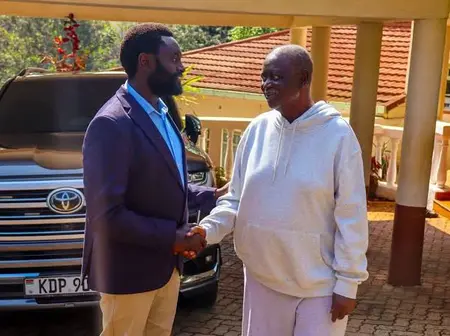
    Oburu made the remarks while appreciating Nyandarua Senator John Methu for visiting him during his difficult moments in hospital.

    The Siaya Senator described Methu as a good man, saying their political differences had not stopped him from showing kindness when it mattered.

    "When I was sick, I thought I was going to die before I could express my feelings in Parliament. Methu is a good man. He visited me when I was sick, and we are not enemies," Oburu said.

    His statement has attracted attention because Methu is associated with the United Democratic Alliance (UDA), the ruling party led by President William Ruto, while Oburu leads the Orange Democratic Movement (ODM).

    The two politicians belong to different political camps at a time when political activities are gaining momentum ahead of the 2027 General Election.

    Oburu's appreciation also comes as he continues recovering and preparing to resume his parliamentary responsibilities after his recent health challenges.

    On November 4, National Assembly Speaker Moses Wetang'ula and Senate Speaker Amason Kingi led a delegation of legislators to his Nairobi residence to check on his progress.

    During the visit, Oburu thanked those who had supported him and expressed his intention to return to active parliamentary duties.

    The ODM leader has also been involved in discussions surrounding the party's leadership and political direction as disagreements continue over its future.

    His latest remarks about Methu have brought attention to the relationship between politicians from opposing parties.

    Oburu's message was a reminder that political competition does not necessarily prevent leaders from maintaining personal friendships and supporting one another during difficult times.

    As the country moves closer to the 2027 elections, his comments have added another talking point to Kenya's political debate.

  • Claims Emerge on Opposition Figure Ruto Fears Facing in 2027 Presidential Race

    Claims Emerge on Opposition Figure Ruto Fears Facing in 2027 Presidential Race

    Mwangaza, who serves as the Linda Mwananchi Movement (LMM) Deputy Party Leader, reportedly claimed that Ruto is not particularly worried about other opposition figures but would face a difficult political battle if Sifuna were fronted to compete against him for the presidency in 2027.

    Her remarks have brought renewed attention to Sifuna's growing position within the opposition, particularly following his fallout with the Orange Democratic Movement (ODM), where he previously served as Secretary General before establishing himself as a leading figure in the Linda Mwananchi political movement.

    The movement has increasingly positioned Sifuna at the centre of its political strategy, with its leadership seeking to establish grassroots structures and expand its influence across all 47 counties as preparations for the 2027 General Election gather momentum.

    Sifuna's growing political profile has also been reflected in opinion polls, with a Research 8020 survey published in October placing Ruto at 26 per cent and the Nairobi senator closely behind at 25 per cent, suggesting a potentially competitive presidential contest.

    Although other research organisations have produced varying figures, the emerging surveys have continued to fuel debate about the opposition's possible presidential candidates and the political figures capable of mounting a serious challenge against Ruto.

    With the 2027 elections approaching, Mwangaza's remarks have added to growing claims about the opposition figure being considered a potential challenger to Ruto, placing Sifuna at the centre of fresh political discussions over who could be fronted to face the President in the race for State House.

  • Not Gachagua? New Details Emerge on Who Holds the Highest Position in DCP Party

    Not Gachagua? New Details Emerge on Who Holds the Highest Position in DCP Party

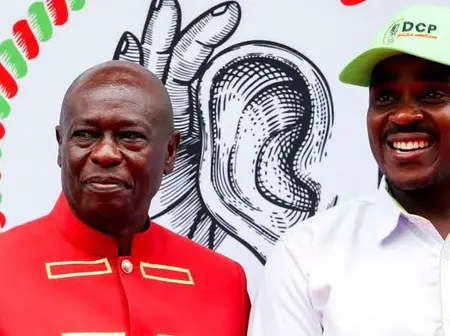
    According to information attributed to the Office of the Registrar of Political Parties, the position of party leader was reportedly not among the registered offices at the time of the inquiry, leaving Deputy Party Leader Cleophas Malala as the highest-ranking official in the party's registered records.

    The development has attracted political attention, particularly because Gachagua has publicly presented himself as the leader of DCP since its establishment in May 2025.

    Gachagua was appointed party leader by the party's National Executive Council on September 23, 2025. The party subsequently issued a notice regarding the appointment and intended changes to its leadership structure.

    However, questions surrounding the registration and gazettement of party officials have continued to generate debate.

    Malala, who previously served as Kakamega Senator and UDA Secretary-General, has remained a prominent figure within the opposition outfit.

    His position has also attracted attention following recent disagreements over the party's preferred presidential candidate for the 2027 General Election.

    Malala publicly expressed support for Nairobi Senator Edwin Sifuna's presidential ambitions, but Gachagua later clarified that his deputy was expressing a personal opinion rather than communicating DCP's official position.

    The former Deputy President maintained that only the party leader or secretary-general could communicate the official position of DCP.

    The latest revelations are likely to renew discussions about the party's registration documents and the procedures governing changes to political party leadership in Kenya.

    As the 2027 General Election approaches, the development places renewed focus on DCP's internal structures and the relationship between its senior officials.

    The issue is also expected to attract reactions from Kenyans following discussions about Gachagua and Malala's respective positions in the party.

  • Oburu Speaks in Parliament After Long Absence, Mentions Methu and Reveals His Biggest Fear While ill

    Oburu Speaks in Parliament After Long Absence, Mentions Methu and Reveals His Biggest Fear While ill

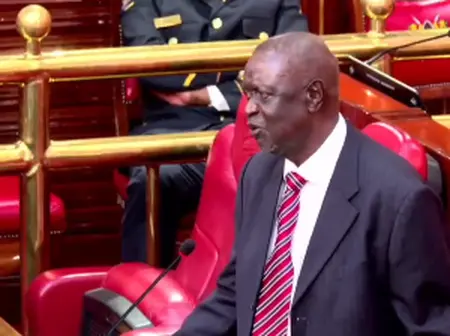
    Siaya Senator and ODM leader Dr Oburu Odinga has spoken in Parliament after a long absence caused by illness. His return to the Senate comes after a period of health challenges that included hospital admissions and recovery at home.

    Oburu told fellow senators that while he was unwell he feared he might die before returning to Parliament to express his views. He thanked colleagues who stood by him during the difficult period.

    In his remarks he also mentioned Nyandarua Senator John Methu. The mention drew attention given that the two leaders belong to different political camps.

    Methu is a key figure in the Democracy for the Citizens Party associated with former Deputy President Rigathi Gachagua. He visited Oburu at his Nairobi residence in September 2026. He found the veteran politician in very high spirits.

    The Nyandarua senator presented gifts of goats and rams as a traditional gesture of goodwill. Methu described the encounter positively at the time.

    The two senators operate in distinct political spaces. Oburu took over the leadership of ODM after the death of Raila Odinga. Methu is aligned with DCP.

    Oburu is a veteran politician with decades of experience in Kenyan politics. His comments in the Senate have therefore drawn wide interest.

    The exchange highlights the personal relationships that often cut across Kenya’s sharp partisan divides. Methu had earlier made courtesy calls in late 2025 including one with Kiambu Senator Karungo wa Thang’wa after Raila’s death. They signalled mutual respect between leaders from Mt Kenya and Nyanza.

    Oburu’s return and remarks reinforce the point that collegiality and human concern can persist even when parties and camps remain separate. It offers a note of civility amid ongoing political realignments ahead of 2027.

    https://www.facebook.com/share/v/1CZD32K17n/

  • Tension Brews in Uganda as Leaders Oppose Muhoozi’s Bid to Succeed His Father as President

    Tension Brews in Uganda as Leaders Oppose Muhoozi’s Bid to Succeed His Father as President

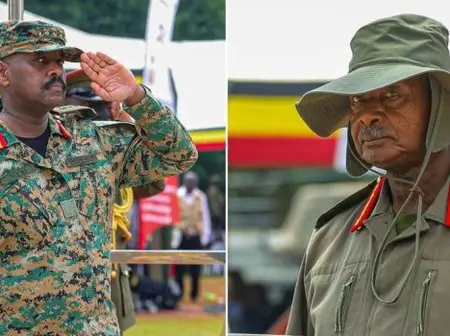
    Uganda's ruling National Resistance Movement (NRM) is facing reported internal disagreements over President Yoweri Museveni's succession, following growing resistance to plans to position his son, General Muhoozi Kainerugaba, as his possible successor.

    The disagreement reportedly emerged during a closed-door meeting of the party's Central Executive Committee (CEC) at State House in Entebbe on Tuesday, November 10, 2026.

    According to five participants who spoke to Agence France-Presse (AFP), some senior party officials opposed Muhoozi's proposed succession, forcing members to abandon a vote on the matter.

    Of the 28 committee members, only seven had voted before the process was stopped. Four reportedly supported Muhoozi's candidature, while three opposed it. The reported outcome has not been officially confirmed by the NRM.

    The reports also raised concerns over Muhoozi's public conduct, particularly his controversial statements on social media and confrontations with political opponents.

    Some CEC members reportedly questioned whether his approach could affect his chances of gaining wider support among Ugandans.

    One participant reportedly suggested that Museveni should consider giving his son a civilian role to help him gain political experience outside the military.

    However, Kasambya County MP Daudi Kabanda has strongly dismissed claims that the ruling party rejected Muhoozi's presidential ambitions.

    Kabanda, who serves as Executive Secretary in the office of the Patriotic League of Uganda (PLU) chairman, described the reports as false information in a statement on Thursday, November 12.

    He did not provide an alternative account of what happened during the November 10 meeting or explain which details were inaccurate.

    Muhoozi, who currently serves as Uganda's Chief of Defence Forces, declared his intention to contest the 2031 presidential election in September.

    His ambition has attracted support from PLU members, who have been mobilising behind his proposed candidature.

    The latest developments have therefore placed Uganda's succession debate under fresh public attention as Museveni's future leadership plans remain a major political issue.

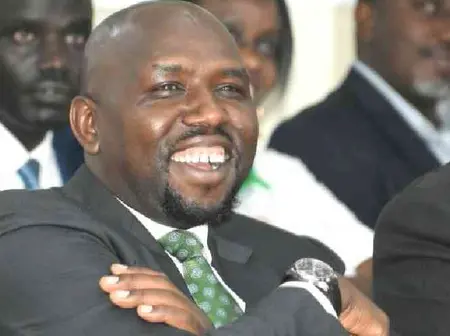
  • “We Miss Kindiki as Interior CS, Murkomen Is Just a TikToker,” Top Opposition Leader Says

    “We Miss Kindiki as Interior CS, Murkomen Is Just a TikToker,” Top Opposition Leader Says

    The outspoken senator did not mince his words, suggesting that Kenyans are missing the leadership Kindiki provided when he was in charge of the Interior Ministry.

    In a statement that quickly attracted attention, Khalwale said: “We miss KINDIKI as minister of INTERNAL SECURITY, he was able to contain insecurity in the country, MURKOMEN is a TIKTOKER.”

    His remarks have placed Murkomen under fresh scrutiny, with questions emerging about his approach to handling insecurity across the country.

    Khalwale appeared to draw a clear distinction between the two leaders, arguing that Kindiki had demonstrated stronger abilities in dealing with security challenges during his tenure.

    The comments are particularly significant because the Interior Ministry is one of the most sensitive positions in government. It deals with policing, public safety, internal security and the protection of citizens.

    Murkomen, who currently holds the powerful position, has faced public discussions surrounding insecurity, police operations and the government's response to security threats.

    However, Khalwale's criticism has added another political dimension to the conversation, especially because it came with direct praise for Kindiki.

    Many people were left talking about whether the senator's remarks reflect growing dissatisfaction with Murkomen's leadership or simply political differences.

    The incident sparked reactions online, with supporters appearing divided over which of the two leaders performed better in the demanding security docket.

    While some may agree with Khalwale's assessment, others could argue that judging a Cabinet Secretary requires considering the challenges and circumstances surrounding their tenure.

    What happened next surprised many, as the remarks opened another uncomfortable conversation about accountability in Kenya's security sector.

    Do you agree with Boni Khalwale that Kindiki was better suited to handle Kenya's internal security than Murkomen? Share your thoughts.

  • Catholic Bishops Ban Political Speeches in all Churches

    Catholic Bishops Ban Political Speeches in all Churches

    The directive comes at a time when political activities are gaining momentum across the country, with various leaders seeking opportunities to connect with voters and strengthen their political influence ahead of the highly anticipated elections.

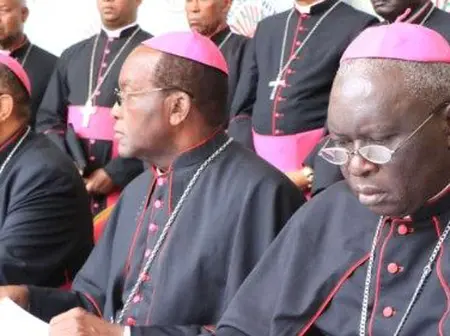
    The Kenya Conference of Catholic Bishops (KCCB), led by Archbishop Maurice Muhatia Makumba, has maintained that churches should remain places of worship rather than political arenas where leaders advance their personal or party interests.

    The bishops have called on church leadership to protect religious gatherings from partisan political activities, insisting that worshippers should be allowed to attend services without being subjected to political messages or campaign rhetoric.

    The position is particularly significant considering that politicians have frequently attended Sunday services, where some have been given opportunities to address congregations and communicate their political ambitions.

    The bishops have also called on politicians to exercise restraint in their public statements, warning against inflammatory remarks, hate speech and political exchanges that could create divisions among communities.

    They further encouraged Kenyans, particularly young people, to participate responsibly in the democratic process by registering as voters and rejecting political violence, bribery and electoral malpractice.

    The Catholic leadership has also challenged the Independent Electoral and Boundaries Commission (IEBC) to ensure that preparations for the next general election are transparent, credible and inclusive.

    The latest position places religious institutions at the centre of the national conversation about responsible political leadership and the protection of democratic values.

    As political temperatures continue rising, the bishops' message serves as a reminder that churches should remain neutral spaces where Kenyans can worship together regardless of their political affiliations.

    It now remains to be seen how political leaders will respond to the church's position as campaigns gradually take shape ahead of the 2027 General Election.

    https://x.com/Kenyans/status/2120852996447994317/photo/1?a=nA4VIWaGM9CJXAZ3r9c&s=19