Category: Politics

  • “Sifuna Is the Voice of the Luhya Community at the Table,” Furious Natembeya Tells Eugene Wamalwa

    “Sifuna Is the Voice of the Luhya Community at the Table,” Furious Natembeya Tells Eugene Wamalwa

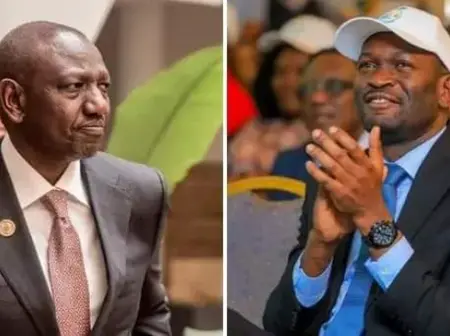
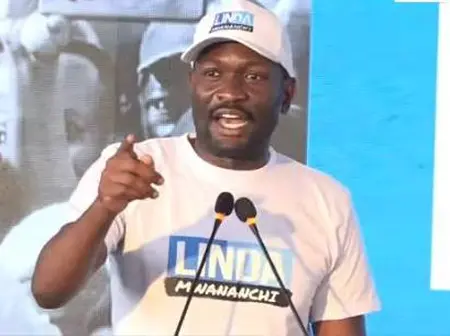
    Speaking during a political engagement, Natembeya appeared frustrated by disagreements over who should represent the community in political discussions. He maintained that Sifuna was currently the leader speaking on behalf of the community and that other politicians should respect his position.

    Natembeya directly challenged Wamalwa, suggesting that he should leave the political table if he could not acknowledge Sifuna's leadership. He warned against having competing voices create confusion among leaders seeking to advance the community's political interests.

    The governor also appeared to take a swipe at Wamalwa's political influence, referring to him as the "one million" man and insisting that he should step aside.

    Eugene should leave the table and stop bringing confusion. Sifuna is the one speaking for us at the table. The one-million man should step down. Period! We don't want confusion at the table," Natembeya declared.

    His remarks have brought renewed attention to the question of political leadership within the Luhya community, particularly as different leaders seek influence and recognition ahead of future political contests.

    Natembeya's comments clearly indicate his support for Sifuna's growing political role and his opposition to competing leadership claims.

    Watch the video here

    https://www.facebook.com/share/v/19o6zgNpqA/
  • Catholic Bishops Caution Parliament Over Divisive Electoral Bills Ahead of 2027 Elections

    Catholic Bishops Caution Parliament Over Divisive Electoral Bills Ahead of 2027 Elections

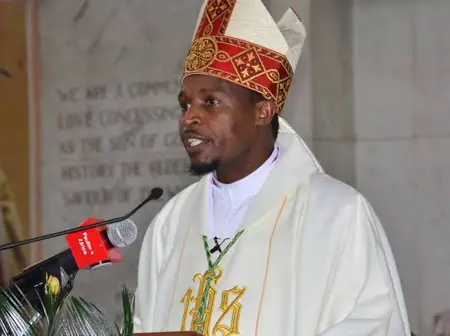
    According to a report by the clerics urged the Speakers of the National Assembly and Senate to reject legislation that could restrict Kenyans' access to electoral information.

    The bishops argued that transparent elections require citizens to have access to information about the counting and verification of results.

    "Parliament has yet one more chance to redeem itself, by totally rejecting such an attempt to muzzle free access to information," the bishops stated, according to the report.

    The religious leaders also called on lawmakers to prioritise electoral reforms that strengthen democratic institutions rather than create divisions among Kenyans.

    They urged Parliament to fast-track pending legislation necessary to improve the country's electoral framework while ensuring that the reforms protect peace and stability before, during and after the elections.

    The statement further challenged the Independent Electoral and Boundaries Commission (IEBC) to strengthen preparations for the 2027 polls.

    The commission was urged to improve voter registration, election logistics, training of electoral officials, verification of results and mechanisms for resolving electoral complaints.

    The bishops also emphasised the importance of protecting the commission's independence, warning against interference or intimidation by politicians and other powerful interests.

    They called on the Judiciary to handle election-related disputes impartially and efficiently, citing the need to avoid controversies that could threaten national stability.

    The statement was signed by KCCB Chairman Archbishop Maurice Muhatia Makumba following a gathering of Catholic bishops at the John Cardinal Njue Pastoral Centre in Embu.

    The bishops additionally appealed to political leaders to embrace responsible leadership, peaceful campaigns and national unity as the country approaches the 2027 elections.https://x.com/citizentvkenya/status/2120839738592538752?a=MzQbR1suy-AnkcIrwyY&s=20

  • NEWS JUST IN: New Poll Puts Sifuna Neck and Neck With Ruto in 2027 Race

    NEWS JUST IN: New Poll Puts Sifuna Neck and Neck With Ruto in 2027 Race

    A new opinion poll has sent fresh waves through Kenya's political landscape after placing Nairobi Senator Edwin Sifuna neck and neck with President William Ruto in the race for the 2027 General Election.

    According to the latest survey released by Trends and Insights For Africa (TIFA) Research on Thursday, November 12, 2026, both Ruto and Sifuna command 31 per cent support among Kenyans, emerging as joint front-runners in the highly anticipated presidential contest.

    The findings represent a significant development for Sifuna, whose political popularity has grown considerably in recent months. The Nairobi Senator has increasingly positioned himself as a strong opposition voice, attracting attention through his outspoken criticism of the government and his involvement in the Linda Mwananchi political movement.

    For President Ruto, the survey indicates a recovery in popularity, with his support rising from 24 per cent in June 2026 to 31 per cent in November.

    Other potential presidential contenders recorded considerably lower figures. Wiper Party leader Kalonzo Musyoka attracted 9 per cent, followed by former Interior Cabinet Secretary Fred Matiang'i with 5 per cent. Former Deputy President Rigathi Gachagua registered 4 per cent, while 15 per cent of respondents remained undecided.

    Sifuna's emergence as an equal competitor to the sitting President could reshape political conversations surrounding the opposition's strategy ahead of the 2027 elections.

    The findings also raise questions about the influence of emerging political movements and the growing demand for alternative leadership, particularly among Kenyans seeking changes in governance and economic management.

    However, opinion polls are not election results, and political dynamics can change significantly before voters head to the ballot.

    With the 2027 General Election approaching, the latest findings suggest that Kenya's presidential contest could become increasingly competitive, especially if opposition leaders manage to consolidate their political support.

    The big question now is whether Sifuna can maintain his momentum and translate his growing popularity into a serious challenge for State House.

    Sources

  • The Woman Who Rejected Jomo Kenyatta Despite His Attempts to Win Her Love

    The Woman Who Rejected Jomo Kenyatta Despite His Attempts to Win Her Love

    Esther Wanjeri was the woman who repeatedly turned down Kenya's founding President, Jomo Kenyatta, despite his efforts to win her affection, according to a report by The Standard.

    Their paths crossed in the 1940s when Jomo returned from England and was appointed principal of Kenya Teachers Training College (KTTC) in Kiambu County. Wanjeri was studying embroidery at the institution.

    Her father was a close friend of Jomo, who frequently visited their home for supper. During these visits, he developed a liking for Wanjeri's cooking, particularly her roasted bananas.

    Jomo would sometimes escort her home after meals and tell her that she was the ideal woman for him. However, Wanjeri repeatedly rejected his advances because she considered him too old and was uncomfortable with his unkempt beard.

    On one occasion, another rejection reportedly left Jomo so upset that he returned to his house crying.

    He even enlisted his daughter, Wambui Kenyatta, who was friends with Wanjeri, to persuade her to accept his advances, but the attempt failed.

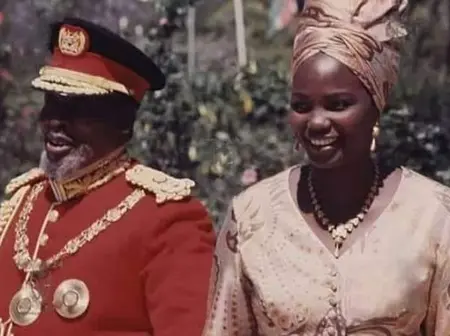
    Wanjeri eventually married her longtime boyfriend, Kamau, a farmer. Jomo later married Mama Ngina, whom he once took to Wanjeri and asked her to teach how to serve food.

    https://www.kenyans.co.ke/news/37890-how-esther-wanjeri-made-mzee-jomo-kenyatta-cry

  • Ruto Sends Firm Message to Leaders Promising to Abolish the Housing Levy

    Ruto Sends Firm Message to Leaders Promising to Abolish the Housing Levy

    President William Ruto has drawn a firm line over the affordable housing programme, warning leaders against promising to abolish the housing levy.

    His remarks have reopened a political debate that touches millions of workers, employers and families hoping to own decent homes.

    Ruto argues that the programme should not be judged only by the monthly deductions appearing on payslips. He says it also supports construction, employment and the government's wider plan to increase access to affordable homes.

    The President has repeatedly challenged opponents to explain what would happen to people earning a living through housing projects if the programme were scrapped. During earlier remarks, he cited jobs linked to construction and related activities as a major reason for keeping the initiative.

    That argument gives the debate an economic dimension beyond political competition. Construction workers, suppliers, transport operators and small businesses can all be affected by decisions involving large building projects.

    However, critics have raised questions about the levy itself, including the burden placed on salaried workers and whether the programme delivers fair value. For households already balancing rent, food, transport and school expenses, another deduction can remain a difficult issue.

    The disagreement is also political. Nairobi Senator Edwin Sifuna has publicly supported scrapping the levy, putting him among leaders challenging the government's approach. Ruto, in turn, has questioned the wisdom of abandoning a programme he says supports jobs and housing opportunities.

    The two positions reflect different priorities. Supporters see a long-term investment in homes and employment, while critics want a funding model that places less pressure on workers and answers concerns about accountability.

    The debate therefore goes beyond whether one politician wins an argument. Kenyans need clear information about how much is collected, how funds are used, who benefits and what protections contributors receive.

    Ruto's latest warning makes one thing clear: the housing levy is likely to remain a major political issue as leaders position themselves ahead of the next election.

    Should Kenya retain the housing levy with stronger accountability, or should the next government abolish it and pursue another housing funding model?

  • How Jomo Kenyatta’s Fear of Elevators Forced Mama Ngina to Step In During Official Visit

    How Jomo Kenyatta’s Fear of Elevators Forced Mama Ngina to Step In During Official Visit

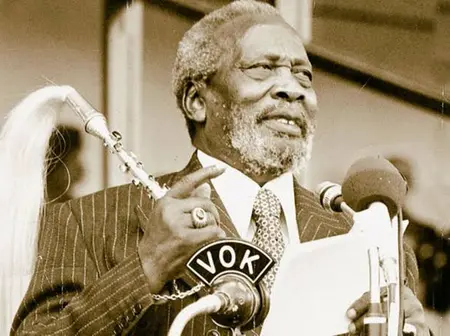
    Kenya’s first President, Jomo Kenyatta, once refused to enter an elevator during an official government function in Mombasa, forcing his wife, Mama Ngina Kenyatta, to intervene.

    The incident happened in 1970 when Kenyatta visited the Coast region to officially open the Coast Provincial Headquarters.

    As part of the presidential visit, the former head of state was required to sign a visitors' book. He was escorted towards an elevator that would take him to the third floor, where the book was located.

    However, when the elevator doors opened, Kenyatta declined to step inside. Instead, he called upon Mama Ngina and asked her to sign the visitors' book on his behalf.

    Mama Ngina, however, came up with a different solution. Rather than signing the book herself, she instructed those accompanying them to bring it down to the ground floor so that her husband could sign it personally.

    The incident offered a glimpse into Kenyatta's fear of heights, which reportedly influenced his reaction to the elevator during the official function.

    https://www.kenyans.co.ke/news/43232-day-jomo-kenyattas-elevator-phobia-forced-wife-intervene?amp=1&page=194

  • Why Jomo Kenyatta Restricted a Visiting African President to Mombasa in 1964

    Why Jomo Kenyatta Restricted a Visiting African President to Mombasa in 1964

    Kenya’s first President, Jomo Kenyatta, once ordered a visiting African Head of State to restrict his stay to Mombasa because of a promise he had made to another president.

    The unusual incident happened on May 23, 1964, when Liberian President William Tubman docked in Mombasa while travelling to Madagascar.

    According to former Central Bank of Kenya Governor Duncan Ndegwa in his book, Walking in Kenyatta's Struggle: My Story, Kenyatta had made a special pact with his close friend, Ethiopian Emperor Haile Selassie.

    Kenyatta had promised Selassie that he would be the first Head of State to visit Kenya after the country gained independence in 1963.

    The promise was so important to the Kenyan leader that when Tubman arrived in Mombasa, he was instructed to confine his visit to the coastal city rather than proceed elsewhere in the country.

    Kenyatta wanted to honour his commitment to Selassie by ensuring that the Ethiopian Emperor retained the distinction of being the first foreign Head of State to visit independent Kenya.

    https://www.kenyans.co.ke/news/39022-day-mzee-kenyatta-ordered-confinement-visiting-president

  • Wamalwa Faces an Unexpected Challenge After Natembeya’s Latest Sifuna Remarks

    Wamalwa Faces an Unexpected Challenge After Natembeya’s Latest Sifuna Remarks

    Trans Nzoia Governor George Natembeya has launched a sharp attack on former Defence Cabinet Secretary Eugene Wamalwa demanding that he recognise Nairobi Senator Edwin Sifuna as a key political leader of the Luhya community.

    In his remarks, Natembeya appeared frustrated by what he considers reluctance by some leaders to acknowledge Sifuna's growing political influence insisting that anyone unwilling to recognise the senator's position should reconsider their place at the opposition leadership table.

    "Kama Eugene Wamalwa hawezi sema Sifuna ndiye kiongozi wa Waluhya kisiasa saa hizi msikubali kumskiza, yeye aondoke kwenye hiyo meza asilete kisirani!" Natembeya declared.

    The governor's remarks underline the growing political debate surrounding leadership and representation within the Luhya communit particularly as opposition leaders position themselves ahead of the 2027 General Election.

    Sifuna, who has emerged as a vocal critic of President William Ruto's administration has increasingly attracted attention through his political activities and involvement in the Linda Mwananchi Movement.

    Natembeya's statement also places Wamalwa in the spotlight raising questions about possible differences among leaders seeking to strengthen opposition unity.

    The governor appeared to suggest that political cooperation should not be used to undermine leaders whose influence is gaining momentum.

    His remarks could further intensify discussions over who should take the leading political role among the Luhya community as the opposition prepares for the next electoral contest.

    With 2027 approaching, the question of leadership, political influence and regional representation could become a major factor in shaping opposition alliances.

    Source;https://www.facebook.com/reel/1909144849900607/?app=fbl

  • Linda Mwananchi Takes Nairobi Lead as Ruto and Sifuna Face New Political Test

    Linda Mwananchi Takes Nairobi Lead as Ruto and Sifuna Face New Political Test

    Linda Mwananchi’s reported 26 per cent support in Nairobi has put Edwin Sifuna’s movement at the centre of a fresh political conversation.

    The TIFA Research finding raises questions for established parties, including President William Ruto’s United Democratic Alliance and the Orange Democratic Movement.

    According to the shared poll result, Linda Mwananchi ranks as Nairobi’s most popular political party, attracting 26 per cent of respondents.

    The figure gives the movement a notable city-level platform as politicians position themselves for the 2027 General Election.

    For Sifuna and movement leaders, the result offers an opportunity to argue that their message is gaining public attention.

    However, a strong showing in one county does not automatically translate into nationwide support or electoral success.

    National figures reported from TIFA’s latest survey paint a more complicated picture of the political contest.

    UDA was placed first nationally with 25 per cent, while Linda Mwananchi followed at 17 per cent and ODM had 10 per cent.

    That distinction matters because Nairobi’s preferences cannot represent every county’s political mood.

    Kenya’s voting patterns remain diverse, with parties drawing different levels of support across regions.

    The poll arrives as debate turns towards leadership, party identity and alliances likely to shape 2027.

    Supporters may view the Nairobi result as evidence that voters want a stronger alternative and attention to everyday concerns.

    Those concerns include jobs, the cost of living, public services and whether elected leaders deliver on promises.

    Supporters of established parties can point to their national structures, wider networks and experience in previous elections.

    An opinion poll measures responses at a particular time; it does not determine how voters will cast ballots.

    The Nairobi breakdown and survey methodology should be read alongside TIFA’s full report before wider conclusions are drawn.

    Even so, the reported 26 per cent gives political leaders a fresh reason to pay attention to Nairobi.

    With Ruto’s UDA, ODM and Sifuna’s movement facing a changing environment, the city’s next moves will attract scrutiny.

    Do you think Linda Mwananchi can turn its reported Nairobi lead into lasting national support, or will established parties regain ground?

  • Martha Wangari Leads in the Gilgil Parliamentary Race, New Opinion Poll Shows

    Martha Wangari Leads in the Gilgil Parliamentary Race, New Opinion Poll Shows

    According to the latest Opinion Poll that was released by Politrack Africa on Thursday, November 12, 2026, Wangari is ahead in the race with 20.3%. In second place is Ndiritu Mathenge with 15.1%, while Maina Peter Njoroge follows with 13.3%.

    John Thuo comes in fourth at 11.3%, trailed by Martin Ngure with 9.3%. Agnes Njambie sits in sixth place with 8.1%, ahead of Maggie Wangui Kabura at 7.3% and Tony Ng'ang'a at 5.7%.

    Wangari is serving her second term as the MP for Gilgil. She retained the seat in the 2022 polls on the United Democratic Alliance (UDA) ticket after first being elected in 2017.

    However, she went against the party during the impeachment of former Deputy President Rigathi Gachagua.

    She is among the Mt Kenya MPs who opposed and voted against the impeachment of Gachagua in October 2024, joining 43 other lawmakers in casting a "No" vote in the National Assembly.

    https://www.facebook.com/61555641422794/posts/122310974618188047/?mibextid=rS40aB7S9Ucbxw6v