Category: Politics

  • Gachagua’s Popularity Takes a Hit as TIFA Poll Shows Support Drops to 4%

    Gachagua’s Popularity Takes a Hit as TIFA Poll Shows Support Drops to 4%

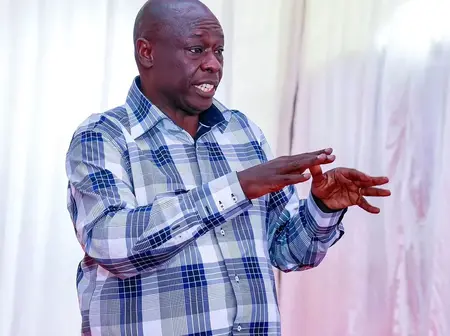
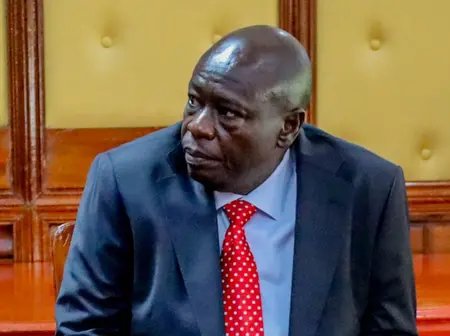
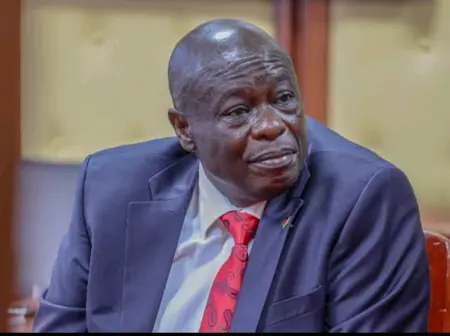
    Former Deputy President Rigathi Gachagua has recorded a significant decline in support as a preferred presidential candidate, according to new findings attributed to TIFA Research.

    The latest figures indicate that Gachagua's support has fallen from 9 per cent in May 2026 to 4 per cent, representing a five-percentage-point drop in his popularity among respondents surveyed.

    The development could raise fresh questions about his political standing as leaders continue positioning themselves ahead of the 2027 General Election.

    Gachagua has remained an influential figure in opposition politics, particularly through his engagements with leaders opposed to President William Ruto's administration. His political activities have also attracted attention as different factions work to strengthen their influence and build support across the country.

    However, the latest figures suggest that his popularity as an individual presidential candidate has weakened compared with the position he held in May.

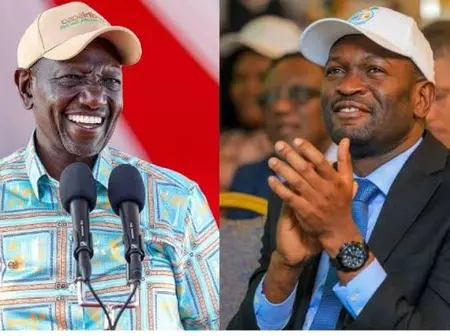
    The decline comes at a time when Nairobi Senator Edwin Sifuna is attracting increased attention following his growing support in opinion polls. The latest TIFA findings place Sifuna and President Ruto at 31 per cent each in the preferred presidential candidate rankings.

    Despite the drop, Gachagua continues to command support within his Democracy for the Citizens Party (DCP), where he remains a key political figure.

    The findings are likely to intensify discussions about the opposition's strategy, leadership and ability to rally behind a single presidential candidate ahead of the 2027 elections.

    The latest figures have also sparked fresh debate about whether Gachagua can rebuild his support as the political contest gathers momentum.

    The poll results were highlighted in a Facebook post, drawing attention to the former deputy president's changing fortunes in the race for State House.
  • Babu Owino Engage With Luhya Community as He Eyes for the Nairobi Gubernatorial Seat Ahead of 2027

    Babu Owino Engage With Luhya Community as He Eyes for the Nairobi Gubernatorial Seat Ahead of 2027

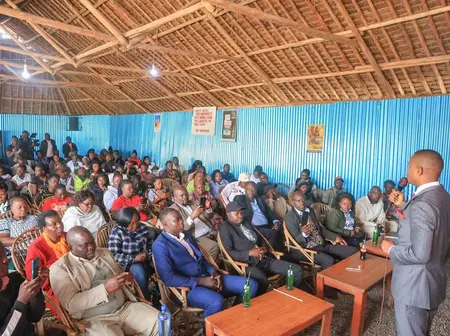
    Embakasi East Member of Parliament Babu Owino is seemingly stepping up his political mobilisation ahead of the 2027 General Election as he seeks to strengthen his chances of becoming Nairobi's next governor.

    The outspoken legislator has been engaging different communities, with his interaction with members of the Luhya community attracting attention amid growing speculation about the political strategies he is employing to secure support across the capital.

    The Luhya community remains one of the influential voting blocs in Nairobi, making its political support particularly important for anyone seeking to occupy the gubernatorial seat.

    Babu's engagement could therefore be part of a calculated effort to expand his political networks and establish stronger connections with residents from different backgrounds.

    Having represented Embakasi East for several years, the legislator has developed a significant political following, especially among young people. His outspoken nature and frequent involvement in national political discussions have also helped him maintain visibility beyond his constituency.

    However, the Nairobi gubernatorial contest presents a different challenge. Unlike parliamentary elections, winning the city's top county position requires a candidate to appeal to voters across all 17 constituencies and demonstrate an understanding of Nairobi's major challenges.

    These include unemployment, insecurity, poor infrastructure, congestion, waste management and the delivery of essential county services.

    Babu's gubernatorial ambitions have also attracted attention because of his association with The Mwananchi Party (TMP), which is linked to his broader political plans ahead of the next elections.

    He has also expressed support for working with Senator Edwin Sifuna's Linda Mwananchi political formation, potentially creating opportunities for political cooperation as opposition leaders position themselves for 2027.

    Meanwhile, Governor Johnson Sakaja is expected to face competition from several political figures seeking to influence Nairobi's leadership in the coming election.

    Babu's latest engagement with the Luhya community could therefore be an important step in his attempt to build a broad political coalition.

    https://x.com/HEBabuOwino/status/2120832176824406330?a=4e9-sikcvVQL4Z2rrSc&s=19

  • Uhuru’s Call for Opposition Unity Lands Him in Hot Soup as New Details Emerge

    Uhuru’s Call for Opposition Unity Lands Him in Hot Soup as New Details Emerge

    Former President Uhuru Kenyatta’s renewed push for opposition unity is opening another political battlefront with President William Ruto as the country gradually moves towards the 2027 General Election.

    Uhuru’s growing involvement in efforts to bring opposition leaders together has drawn attention to the changing political landscape, with questions emerging over how the former president’s influence could shape the next election.

    The push for a united opposition comes at a time when political leaders are positioning themselves for the 2027 contest. Several opposition figures have expressed interest in working together, although bringing different political interests under one arrangement remains a major challenge.

    The political tension intensified after Uhuru’s remarks attracted a sharp response from Ruto, who accused his predecessor of abandoning his position as a statesman and turning into a political broker for the opposition.

    Speaking during his development tour of the Gusii region on Wednesday, November 11, Ruto dismissed Uhuru’s efforts to bring opposition leaders together, insisting that his administration was prepared to face any number of presidential candidates in 2027.

    The President also questioned the opposition’s prolonged consultations, challenging its leaders to settle on a presidential candidate instead of repeatedly changing their preferred choices.

    Uhuru’s intervention has also brought renewed attention to his relationship with former Deputy President Rigathi Gachagua. The two leaders previously fell out politically following the 2022 General Election, but their possible cooperation could influence the emerging opposition arrangements.

    Gachagua has been working to strengthen his political influence in the Mt Kenya region while building relationships with other opposition leaders, including Wiper Party leader Kalonzo Musyoka and DAP-K's Eugene Wamalwa.

    Uhuru has also indicated that he could visit Gachagua’s Wamunyoro home when the right time comes, adding another interesting dimension to the unfolding political developments.

    With the 2027 elections approaching, the growing exchange between Uhuru and Ruto could become a major feature of the campaign season.

    The biggest question now is whether the opposition will overcome its internal differences and agree on one presidential candidate before facing Ruto at the ballot.

  • Responsibility of Ruto is To Be Able to Traverse the Entire Country & Deliver Promises – Passaris

    Responsibility of Ruto is To Be Able to Traverse the Entire Country & Deliver Promises – Passaris

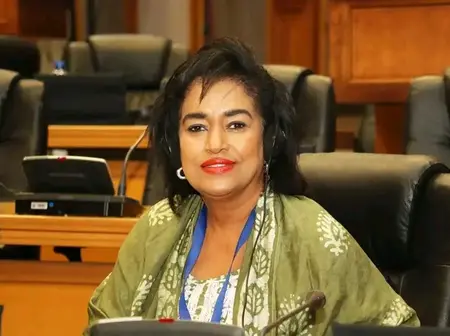
    Nairobi Women Representative Esther Passaris has sparked political debate after publicly praising President William Ruto's leadership style, describing him as a hands-on Head of State who is shaping how the presidency should operate in Kenya.

    Passaris made the remarks while reflecting on the responsibilities of the country's top office, arguing that a president must remain actively involved in national affairs and ensure that promises made to Kenyans are translated into tangible results.

    "The responsibility of a president to the nation of Kenya is to be able to traverse the entire country and to be able to deliver on promises made. Ruto is a hands-on person; I think he's shaping the way the presidency should work," Passaris stated.

    Her comments are particularly significant given the growing political divisions surrounding Ruto's administration as the country moves closer to the 2027 General Election.

    The Orange Democratic Movement (ODM) legislator suggested that presidential leadership should not be confined to State House offices, but should involve direct engagement with citizens across different regions of the country.

    According to Passaris, travelling throughout Kenya allows the President to understand the challenges facing ordinary citizens, monitor government programmes and assess whether development commitments are being fulfilled.

    Her description of Ruto as a hands-on leader also highlights the importance she places on presidential involvement in implementing government policies and supervising national development projects.

    The remarks could generate fresh political conversations within ODM and the wider opposition, particularly at a time when several leaders are questioning the direction of the Kenya Kwanza administration.

    Passaris has previously challenged former President Uhuru Kenyatta over his calls for opposition unity, arguing that political leaders must provide convincing reasons why Kenyans should remove Ruto from office rather than simply campaigning against him.

    Her latest assessment of the President presents another interesting perspective on the political debate, especially as leaders begin preparing for the next electoral contest.

    With the 2027 elections approaching, Ruto's leadership record, government performance and ability to fulfil campaign promises are expected to remain central issues in determining his political fortunes.

    Passaris' remarks have consequently added another voice to the ongoing discussion about presidential leadership and accountability in Kenya.

    Link:

    https://www.facebook.com/share/v/1CgNqQroXA/

  • MP Junet Breaks Silence After Huge Crowd Storm Ruto’s Kisii Rally, Send Powerful Message

    MP Junet Breaks Silence After Huge Crowd Storm Ruto’s Kisii Rally, Send Powerful Message

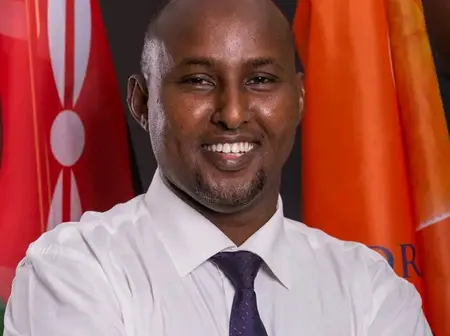
    National Assembly Minority Leader and Suna East MP Junet Mohamed has broken his silence following the huge crowd that turned up for President William Ruto's rally in Kisii Town, as ODM and UDA push ahead with 2027 coalition talks.

    In a statement, Junet said: "Political parties partner on written agreements on principles of governance and composition of the machinery of government. The ODM Party and the UDA Party will emerge stronger together in the negotiations ahead."

    He added that the two parties have a joint historic mandate to deliver rapid economic transformation in Kenya, "with the understanding that such transformation must reach all."

    He signed off with the party's rallying slogan: "USAWA NI SAWA. CHAMA IKO IMARA! TUKO TAYARI!"

    The slogan has become ODM's campaign refrain.

    Party chairperson Gladys Wanga has said ODM has decided to go into the election with Ruto, which is why it says Usawa ni Sawa.

    Junet used the same line while rallying Rift Valley supporters behind the broad-based coalition.

    The coalition path has not been smooth.

    Talks between the two parties are ongoing, and earlier this year UDA leaders rejected ODM proposals for electoral zoning, insisting they would field candidates nationwide.

    ODM, for its part, has said its parliamentary seats are non-negotiable and that it will field candidates across the country.

    Junet has also been clear on what ODM wants from the deal.

    In July, he said that if UDA retains the presidency, ODM will demand the deputy presidency, and he endorsed Wycliffe Oparanya as Ruto's running mate.

    This is consistent with his earlier vow that ODM will never again be called an opposition party.

    Wanga has projected that pooled ODM and UDA votes could reach about 17 million, while Junet says every region that backed Raila Odinga will not be left behind.

    Not everyone in ODM appears convinced, however.

    The partnership has stirred internal tensions, and several local leaders snubbed a party rally in Kisii in September 2025.

    With negotiations still ahead, all eyes now turn to whether the written agreement Junet describes will be signed before the 2027 vote.

    Link:

    https://x.com/JunetMohamed/status/2120587389513109646?a=xo4U0f2v2LFulxqAh9w&s=19

  • Sifuna Under Pressure as Details Emerge on What He Should Not Do in 2027 If He Truly Loves Babu

    Sifuna Under Pressure as Details Emerge on What He Should Not Do in 2027 If He Truly Loves Babu

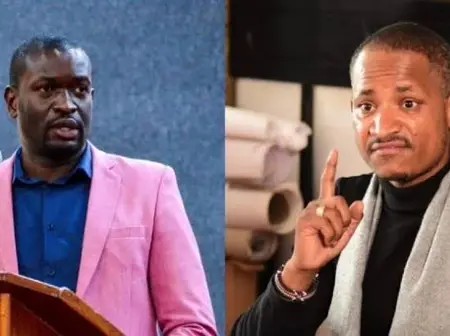
    Mary Njoroge has urged Nairobi Senator Edwin Sifuna to support Embakasi East MP Babu Owino's ambition to become Nairobi governor in the 2027 General Election, warning against fielding another candidate for the same position.

    In her remarks, Njoroge argued that if Sifuna genuinely values his political friendship with Babu, he should avoid presenting a competing candidate in Nairobi.

    "If Sifuna loves his brother Babu, he should not field a governor candidate in Nairobi," she stated.

    Her comments come as the two leaders continue pursuing different political ambitions under the Linda Mwananchi Movement.

    Sifuna has been positioning himself as a potential presidential candidate in the 2027 elections, while Babu has openly declared his intention to contest the Nairobi gubernatorial seat.

    Babu has repeatedly expressed support for Sifuna's presidential ambitions, maintaining that their political interests should not put them against each other.

    During earlier engagements, the Embakasi East MP explained that he wanted to build a strong political party capable of securing enough support in the Nairobi County Assembly to help him govern effectively if elected.

    He has also maintained that having different political parties does not necessarily mean the two leaders cannot work together.

    However, the question of who will control Nairobi politics remains an important issue as different political groups prepare for the next general election.

    The Nairobi governor's position is particularly important because several opposition parties are expected to negotiate over candidates and political support in the capital.

    Other leaders have also expressed interest in the seat, raising questions about possible alliances and whether the opposition can agree on one candidate.

    Njoroge's remarks add to the ongoing discussion about political loyalty, friendship and power-sharing within Linda Mwananchi.

    With the 2027 elections approaching, will Sifuna's camp fully support Babu's Nairobi governor ambitions?

  • Rigathi Gachagua emerge as the main figure responsible for opposition disagreements at 43% – TIFA survey

    Rigathi Gachagua emerge as the main figure responsible for opposition disagreements at 43% – TIFA survey

    thumbnail

    Former Deputy President Rigathi Gachagua has emerged as the politician most frequently blamed for disagreements among opposition leaders, a new opinion poll by TIFA Research and Consulting shows. The poll, conducted between October 26 and November 5, said 43 per cent of the respondents attributed the divisions to him.

  • “They Don’t Recognize Women Leaders” – Presidential Aspirant Reacts To Tifa Poll That Put Sifuna Top

    “They Don’t Recognize Women Leaders” – Presidential Aspirant Reacts To Tifa Poll That Put Sifuna Top

    Imarisha Uchumi Party leader Justina Wamae has criticised the latest TIFA Research survey for ignoring women leaders. She claimed she remains the most preferred presidential candidate.

    In a post shared on November 12 2026 shortly after the poll’s release Wamae described TIFA Research as very misogynistic. She said the firm has never recognised women leaders. She insisted that she is the most preferred candidate and tagged the post with her movement’s slogan #inatuhusu.

    The TIFA survey was released the same day. It placed President William Ruto and Nairobi Senator Edwin Sifuna jointly at 31 per cent as preferred 2027 presidential election winners.

    Kalonzo Musyoka followed at 9 per cent while Fred Matiang’i stood at 5 per cent and Rigathi Gachagua at 4 per cent. Fifteen per cent of respondents were undecided. No female candidate featured among the named frontrunners.

    Wamae served as running mate to George Wajackoyah on the Roots Party ticket in the 2022 election. She declared her presidential bid on October 25 2026 while launching the Imarisha Uchumi Party in Nairobi.

    The party is fully registered by the Office of the Registrar of Political Parties. It operates under the slogan Inatuhusu which means It Concerns Us. She has positioned it as a vehicle for economic reform. This includes abolishing the Affordable Housing Levy and refunding contributions to those who opt out.

    Her response to the poll highlights ongoing debate about gender representation in Kenyan opinion research. Wamae has argued for leadership based on ideas and competence rather than gender quotas. She maintains that women leaders continue to be sidelined in mainstream political measurements.

    The criticism adds another voice to the reactions surrounding the TIFA findings as the 2027 contest takes clearer shape.

    https://www.facebook.com/share/1NXwZLDJjw/

  • Matatu Operators Face Setback as MPs Reject Digital Traffic Ticketing Proposal

    Matatu Operators Face Setback as MPs Reject Digital Traffic Ticketing Proposal

    Matatu operators may have to wait longer for digital traffic ticketing and protection against repeated roadside police stops, after Parliament rejected proposals seeking to introduce the changes through amendments to the Traffic Act.

    The Matatu Owners Association (MOA) had asked lawmakers to introduce digital traffic enforcement systems, including electronic ticketing and digital records, through cooperation between the National Police Service (NPS) and the National Transport and Safety Authority (NTSA).

    The association argued that adopting digital systems would improve the way traffic offences are recorded and handled. It also hoped the changes would reduce reliance on manual processes during roadside inspections.

    Under the proposal, traffic officers and transport authorities would work together to maintain digital records of offences and enforcement actions, making it easier to track cases involving motorists and public service vehicles.

    Matatu operators also sought safeguards against what they described as unnecessary repeated police stops while vehicles were carrying passengers along their designated routes.

    Their recommendations included clearer guidelines on roadside checks and restrictions on officers stopping the same vehicle repeatedly without sufficient reason.

    However, the Departmental Committee on Transport and Infrastructure declined to include the proposals in the Traffic (Amendment) Bill, 2026.

    The committee reportedly argued that the recommendations fell outside the scope of the proposed legislation and could not be accommodated through the amendments under consideration.

    The Bill is mainly focused on regulating the period police officers can detain vehicles and motorcycles seized during traffic-related investigations.

    It does not seek to establish a new digital traffic enforcement system or introduce broader rules governing roadside inspections.

    The decision means the matatu association's proposals will not form part of the current amendment process, leaving operators without the changes they had requested under the Bill.

    For public service vehicle operators, the rejected proposals had been aimed at addressing concerns over how traffic offences are handled and the frequency of police checks during daily operations.

    The committee's position, however, was that the issues raised by the association were beyond the specific purpose of the proposed amendments.

    LINK: https://www.kenyans.co.ke/news/129324-mps-reject-matatu-owners-proposals-ntsa-digital-fines-police-stops?fbclid=IwZXh0bgNhZW0CMTEAcGRvZgRzcnRjBmFwcF9pZA80MDk5NjI2MjMwODU2MDkAAR8DzBPd4-qQZZZCR4VfhbDIa5wftU_Y5E3kE_R8QDNP8jV0NnpUmUjtkFKZeQ_aem_vcriBW75V1XWCYraORX7YA

  • Bad News for Gachagua as Latest Poll Puts His 2027 Political Ambitions Under Scrutiny – Details

    Bad News for Gachagua as Latest Poll Puts His 2027 Political Ambitions Under Scrutiny – Details

    Democracy for the Citizens Party (DCP) leader Rigathi Gachagua has recorded a decline in his support as a preferred presidential candidate ahead of the 2027 General Election, according to the latest TIFA Research opinion poll.

    The findings released on Thursday, November 12, 2026, show that Gachagua's popularity has dropped from nine per cent in May 2026 to four per cent in November.

    The latest figures represent a five-percentage-point decline in support for the former Deputy President, who has been positioning himself as one of the key opposition figures seeking to challenge President William Ruto.

    The decline comes despite Gachagua's continued political activities through DCP, where he has been mobilising supporters and building alliances ahead of the next general election.

    In June 2026, his support had already fallen to seven per cent, suggesting that the latest rating continues a downward trend recorded in the previous survey.

    The poll also comes at a time when opposition leaders are facing questions about unity and their preferred presidential candidate for 2027.

    Meanwhile, President Ruto and Nairobi Senator Edwin Sifuna have emerged as joint frontrunners in the latest survey, each recording 31 per cent support.

    Other opposition figures, including Wiper leader Kalonzo Musyoka and former Interior Cabinet Secretary Fred Matiang'i, have also recorded lower ratings compared with their previous high points.

    Gachagua, however, continues to command support within his political base. The June survey showed that 44 per cent of DCP supporters preferred him as their presidential candidate.

    The latest findings do not mean that Gachagua has lost his political influence, but they highlight the challenge he faces in attracting wider national support.

    With political alliances taking shape and leaders preparing for the 2027 contest, the coming months will be important in determining whether Gachagua can reverse the decline and strengthen his position.