According to Karangu, the cornea in Baba Talisha's left eye has been badly damaged, and he is now awaiting a transplant. He further revealed that doctors have recommended that he travel to India for specialised medical treatment.
"Dear friends, this great man Baba Talisha is seriously sick. For now, the left eye has melted its cornea, awaiting transplant. Doctors have now referred him to India for further medication. Please, let's pray for him and support him through his number," Karangu stated.
Karangu did not hide his concern as he called on people to come together and help the content creator during this challenging period. He encouraged well-wishers to pray for him and also contribute financially towards his treatment.
The latest development comes just a few weeks after Baba Talisha's health situation became a subject of public discussion. His struggles have continued to attract the attention of social media users, many of whom have followed his journey and interactions with other content creators.
The recommendation to seek treatment in India could mark an important step in his recovery journey, especially as he awaits a cornea transplant.
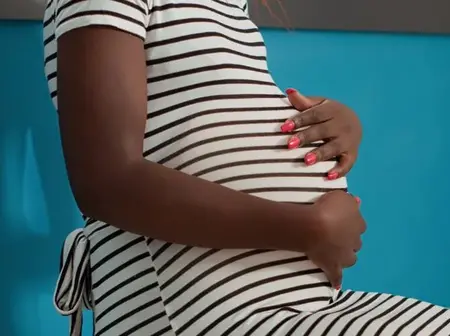
Listen to articleThe latest findings show stronger links between exposure and reduced fertility, problems with reproductive development and impaired brain function.Exposure to chemicals that interfere with the body's hormones can begin before birth and have lasting effects on children's brain development, growth and reproductive health, with research increasingly linking them to a wider range of health problems.
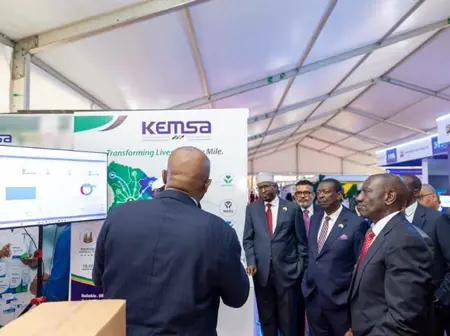
Developed alongside the Ministry of Health, the platform monitors medical commodities at every stage – from the moment they leave manufacturers to their arrival in warehouses, public health facilities, and ultimately, patients’ hands.
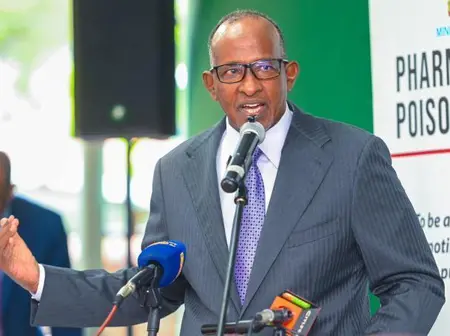
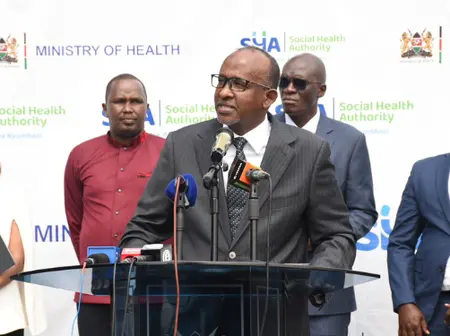
Speaking at a press briefing at KEMSA’s Nairobi offices, Chief Executive Officer Dr. Waqo Ejersa explained that the technology boosts accountability by creating an end-to-end digital trail for every medical item.
“This technology is a game changer in the management of medical supplies. It will ensure every product can be tracked from the manufacturer to the final patient, strengthening accountability across the supply chain,” Dr. Waqo said.
To monitor individual medical items, the platform uses GS1 DataMatrix barcodes. Each scannable code stores vital product details, including:
Product identification data
Batch numbers
Expiry dates
Unique serial numbers
By scanning these codes at key transit points, authorities can trace each item’s exact journey, spot irregularities early, and pinpoint precisely where missing supplies go.
To keep stock levels accurate, KEMSA will connect this tracking tool directly to its Enterprise Resource Planning (ERP) platform and the National Logistics Management Information System. This unified setup improves inventory management, increases real-time visibility, and streamlines how teams coordinate deliveries nationwide.
Beyond digital barcodes, KEMSA is introducing physical security upgrades to protect high-value medical cargo on the road. Drivers and logistics teams will use geo-fenced electronic locks, which only open at authorized delivery destinations, alongside electronic proof-of-delivery systems to verify handoffs.
Dr. Waqo noted that these combined reforms directly target the vulnerabilities that previously enabled drug diversion, giving officials the data they need to catch suspicious activity and hold bad actors responsible.
“Our goal is to seal loopholes that have previously allowed medical supplies to be diverted. With this system, every movement will be traceable, making it easier to detect irregularities and safeguard essential medicines,” he said.
The rollout arrives just ahead of a major industry milestone: all manufacturers and suppliers working with KEMSA must meet international GS1 identification standards by December 31, 2026.
Through these sweeping supply chain reforms, KEMSA aims to increase operational transparency, safeguard taxpayer resources, and ensure life-saving medicines consistently reach the Kenyan communities that depend on them.
Every year, thousands of candidates celebrate the end of their four-year secondary school journey. Yet for 22-year-old Fyonnah Wanjiku Kabitta, completing her Kenya Certificate of Secondary Education (KCSE) examinations marks the end of an extraordinary eight-year journey.Battling chronic kidney failure since childhood, Wanjiku has spent nearly a decade balancing hospital visits, international medical trips and classroom sessions to finally reach the finish line.
CountdownKenya has achieved 100 per cent coverage in tracing all identified Ebola contacts, bringing the country closer to an anticipated declaration of being Ebola-free.Kenya has achieved 100 per cent coverage in tracing all identified Ebola contacts, bringing the country closer to an anticipated declaration of being Ebola-free on December 23.
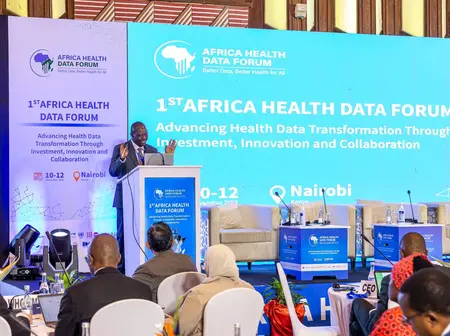
Nairobi, Kenya: On a screen displaying Africa’s health indicators, Dr. Benson Droti moves between country profiles, performance dashboards and interactive data tools. With a few selections, he pulls up Kenya’s health information, compares its performance with other countries and demonstrates how policymakers can track progress towards global health targets.
Medical practitioners in public hospitals benefit from structured salary scales negotiated through agreements between the government and their union. Those working in private hospitals, on the other hand, often negotiate their remuneration based on experience, specialisation and institutional budgets.
Figures cited in the available salary estimates place monthly gross earnings for doctors in the public healthcare sector between approximately KSh206,000 and KSh1.4 million, depending on their professional level and employment terms.
How much doctors earn in public hospitals
Doctors employed by the national government and county administrations receive salaries determined by their professional grades and applicable employment agreements.
Their remuneration has been influenced by several Collective Bargaining Agreements (CBAs) negotiated between the Kenya Medical Practitioners, Pharmacists and Dentists Union (KMPDU) and the government.
The May 2024 agreement was part of efforts to address doctors' remuneration and working conditions following years of negotiations and industrial disputes.
According to the salary estimates provided, medical interns earn approximately KSh206,000 to KSh208,000 monthly, although their actual remuneration depends on the applicable employment terms.
Entry-level doctors working in lower-tier public health facilities are estimated to earn approximately KSh206,000 monthly.
Those stationed in major referral hospitals can receive considerably higher packages, with some estimates placing their monthly gross remuneration at up to KSh413,785.
Senior specialists and experienced consultants occupy higher salary grades, with remuneration potentially reaching KSh1.4 million monthly at the upper end of the reported public-sector estimates.
These figures should not be interpreted as uniform take-home salaries because deductions, individual allowances and employment arrangements affect the final amount received.
Allowances that increase doctors' earnings
Apart from their basic salaries, medical practitioners receive various allowances intended to compensate them for additional responsibilities, working conditions and living expenses.
These benefits can significantly increase their overall monthly remuneration.
The reported allowance estimates include:
Emergency call allowance: KSh72,000 to KSh80,000.
Housing allowance in Nairobi: KSh28,000 to KSh80,000.
Housing allowance outside Nairobi: KSh16,500 to KSh60,000.
Health risk allowance: Approximately KSh20,000.
Non-practice allowance: KSh18,000 to KSh40,000.
Commuter allowance: KSh8,000 to KSh20,000.
Annual leave allowance: KSh6,000 to KSh10,000.
However, not every doctor qualifies for all these allowances. Eligibility and payment rates depend on the applicable employment agreement, job grade and individual circumstances.
Why doctors in different regions earn different amounts
A doctor's workstation can influence the overall compensation package, particularly through housing and hardship-related allowances.
Medical professionals working in Nairobi and other major urban centres may receive higher housing benefits because of the relatively high cost of accommodation.
Those deployed to remote and hardship areas may qualify for additional incentives intended to attract and retain qualified medical personnel.
The differences mean that two doctors with similar professional qualifications may receive different overall packages depending on their employment grades and duty stations.
How much doctors earn in private hospitals
Unlike the public healthcare sector, Kenya's private hospitals do not operate under one standard salary structure for all doctors.
Their remuneration depends on institutional budgets, professional experience, specialisation, workload and individual negotiations.
Specialists generally command higher compensation than general practitioners because of their advanced training and the complexity of the medical procedures they perform.
For instance, surgeons, neurosurgeons and other highly specialised practitioners may earn considerably more than doctors beginning their careers.
The available estimates also highlight substantial differences among some of the country's leading private healthcare institutions.
At Aga Khan University Hospital, reported monthly earnings for specialist general surgeons range between approximately KSh181,000 and KSh217,000, while another category of general surgeons is estimated to earn between KSh694,000 and KSh800,000.
At The Nairobi Hospital, surgeons are reported to earn approximately KSh979,000 to KSh1 million monthly.
These figures are indicative estimates rather than verified, standardised salary scales published by the hospitals. Actual remuneration may differ depending on the practitioner's position, experience and contractual arrangement.
Some doctors in private practice also work across multiple healthcare facilities, making their total professional earnings difficult to establish through individual hospital salary estimates.
How much nursing and clinical officer interns earn
The healthcare sector also has different remuneration arrangements for professionals undergoing supervised clinical training.
According to the SRC-related estimates cited in the report, degree-holding nursing interns are recommended to receive between KSh35,000 and KSh50,000 monthly.
Diploma-level clinical officer interns are estimated to earn between KSh27,000 and KSh35,000, while those with degrees have reported recommended monthly stipends ranging from KSh35,000 to KSh50,000.
These are separate professional categories and should not be confused with the remuneration of fully qualified doctors.
What determines a doctor's salary in Kenya?
Several factors influence how much a medical practitioner earns in the country.
Professional qualifications and specialisation are important because advanced training can open opportunities in higher-paying medical positions.
Experience also matters, with senior doctors and consultants generally occupying higher professional grades than newly qualified practitioners.
The type of employer is another major consideration. Government facilities follow structured remuneration arrangements, while private institutions determine compensation through their respective employment policies and negotiations.
Overall, doctors' earnings in Kenya vary widely across public and private healthcare facilities. While the reported figures show that senior specialists can command substantial monthly packages, the actual amount received depends on an individual's position, employer, allowances and statutory deductions.
FCPA Hesbon Omollo has welcomed improvements in cancer treatment coverage under the Social Health Authority (SHA), saying the increase in benefits is an important step towards easing the financial burden on patients and their families.
Speaking on Citizen TV’s Daybreak, Omollo noted that the annual cancer treatment package had increased from KSh500,000 to KSh800,000, giving patients access to more financial support during treatment.
The enhanced package was officially raised from KSh550,000 to KSh800,000, effective December 2025.
It covers services including oncology consultations, chemotherapy, radiotherapy and specialised diagnostic procedures.
“SHA is a good programme, with improvements such as the increase in cancer cover from KSh500,000 to KSh800,000,” Omollo remarked.
He, however, warned that the long-term sustainability of Taifa Care would depend on expanding contributions, particularly from workers in the informal sector.
Omollo observed that about 83 per cent of Kenya’s economy is informal, leaving many workers without regular payslips and making it difficult to collect contributions consistently.
He argued that the government should consider using tax revenues through the national budget to bridge funding gaps and strengthen healthcare financing.
“Healthcare is a right, and the government must consider using tax resources through the national budget to bridge the funding gap and support SHA,” he stated.
Omollo also highlighted the need to invest in primary healthcare, noting that it serves some of the most vulnerable Kenyans who need affordable services.
He compared the former National Health Insurance Fund (NHIF) with SHA, noting that NHIF’s highest annual hospital reimbursements stood at about KSh25 billion, while SHA had paid KSh178 billion by August 2026 since its launch in October 2024.
The latest Treasury health sector report placed cumulative SHA payments at KSh197.7 billion by September 30, 2026, with more than 33 million Kenyans registered.
At the same time, political analyst Fred Okang’o also called for sustainable financing, noting that the government had taken responsibility for premiums for about 2.3 million vulnerable Kenyans.
He urged authorities to address concerns over deductions among salaried workers and focus on the number of active contributors, rather than registration figures alone.
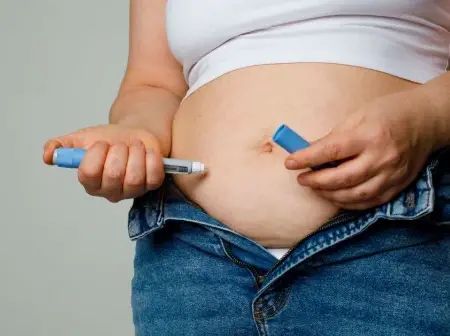
Dr Lyudmila Schukina, a weight-loss specialist at Nairobi Bariatric Centre, says the medications are generally recommended for adults living with obesity or those who are overweight and have related health complications.
According to the specialist, doctors assess several factors before prescribing the injections. These include a patient's body mass index (BMI), waist circumference, medical history, general health and previous attempts to manage their weight.
Generally, adults with a BMI of 30 or above may qualify for the treatment. Those with a BMI of 27 or higher may also be considered if they have conditions such as type 2 diabetes, high blood pressure, high cholesterol or sleep apnoea.
However, Schukina says people who are already at a healthy weight and only want to lose about five kilogrammes to improve their appearance should not use the injections for that purpose.
She emphasises that the medications are medical treatments rather than lifestyle products that people should take because they are fashionable.
Before prescribing the injections, doctors conduct a medical assessment to determine whether a patient is suitable for treatment.
Schukina says the evaluation includes checking weight, BMI, blood pressure and existing medical conditions. Doctors also review medications a patient may already be taking.
Blood tests are conducted to assess blood sugar levels, kidney function and, in many cases, liver function and cholesterol.
Patients are also asked about previous medical conditions, including pancreatitis, gallbladder problems and stomach disorders. Pregnancy is another important consideration because the medications should not be used during pregnancy.
The specialist further cautions against prescribing the drugs to people with certain rare thyroid cancer conditions, particularly medullary thyroid cancer and multiple endocrine neoplasia type 2 (MEN2).
Patients with serious problems involving stomach emptying or a history of pancreatitis may also require careful medical consideration before treatment.
GLP-1, short for glucagon-like peptide-1, is a hormone naturally produced by the body. It plays a role in regulating blood sugar and appetite.
Medications that mimic its effects were initially developed to help manage type 2 diabetes. However, doctors later observed that patients taking them also experienced significant weight loss, leading to further research and the development of formulations specifically approved for weight management.
Semaglutide, sold under brand names such as Ozempic and Wegovy, acts on the GLP-1 hormone. Tirzepatide, marketed as Mounjaro, works on two hormones: GLP-1 and GIP.
The financial commitment is another factor patients are encouraged to consider before starting treatment.
According to Schukina, treatment costs in Kenya begin at approximately KSh45,000 per month for the initial dose. The amount may increase as the dosage is gradually adjusted and depending on the clinic providing the service.
She warns that the treatment should not be viewed as a one-month programme. Many patients require several months of medication, while others may need to continue for longer.
Doctors therefore encourage patients to understand the expected costs and treatment requirements before making a decision.
As demand for weight-loss injections grows, the specialist's message is that medical assessment should come before the desire to achieve a particular body shape. People considering the medications should consult qualified healthcare professionals rather than obtaining injections from beauty parlours or using them without proper supervision.
Ultimately, the decision to use weight-loss medication should be based on an individual's health needs and medical suitability, not simply the pressure to lose a few kilogrammes.
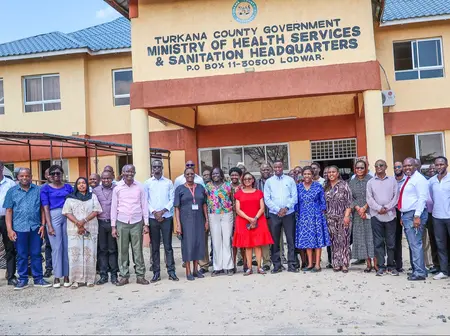
The milestone positions Turkana to tap into early disbursements under the joint Kenya–World Bank health financing framework, specifically anchored around the Building Resilient and Responsive Health Systems (BREHS) programme.
Designed to strengthen primary healthcare, upgrade Level 2 and Level 3 facilities, and bolster community health services, the funding targets grassroots clinics that serve as the first point of care for thousands of residents.
In addition to general county allocations, Turkana stands to benefit from specialized refugee-host community health support—a critical lifeline given the vast medical needs around Kakuma and Kalobeyei.
Qualification for the inaugural tranche required county governments to sign Implementation Partner Agreements and meet strict fiduciary, procurement, and operational readiness benchmarks set by the Ministry of Health and the World Bank.
While 45 counties successfully met the compliance threshold to unlock the first wave of disbursements, two counties missed out on the initial rollout due to pending administrative and reporting requirements.
For Governor Jeremiah Lomorukai’s administration, securing a spot in the first batch marks a significant win in efforts to bridge long-standing healthcare gaps across one of Kenya’s largest and most remote counties.
The incoming funds are expected to help ease persistent shortages of essential medicines, improve maternal and newborn care, and equip community health promoters operating across Turkana’s six sub-counties.
Speaking during recent high-level review engagements with World Bank officials, Health Cabinet Secretary Aden Duale emphasized that the funds come with tight accountability guardrails.
Counties receiving the cash must maintain transparent financial management, timely procurement reporting, and strict ring-fencing of resources to ensure every shilling translates into tangible medical services for citizens.
With the first batch of funds now unlocked, attention turns to county health executives to swiftly deploy the resources and deliver visible improvements across Turkana’s dispensaries and sub-county hospitals.