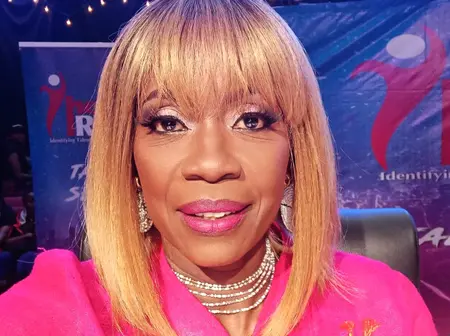
Doctors have finally established what caused the death of 86-year-old Dorita Lasinder Macharia, the mother of former KTN presenter Regina Wambui Gitao, popularly known as Regina Re, following a postmortem examination at Lee Funeral Home.
Dr Midia also disclosed that the examination revealed several other cuts on different parts of the elderly woman's body.
He announced the findings on Tuesday, November 3, 2026, after the postmortem examination, which lasted more than two hours.
Dorita died on Friday evening, October 30, 2026, at her home in Nairobi's Loresho estate. Her death prompted police investigations, which later led to the arrest of four people linked to the case.
On Monday, November 2, Regina Re and three other relatives appeared before the Kibera Law Courts as detectives sought more time to investigate the killing.
However, the court allowed police to hold them for 10 days as investigations continued.
The four suspects have not been convicted, and detectives are still working to establish the circumstances surrounding Dorita's death.
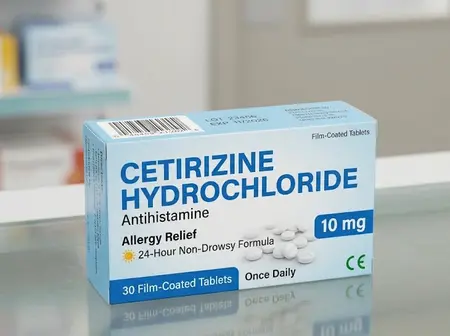
Cetirizine is a commonly used antihistamine that helps relieve allergy symptoms such as sneezing, a runny nose, itchy eyes and skin reactions.The medicine is often used by people experiencing hay fever, dust allergies, hives and other allergic reactions. It works by blocking histamine, a chemical released by the body during an allergic reaction.
Cetirizine has become a topic of discussion among Kenyans online following claims that the commonly used allergy medication can cause dryness and affect women’s natural lubrication.The conversation has sparked curiosity about what happens to the body after taking the drug, particularly its effects on moisture levels, alertness and other bodily functions.
The Ministry of Health has announced a major milestone in the response to the Ebola outbreak, with five more patients recovering and being discharged from hospital after successfully completing treatment.In an update on Tuesday, November 3, the Ministry said the five male patients, two from Kenyatta National Hospital (KNH) and three from The Nairobi Hospital, had tested negative for the virus after completing treatment and remaining free of symptoms.
The expert has highlighted seven little-known ways people could save(Image: Getty)
With the autumn budget announcing an increase to the National Living Wage by 3.9% to £13.21 per hour, a health expert is urging Brits to check their eligibility for several savings and allowances. They say many people could be saving hundreds of pounds spent every year on glasses, contacts and eye health.
Krina Halai, Dispensing Optician at Feel Good Contacts is urging people to check eligibility for £3,250 allowance and NHS vouchers. She said: "With the cost-of-living stretching people's finances further than ever, it's important families are aware of the support that is available to them."
She added: "If you are unsure whether you qualify, you can speak to your optician who will be able to explain the options available as per your individual circumstances." Below is a run-down of everything you need to know.
Krina says: “People living with sight loss could be entitled to the Blind Person's Allowance – an added tax-free allowance to the yearly Personal Allowance, for those registered and certified as severely sight impaired (SSI). Instead of being an outright £3,250 payment, the allowance increases the amount of income you can receive before paying Income Tax, from which you could potentially transfer the unused portion to a spouse.
"To qualify in England and Wales, you must have a valid certificate that acknowledges you're blind or severely sight impaired completed by a consultant ophthalmologist. A similar certification process is applicable for those living in Scotland and Northern Ireland."
People who are working can still apply for the NHS Low Income Scheme
Krina says: “Before paying full price for your next pair of glasses, it’s worth checking whether you’re entitled to NHS help. Depending on your circumstances and prescription, you could receive an optical voucher worth anywhere between £42.50 to £233.56 towards glasses.
“Children and some young people in full-time education can qualify, while those on the NHS Low Income Scheme may receive partial or full help along with the cost of prescription glasses or contact lenses."
You can apply even if you’re working and earning a salary, so don’t assume you’re not eligible, as both full and partial help can be given depending on the criteria. Krina says: "To apply, your total savings can't exceed more than £16,000, however, it's useful to know that any help you're entitled to is also available to your partner and dependent children.
"If rising costs are making eye care harder to afford, then it's definitely worth checking if you can apply for the NHS Low Income Scheme, as you may be granted full or partial help depending on your circumstances."
If you've recently paid for an eye test, glasses or contact lenses, don't assume it's too late to be able to get help with the cost. Krina says: "If you find out later that you were entitled to NHS support after you’ve paid, then you may be able to claim some or all of the cost back.
"There's a three-month time limit from the date you paid, so it's worth checking your eligibility sooner rather than later and keeping hold of any receipts."
Those who have already paid for eligible eye care may have just three months to claim costs back
Krina says: “If you have been formally diagnosed with glaucoma, you could be entitled to a free NHS sight test. If you're aged 40 or over and have immediate-family history of glaucoma, then you can also qualify., You may also be entitled if an ophthalmologist has advised you that you're at risk of developing the condition."
Krina says: “Children's glasses can very easily get lost or damaged, particularly at school or while playing sports, but parents shouldn't automatically assume that they have to pay the full replacement costs themselves. Those under 16 may be entitled to an NHS optical repair or replacement voucher towards glasses or contact lenses that have been lost or damaged.
"There are conditions attached, including whether the glasses are already covered by a warranty or insurance policy, so parents should check before buying a replacement."
Krina says: “People with high or complex prescriptions might be eligible for added NHS support even if they don't qualify for any of the other schemes. The NHS complex lens voucher is available to those who need complex lenses, including prescriptions of +10/–10 dioptres or more.
"The vouchers are currently worth £15.81 towards single-vision lenses and £40.57 towards bifocal lenses. While it may not cover the entire cost of your glasses, it is worth speaking to your optician to check if you meet the criteria." For more information on the eye care support available, please visit: https://www.feelgoodcontacts.com/eye-care-hub
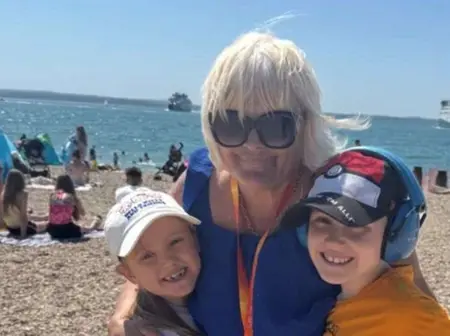
Debbie Tomlinson was a beloved grandmother(Image: Cover Images)
A “bubbly, strong and fearless” mum has died after a four-year battle with bowel cancer which doctors initially mistook for irritable bowel syndrome (IBS).
Debbie Tomlinson, 62, passed away after the disease spread to her lymph nodes, liver, bowel and knee, despite undergoing surgery and extensive treatment.
After enduring several rounds of chemotherapy, Debbie eventually made the heartbreaking decision to stop treatment so she could spend what time she had left making memories with her family. Her loved ones said their final goodbyes at her funeral on Friday October 23, with daughter-in-law Amy Tomlinson describing the service as “joyful rather than sad”. Amy said: "We gave her the send-off she would've wanted."
The tragedy comes as awareness for bowel cancer is being raised following the death of Olympic athlete Ciara Mageean at the age of just 34.
Family members, some of whom pictured, have paid tribute to Debbie(Image: Cover Images)
The family, though, are now facing a £3,000 shortfall in funeral costs. Debbie's son, Rhys, contributed £1,500 towards the arrangements, but he and his wife Amy are appealing for public support to help cover the remaining amount.
Amy said Debbie had initially visited her GP with concerns about persistent symptoms, including bloating, stomach pain and difficulty going to the toilet.
But for more than a year, her symptoms were attributed to IBS and general stomach problems, with no further investigations, Amy claimed. She said: "All they put it down to was IBS and tummy problems."
Debbie was eventually diagnosed with bowel cancer after a routine screening kit returned an abnormal result. The hospital contacted her and arranged further tests, which confirmed the devastating news. Despite the delay, Amy said Debbie never allowed anger to consume her.
“The way Debbie was, she was never angry. She just lived her life. She was just like, 'It is what it is',” the grieving daughter-in-law, from Reading, Berkshire, said.
Debbie 'lived for' her grandchildren, her relatives said(Image: Cover Images)
Following her diagnosis, Debbie underwent surgery in Reading to remove the cancer, followed by radiotherapy and chemotherapy, which she found extremely difficult.
Although she missed her final chemotherapy session, Debbie was led to believe her treatment was over and everything was “done and dusted”, Amy, who has shared to reporters photos the family is happy the media use, explained.
But in October 2024, a routine scan revealed the cancer had spread to her liver. Debbie was referred for specialist treatment in Basingstoke, where she underwent another operation to remove the cancer from her liver. Doctors subsequently told her there was no evidence of disease.
However, the relief was short-lived. In January 2025, another routine scan revealed the cancer had returned to her bowel. Doctors proposed further surgery which would remove the cancer but also involve removing several vital organs.
“It would've been a long recovery, but Deb was up for it,” Amy said.
Between January and February, Amy accompanied her mother-in-law to appointments and scans at several hospitals as they waited for news about the proposed operation. Then, in February 2025, the family received a devastating phone call informing them the surgery could not go ahead and Debbie's cancer was terminal.
She was offered chemotherapy, which she initially agreed to try again, but the side effects quickly became too much. Eventually, Debbie decided she would rather spend her remaining time with her family than continue treatment that was leaving her unable to enjoy life.
Amy explained: “She decided she couldn't do it, because if she did the chemo, she had no life, but if she didn't do it, at least she had a life where she could go and do things."
The chemotherapy left Debbie struggling to get out of bed and also caused hair loss, something which particularly upset her because of how much she loved her hair.
Amy said: "It's quite rare to lose hair after one session. It's normally a build-up of several sessions, so that really affected Deb because she really loved her hair, and she was also so poorly.
Despite knowing her illness was terminal, Debbie remained determined to make the most of the time she had left.
She enjoyed days out and precious moments with her family, particularly her grandchildren, Logan and Thea, whom Amy said she “lived for”.
Remembering the 62-year-old, Amy paid tribute to a woman whose personality and sense of humour left an unforgettable mark on those around her.
“She had her own way of doing things, her own sense of humour and a personality that could never be replaced,” she said.
And in a touching final tribute, Amy revealed the family could almost picture Debbie enjoying some of her favourite things wherever she is now.
“We know that wherever she is now, she'll be having a WKD Blue, a fag and a Fab for us all – and probably wondering what on earth we're all making such a fuss about."
To donate to the family's GoFundMe page, use this link.
Kenya is preparing to conclude its Ebola monitoring exercise this week, with 52 people still under quarantine expected to be released after completing the required observation period.Health Cabinet Secretary Aden Duale said the country has not recorded any new confirmed infections since October 19.The Ministry of Health said the outbreak resulted in nine confirmed cases and two deaths, with all infections traced to a single cluster linked to a patient who had travelled from the Democratic Republic of Congo (DRC).
Dozens of health workers hired under a Global Fund programme have gone unpaid for 19 months, forcing some to abandon medical treatment, pull children out of school, or rely on spouses and well-wishers to survive.
Sophie Yogo, a medical laboratory technologist at Karachuonyo County Hospital laboratory in Homa Bay County, says she is among dozens of health workers supported by the Global Fund who have gone nearly 20 months without pay.
Dr Ranj Singh gave an update to BBC Morning Live viewers(Image: BBC)
A BBC doctor has given an update on so-called ‘American Covid’ – the prevalent XFG variant which is sweeping the UK causing an increase in hospitalisations this season – and said there are specific symptoms to watch out for. The UK Health Security Agency (UKHSA) monthly figures show in October a total of 8,518 people contracted Covid, a 40 per cent increase on September which saw 5,201 cases overall.
A total of 1,847 Covid-19 cases were identified in hospital settings in the seven days up to 27 October, decreasing from 2,151 cases in the previous week, according to the latest UKHSA data.
Although weekly cases have declined, the number of deaths recorded in the week to October 16 increased by 25 per cent to 69 from 55 the previous week.
Appearing on BBC Morning Live this week Dr Ranj Singh said: “Many people will have heard of so-called American COVID. It’s being used to describe the XFG variant, which is a Omicron descendant. No evidence at the moment that it’s any more serious than other Omicron descendants. COVID, it’s it’s the SARS KV2 virus. Respiratory spread again much like other viruses.”
He said infections were ‘mild to moderate’ for most people but warned it could be severe in particular groups, especially the vulnerable.
The UKHSA said: “XFG – sometimes referred to in the media as the Stratus variant – remains the most common current COVID-19 variant. XFG has also been referred to as ‘American Covid’ in some media coverage.
“The name reflects where the strain was first sequenced and detected, rather than necessarily where it originated.”
Dr Singh reminded people of three key symptoms which could indicate people have Covid rather than other seasonal illnesses. He said: “Remember for this um the loss of smell and taste. And also the gastrointestinal symptoms are quite predominant in COVID.”
For preventing American Covid, Dr Singh said people should consider masks: “Prevention again we’ll talk about ventilation really important, hygiene is really important. Masks in high-risk situations, especially if you’re around very very vulnerable people and again COVID vaccination is being offered to certain high-risk groups.”
UK Health Security Agency (UKHSA) data shows that COVID-19 positive test rates rose to around 7% in September, with hospital admission rates increasing by approximately 50% over the same period. UKHSA said increases have been observed consistently across England, Scotland, Wales and Northern Ireland, as well as across Europe and the United States, ‘indicating this is not a localised trend’.
Ensure our latest health headlines always appear at the top of your Google Search by making us a Preferred Source. Source in your Google search settings
It added: “Current data does not indicate that these variants lead to more severe illness than other variants in circulation. UKHSA monitors a range of surveillance systems, including GP appointments, A&E attendances and hospitalisations, alongside genomic sequencing, to track how variants are behaving.
“As increases in hospitalisations are rising in line with overall increases in COVID-19 circulation – rather than rising sharply on their own – this suggests a general increase in COVID-19 activity rather than a variant causing more severe disease.”
In terms of explaining the increase the UKHSA said: “There are likely to be several factors behind the current rise. As we move into winter, colder and wetter weather means people spend more time indoors, which enables the spread of respiratory viruses. It has also been roughly a year since the last significant COVID-19 wave, so immunity from vaccination and previous infection may be waning in parts of the population, making people more susceptible.”
UKHSA says if you have symptoms of a respiratory infection, such as COVID-19, and you have a high temperature or do not feel well enough to go to work or carry out normal activities, you should avoid contact with vulnerable people and stay at home if possible. For those of us who absolutely can't stay at home, the guidance remains unchanged, and will reduce the chance of passing on your infection to others:
Listen to articleDr Amoth urged communities to welcome discharged patients and contacts without discrimination, emphasising that those who complete quarantine without developing symptoms pose no risk to others.Five Ebola patients have been discharged from hospital after recovering from the Bundibugyo virus, as Kenya steps up efforts to contain the outbreak.