
Listen to articleDr Amoth urged communities to welcome discharged patients and contacts without discrimination, emphasising that those who complete quarantine without developing symptoms pose no risk to others.Five Ebola patients have been discharged from hospital after recovering from the Bundibugyo virus, as Kenya steps up efforts to contain the outbreak.
Category: Health
-

Obidan Dela reveals latest update on Geoffrey Mosiria’s health
TikToker Obidan Dela has shared a positive update on the former Nairobi County Chief Officer Geoffrey Mosiria, who was recently admitted to hospital, revealing that he is stabilising and has started eating as he continues to recover.In a video shared on his Instagram page on Monday, November 2, 2026, Obidan said Mosiria was doing better and thanked those who had shown concern about his condition.
-

Energy drinks may pose serious heart risks for young adults, new study warns
A new study has indicated potential health risks which may be associated with caffeinated energy drinks, including an increased risk of heart problems.
The American Heart Association has conducted the research, which examined over 28,000 reports covering a time scale of eight years.
These reports were sent to a database held by the Food and Drug Administration (FDA), and looked at adverse events, though the findings have not been published in a peer reviewed journal at present.
Part of the data allowed them to compare incidences of cardiac arrest with energy drinks and supplements that contained caffeine with such as caffeine pills or powders used prior to a workout with other FDA-approved products.
Cardiac arrest was reported approximately 11 times more frequently in the case of these products than with other products which are regulated by the FDA, NBC reports.
In other parts of the data they also found that energy drinks and supplements appeared around 4.5 time more likely to include mention of a heart attack, as well as around four times more likely for palpitations or an abnormal heartbeat.
A large proportion of the data, nearly half of the reports, was made up of people who were aged between 18 and 34, with the same pattern also being there for women and men.
The study does not prove that drinking energy drinks leads to heart problems or that most people who drink them will go on to develop heart problems, and further research is still needed.
Dr. John Higgins is a sports cardiologist at UTHealth Houston, and called the research, which he himself was not involved with, a 'warning sign' about the potential impact that energy drinks could have.
“These are very powerful stimulants. I believe the study identifies an important and concerning cardiovascular safety signal, particularly given the reports involving younger adults and adolescents," he said.
Meanwhile Dr. Luke Laffin, who works as a preventive cardiologist at the Cleveland Clinic in Ohio, said that the way that the FDA's reporting system works can be useful for researchers.
“Although not a perfect data set, FDA’s adverse event reporting system can help identify signals of harm that need to be explored with systematic safety monitoring,” he said, adding that a 'future evaluation' of the safety of energy drinks which was carried out in a 'systemic way' could be 'useful'.
The FDA database in question in called CAERS, and anyone is able to submit data to it.
This includes patients, carers, as well as medical professionals, all of whom can file reports about any health event, such as a cardiac arrest, which they think may be connected to a particular product such food or cosmetics.
The FDA also warns that these reports are not the FDA saying definitively that a product causes a particular medical event.
According to Mayo Clinic, a recommended safe daily intake for an adult is around 400 milligrams of caffeine, equivalent to around four cups of filter coffee, though this can vary from person to person.
-

Kenya flagged as high risk of Rift Valley fever disease outbreak
Kenya is among six nations facing the highest risk of an outbreak of the Rift Valley Fever (RVF) disease, a United Nations agency has warned, putting pressure on health and veterinary authorities to prevent another spate of the highly contagious virus.
The UN’s Food and Agriculture Organisation (FAO) and the Intergovernmental Authority on Development (IGAD) urged Kenya and other countries across Eastern Africa to strengthen preparedness and surveillance measures as heavy rainfall and flooding associated with El Niño increase the risk of RVF outbreaks.
-

How millions of people worldwide experience the same terrifying dream and what it means
If you’ve ever been nodding off to sleep and suddenly felt completely awake but unable to move or speak as terror sweeps through your body and you get the unsettling feeling that there’s someone – or something – in the room with you, then you’re likely one of the millions of people who have experienced sleep paralysis.
Unlike a normal dream, during sleep paralysis you’ll typically feel awake and aware and you may feel as though someone is in the room with you or that there’s something pushing down on you.
And if all that isn’t scary enough, you won’t be able to move or cry out for help.
Although episodes usually only last for up to a few minutes, it can feel a lot longer for sufferers.
According to Dr Baland Jalal, a neuroscientist at Harvard, as many as one in five people have experienced the same nightmares at least once, meaning there could be more than a billion sufferers across the globe.
Interestingly, many people even recall seeing the same sort of things during sleep paralysis, with shadowy figures, such as the Hat Man, and menacing presences commonly seen or felt during the episodes.
Others report seeing themselves, sometimes looking down over themselves.
In an article for the Daily Mail, Dr Jalal explained that when we go to sleep we initially fall into a light sleep – known as Stages 1 and 2 – where our heart rate and temperature begin to drop. We then drop into Stage 3, known as deep sleep, before moving into rapid-eye-movement (REM) sleep, or Stage 4, where most of our dreams take place.
During Stage 4, our bodies release chemicals that prevent us from moving so we don’t get hurt thrashing around during a dream.
According to Dr Jalal, sleep paralysis occurs as we transition into Stage 4, as we can sometimes wake up ‘while still under the spell of REM paralysis, leaving you stuck, just like a light switch stuck between on and off’.
The doctor said he has spent years researching the phenomenon after experiencing it himself as a child.
Explaining why the episodes can be so terrifying, he writes that in our day-to-day lives our bodies work seamlessly with our brains to create movement. So, if you want to lift your arm, your body will respond by moving your arm, but during a bout of sleep paralysis the body stops acting how you’d expect – you want to move but your body remains still.
“Lacking feedback from the body, your brain tries to fill in the blanks, sometimes creating bizarre sensations like floating, spinning or sinking,” he explained.
“The brain is a pattern-seeking storyteller. When paralysis, chest pressure and choking sensations occur together – leftovers from REM sleep – it tries to make sense of them.
“‘These can’t be random,’ it reasons, ‘something must be causing this.’ So it fills in the blanks with familiar ideas from memory: ‘A ghost is sitting on my chest, trying to strangle me.’”
As for what causes sleep paralysis, that’s not exactly clear.
However, the NHS notes that it has been linked with insomnia; disrupted sleeping patterns from jet lag or shift work; post traumatic stress disorder (PTSD); narcolepsy; anxiety; and a family history of sleep paralysis.
If you are a sufferer, the NHS recommends trying to get a solid seven to nine hours sleep a day, sticking to a routine bedtime and getting regular exercise.
It also warns against eating a big meal, drinking alcohol or smoking just before bed and suggests folks don’t sleep on their backs as this can make it more likely to happen.
-
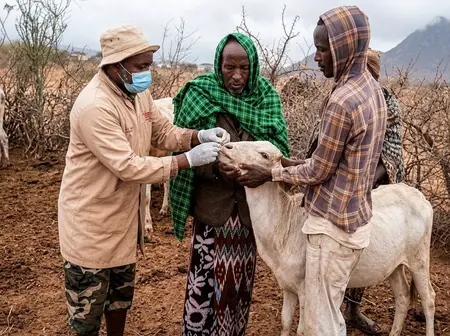
One Health, One Future: The Global Revolution Starting in Our Backyards
Nairobi-In an era of rapid urbanization, shifting climates, and interconnected global travel, health is no longer confined to hospital wards and laboratories. When a pathogen leaps from wildlife or livestock to humans, the ripples shatter economies, destabilize food security, and claim millions of lives.
-

Photos: Mount Kenya University medical students explore oncology laboratory and pharmacy operations at Texas Cancer Centre
Medical students from Mount Kenya University visited the Oncology Laboratory and Pharmacy units at The Texas Cancer Centre, Nairobi, as part of an academic tour aimed at strengthening their practical understanding of cancer diagnosis, treatment and comprehensive patient care.The visit offered the students valuable first-hand exposure to the organisation and management of specialised oncology services, with insights into daily operations, clinical workflows, laboratory processes, pharmaceutical management and interdepartmental coordination.
-
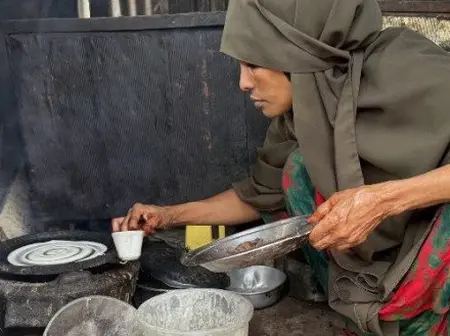
Somali refugees benefit from Kenya’s national health insurance scheme
Iglan Abdulle received surgery and treatment relieving her after years of pain/Ahmed Abdullahi/ErgoSomali refugees in Kenya’s Dadaab camps are using the Kenyan government’s Social Health Authority (SHA) national health insurance scheme to access treatment they cannot otherwise access or afford.Iglan Abdulle Mohamed, 39, who lives in Hagadera camp, underwent gallbladder surgery at Garissa General Hospital in February after six years of illness.
-
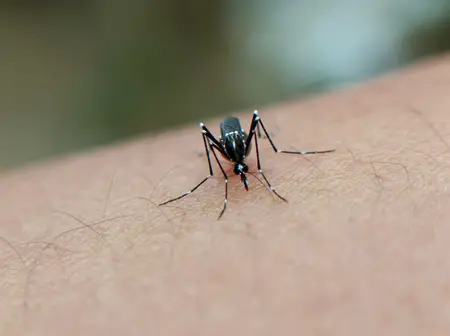
Kenya Becomes First African Nation to Join Global Dengue Alliance as Cases Surge
Nairobi- Kenya has become the first African country to join the Dengue Alliance, a global partnership working to develop treatments for dengue, with the Kenya Medical Research Institute (KEMRI) formally admitted at the Alliance’s meeting in Kuala Lumpur, Malaysia, on 27 October.
-
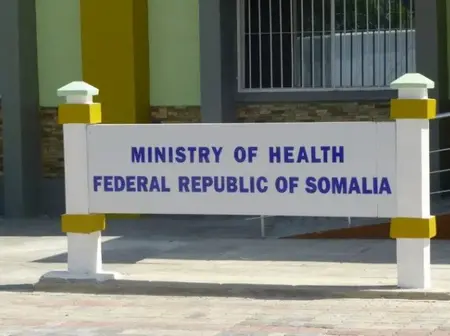
Somalia releases Ebola contact after two negative tests, 21-day quarantine
Mogadishu (HOL) — Somali Health Ministry released a man from Ebola quarantine after two tests returned negative and he completed a 21-day monitoring period without developing symptoms, officials announced Sunday.The man had been placed in isolation after health authorities determined that he had direct contact with a person infected with Bundibugyo Ebola virus disease who later died in Kenya.