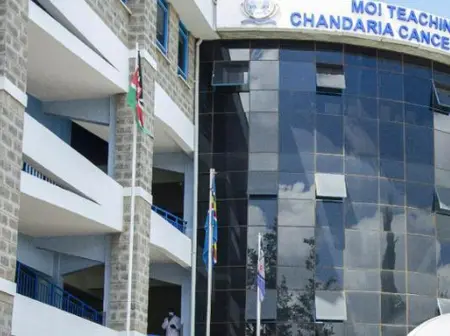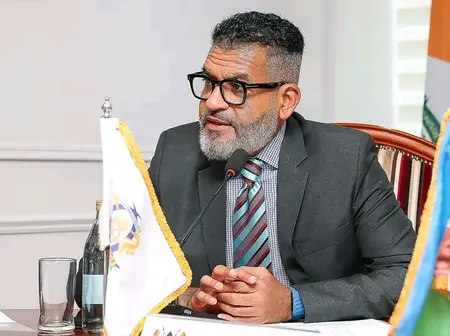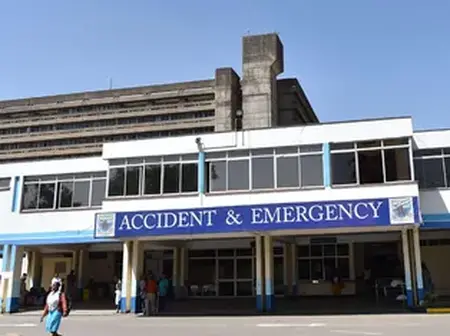
The latest clash escalated on Monday, November 23, 2026, when Council of Governors (CoG) Chairperson on Health and Tharaka Nithi Governor Muthomi Njuki directed all county hospital managers nationwide to completely ignore the order issued by Medical Services Principal Secretary Dr. Ouma Oluga.
PS Oluga had sparked the row over the weekend—first during a visit to Vihiga Teaching and Referral Hospital on Saturday, November 21, and later in a media interview on Sunday, November 22—by instructing Social Health Authority (SHA) compliance officers to inspect public health facilities and strip away payment Paybills with security backing.
According to Dr. Oluga, displaying Paybill numbers at public hospitals encourages unauthorized out-of-pocket charges for medical procedures already covered under the Social Health Insurance Fund (SHIF), which he warned drives low-income families into poverty and erodes public trust in SHA enrolment.
The Principal Secretary maintained that the Ministry has already digitized 95 percent of public hospitals and contracted all facilities under the HAKIKA platform to track transactions transparently without requiring cash or Paybill collections from insured patients.
Addressing a press briefing on Monday afternoon, November 23, Governor Njuki dismissed PS Oluga’s directive as unconstitutional, reckless, and a direct invasion of county government autonomy.
Governor Njuki emphasized that under the Constitution of Kenya and the Public Finance Management Act of 2012, county governments hold the exclusive legal authority to manage county hospitals and impose lawful service fees.
While the Council of Governors stated that it agrees with the Health Cabinet Secretary’s stance against double-charging patients for SHA-covered treatments, Njuki pointed out major operational gaps that make Paybill channels indispensable.
Specifically, governors noted that SHA does not cover every specialized medical procedure—particularly at tertiary referral hospitals—and does not cater to uninsured patients or individuals who have exhausted their annual benefit limits.
Furthermore, the Council accused SHA of subjecting public facilities to delayed, rejected, or inadequate claim reimbursements, warning that shutting down official revenue collection channels without alternative funding would cripple daily hospital operations.
With governors warning that enforcing the directive without prior consultation disrupts care for patients currently admitted in wards, Kenyans seeking treatment now face confusion at hospital payment desks over whether services will be offered free under SHA or billed via county Paybills.
SOURCE