She said the family intends to pursue disability registration because of the extent of his vision loss.
Baba Talisha has been battling Acanthamoeba keratitis, a rare and aggressive eye infection that affects the cornea and can cause severe damage to vision if not treated promptly.
The illness reportedly progressed after an extended period of treatment and medical investigations before doctors identified the infection. He has since undergone an emergency cornea transplant in Kenya as part of efforts to address the damage caused by the condition.
His wife explained that the family is seeking further specialised medical care in India to establish the infection's precise nature and determine the most effective treatment and post-surgery management.
The trip is expected to cost approximately KSh 1.6 million, covering medical examinations, treatment and management. The family has appealed to well-wishers for financial assistance after reportedly exhausting their medical insurance through earlier treatment and surgery.
The infection has also affected Baba Talisha’s ability to work and carry out his usual activities, with his wife saying he is expected to remain incapacitated for several months as he recovers.
The family is now seeking public support as he continues his treatment journey, hoping to protect his remaining eyesight and manage the complications associated with the infection.
The family has also raised concerns over the risk of reinfection and rejection of the transplanted cornea, saying continued medical monitoring will be crucial during recovery.https://web.facebook.com/share/p/1BWbyQPefE/
CoG Chairperson Muthomi Njuki said county governments needed to be consulted before the Ministry of Health proceeded with the planned enforcement exercise.
Speaking on Monday, November 23, 2026, Njuki questioned how patients already receiving treatment would be handled if hospitals were forced to comply with the directive without clear transition arrangements.
He expressed concern that some patients could be discharged or denied continued medical attention before alternative arrangements were established.
Njuki insisted that the national government should engage county leaders and agree on a framework that protects patients while addressing concerns surrounding hospital charges.
Mombasa Governor Abdulswamad Nassir, who chairs the CoG Health Committee, also criticised the proposed enforcement approach, particularly the involvement of security officers.
Nassir argued that hospitals suspected of violating the law should be reported through established Council of Governors leadership structures for appropriate action.
He maintained that disagreements between the national and county governments should be resolved through consultation rather than forceful inspections.
The controversy follows a directive by Principal Secretary for Medical Services Ouma Oluga, who instructed Social Health Authority (SHA) compliance officers to inspect public hospitals and remove Paybill payment channels.
Oluga issued the instructions during a meeting with health officials in Vihiga County, arguing that patients should not be subjected to additional charges for services covered under SHA.
He also promised security support for compliance officers conducting the nationwide inspections.
Meanwhile, Njuki raised another concern over delayed payments to county hospitals, revealing that SHA had fallen behind by an average of three months in reimbursing facilities for services already provided.
He said counties had submitted claims for treatment offered to patients but were still waiting for the authority to settle the outstanding payments.
The governor did not disclose the total amount owed to county governments, but warned that reimbursement delays remained a concern for healthcare facilities.
The dispute has exposed growing differences between the national government and county administrations over the implementation of SHA policies and the management of public healthcare services.
The governors have expressed concerns over the directive, which seeks to stop county hospitals from using their existing Paybill numbers to collect payments for medical services.
The development has sparked debate between the national government and county administrations, with governors expected to defend the financial systems currently used by their healthcare facilities.
Paybill numbers have become an important payment option for patients visiting public hospitals, allowing them to settle medical bills through mobile money platforms without necessarily carrying cash.
For many Kenyans, particularly those seeking treatment in busy county hospitals, the system provides a convenient way of paying for services.
The directive by Oluga is therefore likely to affect how patients make payments if implemented across county healthcare facilities.
The Council of Governors' opposition highlights concerns about the implications of changing existing payment arrangements without adequately addressing the operational needs of county hospitals.
Healthcare services are largely managed by county governments, which are responsible for running public hospitals, employing healthcare workers and ensuring that facilities have the resources required to serve residents.
Consequently, any changes affecting hospital revenue collection systems are likely to attract attention from county administrations.
The disagreement also comes at a time when the government is implementing changes under the Social Health Authority (SHA) as it seeks to improve access to healthcare and strengthen accountability in the sector.
The national government has been pushing for reforms aimed at improving the management of public healthcare resources and ensuring transparency in financial transactions.
However, the governors' position suggests that consultations between the two levels of government may be necessary before implementing the proposed changes.
Kenyans will now be watching closely to see whether the Ministry of Health and the Council of Governors reach an agreement on the matter.
The outcome could determine how patients continue making payments at county hospitals across the country.
The Council of Governors has opposed a government directive requiring public health facilities to remove their Paybill numbers, arguing that the move has threatened the financial autonomy of county governments and could interfere with the delivery of healthcare services.
In a statement, the Council has challenged an instruction issued by Principal Secretary for Medical Services Dr Ouma Oluga, which ordered the removal of Paybill numbers from county health facilities.
The governors have described the directive as unconstitutional, insisting that counties have retained the authority to manage their healthcare systems under the devolved government framework.
The Council has maintained that although it has supported efforts to prevent patients from paying twice for services covered under the Social Health Authority (SHA), the government has not covered every medical service or every Kenyan under the current healthcare arrangement.
According to the governors, some medical services have remained outside the approved SHA benefits package, leaving patients with expenses that have not been fully covered.
They have further pointed to delayed, rejected and inadequate reimbursements, which have continued to place pressure on county hospitals and other public healthcare facilities.
The dispute has consequently raised questions about how hospitals have been expected to sustain their operations while dealing with funding challenges and the growing demand for medical services.
The Council has instructed health facility managers to disregard the directive, arguing that counties have needed lawful mechanisms to recover costs and maintain service delivery.
It has insisted that removing payment channels without addressing existing financial challenges could further complicate the running of healthcare facilities.
The governors have also emphasized that Universal Health Coverage has needed to strike a balance between protecting patients from unnecessary charges and ensuring that hospitals have sufficient resources to operate.
The latest disagreement has exposed growing tensions between the national government and county administrations over the management of public healthcare, particularly as the country has continued implementing its new health financing system.
The Council has maintained that protecting patients has remained important, but the sustainability of hospitals and respect for constitutional devolution have also needed to be considered in government decisions affecting county healthcare services.
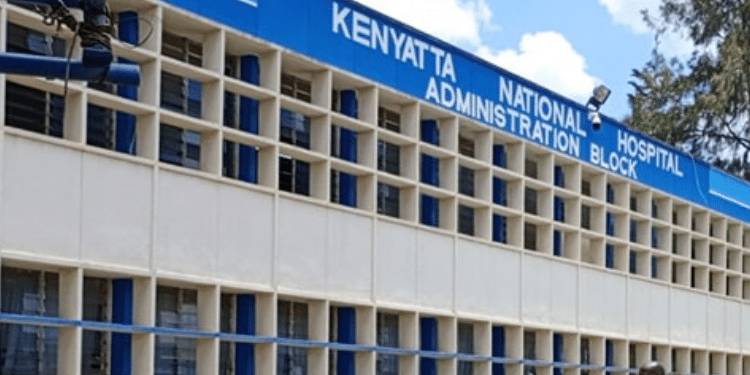
The Kenyatta National Hospital (KNH) has announced a temporary closure affecting one of its key hospital sections, with the changes expected to last approximately four months.In a public notice issued on Monday, November 23, 2026, by Dr Joel Lessan, the hospital’s Acting Chief Executive Officer, the hospital said the front section of its International Trauma Centre (ITC) would close for renovation work starting at 5.00 p.m. on the same day.
Addressing the press, CoG Chairperson Muthomi Njuki directed all county health facilities to ignore the ministry's unilateral declaration, warning that enforcing the order risks disrupting essential healthcare delivery, undermining facility operational budgets, and creating severe confusion for patients undergoing specialized care.
The confrontation stems from instructions issued by PS Oluga to Social Health Authority (SHA) compliance officers during a health forum in Vihiga County.
Oluga ordered officers, backed by county commissioners and security details, to inspect public healthcare facilities and dismantle payment Paybills, arguing that demanding direct payments from citizens undermines universal health coverage and pushes low-income families into financial distress.
While the Council of Governors agreed that patients should not be double-charged for services fully paid under the SHA scheme, CoG leadership argued that the directive fails to accommodate treatments, co-payments, and specialized procedures that fall outside defined SHA benefit packages, as well as instances where patients have exhausted their annual limits.
Furthermore, governors cited systemic delays in the settlement of outstanding SHA claims owed to county health facilities, alongside complex electronic contracting hurdles that threaten to leave public hospitals without predictable operational funding.
Reiterating that health function management is a devolved responsibility under the Constitution, the Council urged national health administrators to refrain from making sweeping public pronouncements and instead utilize established intergovernmental dispute channels to resolve billing and scheme coverage gaps.
What are your thoughts about this article? Share your reactions in the comment section and don't forget to share and follow for more updates.
OpposedThe Council of Governors (CoG) has opposed a directive by Medical Services Principal Secretary Ouma Oluga ordering the removal of Paybill numbers from county hospitals.The Council of Governors (CoG) has opposed a directive by Medical Services Principal Secretary Ouma Oluga ordering the removal of Paybill numbers from county hospitals.
The Council of Governors has rejected a directive by Health Principal Secretary Dr Ouma Oluga that ordered Social Health Authority officials to remove paybills from all public hospitals. The governors termed the order unconstitutional and said it would not be followed.
Speaking at a press briefing on Monday the council's Health Committee Chairperson and Tharaka Nithi Governor Muthomi Njuki said the directive was a clear invasion of the mandate of county governments. Dr Oluga had issued the order on Sunday on the basis that all Kenyans are fully covered under the Social Health Insurance Fund.
The governors cited the Public Finance Management Act of 2012 which gives counties the power to run health facilities and set fees and charges. They insisted that the PS has no supervisory authority over county entities and cannot act as a prefect over the 47 counties.
Njuki also dismissed the claim that every Kenyan is covered. He explained that registration does not guarantee access to every service especially at tertiary hospitals. He noted that SHA works within defined benefit packages and some patients exhaust their cover or need specialised care that falls outside it.
The governors further accused the Ministry of Health of failing to settle outstanding SHA claims on time. They warned that conditions in the new e-contracting system could push more facilities out of SHA and force them to charge patients for all services.
The council directed all health facility managers to ignore the directive. It urged Dr Oluga to stop making sweeping public declarations that create unrealistic expectations among Kenyans.
The governors said matters touching county hospitals must be handled through consultation and proper intergovernmental structures. They stressed that devolution is a constitutional obligation and not an administrative courtesy.
The governors have instructed hospital managers to disregard the directive, setting the stage for a fresh dispute between county governments and the national government over hospital administration, patient charges and the implementation of the Social Health Authority (SHA).
Speaking on Monday, November 23, Tharaka Nithi Governor Muthomi Njuki, who chairs the Council of Governors' Health Committee, accused Principal Secretary for Medical Services Dr Ouma Oluga of overstepping his mandate by issuing instructions affecting county-run hospitals.
Oluga had issued the directive on Sunday, November 22, arguing that Kenyans were covered under the Social Health Authority and should therefore not be required to pay through hospital paybills.
However, the governors disputed the claim that SHA provides comprehensive coverage for every Kenyan and every medical service, saying registration alone does not guarantee access to all treatments.
Njuki argued that hospitals still handle services that may fall outside the approved SHA benefits package, including specialised interventions, treatments whose coverage limits have been exhausted and services subject to co-payments.
He questioned how facilities would collect payments for such services if they were prohibited from maintaining paybill payment channels.
The Council of Governors maintained that county governments have the legal authority to manage their health facilities, including determining lawful charges and overseeing the collection of revenue for services provided.
In defending their position, the governors cited the Public Finance Management Act, 2012, which they said gives county governments responsibility for managing county health facilities and overseeing service delivery, including fees, levies and other charges.
Njuki argued that the Principal Secretary does not have supervisory authority over county government institutions and accused the Ministry of Health of undermining county officials responsible for managing public facilities.
The governors said decisions affecting county hospitals should be handled through established intergovernmental consultation mechanisms rather than unilateral announcements by national government officials.
They also raised concerns about delayed payments and outstanding claims owed to county health facilities under SHA, arguing that hospitals continue to face financial pressure while waiting for reimbursements.
According to the Council, unresolved payment claims and operational challenges could affect the ability of counties to sustain services, particularly where facilities depend on reimbursements to meet their daily expenses.
The governors further warned that the new electronic contracting arrangements under SHA could potentially leave some health facilities outside the scheme, forcing them to rely more heavily on alternative revenue sources to maintain operations.
They argued that hospitals cannot be expected to provide services that are excluded from SHA's benefits package, inadequately reimbursed or subject to additional lawful payment requirements without a clear financing arrangement.
The Council urged Oluga to avoid making broad public statements suggesting that SHA covers every Kenyan and every medical need, warning that such assurances could create unrealistic expectations among patients.
Njuki said the health insurance system operates within defined benefit packages, eligibility requirements, tariffs and limitations, meaning not every treatment or medical procedure is automatically covered.
The governors maintained that removing hospital paybills without addressing these gaps could complicate how facilities collect payments for services that are not covered by the national health insurance scheme.
The Council called for discussions between the Ministry of Health, SHA and county governments to resolve the dispute, insisting that the pursuit of Universal Health Coverage must respect the Constitution, protect patients and ensure that public hospitals remain financially sustainable.
The Council of Governors (CoG) has rejected a directive by Principal Secretary for Medical Services Dr Ouma Oluga ordering Social Health Authority (SHA) officials to remove paybills from all public hospitals, setting up a fresh dispute between county governments and the national Ministry of Health.
Speaking during a briefing on Monday, November 23, 2026, Council of Governors Chairperson on Health and Tharaka Nithi Governor Muthomi Njuki accused the PS of interfering with the constitutional mandate of county governments to manage public health facilities.
The governors argued that the directive was unconstitutional, insisting that the national government cannot unilaterally dictate how county hospitals administer their finances and healthcare services.
According to Njuki, the Public Finance Management Act of 2012 gives county governments responsibility for managing county health facilities and overseeing service delivery, including imposing lawful fees, levies and other charges.
The Council maintained that the Principal Secretary has no supervisory authority over county government entities and cannot assume the role of a prefect over the 47 constitutionally established counties.
The governors also questioned the Ministry of Health's position that all Kenyans are fully covered under the Social Health Insurance Fund (SHIF), arguing that registration with SHA does not automatically guarantee access to every medical service.
Njuki explained that SHA operates under specific benefit packages, tariffs, eligibility requirements and limitations, meaning some specialised treatments and services may require alternative payment arrangements.
He further raised concerns over outstanding SHA claims and delays in reimbursements to counties, warning that financial challenges could undermine the delivery of healthcare services in public hospitals.
The Council also expressed concern that conditions introduced under the new e-contracting system could force more health facilities out of SHA, leaving them to charge patients directly for services.
In its response, the Council directed all public health facility managers to ignore what it described as unconstitutional statements threatening to disrupt service delivery.
The governors argued that county hospitals cannot be expected to provide services that are excluded from SHA benefits, require co-payments or have not been adequately reimbursed.
They also urged PS Oluga to stop making broad public statements suggesting that SHA covers every Kenyan and every healthcare need, saying such claims create unrealistic expectations among patients.
The Council called for disputes involving county health facilities to be addressed through consultation and established intergovernmental structures rather than unilateral directives.
It maintained that the pursuit of Universal Health Coverage must respect the Constitution, protect patients and safeguard the financial sustainability of healthcare services.