The Ministry of Health is exploring opportunities to strengthen specialised medical services in Kenya through a possible collaboration with the Asia Institute of Gastroenterology.
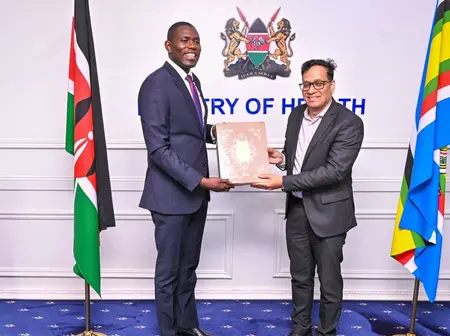
This emerged after Principal Secretary for Medical Services Dr Ouma Oluga hosted Dr Niladri Samal, representing the Asia Institute of Gastroenterology, during a courtesy call at Afya House.
According to the Ministry of Health, the discussions focused on specialised training in endoscopy and colonoscopy for healthcare professionals working in county and national referral hospitals.
The proposed collaboration seeks to strengthen diagnostic and therapeutic services by equipping medical professionals with specialised skills to handle gastrointestinal conditions.
Speaking during the meeting, Dr Oluga emphasised the importance of developing a skilled healthcare workforce to support ongoing health sector reforms.
He noted that investing in specialised medical training is critical to improving healthcare service delivery and patient outcomes.
The engagement highlights the Ministry's efforts to explore partnerships that can strengthen the capacity of healthcare workers and improve access to specialised medical services across the country.
As the world prepares to mark World AIDS Day on December 1, Kenya has reason to reflect on its progress in the fight against HIV. Although the country has made commendable strides in prevention, testing and treatment, the latest statistics reveal that the battle is far from over.
Nairobi Senator Edwin Sifuna has challenged Kenyans living in the diaspora to help identify qualified professionals who could serve in government, questioning whether the country lacks a health expert capable of performing better than the current Health Cabinet Secretary, Aden Duale.
Speaking during an engagement with Kenyans in the United States on Sunday, November 23, 2026, Sifuna said Kenya had skilled professionals abroad whose expertise could help transform public institutions if the country restored meritocracy.
The senator argued that political appointments should be based on qualifications and competence rather than other considerations, saying the country needed to create opportunities for capable Kenyans to serve at home.
“Where are you going to get your cabinet? Where are you going to get your cabinet?” Sifuna posed, before challenging the audience to consider the talent available among Kenyans.
Sifuna questioned whether the diaspora community could identify a Kenyan capable of serving as Health Cabinet Secretary and outperforming Duale.
“Can you tell me, in this room, that we cannot find a Health Minister better than Duale?” he asked, challenging Kenyans abroad to contribute their expertise towards building a government that serves the public.
He said the country should tap into the skills of professionals who have built careers abroad but may not have received similar opportunities in Kenya.
Sifuna cited an example of a Kenyan, James Wafula, whom he said had designed and built a boardwalk in East London, South Africa, arguing that qualified Kenyans were making contributions overseas while their expertise remained underutilised at home.
The senator attributed the situation to what he described as the erosion of meritocracy, arguing that professionals often find it easier to secure opportunities abroad based on their qualifications than in Kenya.
He pledged that a government led by the Linda Mwananchi movement would seek to restore merit-based appointments and encourage skilled Kenyans abroad to return and contribute to national development.
Sifuna said the diaspora should be involved in shaping government and implementing policies rather than being left to seek assistance from leaders after they assume office.
The remarks come amid Sifuna’s wider criticism of President William Ruto’s administration and his calls for accountable leadership.
On November 19, 2026, the senator accused Ruto of failing to uphold the Constitution after assuming office, arguing that the presidency carries an obligation to respect, uphold and defend the country’s supreme law.
Sifuna said constitutional accountability and competent leadership should guide the running of government, maintaining that public office must be exercised in line with the responsibilities attached to it.
Kenya spends up to Sh25 billion annually to keep people living with HIV on treatment, a bill that may become increasingly difficult to sustain as international donors reduce their support.
Foreign donors finance about 66 per cent of Kenya's HIV programme, while the government and other domestic sources contribute about 34 per cent. The United States, which foots most of the bill, expects Kenya to take over the full cost of its HIV programme by 2030.
National Syndemic Diseases Control Council (NSDCC) chief executive Douglas Bosire said one way to reduce the long-term financial burden is to prevent new infections, particularly among children, who would otherwise require lifelong treatment.
Kenya recorded 3,396 new HIV infections among children aged below 15 in 2025.
Bosire said 72 per cent of these infections were associated with mothers reporting late for antenatal care or failing to take their HIV medication consistently during pregnancy and breastfeeding.
Bosire urged men to support their pregnant wives in accessing health facilities, including helping them meet transport costs.
“We are not saying too much; we are just saying let her go for four ANC visits. During those four ANC visits, apart from the HIV care, there are some other health benefits that she gets from the process,” he said.
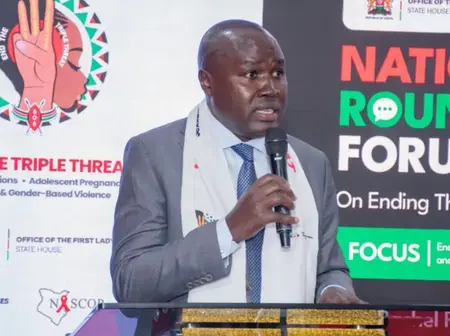
He spoke in Nairobi during the launch of activities to mark World Aids Day 2026, which will be observed on December 1 under the theme, Ending Aids starts with access.
The campaign calls for fair access to HIV prevention, testing, treatment and care, while protecting human rights and ensuring adequate resources to sustain the response.
The financial pressure comes at a time when Kenya is still struggling to ensure children living with HIV receive the same level of care as adults.
The country has about 1.4 million people living with HIV, and 69,330 of those are children.
Bosire said nearly half of the children receiving treatment have not achieved viral suppression, meaning the amount of HIV in their bodies has not been reduced to undetectable levels.
He said while children account for only 4.7 per cent of Kenyans living with HIV they contribute 11.5 per cent of Aids-related deaths.
Bosire said Kenya had made significant progress in reducing new infections and keeping people living with HIV on treatment, but warned against confusing progress with success.
Kenya recorded 13,936 new HIV infections in 2025, down from 32,027 in 2021, representing a 56.5 per cent reduction. However, this still translates to about 38 new infections every day. At least 19,434 people died of HIV-related causes last year.
Of the new infections, adolescents and young people aged 15 to 24 accounted for 4,322.
Children, adolescents and young people together account for 55 per cent of new infections, making them a major priority in the country's HIV response.
Bosire said infections among young people remained particularly worrying because those who acquire HIV must live with the virus and take medication throughout their lives.
“These are children who are in school. These are children who are about to sit for their Grade 9 examinations, children in high school and institutions of higher learning. When a child gets HIV at the age of 15 or 16, that child has to live with the virus for life,” he said.
He called for stronger sexuality education in schools, saying young people needed accurate information to make informed decisions about their sexual health. He also challenged religious leaders to take a more active role in HIV prevention.
The council chief raised concern about the high number of men dying from HIV-related illnesses, despite women making up about 65 per cent of people living with HIV.
He said men were dying disproportionately because many were not getting tested and seeking treatment early enough.
“Men have to get tested. When you look at the statistics, 65 per cent of those living with HIV are women, but the deaths are almost 50-50. This means men are dying disproportionately more than women,” he said.
Bosire also called for more targeted services for key populations, who continue to carry a much higher HIV burden than the general population.
He cited HIV prevalence of 27 per cent among female sex workers, 19 per cent among men who have sex with men, nine per cent among people who inject drugs and 22 per cent among transgender people, compared with about three per cent nationally.
He said declining international funding was forcing Kenya to rethink how it delivers HIV services, including integrating programmes for key populations into ordinary health facilities.
Bosire said about 87 per cent of Kenyans living with HIV were virally suppressed, meaning treatment had reduced the amount of virus in their bodies to undetectable and they cannot transmit it.
He estimated that treating one person costs between Sh15,000 and Sh20,000 annually, translating to between Sh20 billion and Sh25 billion for the country's HIV population.
He said the ultimate goal should be to stop new infections rather than concentrate only on treating those already living with the virus.
“Our desire is that by 2030, we will have zero new HIV infections. We are not saying that by 2030 we will not have people living with HIV. There will still be more than one million Kenyans living with HIV because we have succeeded in keeping people on treatment.”
The World Aids Day activities will begin with a national half marathon at Nyayo National Stadium in Nairobi on November 29.
The event will feature a 21km competitive race, a 10km road race, a 10km wheelchair race, a 5km family and corporate race and a 2km children's fun run.
On December 1, activities will take place across all 47 counties, including community dialogues, public accountability forums, candle-lighting ceremonies, memorial vigils and distribution of dignity packs.
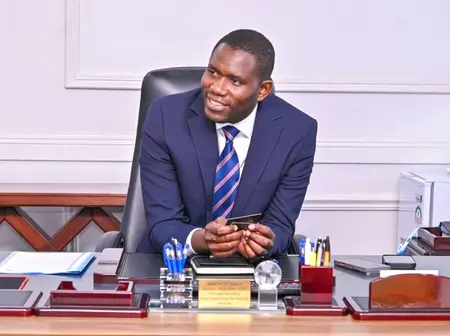
Listen to articleThe Medical Services PS says demanding payments before treatment could push low-income households further into poverty.Principal Secretary for Medical Services Ouma Oluga has ordered the removal of payment paybills from all public hospitals, warning that demanding money from patients before treatment risks deepening poverty among vulnerable households.
Medical practitioners conducting holiday circumcisions must observe strict hygiene and public health guidelines to prevent infections, Public Health PS Mary Muthoni has warned.
She said those involved in the initiation exercise must prioritise the safety and well-being of boys to ensure they recover fully and resume their lives without health complications.
“We want to make sure our boys are okay and continue with their lives even after that,” Muthoni said.
She reminded medical practitioners of their responsibility to protect the health, safety and rights of boys undergoing circumcision, urging them to follow prescribed medical procedures and public health regulations.
Her remarks come amid concerns raised by some Kikuyu elders over what they described as a decline in the size of boys’ genitalia, which they attributed to the prolonged use of diapers. However, the claims have not been independently established by medical evidence.
The PS’s appeal comes as families prepare for the annual initiation season, when many boys undergo circumcision during the school holidays.
Muthoni also urged parents to remain attentive to their children during the holidays, when young people spend more time away from school and engage in different social activities.
She warned against drug and substance abuse, urging parents to guide their children and help them avoid environments that could expose them to harmful habits.
“Parents should be very keen on where their children are, who they are with and what they are doing,” she said.
The PS also urged young people completing secondary school to exercise responsibility as they enjoy the freedom that comes with leaving school.
She cautioned them against drug and substance abuse as they transition into the next stage of their lives, saying personal responsibility was particularly important during the holiday season.
Baba Talisha’s second wife, businesswoman Wanjiru C. Wanjiru, popularly known as Miss Wanjey, has revealed that the photographer and social media influencer is legally blind as he battles an aggressive eye infection that threatens his remaining sight.Baba Talisha, whose real name is Faustine Lukale, is battling a rare eye infection known as Acanthamoeba keratitis, which affects the cornea and can cause severe pain, inflammation and vision loss if not treated promptly.
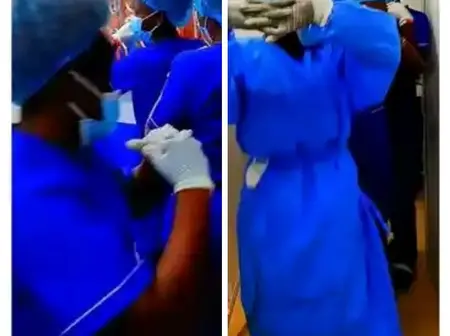
A surgical practice has caught public attention after a video showed surgeons walking backwards inside an operating theatre.
The video, which has been shared widely on Facebook, Instagram, and TikTok, shows several people dressed in blue and green surgical scrubs, caps, masks, and gloves moving backwards through a hospital corridor and into an operating area.
In one part, three people walk in a line with their backs facing the door. In another part, one person in a surgical gown leads the others, with arms crossed in front.
Many people who saw the video were surprised and confused. Some joked about it, saying the operation was not successful or that the surgeons had lost Bluetooth connection.
But doctors and nurses who have explained the video say there is a very simple and important medical reason behind it: to maintain sterility.
Sterility means keeping everything clean and free from germs. In an operating theatre, even a small germ can cause a serious infection for the patient.
After surgeons scrub their hands and arms with soap and disinfectant, they put on a sterile gown and gloves. Only the front of the gown, the arms, and the gloves are considered sterile. The back of the gown is not sterile.
If a surgeon walks forward through a door, their sterile front could brush against the door, the wall, or another person. That contact could contaminate the gown and gloves.
To avoid that, surgeons sometimes walk backwards through the door. That way, their sterile front faces forward, away from the door, and their non-sterile back is the part that goes through the doorway first.
Another reason is that after scrubbing, surgeons must keep their hands up and in front of them, and they must not touch anything. A nurse or assistant usually opens the door for them. Walking backwards helps them avoid touching the door handle or pushing the door with their sterile hands.
Inside the theatre, they are then assisted into their final sterile gowns and gloves without touching non-sterile surfaces.
This is why in many of the videos, the surgeons walk with their arms crossed or held up in front of them. It is not a dance or a joke. It is a way to protect the patient.
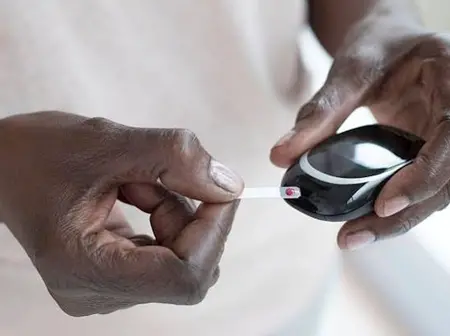
She said people can live with the condition for years without realising they have it.
According to a global study published in The Lancet Diabetes & Endocrinology, about 44 per cent of people aged 15 and above with diabetes were undiagnosed in 2023.
The study found that young adults were the most likely to be undiagnosed, even though they face higher risks of long-term complications.
Reports note that regional gaps are wide. In Central sub-Saharan Africa, fewer than 20 per cent of people with diabetes knew about their condition.
Even among diagnosed patients, control is a challenge. About 91 per cent were on medication, but only 42 per cent of those treated had well-managed blood sugar.
Without diagnosis and management, high blood sugar can damage the heart, kidneys, eyes and nerves, reports say.
Common signs include excessive thirst, extreme tiredness and frequent urination, although many people have no symptoms early on.
The Standard reported that regular checks of blood glucose, blood pressure and cholesterol, along with kidney, eye and foot examinations, help detect complications early.
The report also called for a shift from symptom-based care to preventive screening, with accessible testing and affordable treatment.
Experts project that 1.3 billion people could be living with diabetes by 2050, according to the study's researchers.
Anyone worried about diabetes should speak to a health worker about testing, as a simple blood sugar test can detect it.
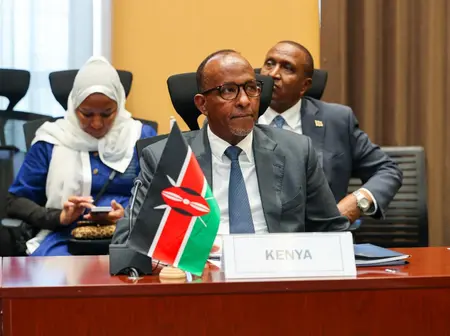
Duale assumed the role during the 16th Ordinary Meeting of the Africa CDC Governing Board, which brought together health ministers from eight nations under Director-General Dr. Jean Kaseya. During the session, Uganda's Dr. Chris Baryomunsi and Namibia's Dr. Esperance Luvindao were elected as Chairperson and Vice-Chairperson, respectively.
As a two-year voting member, Duale will help shape continental health priorities, direct public health strategies, and approve the agency's budgets. Kenya’s focus on the board centers on three core pillars:
Nominated by the African Union Commission in November 2026, Kenya's representation highlights the country's ongoing health system and digitization reforms, while ensuring national healthcare priorities closely align with continental funding over the next two years.