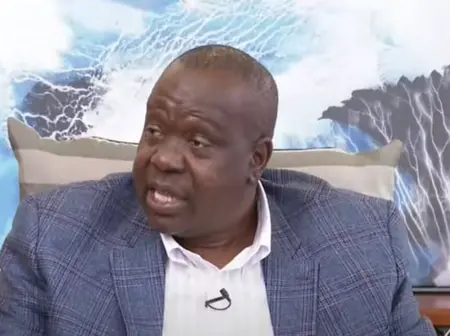
During an interview with NTV, the former Interior Cabinet Secretary said scrapping the levy would add disposable income in the pockets of Kenyans, offering much-needed relief.
“Quite frankly, in my view, we should scrap this housing levy because it is very burdensome when you look at it,” he stated.
Matiang’i further proposed raising the threshold for tax-free income to KSh35,000 to ease the burden on low- and middle-income earners. He said putting more money in workers’ pockets could boost household spending and help the economy recover.
“There is a need to increase disposable income in the pockets of our people by, for example, raising the ceiling to non-taxable income to even KSh35,000, so that slowly we can begin to have some recovery,” Matiang’i said.
He also cited public spending, excessive bureaucracy, and corruption as major challenges, warning that corruption had reached unprecedented levels.
“But the greatest challenge is wastage of resources, bureaucracy, and corruption. Corruption has reached unprecedented levels. Sometimes I feel people have not come to terms with the gravity of our situation,” he said.
Matiang’i said bold, decisive action is needed to tackle the country’s economic challenges, saying the government needed far-reaching reforms in public spending and key sectors.
“There is need to be courageous, radical and decisive to be able to get the country where it is right now,” he said.
He proposed reviewing the national budget to identify spending cuts and direct public funds towards essential services and development priorities.
“That will mean we will have to relook at our budgeting to see whether we can stop the wastage that we have. We then need to work on critical sector reforms, address corruption, security, bureaucracy. These are measures we will need to take urgently,” he added.
Listen to articleA new report by the Controller of Budget (CoB), Margaret Nyakang’o, has revealed that only Sh1.47 trillion of the Sh14.6 trillion approved for withdrawal over the past three financial years was set aside for development projectsDevelopment projects are lagging behind as national and county governments continue to spend the bulk of public funds on salaries, debt payments and other recurrent expenses.
Oil prices fell to their lowest level in more than two weeks on Monday as fresh hopes emerged of a possible breakthrough in efforts to end the Iran war.
Brent crude, the international benchmark, dropped by more than 6.5 per cent to Ksh13,709 a barrel, its lowest level since October 16. The decline lifted airline shares and pushed down government borrowing costs.
The drop followed reports from Tehran that contacts between Iran and the United States aimed at ending their eight-month war were continuing.
“Consultations through mediators are very intensive. We have presented our conditions and proposals and everything depends on the political rationality of Washington,” Iranian Foreign Minister Abbas Araghchi said, according to state media outlet IRNA.
Over the weekend, Qatari officials attempted to negotiate the release of more than Ksh779.64 billion in Iranian assets, in a move that could pave the way for Tehran to allow the Strait of Hormuz to reopen.
US President Donald Trump had earlier adopted a tougher stance, telling voters in Iowa on Sunday that Iran would receive “the hammer” unless progress was made.
“The only reason why I’m not finished with Iran is I want to be nice. I want to try and save all those lives if I can … But at some point we’re going to have to give them the hammer,” he said during a campaign rally ahead of the US midterm elections.
Investors were also encouraged by reports on Monday that Iran’s Supreme Leader Mojtaba Khamenei had granted his government “powers” to negotiate with the United States in efforts to end the Middle East war.
Chris Beauchamp, chief market analyst at investment and trading platform IG, said: “The news is manna from heaven for stock markets, which have felt increasingly pressured by oil’s rise, but of course there is still a risk that Trump will try one last throw of the iron dice after the midterms.”
What happens when a post office can no longer depend on letters and parcels to keep its business running? For Postal Corporation of Kenya (Posta), the answer lies in finding new ways to make money from its nationwide network, from transporting medicines and fresh produce to handling online shopping deliveries and digital payments.
The corporation is pursuing this shift as traditional mail volumes fall and its liabilities rise to about Ksh7.2 billion. Its latest move, a Ksh96 million investment in 11 specialised vehicles, is part of a wider plan to turn the postal operator into a modern logistics and digital services provider.
The changes are intended to give Posta new sources of income while making better use of its branches and delivery network. However, the corporation must also address its financial obligations and compete with private courier companies that have taken a growing share of the parcel market.
The decline in postal services is reflected in industry figures. Communications Authority data show Posta handled 577,694 domestic letters between April and June 2026, a 70.2 per cent drop compared with the same period a year earlier.
Its domestic parcel volumes also fell by 33.2 per cent to about 993,099 during the 2025/26 financial year. Private courier companies handled 14.4 million domestic parcels in the same quarter, underlining the competition facing the state-owned operator.
Posta is responding by expanding into cold-chain logistics through its Post4Health initiative. The specialised vehicles will transport goods that require controlled temperatures, including medical supplies, blood products, medicines and fresh agricultural produce.
The funding involves the Universal Postal Union, through its Quality of Service Fund and Post for Health programme, and Kenya’s Communications Authority, through the Universal Service Fund.
Information, Communications and the Digital Economy Cabinet Secretary William Kabogo said the project would help address needs in healthcare and food security while creating a role for postal workers in receiving, sorting, transporting and delivering the consignments.
“Posta is undergoing significant changes under the Government Owned Enterprises Act, 2025. The corporation, now operating as a commercial enterprise, is expected to finance its operations through revenue generated from the services it offers,” Kabogo noted.
Communications Authority Director-General David Mugonyi has described the changes as part of a wider shift in the postal industry, saying: “The Post is not disappearing; it is evolving,” with future opportunities in logistics, parcel delivery, fulfilment, financial services and digital solutions.
Posta’s transformation strategy was reviewed by the National Assembly’s Departmental Committee on Communication, Information and Innovation in October 2025.
Postmaster General John Tonui told the committee that the plan seeks to reposition the corporation as a financially sustainable provider of logistics, e-commerce and digital financial services while maintaining its Universal Service Obligations.
The committee heard details of the corporation’s liabilities, including salary arrears, unremitted pension contributions, supplier debts and amounts owed to the Communications Authority.
Members called for stronger financial controls and clear targets for implementing the turnaround plan. Committee member Kiarie said: “We want Posta to succeed, but success must be measurable, timely, and accountable.”
Among the proposals discussed were restoring Posta as a payment channel for the Inua Jamii programme, integrating PostaPay with school-capitation payments and using its branches to distribute National Government Constituencies Development Fund bursaries.
These services could bring more transactions through post offices while expanding access to government payments.
At the 152nd World Post Day, Public Investments and Assets Management Principal Secretary Cyrell Odede Wagunda said the corporation should make better use of its network of more than 600 outlets under the Government Owned Enterprise Act 2025.
The framework requires the corporation to operate on commercial principles without routine Exchequer support, while designated public-service obligations in remote areas would be separately costed and funded.
Tonui has also announced a strategic agency agreement with a Chinese logistics company aimed at positioning Posta as a super-agent for Eastern and Central Africa. The arrangement focuses on cross-border e-commerce, warehousing and last-mile delivery for Kenyan micro, small and medium-sized enterprises.
Meanwhile, the Communications Authority is modernising selected post offices through local-area networks, installing radio-frequency identification tracking in dozens of branches and reviewing the postal market structure to reflect the growth of online commerce.
The proposed changes offer Posta several ways to generate income from its existing network. But the real test will be whether the corporation can turn these investments and partnerships into regular business, improve its financial management and settle its outstanding obligations.
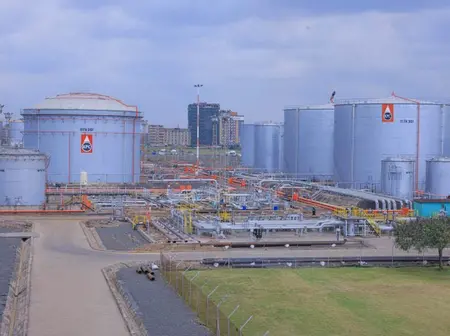
Kenya Pipeline Company (KPC) has posted a 13 per cent increase in profit after tax to Ksh11.58 billion for the 2025/26 financial year, supported by a 9 per cent growth in group revenue to Ksh43 billion.
Acting Chief Financial Officer Anthony Ndegwa presented the company’s financial performance to investors during a roadshow in Kigali, Rwanda, on November 1, 2026, where the company also outlined plans to expand its regional pipeline network.
The results come as KPC pursues opportunities in East Africa, with Rwanda emerging as a key market in its expansion strategy. The company is exploring a proposed pipeline extension to Kigali to improve the transportation and storage of petroleum products across the region.
Acting Managing Director and Chief Executive Officer Pius Mwendwa said Rwanda was an important market in the company’s regional growth plans.
“Rwanda is an important market in our regional growth ambitions. We see significant opportunities to strengthen our partnership, enhance regional connectivity and support the country’s growing energy needs through reliable transportation and storage infrastructure,” he said.
He added that the company was looking beyond its existing markets, with the proposed Kigali extension expected to create an opportunity to “enhance supply reliability, improve efficiency and strengthen regional integration.”
KPC said it was pursuing growth through investments in pipeline expansion, storage capacity and infrastructure modernisation, alongside partnerships aimed at meeting rising energy demand across East Africa.
The Rwanda investor roadshow is part of the company’s engagement with investors and regional stakeholders to present its growth strategy and explore opportunities for regional connectivity and energy security.
The financial results come months after the government sold 65 per cent of KPC through an initial public offering priced at Ksh9 per share. Trading of the shares on the Nairobi Securities Exchange began on March 9, 2026.
The state retained a 35 per cent stake in the company, while Uganda National Oil Company holds approximately 20.15 per cent.
The purchase made Dangote the company’s second-largest shareholder. It also drew attention to KPC’s ownership structure following the government’s partial privatisation of the company.
Ruto has argued that the acquisition involved a private investor using his own funds and maintained that the government would not allow intermediaries to buy shares at lower prices for resale at a profit.
He has also pointed to the rise in KPC’s share price following the transaction, projecting further growth in the company’s value over the coming years.
KPC operates a pipeline network used to transport petroleum products from coastal facilities to inland and regional markets. Its latest financial performance and proposed expansion plans place the company at the centre of efforts to strengthen energy supply infrastructure across East Africa.
The NSE (Nairobi Securities Exchange) has been under selling pressure for the past week in what market analysts attribute partly to the upcoming corporate earnings season.Top on the watch list is Safaricom which is scheduled to release its half year 2027 results this Thursday November 5th 2026.
The proposed introduction of the Wall Street Africa (WSA) Banking Index Exchange Traded Fund (ETF) on the Nairobi Securities Exchange(NSE) is an important development for our capital markets.Beyond introducing another investment product, ETFs provides investors with an alternative way of participating in the growth of Kenya’s banking sector without necessarily having to purchase shares in individual banks.
Britam Life Assurance Kenya has appointed Gwen Njiru-Kinisu as the new Chief Executive Officer and Principal Officer.The appointment puts one of the industry’s most experienced distribution specialists at the helm of one of the country’s biggest life insurers.She joins Britam from Prudential Kenya, where she has worked for over eight years, initially as Chief Commercial Officer and later as CEO and Managing Director from 2021.
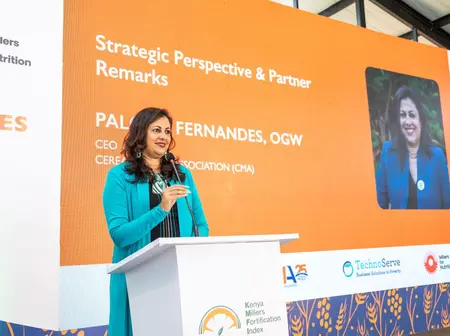
Kenya’s food processing industry has strengthened its commitment to tackling micronutrient deficiencies and improving the nutritional quality of everyday food products, with the Kenya Millers Fortification Index (KMFI) now benchmarking products estimated to reach 45 million Kenyans daily.Since its introduction in 2022, the KMFI has grown from just five participating companies representing 41 brands to 32 companies representing 144 brands in 2026, covering maize flour, wheat flour and edible oils.
The Kenya Shilling has remained relatively stable around KSh129–130 against the US Dollar, despite heightened global currency volatility.This stability is not accidental. Several policy and economic measures have helped ease pressure on the local foreign-exchange market:G2G fuel arrangement: Reduced immediate demand for dollars by extending petroleum suppliers’ payment terms.