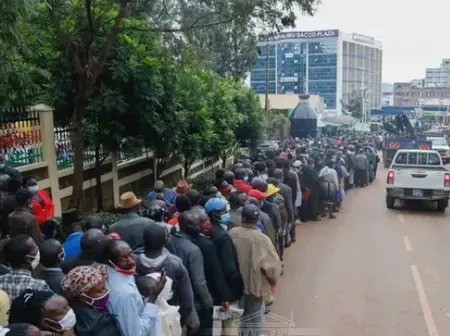
The market was completed in less than two years and officially commissioned by President William Ruto in April 2026, according to Omollo. Designed as a three-tier commercial centre, it provides 373 stalls for an equal number of traders.
The facility has 254 stalls in the basement, 113 on the upper ground floor and six on the first floor. Tailors have been allocated space on the ground floor, while fresh produce sellers are expected to benefit from cold rooms and dry storage facilities.
The facility also has reliable water and electricity, improved drainage and modern sanitation. These services are important for creating a more organised trading environment and supporting day-to-day business activity.
Omollo said local administrative structures under the State Department for Internal Security and National Administration are helping maintain a safe and orderly market. Their role also includes strengthening relations between traders and local leadership and addressing emerging community concerns.
The Chuka market is being presented as one example of BETA’s infrastructure gains. What difference do you think such modern markets can make to local businesses and livelihoods? Share your views and comments in the comment section.
The Salaries and Remuneration Commission (SRC) has unveiled a five-year plan that will link public servants' salaries and rewards to their performance, potentially allowing more productive workers to earn more.
The initiative, contained in SRC's strategic plan for the 2025/2026 to 2029/2030 financial years, seeks to improve efficiency, productivity and service delivery across public institutions.
Under the plan, the commission, led by Chairperson Sammy Chepkwony, intends to expand the implementation of performance-based compensation from the current 22 public sector institutions to 1,009 institutions by the end of the five-year period.
SRC has set an intermediate target of reaching 504 institutions during the plan's mid-term evaluation.
To achieve this, the commission plans to develop guidelines that will help public institutions introduce performance-based incentives into their human resource systems.
It will also conduct a study to establish a framework for rewarding employees based on productivity, including developing indicators that can be used to measure individual and institutional performance.
The proposed changes are also expected to influence future salary negotiations between public sector employers and workers, with performance-based pay models incorporated into Collective Bargaining Agreements (CBAs).
SRC further plans to introduce a Public Sector Productivity Training Curriculum to help institutions measure and manage employee performance.
The commission will also organise an annual National Productivity and Performance Conference, where outstanding employees and institutions will be recognised for their achievements and best practices.
Meanwhile, the Kenya Revenue Authority (KRA) has already introduced a productivity-based reward system following the enactment of the Kenya Revenue Authority (Amendment) Bill 2026 in August.
Under the law, KRA is authorised to pay employees bonuses equivalent to 3 per cent of revenue collected above the estimated targets in a given quarter.
The SRC initiative signals a major shift in how public sector employees could be compensated, moving away from traditional salary arrangements towards a system that places greater emphasis on measurable results and productivity.
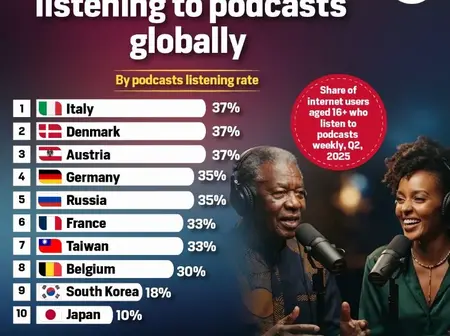
Japan and South Korea record the lowest weekly podcast listenership among internet users aged 16 and above, according to Q2 2025 data from Visual Capitalist.
Japan ranks lowest globally, with just 10 per cent of online adults listening to podcasts weekly, followed by South Korea at 18 per cent and Belgium at 30 per cent.
European countries dominate the rest of the bottom 10. France and Taiwan tie at 33 per cent, while Germany and Russia each record 35 per cent.
Italy, Denmark and Austria complete the list, each with weekly listenership of 37 per cent.
The figures highlight a contrast in podcast consumption across global digital markets, with these countries recording lower weekly listenership than leading markets such as Morocco, Kenya and Nigeria.
The Salaries and Remuneration Commission (SRC) has announced plans to expand performance-linked pay and productivity-based rewards to 1,009 public sector institutions by the end of the 2029/2030 financial year.
The initiative is aimed at transforming how public servants are compensated by ensuring that salaries, incentives and other financial rewards are increasingly linked to measurable performance, efficiency and service delivery.
In its Strategic Plan for the 2025/2026 to 2029/2030 period, the commission outlined several measures intended to promote productivity-driven remuneration systems across government institutions.
According to the strategic plan, only 22 public sector institutions had implemented performance-linked pay and productivity-based rewards by the end of the 2024/2025 financial year.
The commission now intends to significantly increase the number of institutions adopting the system over the next five years, signalling a major shift towards results-oriented compensation in the public service.
To facilitate the implementation, SRC plans to develop and distribute performance-based incentive guidelines to public institutions.
The guidelines will provide a framework for organisations to incorporate performance-linked rewards into their internal human resource management processes.
This is expected to help institutions establish clear mechanisms for assessing employees' productivity and determining appropriate incentives based on their contributions and achievements.
SRC also plans to undertake a comprehensive study to inform the development of a performance-based pay and productivity recognition framework for the public service.
The proposed framework is expected to guide the adoption of consistent approaches to rewarding employees who demonstrate improved performance and contribute to institutional objectives.
The initiative comes amid ongoing efforts to improve efficiency and accountability in government institutions while ensuring that public resources allocated to employee compensation generate better results.
By linking remuneration to measurable outcomes, the commission hopes to encourage a stronger performance culture among public servants and improve the quality of services delivered to Kenyans.
The 1,009-institution target forms part of SRC's broader five-year strategy to reform public sector remuneration and strengthen productivity across government agencies.
If successfully implemented, the changes could influence how public institutions evaluate employee performance, recognise outstanding contributions and administer productivity-based financial rewards.
Kenya's State Department for Roads is facing a Sh255 billion funding shortfall for the 2027/2028 financial year, raising concerns over the implementation of major infrastructure projects across the country.
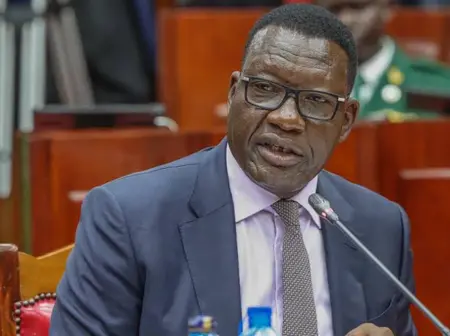
Roads and Transport Cabinet Secretary Davis Chirchir raised the concern while appearing before the National Assembly's Transport Committee, chaired by Ndia MP George Kariuki, to present the ministry's proposals for the 2027 Budget Policy Statement (BPS).
Chirchir warned that failure by the National Treasury to address the funding gap could delay ongoing and planned road projects and lead to a fresh accumulation of pending bills.
He also pointed out that the department was facing a recurrent expenditure deficit, which could affect operations and maintenance at its headquarters.
According to the budget proposals, the State Department for Roads has been allocated a proposed expenditure ceiling of Sh242.57 billion for 2027/2028, up from the approved Sh224.88 billion in the current financial year.
However, the proposed allocation remains far below the department's estimated funding requirements. The proposed ceiling covers only 46 per cent of the total requirement.
The recurrent budget is expected to rise from Sh57.8 billion to Sh60.08 billion, against a requirement of Sh60.53 billion.
Development expenditure is projected to increase from Sh167.1 billion to Sh182.5 billion, although the proposed allocation represents only 39 per cent of the department's development funding requirements.
The department is also expected to receive Sh57 billion from the Fuel Levy to support road maintenance and development.
Despite the financial challenges, the government has outlined ambitious infrastructure targets under the 2027 Budget Policy Statement.
In the roads sub-sector, the government plans to construct 4,080 kilometres of new roads and 54 bridges, rehabilitate 293 kilometres and maintain 121,229 kilometres of existing roads.
The government also intends to complete the 750-kilometre Northern Kenya Gateway Corridor linking Isiolo, Wajir and Mandera.
Several major highways are also expected to attract private investment through Public-Private Partnerships (PPPs).
They include the Rironi-Gilgil road, Rironi-Maai Mahiu-Naivasha road and Gilgil-Nakuru-Mau Summit highway.
The government is also considering transitioning major highways, including the Nairobi-Mombasa Expressway and the Mau Summit-Eldoret-Malaba Highway, to the PPP model.
The proposals further include implementing the National Road Safety Action Plan covering 2024 to 2028 and the National Electric Mobility Policy launched in February 2026.
In the railway sector, the government plans to advance the Standard Gauge Railway (SGR) Phase 2B and 2C projects to 50 per cent completion over the medium term.
It also intends to rehabilitate the Mombasa Island-Miritini Metre Gauge Railway line, including the 283-metre Makupa Railway Bridge.
Other planned railway works include the rehabilitation of the Voi-Taveta railway line and improvements to connections between the SGR and the Metre Gauge Railway.
The government is also targeting increased private investment in logistics facilities and technology to strengthen railway freight services.
The planned developments include Inland Container Depots and Special Economic Zones in Mombasa, Lamu, Nairobi and Naivasha.
Across the roads, railway, airports, seaports and maritime transport sectors, the government's medium-term strategy focuses on reducing transport costs, improving regional connectivity and attracting private investment through PPPs.
The proposals are aimed at strengthening Kenya's position as a major transport and commercial hub in East and Central Africa.
The High Court has ordered Nican Resort Hotel to pay Shs10.24 million in damages to a woman who was served expired Club Pilsner beer, finding that the establishment failed to check the product’s best-before date before serving it.In a judgment delivered on 16 November 2026, Justice Bonny Isaac Teko of the High Court Civil Division awarded Nazziwa Ruth Shs10 million in general damages and Shs240,000 in special damages after finding that she suffered a brief gastric upset after taking a sip of the beer.
The German government has committed Ksh3.3 billion to support a new irrigation programme targeting 10,000 farmers across seven counties in Western and Nyanza regions.
Agriculture Principal Secretary Ephantus Kimotho announced the funding after meeting National Assembly Speaker Moses Wetang'ula at Parliament Buildings on Tuesday, November 24, 2026.
The money, equivalent to EUR 22 million, was secured during recent Government-to-Government (G2G) negotiations in Berlin, Germany, under the Smallholder Irrigation Programme (SIP).
The programme will cover 8,000 acres of land in Migori, Homa Bay, Kisumu, Siaya, Busia, Bungoma and Kakamega counties.
It aims to expand the area under irrigation, increase agricultural production and improve the livelihoods of smallholder farmers.
"During the recent G2G negotiations in Berlin, we secured a commitment of EUR 22 million for the programme. It targets 8,000 acres and 10,000 farmers across seven counties," Kimotho said.
The government is now preparing to engage county governments and farmers before beginning implementation.
Kimotho asked Wetang'ula to lead the government team during county engagements to help bring together county leaders and other stakeholders.
A second round of consultations with governors is scheduled for December 17 and 18, 2026, under the State Department for Irrigation.
The meetings will bring together national and county governments, farmers and other stakeholders to agree on how the programme will be implemented.
The State Departments for Irrigation, Agriculture, Trade and Cooperatives will coordinate planning and guide the process.
"We will bring together the State Departments for Irrigation, Agriculture, Trade and Cooperatives to coordinate planning and guide implementation," Kimotho said.
The government also plans to introduce a cost-sharing arrangement between the national and county governments, using lessons from the Smallholder Irrigation Programme in the Mt. Kenya region.
The December consultations are expected to produce an implementation roadmap and a common approach to involving farmers in the projects.
The government says direct farmer participation will help beneficiaries understand the programme, contribute to planning and take ownership of the irrigation projects.
Africa is well positioned to make a significant contribution to the global clean energy transition.
The continent has abundant sunshine, substantial geothermal and wind resources, alongside great rivers which can be used as a resource for hydro generation. However, there is a huge difference between resource potential and generation, with finance being a key barrier to increasing access to reliable electricity.
Despite these constraints, investment in Africa’s energy sector is growing. The International Energy Agency (IEA) World Energy Investment 2026 benchmark estimates that total investment in the continent’s energy sector will grow by 11 per cent to USD 110 billion in 2026.
Private capital has become an increasingly important source of funding, with investment rising to around USD 40 billion. At the same time, public and concessional finance has contracted to USD 20 billion, following a significant reduction in Chinese development finance institution spending, which fell by 85 per cent.
The scale of investment remains disproportionate to Africa’s needs. Although the continent is home to around 20 per cent of the world’s population, it attracts only about 3 per cent of global energy investment. This points to the need for greater financing, particularly for projects that carry higher risks or are not yet commercially attractive to private investors.
The cost of securing these investments remains a steep hurdle. The IEA and the African Development Bank estimate that the cost of capital for utility-scale clean energy projects in Africa can be 2 to 3 times greater than in advanced economies.
A project in Kenya may use the same technology as one in Europe but face significantly higher borrowing costs. These costs can feed into electricity tariffs, increasing the burden on households and businesses while making projects more difficult to finance.
Several factors continue to make investors cautious, including currency risks, shifting policy environments, the financial position of utilities and delays in project implementation. Building confidence will require financially stronger utilities, lower system losses and predictable government policies. Developers also have a role to play by carrying out proper due diligence and preparing projects thoroughly at an early stage.
Issues such as land, permits, grid connections and reliable data should be handled before approaching financiers. Projects that are well prepared will give investors a clearer insight into the costs, risks and potential.
Investors must also assess African markets on their individual merits. Africa is not a single market and has 54 countries with varying policies, economies and investment. Putting them all into one group can mean you miss out on the progress some countries have made. More accurate data and understanding the local markets will help investors understand the opportunities in front of them.
Kenya has seen great success with its geothermal energy. When the first 15 MW unit came online at Olkaria in 1981, it was a huge undertaking. It required a lot of support from the government, technical knowledge and long-term investment.
Today, geothermal makes up around 47 per cent of Kenya’s electricity generation. Kenya now generates close to 90 per cent of its electricity from renewables. Over 93 per cent of electricity generated at KenGen is from hydro, geothermal and wind.
Early support through public and concessional funding helped to develop projects, reduce risk and attract further investment. The IEA estimates that USD 28 billion of concessional capital annually could mobilise USD 90 billion of private investment by 2030.
Using guarantees, currency risk protection and strong local financial institutions will help reduce borrowing costs. African pension funds and other local investors can also be more involved in well-structured projects that offer clear long-term returns.
The need for electricity remains urgent. Around 600 million people in Africa do not have access to electricity. Reliable energy is essential to manufacturing, agriculture, digital and expanding cities. Investment should not just be focused on generation but also transmission, distribution and connections. Without this, new generation will not be fully utilised.
The upcoming Sustainable Energy Conference 2026 will place investment and partnerships at the centre of discussions on Africa’s clean energy future. The event, hosted by KenGen in Olkaria, Naivasha, from 24 to 27 November, is expected to draw more than 1,500 delegates from over 80 countries.
Investors, financiers, utilities and power producers will have an opportunity to engage through various conference sessions, including a dedicated Deal Room where developers can showcase projects and explore potential funding partnerships.
The value from the conference will come from connecting financiers to utilities, developers and policymakers. This will help identify issues, solutions and create partnerships. Developers can discuss what they need to make their projects investable, and investors can get a clearer idea of the opportunities available.
Africa has the resources and demand to have a much larger clean energy sector. But to do this we need capital to flow into well-prepared projects at affordable rates. We need strong institutions, consistent policies, good project preparation and localised financing.
The conference can help create partnerships to move projects forward. Success should be measured based on how many projects have been moved forward, secured financing and provided reliable energy to communities and businesses.
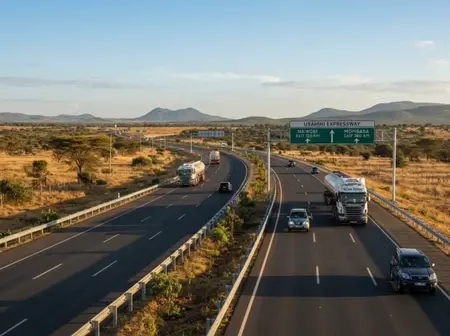
Motorists travelling between Nairobi and Mombasa could pay approximately Ksh2,766 for a one-way journey on the proposed expressway if the latest toll rates announced by the National Infrastructure Fund (NIF) are adopted.
The figure is based on a proposed charge of Ksh6 per kilometre for a Class 1 vehicle, calculated across the approximately 461-kilometre Nairobi-Mombasa highway.
Under the same proposed pricing model, motorists using Class 6 vehicles could pay as much as Ksh16,596 to cover the full distance, based on a rate of Ksh36 per kilometre.
The proposed charges were disclosed by NIF Chief Executive Officer James Mworia during an interview on Tuesday, November 24, 2026, as he explained the Fund’s plans to finance the long-awaited expansion of the Nairobi-Mombasa highway.
“We have finally been able to reduce the cost by half when we come to market, because we want the toll to be six shillings on a class 1 vehicle and Ksh36 on a class 6 vehicle,” Mworia said.
The rates represent a proposed per-kilometre pricing model, meaning the final amount payable would depend on the distance travelled and the vehicle’s classification.
Using the proposed rates and the existing highway’s approximate 461-kilometre length, the potential charges would be:
This means a Class 6 vehicle could pay six times the amount charged to a Class 1 vehicle for covering the same distance.
The figures are illustrative calculations rather than confirmed toll bills. The government has not yet published a complete tariff schedule showing the rates for all vehicle classes or the final tolling arrangements.
It is also not yet clear whether motorists travelling shorter distances along the highway would be charged strictly according to the kilometres covered or under a different payment arrangement.
Mworia argued that the proposed toll charges should be considered alongside the expenses motorists and transporters currently incur because of inefficiencies on the existing highway.
He cited insurance, accidents, tyre damage and other operational expenses, estimating that a truck could incur approximately Ksh15,000 in additional costs when transporting goods along the route.
The NIF boss said the Fund was examining how to structure the toll charges around the savings expected from an improved road.
The argument is that a better highway could reduce vehicle operating expenses, improve travel efficiency and lower the cost of transporting goods.
However, whether motorists and transporters will actually save enough to offset the proposed toll remains an important question.
For ordinary motorists, the Ksh2,766 illustrative one-way charge would mean approximately Ksh5,532 for a return journey, before accounting for fuel and other travel expenses.
For transport companies, the potential Ksh16,596 one-way charge for a Class 6 vehicle could become a significant operating expense unless improvements to the road deliver corresponding savings.
The impact on consumers will also depend on whether transporters absorb the additional expense or pass some of it on through higher delivery charges and prices of goods.
The latest proposal represents a significant shift from the original Nairobi-Mombasa expressway plan that had been pursued under a Public-Private Partnership arrangement involving American investor Everstrong Capital.
The earlier proposal, estimated at approximately Ksh468 billion, involved constructing a separate expressway along a new route.
Under that arrangement, the private investor would finance, construct, operate and maintain the road before eventually transferring it to the government.
The original proposal had projected toll charges of between Ksh12 and Ksh13 per kilometre, which would have translated to approximately Ksh5,280 for a 440-kilometre journey at the lower rate of Ksh12.
However, the National Treasury’s PPP Committee rejected the proposal in July 2025, citing concerns over its financial structure, technical capacity and overall viability.
One of the major concerns was the cost of acquiring land for a completely new highway, which could have increased the overall project cost and the toll charges imposed on motorists.
The government subsequently directed that the project be restructured around expanding the existing Nairobi-Mombasa highway instead of constructing an entirely separate road.
Under the redesigned project, the government intends to expand the existing two-lane highway into a road with at least four lanes and convert it into an access-controlled tolled highway.
The project is also expected to incorporate cost-effective designs to minimise disruption to communities and local traffic along the corridor.
The road is a critical transport link connecting the Port of Mombasa to Nairobi and landlocked countries in East and Central Africa.
It carries a substantial volume of cargo, passenger traffic and merchandise, making improvements to the corridor important for trade, tourism and regional economic activity.
The National Treasury’s PPP Directorate has indicated that the project remains in its early preparation stages, with procurement of a transaction adviser underway.
The adviser is expected to assess the project’s technical and financial feasibility and help determine the appropriate commercial and procurement structure.
Although Mworia has disclosed the proposed Ksh6 and Ksh36 rates, several important details remain unresolved.
The government has not announced a final toll schedule covering all vehicle categories, the exact charges for shorter journeys, the project’s final construction cost or when motorists can expect to start paying to use the expanded road.
The proposed rates should therefore not be treated as approved charges or an indication that construction is about to begin.
For now, the figures provide an indication of how much motorists could pay if the proposed per-kilometre model is adopted.
StrikeThe Kenyatta National Hospital (KNH) has announced a phased payment plan to settle outstanding staff dues amid an ongoing industrial action.The Kenyatta National Hospital (KNH) has announced a phased payment plan to settle outstanding staff dues amid an ongoing industrial action.In a statement on Wednesday, November 25, KNH Acting CEO Joel Lessan said the first payment would be made on Friday, November 27, followed by a second phase on Tuesday, December 8, 2026.