Category: Economy&Finance

  • KeNIC’s premium domain auction draws international interest as Kenya’s .ke registrations rise

    KeNIC’s premium domain auction draws international interest as Kenya’s .ke registrations rise

    KeNIC Domain auctions

    Kenya’s domestic internet addressing market is attracting interest from international buyers as businesses compete for premium web addresses under the country’s .ke extension. More than 620 premium .ke domains are being auctioned by the Kenya Network Information Centre (KeNIC), with current bids for some names exceeding KSh1 million.

    The auction has attracted interest from East Asia, particularly China, where buyers have shown a preference for shorter domain names. KeNIC Chief Executive Andrew Mwanyota Lewela said the registry had received interest from international participants seeking two- and three-letter combinations, although it was yet to establish which market accounted for the highest participation.

    has attracted the highest reported bid at KSh1.33 million, followed by motorbike.ke at KSh1.16 million. Other names drawing substantial offers include derma.ke at KSh914,810 and smoothie.ke at KSh911,820.

    The auction opened on November 17 and closes on December 4. Successful bidders can acquire second-level domain names registered directly under .ke, without intermediate identifiers such as .co.ke or .or.ke.

    Lewela said the auction gives businesses, particularly small and medium-sized enterprises, an opportunity to secure distinctive web addresses for their brands and commercial activities.

    The auction comes as Kenya’s domestic domain market continues to expand. KeNIC manages approximately 147,000 registered .ke domains, compared with 129,140 recorded in June 2026 and 111,268 in June 2025.

    Data reported by TechTrendsKE from Communications Authority statistics showed that registrations increased by 16.06% between June 2025 and June 2026. That growth exceeded the 3.6% expansion recorded in the global country-code top-level domain market over the same period.

    The commercial segment accounts for most registrations. By March 2026, .co.ke domains represented 110,687 of the country’s 124,498 registered domains, equivalent to approximately 88.9% of the portfolio.

    KeNIC is targeting 159,000 registrations by the end of December 2026 as it works towards a longer-term ambition of reaching one million domains. The registry has attributed the growth to wider internet access, more SMEs establishing online operations and government digitisation initiatives.

    The one-million-domain ambition also features in KeNIC’s longer-term development plans. Earlier reporting by TechTrendsKE indicated that the registry was examining how to accelerate adoption, with estimates suggesting that reaching the target could take approximately 30 years at the prevailing growth rate.

    Expanding the number of registered domains also requires making it easier for businesses and institutions to establish websites. KeNIC is working with accredited registrars that offer AI-powered website builders, allowing customers to register a domain and create a website in less than a minute.

    The registry has also introduced a mobile application to simplify domain registration and provide access to digital tools for businesses seeking an online presence.

    Its partnership with Zoho extends the services available to .ke domain holders through access to cloud-based business tools. The arrangement forms part of KeNIC’s efforts to make local domain ownership more useful to enterprises building their online operations.

    Lewela attributed the growth in registrations partly to the expansion of SMEs into digital markets, with the registry seeking to make domain acquisition and website creation more accessible to smaller businesses.

    Education is another area targeted by the registry. Through a partnership with Elimu Holdings and MetacapAI, KeNIC is providing free websites to schools, with the initiative targeting a tenfold increase in the number of institutions with an online presence.

    The websites are intended to improve communication between schools, parents and other stakeholders while making information about school programmes and activities more accessible.

    KeNIC is also pursuing international promotion of the country’s domain extension. In August 2026, the registry appointed media personality Thomas Kwaka Omolo, popularly known as Big Ted, as its global brand ambassador to promote .ke among Kenyans abroad and international audiences.

    The initiatives accompany KeNIC’s longer-term ambition to grow the domestic domain portfolio to one million registrations, extending adoption beyond established commercial users to individuals, smaller enterprises and educational institutions.
  • Govt gives hint on proposed toll charges on upcoming Nairobi-Mombasa Expressway

    Govt gives hint on proposed toll charges on upcoming Nairobi-Mombasa Expressway

    Govt gives hint on proposed toll charges on upcoming Nairobi-Mombasa Expressway

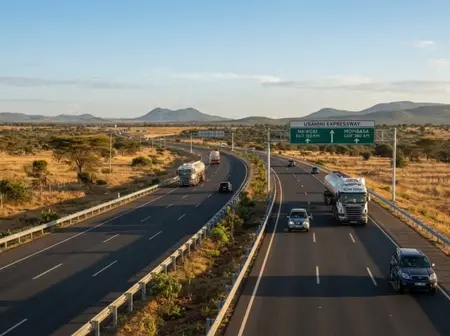
    Motorists using the proposed Nairobi-Mombasa Expressway could pay as little as Ksh6, while heavy commercial vehicles may be charged Ksh36 per kilometer, under a tolling model being assessed by the National Infrastructure Fund (NIF).

    NIF Chief Executive Officer James Mworia disclosed the proposed rates while explaining how the Fund intends to finance the major highway project, which was initially being pursued under a Public-Private Partnership (PPP) arrangement.

    Under the proposed tariff structure, a Class 1 vehicle would pay Ksh6, while a Class 6 vehicle would be charged Ksh36.

    Speaking during an interview with a local TV station on Tuesday, November 24, 2026, Mworia said the Fund was targeting a significant reduction in the cost of delivering the road, arguing that an NIF-led investment could bring the project cost down by approximately 50 per cent compared with the earlier PPP approach.

    “We have finally been able to reduce the cost by half when we come to market, because we want the toll to be six shillings on a class 1 vehicle and Ksh36 on a class 6 vehicle,” he said.

    He added that the proposed charges were being structured to support the competitiveness of businesses rather than simply generate returns for investors.

    The CEO said the Fund was still assessing the investment, with further disclosures expected as the process progresses.

    James Mworia during a past event. PHOTO/@CentumPLC/X

    Explaining the thinking behind the proposed toll charges, Mworia said the Fund had considered the cost incurred by transporters when using an inefficient road network.

    He gave the example of a truck transporting goods along the Mombasa-Nairobi highway, estimating that the additional cost associated with moving goods on the route could reach approximately Ksh15,000.

    The expenses, he explained, include insurance, accidents, tyre wear and other costs associated with road conditions and transport efficiency.

    “You start with the cost of moving goods and services on an efficient road, like the Mombasa-Nairobi highway, which is an artery to the rest of East Africa, and the additional coast per truck of moving goods on that road is about Ksh15,000,” Mworia said.

    He explained that the Fund would calculate toll charges against the savings expected from a more efficient road, with the intention of ensuring that the toll does not become an additional burden to motorists and businesses.

    “If you have the revenue and the cost of funding, you then work out the maximum EPC cost envelope should be,” he added.

    Mworia said the financing model would also involve looking for an engineering, procurement and construction (EPC) contractor capable of delivering the project within the targeted cost envelope.

    The company, through its Kenyan subsidiary Usahihi Limited, had proposed constructing a new expressway stretching approximately 459 kilometres between Mlolongo in Machakos County and Bonje in Mombasa County.

    The greenfield project was estimated at Ksh468 billion and was to be developed under a PPP arrangement, with the private investor financing, building, operating and maintaining the road before transferring it to the government.

    However, on July 2, 2025, the National Treasury’s PPP Committee rejected the proposal, citing concerns over its financial structure, technical capacity and overall viability.

    The committee directed the Kenya National Highways Authority (KeNHA) to consider restructuring the project around expanding the existing Nairobi-Mombasa highway instead of constructing a completely new route.

    The decision was partly informed by the high cost of acquiring land for a separate highway, which could have pushed up the overall project cost and toll charges paid by motorists.

    The PPP Committee’s decision was subsequently upheld after Everstrong challenged it before the Public Private Partnership Petition Committee.

    Under the redesigned proposal, the government intends to expand the existing 461-kilometre Nairobi-Mombasa highway from two lanes to at least four lanes.

    The project will also convert the road into an access-controlled tolled highway, with measures intended to preserve local connectivity.

    According to the National Treasury’s PPP Directorate, procurement of a transaction adviser was initiated in March 2026, with bids closing on May 8. Evaluation of the submissions was underway in the department’s June 2026 report.

    The adviser is expected to assess the technical and financial feasibility of the project and help determine its commercial structure and procurement strategy.

    In October 2026, reports indicated that the government was still pursuing the expansion, with the transaction adviser procurement process underway.

    The proposed road forms part of the Northern Corridor, which connects the Port of Mombasa to Nairobi and landlocked countries in East and Central Africa, including Uganda, Rwanda, Burundi, South Sudan and the eastern Democratic Republic of Congo.

    The proposed highway investment is part of the National Infrastructure Fund’s wider strategy to mobilise capital for major projects while reducing reliance on conventional government borrowing.

    The Fund was established in March 2026 and is capitalised using proceeds from the partial divestiture of government interests in Kenya Pipeline Company and Safaricom.

    Mworia, who was appointed its founding CEO in September 2026, has previously outlined plans to use the Fund’s capital to attract additional private investment into commercially viable infrastructure projects.

    Mworia has said the Fund’s capital has reached approximately Ksh346 billion.

    The Fund is also involved in financing arrangements for the planned expansion of Jomo Kenyatta International Airport, while exploring ways to attract local institutional investors into infrastructure projects.

    For the Nairobi-Mombasa highway, the proposed toll rates and reported 50 per cent cost reduction represent an alternative approach to financing the project.

    However, the Ksh6 and Ksh36 charges are still proposed figures disclosed by the NIF CEO. A complete vehicle-class tariff schedule, final project cost, construction timeline and financing arrangements have not yet been publicly confirmed.

  • Safaricom launches new feature allowing 5 people to spend from one M-Pesa account

    Safaricom launches new feature allowing 5 people to spend from one M-Pesa account

    Safaricom launches new feature allowing 5 people to spend from one M-Pesa account

    Safaricom has launched a new M-PESA feature allowing customers to give up to five people controlled access to spend money directly from their mobile money accounts without sharing their PINs or repeatedly transferring funds to them.

    The service, known as Shiriki Pay, allows M-PESA account holders to authorise trusted family members, dependants or employees to make payments using money in their wallets.

    Under the arrangement, the account holder, referred to as the sponsor, can add up to five beneficiaries and assign each an individual monthly spending limit of up to Ksh20,000.

    This means a customer can allocate a combined spending limit of up to Ksh100,000 per month across the five beneficiaries, although all transactions are deducted directly from the sponsor’s M-PESA balance.

    Safaricom announced the service in Nairobi on Tuesday, November 24, 2026, saying it was designed to make it easier for households and businesses to manage shared financial responsibilities.

    “Managing money is often a shared responsibility, whether within families, households or businesses. Shiriki Pay makes it easier for customers to empower people they trust to make payments on their behalf, while maintaining visibility and control over their funds,” Stephen Chege, Safaricom’s Group Chief Corporate and External Affairs Officer, said.

    The service provides an alternative to the traditional practice of sending money to relatives, household workers or employees whenever they need to make payments.

    Customers can access Shiriki Pay through Safaricom’s My OneApp or by dialling *334# on their mobile phones.

    To activate the service, the M-PESA account holder adds a beneficiary using their registered mobile money number and assigns them a monthly spending limit.

    Once registered, the beneficiary can make authorised payments directly from the sponsor’s wallet without having to receive money in their own M-PESA account first.

    The service supports money transfers, payments through PayBill numbers, purchases through Till Numbers and payments to Pochi La Biashara merchants.

    A screengrab of Safaricom's announcement of Shiriki Pay, a new M-PESA feature allowing customers to give up to five people controlled access to spend from their accounts without sharing their PINs.

    For instance, a parent can allow a child to pay for shopping or other expenses, while a business owner can authorise an employee to purchase supplies without having to send money every time a transaction is required.

    Despite giving other people access to spend from one M-PESA account, Shiriki Pay comes with restrictions intended to protect the account holder’s funds and financial information.

    Beneficiaries cannot withdraw cash from the sponsor’s wallet. They are also restricted from viewing the account holder’s M-PESA balance and transaction history.

    The sponsor retains control of the account and can monitor transactions made by beneficiaries, adjust their individual spending limits or revoke their access whenever necessary.

    This means that although several people can make payments using one wallet, the account holder remains responsible for managing the funds and deciding how much each beneficiary can spend.

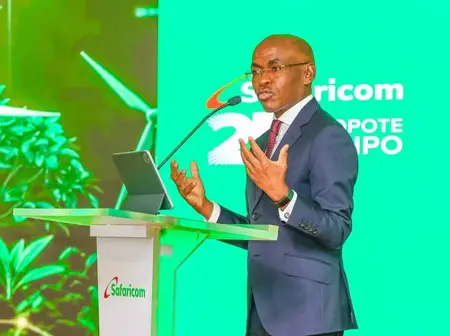
    Safaricom PLC CEO Peter Ndegwa speaks during a past event. PHOTO/@SafaricomPLC/X

    Safaricom said Shiriki Pay had attracted more than 3.7 million customer opt-ins since it became publicly available.

    The uptake highlights the potential demand for services that allow customers to manage household and business expenses without repeatedly transferring money between different M-PESA accounts.

    The company said the service forms part of its efforts to expand M-PESA beyond conventional person-to-person money transfers by providing customers with more flexible ways to manage payments.

    For customers who regularly support dependants, manage household expenses or run businesses, Shiriki Pay provides an additional way to facilitate payments while retaining control over their mobile money wallets.

  • Absa’s plans to enter South Africa’s mobile market take shape through its partnership with Vodacom

    Absa’s plans to enter South Africa’s mobile market take shape through its partnership with Vodacom

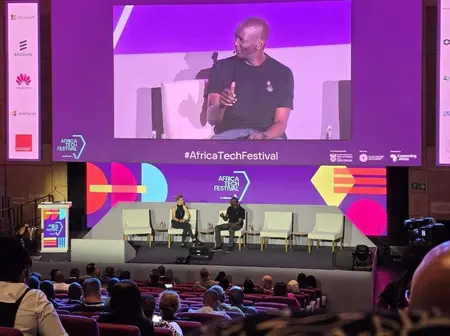
    Absa Africa Tech Festival

    Absa Group is pursuing a route into South Africa’s mobile market through a partnership with Vodacom, bringing its banking services closer to the telecommunications operator’s network, technology and customer base.

    The agreement gives Absa a different route into a market where several of its banking competitors already operate mobile virtual network operators (MVNOs). Rather than announcing a conventional mobile network offering, the two companies intend to develop propositions that combine connectivity with financial services, customer rewards and device financing.

    Vodacom South Africa and Absa said they would work on new customer propositions and opportunities across trusted digital services, loyalty programmes and device financing. They will also examine opportunities for customer acquisition, although neither company has disclosed specific products, pricing or a launch timetable.

    The arrangement follows Absa’s earlier preparations to enter the mobile market with its own MVNO. In April 2026, TechTrendsKE reported that the bank was preparing a mobile network offering, although it had not announced a launch date or confirmed a network partner. Cell C had previously indicated that it was among the operators shortlisted to support the proposed service.

    The new agreement with Vodacom gives Absa access to an established telecommunications operator as it develops its mobile services strategy. The companies have not explained how the partnership relates to the earlier MVNO plans, or whether Absa still intends to launch a standalone offering.

    Mobile services have become another customer acquisition and engagement channel for South African banks. FNB Connect launched in 2015, while Standard Bank and Nedbank have also entered the MVNO market. Capitec is among the other banks with a mobile network offering.

    These services allow banks to extend their relationship with customers beyond conventional banking transactions. Mobile connectivity creates another point of contact through which financial institutions can market products, build loyalty and maintain regular engagement with account holders.

    Absa’s proposed collaboration with Vodacom approaches that opportunity through a partnership with a major network operator. Vodacom will manage the connectivity relationship, while Absa will handle the banking relationship. The companies also intend to develop selected offers, rewards and benefits that bring the two services closer together.

    Vodacom said the arrangement goes beyond the traditional standalone MVNO model. That distinction matters because the partnership’s stated ambitions extend beyond selling mobile subscriptions under a bank’s brand. Its scope includes the development of connected digital services and financial propositions.

    Vodacom South Africa CEO Sitho Mdlalose said the objective was to combine the operator’s network, technology and customer reach with Absa’s banking and financial services capabilities.

    “Our ambition is not simply to create another mobile proposition. We want to combine Vodacom’s network, technology and customer reach with Absa’s banking and financial services capabilities to create meaningful value for customers,” Mdlalose said.

    He added that the partnership would begin with propositions capable of delivering value quickly, with the companies building the capabilities needed for a connected ecosystem over time.

    The mobile agreement also sits within Absa’s broader efforts to distribute financial products through partnerships and digital channels.

    In August 2026, TechTrendsKE reported on the bank’s fintech partnership strategy, including its integration with investment platform EasyEquities. The arrangement made the platform accessible through Absa’s banking app, extending the bank’s digital offering beyond traditional account services.

    Sitoyo Lopokoiyit, Absa’s CEO of personal and private banking for Pan-Africa, has also brought experience from the mobile money sector into the bank. Before joining Absa, he led M-PESA Africa, where mobile payments provided a foundation for a wider range of financial services.

    That background is relevant to the Vodacom agreement because the partnership is built around combining two customer relationships that are often managed separately. A bank can offer financial products, while a mobile operator controls the connectivity and distribution infrastructure used by millions of customers.

    Lopokoiyit said the collaboration would start with everyday customer needs rather than the boundaries between the two businesses.

    “Our starting point is what customers need to do every day, and how we can make that easier,” he said.

    He added that working together would allow the companies to design services around customer needs.

    Device financing is one of the more concrete commercial areas identified in the announcement. Access to a smartphone can determine whether customers can use digital banking applications and other online services, making handset affordability relevant to both companies’ customer acquisition strategies.

    The partnership could give Absa an additional channel through which to reach customers who need financing for devices, while Vodacom could use banking capabilities to support a wider range of customer propositions. However, the companies have not outlined how financing would be structured, who would provide the credit or how the associated risks would be shared.

    The proposed loyalty and rewards offering is similarly broad. The companies have not disclosed whether customers will receive combined banking and connectivity benefits, how rewards will be earned or whether the propositions will be limited to particular customer segments.

    Those details will determine how far the arrangement develops beyond a commercial collaboration between a bank and a telecommunications operator.

    For now, Absa has secured a partnership with a network operator as it pursues a stronger presence in mobile services. The next stage will depend on the products the two companies bring to market and whether they can turn the combined banking and connectivity relationship into services customers have a reason to use.

  • How 5 people can now spend money from one M-PESA account

    How 5 people can now spend money from one M-PESA account

    thumbnail

    Kenyans can now allow up to five other people to spend money directly from one M-PESA account without having to transfer funds to their individual mobile wallets.The new arrangement, introduced by Safaricom through a service known as Shiriki Pay, allows an M-PESA account holder to give trusted individuals controlled access to their funds.

  • Treasury sounds debt distress alarm, unveils plan to tame Sh13.1 trillion burden

    Treasury sounds debt distress alarm, unveils plan to tame Sh13.1 trillion burden

    The National Treasury has warned the country remains at high risk of debt distress.

    The development comes as it unveils a new borrowing strategy to contain rising repayment obligations and the cost of servicing loans.

    The latest debt sustainability assessment jointly conducted by the Treasury and the CBK indicates that although the country's debt remains sustainable, vulnerabilities have intensified.

    The move calls for fiscal consolidation, prudent borrowing and tighter management of the debt portfolio.

    “The Debt Sustainability Analysis jointly conducted by the National Treasury and the Central Bank of Kenya indicates that Kenya’s public debt remains sustainable, but with a high risk of debt distress,” the report states.

    Kenya's public and publicly guaranteed debt stood at Sh13.12 trillion as at June 2026, equivalent to 70.4 per cent of the country's Gross Domestic Product (GDP).

    Of this amount, domestic debt accounted for Sh7.33 trillion, representing 55.8 per cent, while external debt stood at Sh5.79 trillion, or 44.2 per cent.

    In its 2027 Medium-Term Debt Management Strategy covering the 2027-28 to 2029-30 financial years, Treasury acknowledges the growing pressure on public finances.

    Treasury warned that the present value of public debt will remain above the internationally recognised 55 per cent benchmark throughout the projection period.

    The ratio is expected to decline gradually from 65.6 per cent of GDP in 2026 to 62.1 per cent by 2030.

    "This underscores the continued need for fiscal consolidation, prudent borrowing and effective debt management to mitigate public debt-related vulnerabilities," the report states.

    To contain the risks, Treasury plans to shift towards longer-term domestic borrowing, reduce dependence on short-term Treasury bills and prioritise cheaper concessional loans from development partners.

    Under the proposed strategy, 78 per cent of gross borrowing will be sourced from the domestic market, while external borrowing will account for 22 per cent.

    Of the external borrowing component, 12.1 per cent will come from concessional loans, three per cent from semi-concessional financing and 6.9 per cent from commercial borrowing.

    The strategy seeks to reduce exposure to expensive international credit markets while strengthening the domestic securities market.

    "The 2027 MTDS seeks to minimise the cost and risk of public debt through a borrowing mix that targets 22 per cent of gross financing from external sources and 78 per cent from domestic sources over the medium term," Treasury says.

    The government intends to gradually reduce its stock of Treasury bills and increase the issuance of medium- and long-term Treasury bonds to spread out repayment obligations and minimise refinancing risks.

    The move follows concerns over the growing pressure from short-term borrowing, which has left the government exposed to frequent refinancing requirements.

    Treasury's assessment shows that interest payments as a share of GDP stood at 6.2 per cent in June 2026, against a target of 5.1 per cent under the previous debt strategy.

    The report attributes the higher debt servicing costs to elevated domestic interest rates and increased domestic borrowing.

    It also shows that debt maturing within one year accounted for 12.7 per cent of the total debt portfolio, against a target of 11.9 per cent.

    The proportion of debt subject to interest rate adjustments within one year stood at 24.2 per cent, significantly above the targeted 17.9 per cent.

    Treasury says the deviation was largely driven by a higher-than-targeted stock of Treasury bills, which accounted for 7.3 per cent of total debt against a target of 3.4 per cent.

    The strategy projects that the share of debt maturing within one year will decline to 8.9 per cent by June 2030, while the proportion of foreign currency-denominated debt will fall from 44.6 per cent to 41.6 per cent.

    The reduction is intended to cushion the country against exchange rate fluctuations that increase the shilling cost of servicing external loans.

    Treasury also plans to undertake liability management operations to smooth repayment schedules and reduce concentrations of maturing debt.

    The government expects interest payments as a share of GDP to decline from 6.2 per cent to 5.8 per cent by 2030, although the implied interest rate is projected to rise marginally from nine per cent to 9.3 per cent.

    The monitoring framework will provide an early-warning mechanism to identify deviations from the preferred borrowing strategy and facilitate timely corrective action.

    "The debt portfolio will be monitored on a semi-annual basis against established cost and risk indicators to ensure consistency with the objectives of the 2027 MTDS and overall debt sustainability," the report states.

    Treasury also plans to operationalise the Registrar of National Government Securities and establish an over-the-counter trading platform to improve the efficiency and transparency of the domestic debt market.

    The strategy projects that nominal public debt as a share of GDP will decline from 68.7 per cent in June 2026 to 66.6 per cent by June 2030.

  • Kenyans Could See Changes to PAYE, VAT and Fuel Taxes as Treasury Begins Review

    Kenyans Could See Changes to PAYE, VAT and Fuel Taxes as Treasury Begins Review

    The review anchors a broader government effort to evaluate how existing levies affect workers, enterprises, and ordinary Kenyans, with the findings set to shape upcoming reforms to Kenya’s tax framework.

    Mbadi issued the directive after stakeholders presented research papers at a Tuesday, November 24, workshop in Nairobi. The studies examined the four core tax categories alongside electronic invoicing via eTIMS and informal payments.

    Following the presentations, Mbadi instructed technical teams at the National Treasury to scrutinize the recommendations and flag proposals requiring policy adjustments or structural improvements.

    These teams will compile the proposals into a policy review matrix detailing Supporting evidence behind each tax recommendation, additional research needed before implementation, and responsible government institutions tasked with executing the reforms.

    The exercise aligns with the Treasury’s ongoing drafting of the Finance Bill 2027, an active review of Pay As You Earn (PAYE) brackets, and the formulation of Kenya’s second Medium-Term Revenue Strategy (MTRS).

    Addressing workshop participants, Mbadi stressed that the government aims to boost domestic revenue mobilization without squeezing household budgets or deterring businesses from investing, expanding, and creating jobs.

    “How do we strike a balance between the objective of financing better public services while not putting undue pressure on household incomes? How do we raise revenue without disincentivising investment and growth of enterprises?” he posed.

    The upcoming PAYE evaluation will measure how personal income tax impacts earners across different income tiers, including how current exemptions and reliefs affect workers’ take-home pay. Researchers will also analyze income inequality to determine whether taxpayers contribute equitably based on their earnings and ability to pay.

    Parallel studies will examine how VAT and petroleum excise duty impact consumer prices and business operating costs, while corporate tax assessments will track how tax burdens influence capital investment and private-sector expansion.

    Mbadi added that the state must deliver reliable public services in return for taxes collected, noting that taxpayer trust hinges on the responsible use of public funds.

  • Govt completes 84km Kenol-Sagana-Marua Highway upgrade into four-lane dual carriageway

    Govt completes 84km Kenol-Sagana-Marua Highway upgrade into four-lane dual carriageway

    Govt completes 84km Kenol-Sagana-Marua Highway upgrade into four-lane dual carriageway

    The government has completed the upgrade of the 84-kilometre Kenol-Sagana-Marua Highway into a four-lane dual carriageway, marking a major milestone in efforts to improve road connectivity and ease transportation in Central Kenya.

    Raymond Omollo, the Principal Secretary for Internal Security and National Administration, said the upgraded highway would improve mobility, reduce travel time and open up the region to increased trade and investment.

    In a statement shared on Wednesday, November 25, 2026 Omollo described road infrastructure as a key driver of economic inclusion, saying improved connectivity helps bridge geographical divides and brings communities closer to opportunities.

    “Road infrastructure is among the greatest enablers of inclusivity, bridging geographical divides, bringing communities closer and connecting people to economic and social opportunities,” Omollo stated.

    A screengrab of the statement by Principal Secretary Raymond Omollo announcing the completion of the 84-kilometre Kenol-Sagana-Marua Highway upgrade into a four-lane dual carriageway.

    He said the completed highway was a major step towards improving transport infrastructure and opening up the region to economic opportunities.

    “The completed upgrade of the 84-kilometre Kenol-Sagana-Marua Highway into a four-lane dual carriageway is a major step in this direction, opening up the region to greater mobility, trade and investment,” he added.

    The project, implemented by the Kenya National Highways Authority (KeNHA), includes major bridges across the Saba Saba, Tana and Rwamuthambi rivers.

    It also features grade-separated interchanges at Makutano and Marua, pedestrian footbridges, street lighting and designated boda boda sheds.

    According to Omollo, the completed highway is expected to ease traffic congestion, enhance road safety and lower the cost of transporting people and goods.

    “The improved highway will reduce travel time, ease traffic congestion, enhance road safety and lower the cost of moving people and goods,” he said.

    The four-lane carriageway is also expected to strengthen connections between Central Kenya and other parts of the country, making it easier for farmers, traders and businesses to access markets.

    Omollo said the improved infrastructure would create new economic opportunities for communities along the highway while supporting national economic growth.

    “It strengthens connectivity between Central Kenya and other parts of the country, creating new opportunities for businesses, farmers, traders and communities while supporting national economic growth,” he stated.

    Part of the upgraded Kenol-Sagana-Marua Highway, a major infrastructure project expected to ease traffic congestion and reduce travel time.

    The highway upgrade is among the infrastructure developments aimed at improving the movement of people and goods across the country.

    Its completion is expected to improve transport efficiency for motorists and commercial operators using the Kenol-Sagana-Marua route.

    The additional road facilities, including pedestrian footbridges and designated boda boda sheds, are also intended to improve safety for different categories of road users.

    Omollo further stated that the State Department for Internal Security and National Administration would continue working with relevant agencies to strengthen security, enforce traffic regulations and promote road safety along the highway.

    The completion of the 84-kilometre project is expected to strengthen transport links within Central Kenya and improve connectivity with other regions.

  • New road to open up arid Mbeere South for trade, agricultural growth

    New road to open up arid Mbeere South for trade, agricultural growth

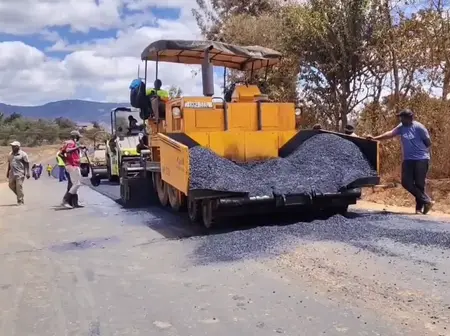
    Residents of Mbeere in Embu county are anticipating an economic turnaround with the tarmacking of the Kiritiri-Kiambere road expected to open up the semi-arid region to new trade and investment opportunities.

    The 30km road will ease transportation of agricultural produce and livestock, lower travel costs and improve access to markets.

    Njagi Magara, a 60-year-old resident, said the construction marks the fulfilment of a promise that successive administrations have made without delivering.

    "Since I was born, I have heard politicians promise that this road would be tarmacked whenever they came seeking for votes. For all these years, it remained a dream, but the Kenya Kwanza government has finally made it happen," he said.

    Magara observed that the improved road was already changing perceptions about the area's economic potential, with landowners receiving better offers for their properties as investors and prospective buyers increasingly show interest.

    Land which previously sold for Sh400,000 now attracting offers of more than Sh800,000.

    Magara said the road will benefit farmers growing green grams, sorghum, millet and other drought-resistant crops by making it easier to transport their produce to markets.

    Buyers will also be able to reach farms directly, reducing the cost of transporting produce and ensuring farmers retain more from their sales.

    Improved connection will also ease livestock transportation, particularly for goat farmers in the Kiambere area, who have traditionally faced difficulties moving their livestock to markets.

    "People will no longer have to walk their livestock over long distances to reach markets. With a good road, buyers can drive directly to the farms, making business easier for both farmers and traders," Magara said.

    The project is also expected to improve regional connectivity by providing a shorter route towards Kitui through Kiambere.

    Dickson Kiura, another resident of Kiritiri, said the road will significantly improve the livelihoods of farmers and livestock keepers who have endured poor transport infrastructure for decades.

    He said improved connection will make it easier to transport agricultural produce, including miraa.

    "Throughout the years I have been voting, I have never witnessed development of this magnitude. We have always been promised electricity, water and roads, but this road remained a dream for a long time," he noted.

    Kiura said better connectivity will encourage farmers to expand production while making it easier for traders to reach the area and buy their produce.

    The residents appealed to the government to ensure the road is regularly maintained after completion to protect the investment and sustain the benefits.

    The road construction comes amid other major infrastructure investments aimed at addressing longstanding development challenges in Mbeere South.

    Among them is the Sh800 million Kamburu Water Supply Project, which is expected to provide clean water to more than 80,000 residents through a treatment plant, storage facilities and 120 kilometres of distribution pipelines.

    The project, which draws water from Kamburu Dam, is designed to supply approximately 10,000 cubic metres daily, easing the burden on households that have for years trekked long distances in search of water.

    The region is also benefiting from investments in irrigation infrastructure, including the Sh69.9 million expansion of the Rupingazi-Weru Irrigation Scheme in Mbeti South ward.

    The expansion is expected to bring an additional 370 acres under irrigation and benefit more than 360 households, reducing farmers' dependence on increasingly unreliable rainfall.

    The national government is also upgrading the 45km Wamumu-PI-Karaba-Makima-Machang'a road at an estimated cost of Sh1 billion, further improving connectivity across the semi-arid constituency.

    The investments are expected to complement one another by improving access to water, supporting agricultural production and making it easier for farmers and traders to move goods to markets.

  • JKIA Customs: Gifts That Could Get Diaspora Kenyans Stopped

    JKIA Customs: Gifts That Could Get Diaspora Kenyans Stopped

    thumbnail

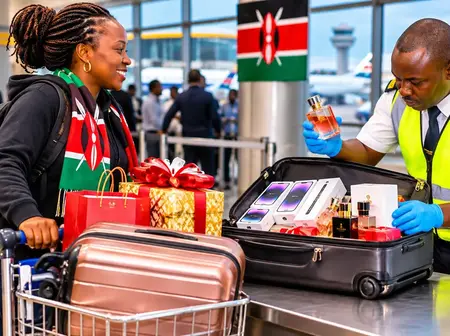
    Kenyan Diaspora! Coming home in December? Be careful what you pack in your suitcases.As the December holiday season approaches, thousands of Kenyans living in the United States, Canada, the United Kingdom, Europe, Australia and the Middle East are preparing to travel home to celebrate Christmas with family and friends.