
When Ceaser Wesala left Kenya, little did he know that his passion for cycling would eventually see him establish a thriving business.Wesala, who hails from Emanyulia, sells bicycles as well as cycling apparel in Singapore. His company is called The Savanna Collective.He also offers tours and travel, as well as visa application services.
Category: Economy&Finance
-
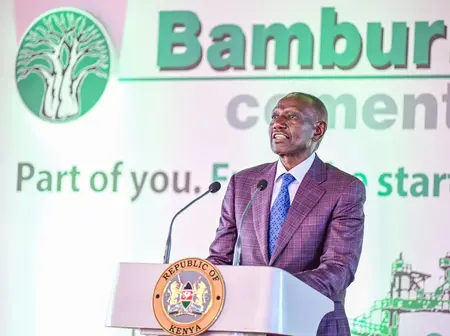
Ruto launches Sh32 billion Bamburi cement plant in Kwale
Listen to articleThe plant, President Ruto says, is expected to produce 5,000 tonnes of clinker daily, a key ingredient in cement manufacturing.President William Ruto on Tuesday launched construction of a Sh32 billion Bamburi Cement plant in Matuga, Kwale County, in an expansion expected to raise the company's annual cement production capacity from 1.8 million to four million tonnes.
-
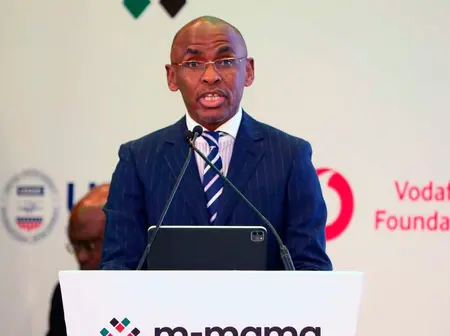
Vodafone reveals Sh430bn gain from Safaricom deal
Vodafone Group booked a gain of €3.02 billion (Sh430.2 billion) after its subsidiary Vodacom Group bought an additional 20 percent stake in Safaricom, making the British multinational the top beneficiary from the transaction.
Vodacom spent a total of Sh272.4 billion to buy a 15 percent and a 5.0 percent stake in Safaricom from the Kenyan government and Vodafone respectively, lifting its ownership in the Nairobi Securities Exchange-listed firm to a controlling 55 percent from the previous 35 percent.
-
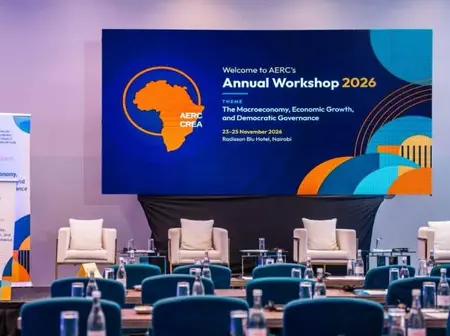
African officials call for stronger economic resilience amid global shocks
Listen to articleMatlanyane also noted that African economies have already demonstrated significant resilience, with the IMF projecting sub-Saharan Africa's economy to grow about 4.5 per cent in both 2026 and 2027.Strengthening the resilience of African economies amid multiple external shocks is central to achieving inclusive growth and long-term stability, senior officials said on Monday.
-
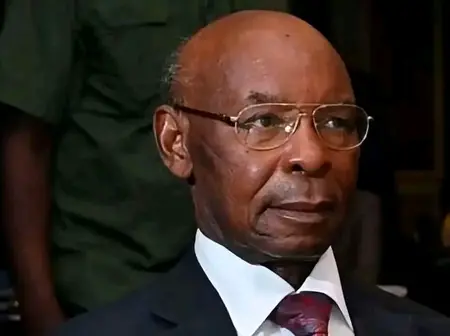
Meet S.K. Macharia: The Man Who Rose From Poverty to Build East Africa’s Largest Media Empire
Born in 1942 in Ndakaini, Gatanga, Murang'a County, Macharia's early life was characterised by hardship. His parents worked as squatters on settler-owned farms, while he lost his mother at the age of five. His father was left to raise four children, with Macharia being the only boy.
The family later moved to Tanganyika, present-day Tanzania, where Macharia herded cattle. In 1952, colonial soldiers destroyed their home near Arusha during Kenya's State of Emergency, forcing the family into another difficult period.
Upon returning to Kenya, Macharia experienced homelessness in Thika, where he survived on leftover food and sometimes slept in a restaurant before reuniting with his family.
He enrolled at Ndakaini Primary School in 1954, aged approximately 11 or 12. His family reportedly made the painful decision to marry off his elder sister, Njeri, to raise dowry money that would help finance his education.
Despite the challenges, Macharia excelled academically at Gituru Intermediate School. After completing his Kenya African Preliminary Examination in 1958, he secured work as an untrained teacher at Makomboki Primary School, earning just eight shillings monthly.
He later trained as a P3 teacher at Kahuhia Teachers Training College.
His determination eventually opened international opportunities. In the 1960s, Macharia secured a place in the prestigious Kennedy Airlift programme, which offered African students opportunities to pursue higher education in the United States.
His remarkable journey from poverty and homelessness to international education laid the foundation for an extraordinary business career.
Today, through Royal Media Services, which operates Citizen TV, Radio Citizen and several vernacular radio stations, Macharia has established himself as a major figure in Kenya's media industry.https://www.facebook.com/groups/617208782275055/permalink/1986091482053438/?app=fbl
-
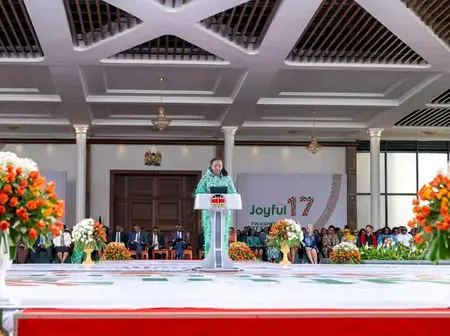
17 Years of Joyful Women: How Rachel Ruto’s Table Banking Initiative Transformed Lives Across Kenya
Celebrated under the Swahili theme "Twasherehekea Hatua Zetu" (We Celebrate Our Steps), the milestone event honored nearly two decades of grassroots financial inclusion driven by the table banking model.
What started as a modest community dream in Eldoret North on August 31, 2009, has steadily expanded into a nationwide economic movement reaching women who were previously locked out of traditional commercial banks.
According to JOYWO official records, the organization has grown to over 250,000 active members across 44 Kenyan counties, revolving roughly KSh 4 billion in member-owned funds.
How the Table Banking Model Works
Unlike conventional banking systems that demand strict collateral and lengthy paperwork, table banking relies on social trust and collective accountability.
Women organize themselves into local groups, commonly known as chamas, consisting of 15 to 20 members who meet monthly to pool their savings directly on the table.
During the same sitting, members borrow from the collected kitty either as short-term emergency advances or long-term development loans to fund small businesses, pay school fees, or boost farm production.
Because the interest generated from loans stays within the group, members earn quarterly bonuses and annual dividends alongside access to welfare safety nets during emergencies.
Transforming Households Beyond Savings
Over the past 17 years, JOYWO has evolved beyond cash lending to equip rural and peri-urban women with practical enterprise and climate-smart agricultural skills.
Through targeted value-chain programs, members receive training in commercial poultry keeping, kitchen gardening, agroforestry conservation, and Black Soldier Fly farming for affordable animal feed.
The initiative also supports household resilience through water-harvesting tank projects and digital literacy sessions that help female entrepreneurs market their goods online.
Seventeen years on, Joyful Women stands as proof that when grassroots women are given accessible financial tools and supportive networks, small contributions around a single table can build lasting generational wealth.
SOURCE
-
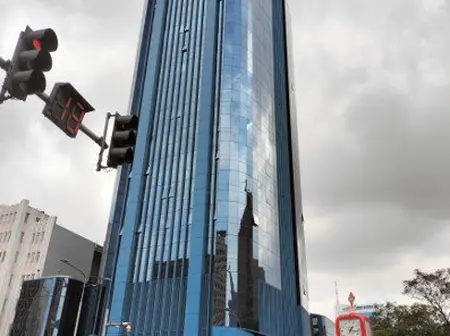
I&M Group Q3 2026 Net Profit Rises to KSh 15.8 Bn
I&M Group Plc has posted a third quarter net profit of KSh 15.8 billion for the nine months’ period ended September 30th compared to KSh 12.7 billion over a similar period last year.I&M Group PLC operates in five countries namely Kenya, Tanzania, Rwanda, Uganda and Mauritius through its subsidiaries, affiliates and joint venture investments in each of these countries.
-
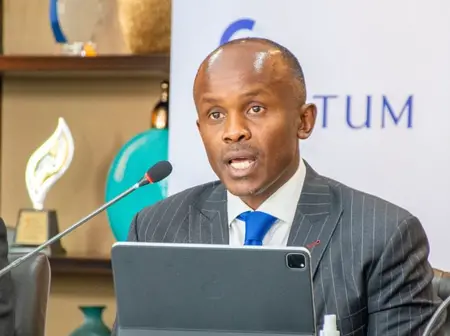
National Infrastructure Fund plans local investor participation in JKIA expansion
The National Infrastructure Fund (NIF) is considering setting aside part of the equity investment in the Jomo Kenyatta International Airport (JKIA) expansion for local institutional investors after the opportunity attracted strong interest from foreign capital.
Fund Chief Executive Officer James Mworia said the equity tranche for the airport upgrade had been fully oversubscribed by foreign investors, with the Fund now selecting investment partners and working out how to accommodate local institutions.
Mworia, in a post dated November 24, 2026, disclosed this in an update on the Fund’s investments, revealing that its capital had reached approximately Ksh346 billion, up from the Ksh310.6 billion seed funding previously reported by Cabinet.
The initial capital comprised Ksh106.3 billion from the partial divestiture of Kenya Pipeline Company and Ksh204.3 billion from the partial divestiture of Safaricom.
Mworia said the Fund had secured three times the debt it was initially seeking for the early works of the JKIA expansion. The financing was secured at the Secured Overnight Financing Rate (SOFR) plus 3.45 per cent.
The Fund will contribute 20 per cent equity, which will be drawn entirely from interest earned on the principal invested.
“The equity tranche for the JKIA upgrade is fully oversubscribed by foreign investors,” Mworia said. “We are now in the process of selecting which equity partners to proceed with and determining how best to ring-fence a meaningful portion of this tranche for local institutional investors.”
The Fund is now working on how to involve local institutions in the project alongside foreign investors.
Beyond the airport expansion, NIF is assessing investment in a major highway project that was initially planned under a public-private partnership (PPP) arrangement.
The proposed toll charges are Ksh6 for Class 1 vehicles and Ksh36 for Class 6 vehicles.
Mworia said the cost of delivering the road under an NIF-led investment model could be 50 per cent lower than under the original PPP arrangement. Further details of the proposed investment are expected to be disclosed.
The assessment is part of the Fund’s plans to support major infrastructure projects while exploring alternative financing arrangements.
The Fund is also holding discussions with the Nairobi Securities Exchange (NSE) and the Capital Markets Authority (CMA) on the structure and listing of an investment instrument similar to a development real estate investment trust (D-REIT).
The discussions come as the Fund continues to mobilise capital for major projects and attract both foreign and domestic investors.
Mworia’s update provides details of the Fund’s progress since its previous engagement on September 9, 2026, including financing for the JKIA expansion, the proposed highway investment and plans to introduce a listed investment product.
-
National Infrastructure Fund plans local investor participation in JKIA expansion
The National Infrastructure Fund (NIF) is considering setting aside part of the equity investment in the Jomo Kenyatta International Airport (JKIA) expansion for local institutional investors after the opportunity attracted strong interest from foreign capital.
Fund Chief Executive Officer James Mworia said the equity tranche for the airport upgrade had been fully oversubscribed by foreign investors, with the Fund now selecting investment partners and working out how to accommodate local institutions.
Mworia, in a post dated November 24, 2026, disclosed this in an update on the Fund’s investments, revealing that its capital had reached approximately Ksh346 billion, up from the Ksh310.6 billion seed funding previously reported by Cabinet.
The initial capital comprised Ksh106.3 billion from the partial divestiture of Kenya Pipeline Company and Ksh204.3 billion from the partial divestiture of Safaricom.
Mworia said the Fund had secured three times the debt it was initially seeking for the early works of the JKIA expansion. The financing was secured at the Secured Overnight Financing Rate (SOFR) plus 3.45 per cent.
The Fund will contribute 20 per cent equity, which will be drawn entirely from interest earned on the principal invested.
“The equity tranche for the JKIA upgrade is fully oversubscribed by foreign investors,” Mworia said. “We are now in the process of selecting which equity partners to proceed with and determining how best to ring-fence a meaningful portion of this tranche for local institutional investors.”
The Fund is now working on how to involve local institutions in the project alongside foreign investors.
Beyond the airport expansion, NIF is assessing investment in a major highway project that was initially planned under a public-private partnership (PPP) arrangement.
The proposed toll charges are Ksh6 for Class 1 vehicles and Ksh36 for Class 6 vehicles.
Mworia said the cost of delivering the road under an NIF-led investment model could be 50 per cent lower than under the original PPP arrangement. Further details of the proposed investment are expected to be disclosed.
The assessment is part of the Fund’s plans to support major infrastructure projects while exploring alternative financing arrangements.
The Fund is also holding discussions with the Nairobi Securities Exchange (NSE) and the Capital Markets Authority (CMA) on the structure and listing of an investment instrument similar to a development real estate investment trust (D-REIT).
The discussions come as the Fund continues to mobilise capital for major projects and attract both foreign and domestic investors.
Mworia’s update provides details of the Fund’s progress since its previous engagement on September 9, 2026, including financing for the JKIA expansion, the proposed highway investment and plans to introduce a listed investment product.
-
National Infrastructure Fund plans local investor participation in JKIA expansion
The National Infrastructure Fund (NIF) is considering setting aside part of the equity investment in the Jomo Kenyatta International Airport (JKIA) expansion for local institutional investors after the opportunity attracted strong interest from foreign capital.
Fund Chief Executive Officer James Mworia said the equity tranche for the airport upgrade had been fully oversubscribed by foreign investors, with the Fund now selecting investment partners and working out how to accommodate local institutions.
Mworia, in a post dated November 24, 2026, disclosed this in an update on the Fund’s investments, revealing that its capital had reached approximately Ksh346 billion, up from the Ksh310.6 billion seed funding previously reported by Cabinet.
The initial capital comprised Ksh106.3 billion from the partial divestiture of Kenya Pipeline Company and Ksh204.3 billion from the partial divestiture of Safaricom.
Mworia said the Fund had secured three times the debt it was initially seeking for the early works of the JKIA expansion. The financing was secured at the Secured Overnight Financing Rate (SOFR) plus 3.45 per cent.
The Fund will contribute 20 per cent equity, which will be drawn entirely from interest earned on the principal invested.
“The equity tranche for the JKIA upgrade is fully oversubscribed by foreign investors,” Mworia said. “We are now in the process of selecting which equity partners to proceed with and determining how best to ring-fence a meaningful portion of this tranche for local institutional investors.”
The Fund is now working on how to involve local institutions in the project alongside foreign investors.
Beyond the airport expansion, NIF is assessing investment in a major highway project that was initially planned under a public-private partnership (PPP) arrangement.
The proposed toll charges are Ksh6 for Class 1 vehicles and Ksh36 for Class 6 vehicles.
Mworia said the cost of delivering the road under an NIF-led investment model could be 50 per cent lower than under the original PPP arrangement. Further details of the proposed investment are expected to be disclosed.
The assessment is part of the Fund’s plans to support major infrastructure projects while exploring alternative financing arrangements.
The Fund is also holding discussions with the Nairobi Securities Exchange (NSE) and the Capital Markets Authority (CMA) on the structure and listing of an investment instrument similar to a development real estate investment trust (D-REIT).
The discussions come as the Fund continues to mobilise capital for major projects and attract both foreign and domestic investors.
Mworia’s update provides details of the Fund’s progress since its previous engagement on September 9, 2026, including financing for the JKIA expansion, the proposed highway investment and plans to introduce a listed investment product.