NCBA is expanding its PropertyDuka digital property marketplace beyond Nairobi. The bank is targeting developers, realtors and investors in Nakuru and Naivasha as it pushes to digitise property transactions and widen access to property finance in regional markets.
The bank describes PropertyDuka as East Africa’s first AI-powered property marketplace. It connects prospective homeowners and investors with developers and real estate professionals, and links property discovery with NCBA’s financing and advisory services.
According to NCBA, active users on the platform have grown from 4,500 in September to more than 625,000. PropertyDuka now hosts 216 property listings and has generated 148 applications for financial products and 95 account-opening requests.
The bank presented the platform to property sector stakeholders from Nakuru and Naivasha at a breakfast meeting in Nakuru.
The expansion targets a market where most people rent. According to the Nakuru County Housing Status Report, published in February 2026 by the Kenya Institute for Public Policy Research and Analysis (KIPPRA) with support from Financial Sector Deepening (FSD) Kenya, more than 70% of urban households in Nakuru County rent their homes.
“Owning a home is an important aspiration for many Kenyans, while developers and realtors need to reach the right customers to grow their businesses,” said Dennis Njau, group director of retail banking at NCBA Group.
“As we expand into Nakuru and Naivasha, we want to give local developers and realtors greater visibility while making it easier for more people to discover property opportunities that align with their aspirations.”
Beyond listings
Through the platform, developers and realtors can showcase properties and connect with prospective customers, while property seekers can browse available opportunities online. NCBA said customer activity on PropertyDuka shows strong interest in property financing, expert advice and home set-up services.
Njau said NCBA’s support goes beyond helping customers find property to financing their purchases.
“Finding the right property is an important first step, but access to appropriate financing can be equally critical in turning that ambition into reality,” Njau said.
“The strong growth of PropertyDuka, both in user adoption and customer demand for financial solutions, demonstrates the growing need for a seamless property ecosystem that goes beyond listings to include financing, advisory services and homeownership support.”
The bank said it wants more regional developers and real estate agencies to join the platform, to widen the range of properties on offer to buyers and investors.
Go to TECHTRENDSKE.co.ke for more tech and business news from the African continent and across the world.
Follow us on WhatsApp, Telegram, Twitter, and Facebook, or subscribe to our weekly newsletter to ensure you don’t miss out on any future updates. Send tips to info@techtrendsmedia.co.ke
Co-working space provider Kofisi plans to expand its presence in the food and beverage business as it targets Kenya’s meetings and events market to return to growth.
Kofisi will work with specialist partners on food and beverage services as it changes its operating model to focus on meetings, conferences and events to improve occupancy.
Julius Kipngetich is set to retire from Jubilee Group after nearly nine years as the insurer’s chief executive officer. Dr Kipngetich’s term will end on November 30, 2026, having been appointed to the role on January 1, 2018.
He will be replaced by Juan Cazcarra, who has been the company’s deputy CEO.
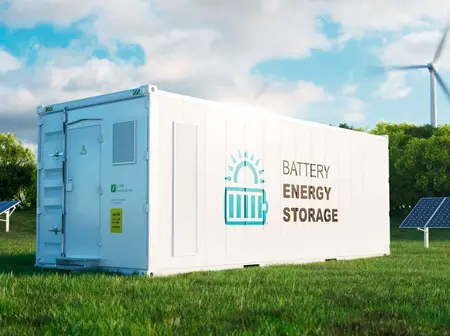
Kenya Electricity Generating Company (KenGen) has secured Sh10.5 billion funding for a battery storage for excess wind and solar power, to boost supply in the evening when demand peaks besides easing reliance on the costly thermal power.
The Global Climate Fund (GCF) of the United Nations will provide $45million (Sh5.84 billion) while World Bank’s International Development Agency (IDA) will disburse the remaining 32.08 million euros (Sh4.65 billion), according to KenGen's latest annual report.
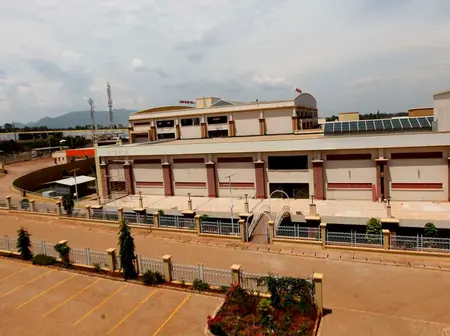
The Lake Basin Development Authority (LBDA) and a property developer are locked in a court battle over a Sh475 million arbitration award arising from a dispute over the construction of Lake Basin Mall in Kisumu.
LBDA is seeking permission from the Court of Appeal to file a late appeal challenging a High Court judgment that upheld an arbitral award ordering it to pay Erdemann Property Limited the amount.
United States oil companies have earned more than $130bn in profits during the war on Iran, even as consumers pay much higher prices for key commodities, amid fears that US President Donald Trump may renew fighting after midterm elections.
The estimate, released by The New York Times, is a conservative evaluation based on the performance of 51 large US oil and gas companies in the six months from April through September. By contrast, in the same period in 2025 – when the prices of oil were lower prior to the launch of the US-Israel war on Iran – they collectively earned less than $47bn.
But the gains come as burgeoning living costs are crushing consumers. Americans have spent an extra $150bn on petrol and diesel since the war on Iran began on February 28, according to an analysis by Brown University’s Climate Solutions Lab, which amounts to more than $1,150 per household.
The disparity has fuelled a political debate over who gains and who pays the price for the war. Responding to Trump, Democratic Representative Jim McGovern wrote on X: “We’re not making a ‘freaking fortune,’ we’re PAYING a ‘freaking fortune’.”
Naser al-Tamimi, a fellow at the Institute for International Political Studies (ISPI) in Milan, Italy, said US energy companies have benefitted from the war in different ways. “Crude producers gain from higher oil prices, while refiners capture exceptional margins as diesel and other fuel supplies tighten,” he said.
Additionally, “damage to Middle Eastern and Russian refineries, disrupted Strait of Hormuz shipments, and sanctions-related trade frictions have intensified shortages”, while “relatively secure US facilities and access to discounted crude strengthen these gains”.
ExxonMobil and Chevron, the biggest US oil companies, on Friday reported profits of between $10bn and $15bn. While the gains are considerable, The New York Times found they generally remained below 2022 levels, when Russia’s invasion of Ukraine caused oil prices to soar to roughly $100 a barrel and raised natural gas prices, compared with the current average of $90 from April through September.
American refining companies also reaped greater profits as global fuel supplies tightened and inventories depleted due to heavy damage to infrastructure in the Middle East and Russia. Valero Energy’s third-quarter profit increased more than sixfold, reaching $6.83bn. Phillips 66 announced its highest quarterly profit on record, with net income jumping to $5.62bn from $133m a year earlier.
Geoffrey Miller, geopolitical analyst and editor of the Gulf States Insights newsletter, said the US-Israel war with Iran “created the largest supply-side shock to global oil and refined products markets in years”.
Miller added that the war “created a risk premium that US-based operators are structurally well placed to monetise”. By contrast, Gulf producers were “hit hard by both higher costs and risks, along with physical damage, which makes their ability to benefit from the higher prices much more difficult”.
Tehran retaliated against the US-Israeli attack by launching missiles and drones at the Gulf Cooperation Council (GCC). The Armed Conflict Location and Event Data (ACLED), a US-registered independent conflict monitor, found Iran and Iran-backed groups in the region have carried out at least 172 attacks on nonmilitary infrastructure across the six GCC member states. Despite claims by Iranian officials that they were targeting US military facilities, they also hit energy infrastructure.
Iran also effectively blocked passage of most vessels through the Strait of Hormuz. In retaliation, the US imposed a naval blockade on Iranian oil and gas – the tit-for-tat steps raising the risks of transporting energy out of the crucial passageway.
Analysts warned of continued volatility until a durable political settlement between the US and Iran is reached. Oil prices dropped briefly in the summer after a memorandum of understanding was signed in June, but prices quickly soared again when talks broke down.
A more recent escalation in fighting between Saudi Arabia and the Houthis has further compounded the crisis: the Bab al-Mandeb strait that connects the Red Sea to the Gulf of Aden, which Saudi Arabia uses to export oil, is now also a theatre of war.
“In the short term, windfall profits will only strengthen oil company balance sheets and shareholder returns,” Miller said. “However, the big profits come with a major caveat. That’s because over the longer term, high oil prices risk harming economic growth prospects and could even contribute towards the outbreak of a recession, which would in turn be likely to lead to reduced demand for oil” and accelerate the transition to renewable energy.
Florence Schmit, senior energy strategist at Rabobank’s global economics and markets team in London, said it was likely that the prices of key energy products would remain high given the uncertainty about the duration of the war in Iran.
“Prices in all markets that have an exposure to this global supply shock – which includes the US – will face high prices also next year, and consumers will continue to feel this price pressure unless governments step in,” Schmit told Al Jazeera.
The US-led war on Iran has raised costs for oil, transport fuels, gas, electricity and food. According to the World Bank Group’s latest Commodity Markets Outlook, commodity prices are set to rise 23 percent this year, as disrupted grain shipments and the El Nino weather phenomenon also threaten harvests and food affordability.
The United Nations’ Food and Agriculture Organization said on October 2 that world food commodity prices rose a further 1.5 percent in September, after reaching their highest level since late 2022 in August, amid adverse weather and trade disruptions in the Black Sea and Strait of Hormuz.
Trump has sought to blame high global fuel prices on Ukraine and pressured Ukrainian President Volodymyr Zelenskyy to halt strikes on Russian refineries, even as Moscow continued to wage attacks on Ukrainian energy infrastructure. The US president has argued that a deal with Russia reversing years of sanctions would help lower diesel prices.
In the Gulf, analysts said higher oil prices will benefit exporters that can maintain shipments, but prolonged insecurity will continue to threaten supply reliability and investment.
“Gulf producers face years of reconstruction and pressure to diversify export routes,” ISPI’s al-Tamimi said. “A diplomatic settlement could ease prices, whereas renewed US-Israeli attacks on Iran risk triggering another regional war, further disrupting Hormuz and prolonging shortages.”
Small- and medium-sized enterprises (SMEs) in Kenya have largely moved beyond the first stage of digital payment adoption, but a productivity gap remains. According to Visa’s new survey for its Pay and Get Paid 2026 report, the vast majority of surveyed SMEs in Kenya actively accept and make digital payments, showing that digital commerce is now a key part of the country’s small business economy.
Binance customers withdrew a net $3.6 billion (£2.7 billion) in digital assets after the world's largest cryptocurrency exchange reopened on Sunday following what is believed to be the largest hack in history. The company had temporarily halted all transactions after the cyber-attack compromised $6.3 billion worth of crypto assets.
Industrialist Narendra Raval has pledged investments worth over Sh200 billion in the past five years, expanding his steel and cement empire beyond Kenya into Uganda and Rwanda.
His investments include the recent Sh70 billion cement and clinker plant in Ngaaie, Kitui County, a Sh45 billion clinker factory in West Pokot, the acquisition of Rwanda’s CIMERWA Plc for Sh13.6 billion and a proposed clinker plant in Musanze, Rwanda, estimated at about Sh27 billion.
Business Ireland Kenya (BIK) has rebranded as the Irish Chamber of Commerce Kenya, with a new name, a new logo and a clear purpose: to connect the Irish and Kenyan business markets over the long term.The new logo is a shamrock, one of the most recognisable symbols of Ireland.