
From premium Kenyan coffee and executive gift hampers to branded office accessories and technology, these business gifting ideas can help companies strengthen client relationships, appreciate partners and build lasting professional connections.As the festive season approaches, businesses in Kenya have an opportunity to do more than exchange greetings.
Category: Economy&Finance
-

Absa marks 100 years in Eldoret with week-long customer and community celebrations
Absa Bank Kenya is commemorating 100 years of successful operations in Eldoret with a week-long series of customer, colleague, and community engagements across Uasin Gishu County, celebrating a century of partnership, growth, and contribution to the region’s economic development.The celebrations bring together customers, colleagues, community leaders, and other stakeholders through a diverse list of activities designed to honour the bank’s long-standing relationship with the people of Eldoret and the wider North Rift region.
-

Spirit Yetu Idumu: Kenya Cane turns 50 and pours a toast to what comes next
Some brands age and others get better at being part of the family.Kenya Cane, popularly known to most of us simply as KC, has just crossed half a century, and it marked the moment the way Kenyans do best: with the people who made it happen.
-
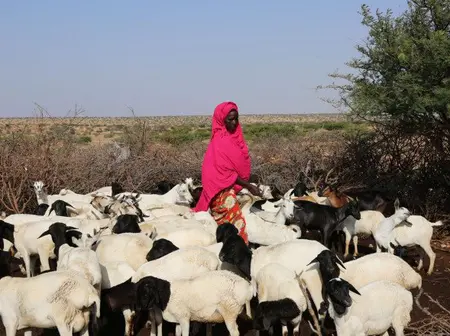
Somalia Faces Rising Rift Valley Fever Risk, Threatening Livestock Livelihoods
Mogadishu (HOL) — Somalia faces a growing risk of Rift Valley fever that could threaten livestock-dependent livelihoods, after the United Nations Food and Agriculture Organization (FAO) and the regional bloc IGAD identified the country among six facing the highest assessed risk of the disease.The warning, issued on October 30, comes as El Niño-related rainfall creates favourable conditions for the spread of the mosquito-borne virus across Eastern Africa.
-
LSK loses bid to block higher excise stamp fees over Sh4.5bn KRA debt
The High Court has struck out a Law Society of Kenya (LSK) petition challenging higher excise stamp fees that the taxman said were needed partly to cover a Sh4.5 billion debt owed to its stamp system contractor.Justice Roselyn Aburili ruled that LSK filed its case before Parliament completed its scrutiny of the 2023 regulations, meaning the court could not determine whether the taxman’s decision complied with constitutional requirements for public participation, regulatory impact assessment and parliamentary scrutiny.
-
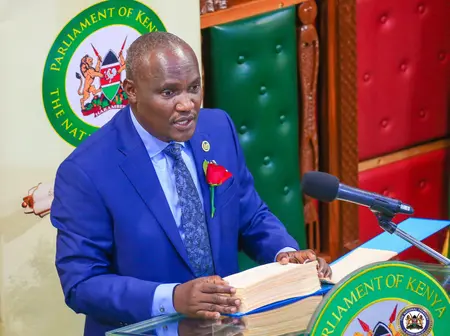
Treasury faces mounting spending demands as Kenya prepares November supplementary budget
Kenya’s supplementary budget for the 2026/27 financial year will have to accommodate new government spending commitments as revenue collections fall short of targets, putting additional pressure on the National Treasury’s efforts to manage the fiscal deficit and public debt.
National Treasury Cabinet Secretary John Mbadi is expected to present the first supplementary estimates for the financial year in November, with the proposed adjustments set to factor in Cabinet-approved expenditure, including the settlement of pending bills worth Sh50 million and below and additional financing for national carrier Kenya Airways.
The supplementary budget comes as the government faces competing funding demands from ministries, departments and agencies (MDAs), even as tax collections struggle to match the targets set at the beginning of the financial year.
“We are hoping that in the supplementary budget coming in the next three weeks, we will be making submissions on how to clear most of the pending bills,” National Treasury Principal Secretary Chris Kiptoo told the National Assembly’s Finance and National Planning Committee on Tuesday.
Kiptoo said the Treasury was considering different financing arrangements for settling the arrears, including securitisation or payments through the national budget.
The proposed supplementary estimates come against a fiscal framework that already requires substantial government borrowing to finance expenditure.
Kenya’s 2026/27 budget projected expenditure of approximately Sh4.8 trillion against revenue and grants of about Sh3.64 trillion, with a deficit of approximately Sh1.15 trillion. The Treasury had also projected net domestic borrowing of Sh1.03 trillion to support the government’s financing requirements.
The current fiscal projections put total expenditure at Sh4.81 trillion against expected revenues of Sh3.63 trillion. The budget deficit is projected at 5.5 percent of gross domestic product (GDP), equivalent to Sh1.14 trillion, for the financial year ending June 2027.
The government also projects the deficit to rise to 5.9 percent of GDP in FY2027/28, pointing to continued pressure on public finances beyond the current budget cycle.
The National Treasury has acknowledged that spending requests from government ministries and State departments are exceeding the resources available from revenue collection.
“The problem right now is that spending pressures are very high. I am getting requests every now and then from MDAs asking for more money, but we are unable to raise corresponding revenues,” Kiptoo said.
The pressure comes as Kenya’s public debt surpassed Sh13 trillion as of August 2026, adding to the government’s financing obligations as it prepares to revise spending allocations and revenue expectations.
The revenue challenge is evident in the Kenya Revenue Authority’s (KRA) first-quarter performance, with ordinary revenue collections falling Sh58.2 billion below the Treasury’s target for the period.
KRA collected Sh655.8 billion in ordinary revenue between July and September 2026, compared with Sh573.5 billion during the corresponding period in 2025. This represented year-on-year growth of 14.4 percent, although the increase was insufficient to meet the government’s collection target.
The National Treasury attributed the overall revenue shortfall to weaker-than-targeted ordinary revenue collections, partly offset by stronger ministerial appropriations in aid (A-i-A).
“By the end of September 2026, revenue collection was below target by Sh40.4 billion mainly on account of shortfalls in ordinary revenues of Sh58.2 billion while ministerial appropriations in aid (A-i-A) surpassed the target by Sh17.8 billion,” the Treasury said in an earlier presentation.
Ordinary revenue comprises tax and non-tax receipts collected by the government, primarily through KRA. The A-i-A category covers revenues collected by ministries and government departments from their respective services and activities.
The Treasury expects total revenue to reach Sh3.63 trillion by June 2027, comprising Sh2.985 trillion in ordinary revenue and Sh644.8 billion in ministerial A-i-A.
The latest collection figures come as KRA pursues digital compliance measures to improve tax administration and broaden visibility into business transactions.
TechTrendsKE reported on October 29 that KRA was discussing an arrangement with Safaricom to facilitate electronic tax invoicing for merchants using M-Pesa tills and paybills. The proposed arrangement would also use transaction information associated with merchant tills and Pochi la Biashara accounts to improve visibility into business income.
The initiative forms part of the authority’s efforts to strengthen electronic invoicing and tax compliance, particularly among businesses operating through mobile money payment channels.
The settlement of pending bills is among the major expenditure items expected to feature in the November supplementary budget after the Cabinet approved payments for outstanding government obligations valued at Sh50 million and below.
The initiative is intended to prioritise micro, small and medium-sized enterprises (MSMEs), which often depend on timely payments from government contracts to maintain working capital, pay employees and meet their own supplier obligations.
For businesses that have completed government contracts but are awaiting payment, clearing these arrears could release funds that have remained tied up in outstanding invoices.
The Treasury has already used securitisation to settle pending bills in the roads sector, clearing approximately Sh80 billion through an arrangement backed by the Road Maintenance Levy Fund.
The fund receives revenue through a Sh25 charge on every litre of petrol and diesel sold at the pump, providing a financing stream that the government has used to address outstanding obligations in the sector.
Kiptoo indicated that the Treasury was considering whether to extend securitisation to the wider pending-bill settlement programme or allocate funds directly through the budget.
The issue also has implications for commercial banks, which finance businesses supplying goods and services to government entities.
In October, TechTrendsKE reported on Moody’s assessment of Kenyan banks’ exposure to government securities, noting that their holdings of sovereign debt stood at 1.7 times their equity at the end of December 2025. The report also linked declining government pending bills to improved loan repayment among contractors, contributing to better asset quality in the banking sector.
Settling outstanding invoices can help contractors repay loans and restore their capacity to finance business operations, making the government’s pending-bill programme relevant to both enterprise liquidity and the banking sector.
The supplementary budget is also expected to accommodate additional financial commitments to Kenya Airways after the Cabinet approved Sh45.5 billion ($350 million) in shareholder financing for the national carrier.
The funding is intended to help the airline meet urgent financial obligations, including aircraft maintenance and returning grounded planes to service.
The Cabinet also proposed converting Sh122 billion in existing government loans to Kenya Airways into equity, a measure intended to strengthen the airline’s balance sheet and support future capital raising.
The two measures form part of a wider government effort to address the airline’s financial position and support its recovery.
As TechTrendsKE reported in October, the shareholder financing and proposed debt restructuring are linked to Kenya Airways’ efforts to restore its operational capacity and pursue longer-term capital support, including the search for a strategic investor.
The Sh45.5 billion shareholder financing represents an additional funding commitment, while the proposed Sh122 billion conversion concerns existing government loans. The restructuring would change the composition of the government’s financial claims against the airline while supporting its capital position.
The Kenya Airways commitments add to the expenditure decisions the Treasury must accommodate as it prepares the supplementary estimates, alongside pending-bill settlements and funding requests from other government agencies.
The supplementary budget comes as the government continues to rely on domestic borrowing to finance a substantial portion of its expenditure requirements.
The original FY2026/27 budget projected net domestic borrowing of approximately Sh1.03 trillion, placing banks and other domestic investors at the centre of the government’s financing strategy.
TechTrendsKE’s reporting on Kenyan banks’ sovereign debt exposure highlighted the close relationship between government borrowing and the financial sector, with commercial banks holding substantial amounts of government securities.
The government’s financing requirements therefore have implications beyond the national budget, particularly for banks, businesses and contractors that depend on access to credit.
For the Treasury, the November supplementary estimates will provide an opportunity to adjust expenditure allocations and revenue expectations as it incorporates approved commitments into the current financial year’s budget.
The revised estimates will also shape how the government manages its financing requirements as it seeks to meet obligations to suppliers, support Kenya Airways and fund government programmes while working within a constrained revenue environment.
Go to TECHTRENDSKE.co.ke for more tech and business news from the African continent and across the world.
Follow us on WhatsApp, Telegram, Twitter, and Facebook, or subscribe to our weekly newsletter to ensure you don’t miss out on any future updates. Send tips to info@techtrendsmedia.co.ke
-
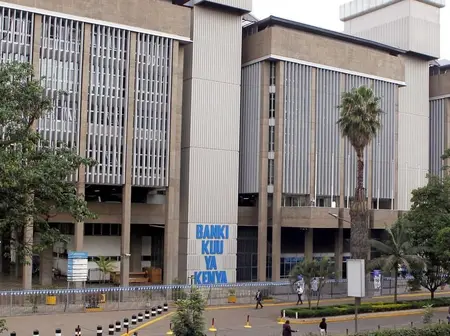
CBK Governor warns heavy government borrowing could undermine efforts to make loans cheaper
Central Bank of Kenya (CBK) Governor Kamau Thugge has called on the National Treasury to reduce government borrowing from the domestic market, arguing that monetary policy alone cannot deliver lower lending rates without support from fiscal policy.
Appearing before the National Assembly’s Finance and Planning Committee, Thugge said the government needed to reduce its fiscal deficit and domestic borrowing if Kenya was to achieve more affordable credit. He told lawmakers that monetary and fiscal policy must work together, warning that the two cannot operate in opposing directions while the Central Bank pursues lower interest rates.
The Governor’s remarks put the government’s financing requirements at the centre of the debate over borrowing costs. CBK can adjust its monetary policy instruments to influence interest rates, but government demand for financing also affects conditions in the domestic credit market, where banks and other investors allocate funds between public and private borrowers.
Thugge told the committee that monetary policy was insufficient on its own to achieve lower lending rates, adding that fiscal policy needed to support the Central Bank’s efforts.
“So we can’t have a situation where they are not working together,” he said, linking lower borrowing costs to a smaller fiscal deficit and reduced government borrowing.
The Governor argued that reducing the government’s financing requirements would help create conditions for lower interest rates and improve the affordability of loans. His position reflects the relationship between public borrowing and private-sector financing, since the government competes with businesses and households for funds available in the domestic market.
When banks and investors allocate a substantial share of their resources to government securities, less funding may be available for private-sector lending. Government borrowing can also influence the returns demanded by investors across the domestic market, affecting the wider cost of financing.
The Governor’s argument is that monetary easing needs to be accompanied by a reduction in the government’s demand for domestic financing if borrowers are to benefit from lower rates.
Thugge used the Treasury’s borrowing requirements to illustrate how government financing plans have changed during budget implementation.
He told lawmakers that the domestic borrowing requirement for the 2025/26 financial year initially stood at KSh634.8 billion before being increased to KSh994.8 billion through a supplementary budget.
The Governor also presented a domestic borrowing requirement of KSh987 billion in the figures he discussed, saying CBK hoped the amount would not change significantly through further supplementary budgets.
“We hope this 987 does not change very much in the event that there are supplementary budgets that will be coming,” Thugge told the committee.
His comments highlighted the effect of supplementary budgets on the government’s financing requirements, particularly when additional expenditure leads to higher domestic borrowing.
The Governor also reviewed CBK’s performance in meeting the borrowing targets assigned to it by the Treasury. He said the Central Bank had achieved 100% of its assigned targets for several years, with some exceptions where supplementary budget requests were submitted close to the end of the financial year.
Thugge said CBK had again funded 100% of the target in the previous financial year and expected to meet its allocation in the current year.
The Treasury’s 2027/28 budget projections provide further context to the Governor’s argument. The projected fiscal deficit stands at KSh1.353 trillion, equivalent to 5.9% of gross domestic product, while net domestic borrowing is projected at KSh929.1 billion.
These financing requirements make government borrowing an important consideration in the domestic interest rate environment. The amount the Treasury raises locally affects the pool of funds available to other borrowers and the returns investors expect from lending to the government.
For commercial banks, government securities provide an alternative to lending to households and businesses. Their allocation decisions are influenced by the relative returns, risks and capital requirements associated with different assets.
Thugge’s position is that reducing the government’s financing needs would help ease pressure on domestic funding conditions and support the transmission of monetary policy into lower lending rates.
The Governor’s comments build on CBK’s broader argument that lower interest rates depend on more than changes to the Central Bank Rate.
Monetary policy influences the cost of money in the economy, while fiscal policy determines how much the government needs to borrow to finance its expenditure. When government borrowing remains high, the effect of monetary easing on private-sector financing can be limited.
Thugge therefore wants the Treasury to reduce its fiscal deficit and domestic borrowing as the Central Bank works to improve credit affordability.
His intervention also places responsibility for lower borrowing costs across government institutions. CBK can influence monetary conditions, but the Treasury’s borrowing decisions shape the environment in which banks price and allocate credit.
Go to TECHTRENDSKE.co.ke for more tech and business news from the African continent and across the world.
Follow us on WhatsApp, Telegram, Twitter, and Facebook, or subscribe to our weekly newsletter to ensure you don’t miss out on any future updates. Send tips to info@techtrendsmedia.co.ke
-
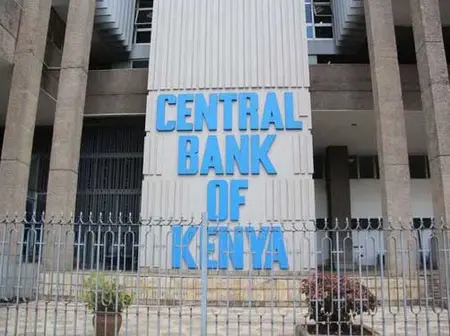
CBK presses banks to meet KSh5 billion capital target despite Treasury’s extended deadline
The Central Bank of Kenya (CBK) is continuing to engage commercial banks over a KSh5 billion capital target for December 2026, with Governor Kamau Thugge saying one or two lenders could struggle to meet the requirement despite changes to the statutory timetable under the Finance Act 2026.
Appearing before the National Assembly’s Finance and Planning Committee this week, Thugge said the regulator had asked a small number of banks to explain how they intended to reach the KSh5 billion threshold. He also disclosed that CBK had written to the National Treasury explaining why it believes commercial banks need stronger capital bases.
The comments highlight differences in emphasis between the banking regulator and the Treasury over the pace of capital increases. The Finance Act 2026 changed the timetable for banks to reach KSh10 billion in minimum core capital, while CBK continues to press institutions over the earlier KSh5 billion target.
Thugge told lawmakers that CBK was engaging a few banks over their plans to meet the KSh5 billion capital target for the end of 2026.
He said the regulator wanted the institutions to explain how they intended to reach the threshold, adding that one or two could have difficulty meeting it.
“Only a few, maybe one or two, might struggle,” the Governor said, describing the engagement as part of CBK’s efforts to understand how the affected institutions planned to strengthen their capital positions.
The Governor did not frame the discussions as a general difficulty across the banking sector. Instead, he pointed to a small number of lenders whose capital plans required closer engagement with the regulator.
The KSh5 billion figure formed part of the phased increase in minimum core capital introduced through the Business Laws (Amendment) Act 2024, which raised the requirement from KSh1 billion towards KSh10 billion by December 2029.
The original framework introduced annual capital milestones intended to move commercial banks towards the KSh10 billion minimum. The milestones included a KSh3 billion threshold for December 2025 and KSh5 billion for December 2026, followed by further increases towards the final KSh10 billion requirement.
The Finance Act 2026 changed that implementation framework by removing the annual milestones and extending the deadline for banks to reach KSh10 billion in minimum core capital to December 31, 2032.
The revised timetable followed concerns about the pace of capital accumulation and its possible effect on credit access, particularly for smaller businesses and specialised lenders.
In a parliamentary presentation in June 2026, National Treasury Cabinet Secretary John Mbadi said the government supported the strategic objective of stronger bank capitalisation but wanted a transition that would minimise disruption to lending and financial services delivery.
The Treasury’s position emphasised the need to protect access to credit for micro, small and medium-sized enterprises and institutions serving niche markets while banks worked towards the higher capital requirement.
Thugge’s latest comments show that CBK continues to regard the earlier KSh5 billion threshold as an important target in its engagement with banks.
The Governor told lawmakers that stronger bank capital was necessary to help financial institutions withstand risks affecting the banking sector, including climate-related shocks and cybersecurity threats.
He said banks needed sufficient financial resources to invest in technology that could protect their operations against cyberattacks and other emerging threats.
Thugge argued that the financial system needed strong institutions capable of absorbing shocks without allowing difficulties at individual banks to spread across the wider sector.
He also linked stronger capitalisation to banks’ ability to finance larger projects, explaining that institutions with stronger capital bases would have greater capacity to support businesses and investments requiring substantial funding.
The argument places capital requirements within CBK’s broader financial stability responsibilities. Capital provides banks with a financial buffer against losses and supports their ability to expand lending while managing the risks associated with their assets.
Thugge disclosed that CBK had written to the National Treasury explaining why the regulator believes banks need to increase their capital bases.
The Governor said the Central Bank had engaged Treasury on the issue because it considers stronger capitalisation necessary in an environment where banks face cybersecurity risks, climate-related disruptions and demands for larger financing commitments.
The correspondence highlights the continuing engagement between the two institutions over how quickly banks should build their capital positions.
CBK’s wider capital framework also includes additional prudential measures. The regulator has proposed capital conservation requirements that would influence how much banks can distribute to shareholders, alongside a framework for identifying domestic systemically important banks and applying additional supervisory requirements to institutions whose failure could threaten financial stability.
These measures form part of the Central Bank’s broader approach to strengthening the resilience of Kenya’s banking sector as institutions adjust to the revised minimum capital timetable.
Go to TECHTRENDSKE.co.ke for more tech and business news from the African continent and across the world.
Follow us on WhatsApp, Telegram, Twitter, and Facebook, or subscribe to our weekly newsletter to ensure you don’t miss out on any future updates. Send tips to info@techtrendsmedia.co.ke
-
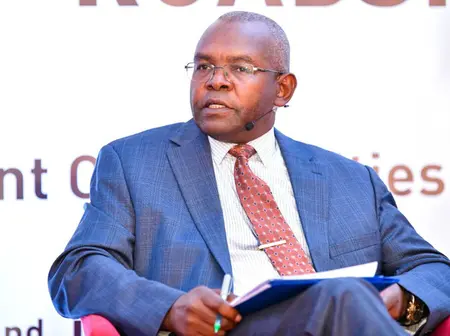
CBK says foreign investment and financial inflows are helping support the Kenyan shilling
Central Bank of Kenya (CBK) Governor Kamau Thugge has attributed the stability of the Kenyan shilling to improving balance-of-payments conditions, pointing to financial inflows and reserve accumulation as important sources of support for the country’s external position.
Presenting before the National Assembly’s Finance and Planning Committee this week, Thugge told lawmakers that Kenya’s current account deficit was being offset by a surplus in the financial and capital accounts. He said the resulting overall balance-of-payments position had allowed the country to accumulate foreign exchange reserves, supporting the stability of the shilling.
The Governor reported a current account deficit of US$4.68 billion and a financial and capital account surplus of US$7.458 billion. He also discussed reserve accumulation of approximately US$2.4 billion in 2026 and projected a further US$1 billion build-up in 2027.
Thugge explained that Kenya’s external position should be assessed by looking beyond the current account, which records trade in goods and services as well as primary and secondary income flows.
He told the committee that the current account deficit was being covered by the surplus recorded in the financial and capital accounts, which include cross-border investment and other financial transactions.
The Governor said the financial and capital account surplus had reached US$7.458 billion against a current account deficit of US$4.68 billion.
This distinction is important because a country can continue importing more goods and services than it exports while maintaining an overall balance-of-payments surplus if sufficient financial inflows enter the economy.
Thugge said the combination of these flows had supported reserve accumulation and contributed to the stability of the Kenyan shilling.
The Governor pointed to foreign investment and major transactions involving Kenyan companies and financial institutions when explaining the financial inflows supporting the country’s external position.
He cited Safaricom, Kenya Pipeline Company and takeovers involving banks as examples of transactions contributing to the financial and capital account.
Such transactions can involve substantial financial flows between domestic and foreign investors, depending on the structure of the deals and the parties involved.
Thugge also outlined the country’s reserve accumulation, saying Kenya had built up approximately US$2.4 billion in 2026. He projected a further US$1 billion accumulation in 2027.
The Governor linked the build-up of reserves to the country’s ability to meet external obligations and maintain confidence in the foreign exchange market.
Foreign exchange reserves provide the Central Bank with resources to support external payments and manage periods of pressure on the domestic currency. Their accumulation also reflects the broader balance-of-payments position and the availability of foreign currency within the economy.
Thugge used historical figures to demonstrate the improvement in Kenya’s external position over recent years.
He told lawmakers that the country recorded a balance-of-payments deficit of approximately US$2 billion in 2022, followed by a deficit of US$1 billion in 2023.
He then pointed to reserve accumulation of approximately US$1.4 billion in 2024 and US$2.4 billion in 2025, before discussing a similar build-up projected for 2026.
The figures formed part of the Governor’s explanation of why he considers the shilling’s stability to be supported by economic fundamentals.
He said the currency’s performance was connected to the country’s improving external position and the accumulation of foreign exchange reserves.
The Central Bank’s projections also point to continued reserve accumulation in 2027, although at a lower level than the amount Thugge cited for 2026.
Thugge also raised the possibility that external financing expected by the National Treasury might not materialise as planned.
The concern is relevant to Kenya’s balance-of-payments outlook because external financing contributes to the supply of foreign currency and helps meet the government’s financing requirements.
If anticipated external resources are delayed or fall short, the government may need to rely on alternative sources of financing, with implications for the country’s external accounts and foreign exchange requirements.
The Governor’s presentation therefore linked shilling stability to the interaction between current account performance, financial inflows, reserve accumulation and the government’s external financing position.
He maintained that the stability of the Kenyan shilling was supported by the country’s underlying economic fundamentals, pointing to the improvement in the balance of payments and the accumulation of foreign exchange reserves.
Go to TECHTRENDSKE.co.ke for more tech and business news from the African continent and across the world.
Follow us on WhatsApp, Telegram, Twitter, and Facebook, or subscribe to our weekly newsletter to ensure you don’t miss out on any future updates. Send tips to info@techtrendsmedia.co.ke
-

Kenya Airways launches new duty-free shopping experience with up to 15% lower prices
Up to 15% cheaper than airport shops, with 5% off the webstore until 30 November and pre-orders accepted up to 72 hours before departure.NAIROBI, Kenya, 30 October 2026 –Kenya Airways has unveiled a completely refreshed Duty-Free experience, introducing Safari Duty Free as its new onboard retail partner.