
Think of a vegetable seller at a busy market, and for years M-PESA has let her accept payments and send money home.What it could not do was help her grow what she earned. Safaricom says that is now changing.Its 2026 Sustainable Business Report describes a shift from financial inclusion to what the company calls financial health: helping customers save, invest, borrow responsibly and protect themselves against shocks.
Category: Economy&Finance
-

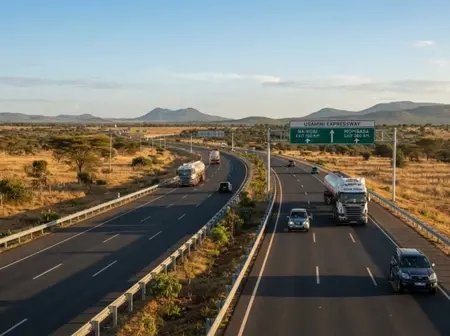
NIF Suggests KSh 6 Per Km Charge for Planned Nairobi-Mombasa Expressway
Kenyan motorists could pay between KSh 6 and KSh 36 per kilometre to use the proposed Nairobi-Mombasa Expressway, under a new financing plan being considered by the National Infrastructure Fund (NIF).
NIF Chief Executive Officer James Mworia announced the proposal during the Forward 2027 forum on Tuesday, November 24, saying the fund had reviewed the project and would take over its construction.
The highway was initially being pursued through a Public-Private Partnership (PPP) arrangement. However, the fund is now exploring an alternative investment model that could cut the construction cost by approximately 50 per cent.
"For this road, it was initially being done as a PPP. We have been able to reduce this cost by half," Mworia said.
Under the proposed toll structure, motorists using Class 1 vehicles would pay KSh 6 per kilometre, while those driving Class 6 vehicles would be charged KSh 36 per kilometre.
The charges are expected to form part of a financing model designed to generate revenue towards the construction and funding of the major road project.
Mworia said the proposed rates were intended to balance the need to attract investment with the broader economic benefits expected from improved transport infrastructure.
"We want the toll to be KSh 6 on a Class 1 vehicle and KSh 36 on Class 6 vehicles. Because we are not just driving returns but we are driving economic competitiveness," he added.
The proposed expressway is expected to provide an alternative route between Nairobi and Mombasa, two of Kenya's key economic centres. The corridor supports the movement of passengers and goods, including cargo serving the Port of Mombasa.
The NIF's revised approach signals a shift from the original PPP financing arrangement, with the fund seeking to lower the project's cost while using toll revenue to support its delivery.
However, the rates remain part of a proposal, and motorists will need to await further details on the final financing structure and implementation plans.
LINK: https://www.kenyans.co.ke/news/129654-nif-proposes-ksh6-km-toll-nairobi-mombasa-expressway-cost-cut-half?utm_source=Facebook&utm_medium=EM&fbclid=IwZXh0bgNhZW0CMTEAcGRvZgRzcnRjBmFwcF9pZA80MDk5NjI2MjMwODU2MDkAAR_q-W3EgA2yLM5TmldD6Y6mqJxSIICybRgHrrDPYhGxqNkLQFYzsYEaf7RmZQ_aem_p8aFZrDvKNkHNRyKJLjNzA
-
Why Your Next Beach Trip Could Cost Twice as Much Before You Even Buy a Liter of Fuel
Under preliminary framework projections for the 461-kilometer corridor, the National Treasury's Public-Private Partnership (PPP) Directorate and transport planners are examining a distance-based pricing model.
Under the indicative parameters, light passenger vehicles (Class 1) would be charged a base rate of Sh6 per kilometer, translating to approximately KSh 2,766 to cover the entire length from Nairobi to Mombasa.
Conversely, heavy multi-axle freight trucks (Class 6)—which form the backbone of port cargo haulage along the Northern Corridor—could face a rate of Sh36 per kilometer, culminating in a total single-trip charge of KSh 16,596.
The National Treasury emphasized that the figures represent preliminary financial modeling guidelines rather than final gazetted tariffs.
The State is currently procuring transaction advisers to conduct comprehensive technical, financial, and traffic feasibility studies to determine appropriate commercial structures, concession timelines, and tolling tiers.
Transportation stakeholders and consumer rights groups have urged caution, noting that while dualing the highway will significantly reduce transit times and accident rates, high toll tariffs for heavy commercial haulers could filter through to elevated consumer prices for imported goods and bus fares across the country.
What are your thoughts about this article? Share your reactions in the comment section and don't forget to share and follow for more updates.
https://peopledaily.digital/insights/nairobi-mombasa-expressway-how-much-motorists-could-pay-to-use-full-length-of-the-road-under-new-toll-rates
-
Kenya and Germany Make Major Move to Boost Trade, Attract Investors and Create Jobs
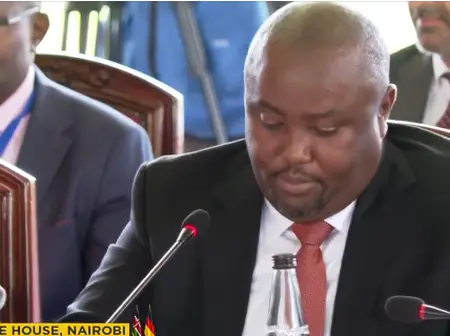
The Kenya-Germany Business Roundtable held at State House in Nairobi brought together leaders and business representatives from both countries to discuss ways of strengthening economic relations.
The meeting was part of German President Frank-Walter Steinmeier's official visit to Kenya. It provided an opportunity for Kenyan and German leaders to explore new business opportunities and discuss areas where the two countries can work together.
The discussions focused on improving trade, attracting investment and creating more opportunities for businesses. Both countries are looking to strengthen their economic partnership through cooperation in different sectors.
Germany is an important economic partner for Kenya, with strong experience in manufacturing, technology, education and industrial development. Kenya, on the other hand, offers investment opportunities in agriculture, tourism, energy, infrastructure and other growing sectors.
The roundtable also provided an opportunity for business representatives to share their views on the challenges facing investors and discuss possible solutions. Stronger business connections could help companies from both countries explore new markets and develop partnerships.
For Kenya, attracting more German investors could support local industries, create employment opportunities and improve access to modern technology. It could also help local businesses improve their products and compete in international markets.
The meeting comes at a time when Kenya is seeking to expand its international trade partnerships and attract more foreign investment. The government has continued to engage international partners in efforts to support economic growth and create jobs.Cooperation between Kenya and Germany could also benefit young people through
skills development, training and access to employment opportunities. German companies have experience in technical training and industrial development, areas that could support Kenya's development plans.
President Steinmeier's visit highlights the importance of maintaining strong relations between the two countries. Through regular engagement, Kenya and Germany hope to identify more areas of cooperation and build stronger economic ties.
The Business Roundtable at State House was therefore an important opportunity for leaders and investors to discuss how both countries can benefit from working together.
source:https://www.facebook.com/share/v/1E1V6AnfnP/
-
Public Servants Face New Pay Model as SRC Maps New 2030 Plan to Guide the Sector
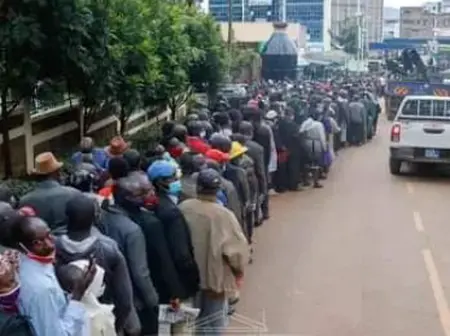
Public servants in Kenya could be heading towards significant changes in their salaries and benefits as the Salaries and Remuneration Commission (SRC) develops a new compensation plan expected to guide the public sector up to 2030.
The proposed plan is likely to attract considerable attention from government employees, many of whom have been raising concerns about the rising cost of living, salary reviews and the gap between earnings and daily expenses.
SRC plays a central role in determining and advising on the remuneration and benefits of public officers. Its latest long-term planning initiative signals a continued effort to review how public servants are paid while considering the country's economic position.
The new framework is expected to provide direction on salary structures, allowances and other employment benefits across government institutions. It could also influence how future salary adjustments are approached, depending on the commission's recommendations and available government resources.
However, public servants will be keen to understand whether the proposed changes will translate into better take-home pay or introduce adjustments that could affect existing benefits.
The government has in recent years faced pressure to balance demands for improved public sector salaries with the need to manage public expenditure. This makes the SRC's 2030 plan particularly important as policymakers consider the financial implications of any new compensation arrangements.
Unions and workers' representatives are also likely to follow the process closely, especially regarding consultations and the protection of employees' interests.
For now, public servants will be watching for further communication from SRC outlining the proposed measures, implementation timelines and how different categories of workers will be affected.https://www.facebook.com/100064288795404/posts/1593145789505032/?app=fbl
-
Hustler Fund: What Borrowers Must Do to Qualify for KSh150,000
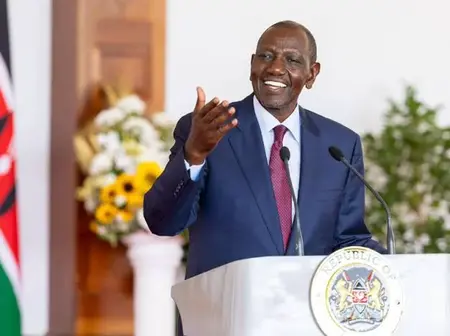
Millions of Kenyans using the Hustler Fund could become eligible for higher borrowing limits under a new government plan announced by President William Ruto.
On November 24, 2026, Ruto announced an additional KSh5 billion allocation to the programme. He also said approximately 4.5 million regular borrowers would be considered for increased loan limits through the Bridge Loan facility.
Eligible individuals could access loans of up to KSh150,000. However, the proposed increase does not guarantee that every customer will receive the maximum amount.
The Bridge Loan facility targets repeat borrowers who meet the Hustler Fund's eligibility requirements.
According to the Fund's published guidance, repayment behaviour and credit ratings are important in determining whether a customer qualifies. Borrowers must also clear their outstanding personal loans before accessing a Bridge Loan.
Consequently, customers should not assume that registration alone makes them eligible for a higher limit.
The KSh150,000 figure is the maximum borrowing amount announced under the plan. The actual amount available to an individual will depend on the applicable eligibility assessment.
The government has not yet provided a detailed timetable explaining when the revised limits will take effect.
Figures in the National Treasury's 2027 Budget Policy Statement show the scale of the programme.
By October 28, 2026, cumulative Hustler Fund disbursements had reached KSh93.4 billion. The document also recorded 10.3 million regular personal-loan borrowers.
The figures demonstrate the programme's reach and the demand for its lending services. The additional KSh5 billion allocation is expected to support the government's plans to expand access to financing.
However, the impact of the allocation will depend on how the additional funds are distributed and how eligible borrowers are identified.
Ruto also directed the Hustler Fund management to develop a KSh300 million group financing product.
Under the proposed arrangement, organised groups would receive financing and determine how to distribute the funds among their members.
This could provide another financing option for groups seeking money to support their activities. However, the government has yet to publish the application requirements, repayment conditions or expected launch date.
The Fund already operates a group lending product. It will therefore be important for the management to explain how the proposed facility will differ from the existing service.
The latest announcement does not mean that all Hustler Fund customers can immediately borrow KSh150,000.
Individual borrowers will still need to meet the Fund's eligibility requirements, while groups will have to wait for further details about the proposed financing product.
Customers should check their loan status through official Hustler Fund channels and rely on formal announcements for information about changes to borrowing limits.
The success of the expansion will ultimately depend on whether the government implements the changes as announced and provides clear information on how individuals and groups can access the additional financing.
-
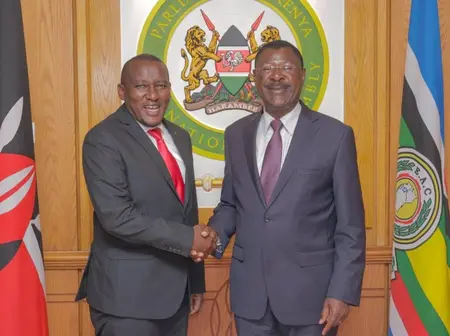
Germany Commits Ksh3.3 Billion to Boost Farming in 7 Western Kenya C, 10,000 Farmers to Benefit
The €22 million (approximately Ksh3.3 billion) commitment will finance the Smallholder Irrigation Programme (SIP), which targets 10,000 farmers and seeks to bring 8,000 acres of farmland under irrigation across seven counties.
The beneficiary counties are Bungoma, Kakamega, Busia, Siaya, Kisumu, Homa Bay and Migori.
Irrigation Principal Secretary Ephantus Kimotho announced the funding on Tuesday, November 24, after meeting National Assembly Speaker Moses Wetang’ula at Parliament Buildings.
Kimotho disclosed that the financial commitment was secured through Government-to-Government negotiations held in Berlin, Germany.
The initiative is expected to help farmers reduce their dependence on rainfall, increase agricultural output and improve household incomes through more reliable access to irrigation infrastructure.
According to the PS, the government is preparing another round of consultations with governors from the seven counties on December 17 and 18, 2026, to agree on how the programme will be implemented.
The discussions will involve national and county government representatives, farmers and other stakeholders.
The government also plans to introduce a cost-sharing arrangement between the two levels of government, borrowing from the implementation model used under the Smallholder Irrigation Programme in the Mt Kenya region.
Kimotho said the consultations would establish a common implementation plan and guidelines for involving farmers in project decisions.
The State Departments of Irrigation, Agriculture, Trade and Cooperatives will also work together to coordinate the programme.
During his meeting with Wetang’ula, the PS requested the Speaker to lead the government delegation during the upcoming county engagements to facilitate discussions with local leaders.
He also briefed him on preparations for the proposed Land Reclamation Bill, which is expected to support efforts to increase land available for irrigation.
The Ksh3.3 billion commitment marks a new phase in government efforts to expand irrigated agriculture, strengthen food production and improve the livelihoods of small-scale farmers in Western Kenya.
https://peopledaily.digital/news/kenya-secures-ksh3-3b-deal-with-germany-to-boost-irrigation-in-7-counties
-
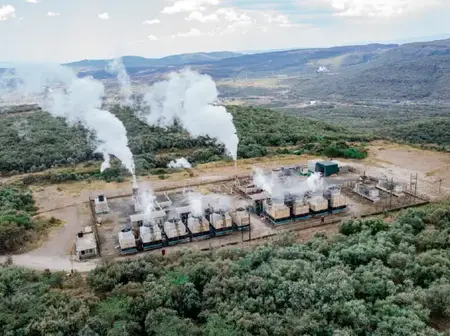
KenGen Adds 63.3MW to National Grid After Rehabilitation of Olkaria I Power Plant
Kenya Electricity Generating Company (KenGen) has added an additional 63.3 megawatts (MW) to the national electricity grid following the successful rehabilitation of the country's oldest geothermal power station, Olkaria I. The development is expected to strengthen Kenya's electricity supply at a time when rising power demand continues to put pressure on the country's generation capacity, raising concerns about potential energy shortages in the coming years.
Commissioned in 1981, Olkaria I has undergone an extensive three-year rehabilitation programme aimed at improving its generation capacity and operational efficiency. Engen Managing Director Engineer Peter Njenga announced that the rehabilitation works had been completed, with the facility already undergoing trials ahead of its official commissioning.
Before the renovation, the power station generated approximately 45MW."We are happy to announce that the rehabilitation works of Olkaria I are now complete, and we have injected an extra 63.3MW into the national grid," Njenga said. He revealed that President William Ruto is expected to officially commission the rehabilitated facility on December 7, 2026.
KenGen Seeks Financing for Upcoming Energy Projects
Njenga said the company intends to use an upcoming three-day sustainable energy conference in the Olkaria region to engage potential financiers and showcase its achievements in renewable energy development. Speaking to journalists in Naivasha after participating in a town clean-up exercise ahead of the conference, the KenGen chief executive noted that several planned projects would require substantial financial investment.
He explained that the conference would provide an opportunity to present the company's development plans and outline the resources needed to implement them. “We are going to tell our financiers the projects that we are embarking on for the next number of years and the resources that we require and demonstrate what we have been able to do," he said. The company is seeking to expand its geothermal generation capacity as Kenya continues to position renewable energy as a major pillar of its electricity supply.
Five Investors Set to Benefit from Olkaria Green Energy Park
Meanwhile, KenGen has revealed that five investors are already operating at the proposed green energy park in Olkaria, with the company expressing confidence in its ability to meet their electricity requirements. Njenga disclosed that one of the investors is a fertilizer manufacturing company expected to require approximately 165MW of geothermal energy.
He said the availability of geothermal resources in the region would provide an opportunity for industrial development while attracting additional investments. “We have enough energy in Olkaria and some of the companies like Kaishan which are producing fertilizer will just require steam from our geothermal fields," he stated. The green energy park is expected to support industrial activities by providing access to reliable geothermal energy and steam, potentially strengthening Kenya's manufacturing sector.
Naivasha Clean-Up Drive Ahead of Resort City Plans
Elsewhere, youth leader Simon Wakaba welcomed the clean-up exercise in Naivasha, describing it as an important step towards improving sanitation and environmental management as the town prepares for its anticipated transformation into a resort city. Wakaba said proper drainage systems, cleanliness and environmental conservation would be essential in achieving the town's development ambitions. He noted that poor drainage and inadequate waste management could undermine efforts to attract investors and tourists.
"We know what happens here in Naivasha in terms of drainage, and this cannot be a resort city when we don't have good drainage, clean-up and a good environment," he said. The clean-up exercise forms part of broader efforts to improve Naivasha's environment ahead of the sustainable energy conference.
-
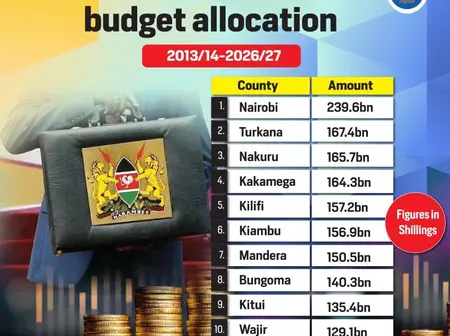
Top 10 counties in budget allocation
Nairobi leads Kenya’s 47 counties in cumulative budget allocations between the 2013/14 and 2026/27 financial years, receiving Sh239.6 billion, according to data from the National Treasury and the Office of the Controller of Budget.
Turkana ranks second with Sh167.4 billion, followed by Nakuru at Sh165.7 billion and Kakamega at Sh164.3 billion. Kilifi received Sh157.2 billion, while Kiambu was allocated Sh156.9 billion.
Mandera ranks seventh with Sh150.5 billion, followed by Bungoma at Sh140.3 billion, Kitui at Sh135.4 billion and Wajir, which completes the top 10 with Sh129.1 billion.
The 10 counties received a combined Sh1.6 trillion over the period, with allocations influenced by factors such as population size, land area and poverty levels.
-
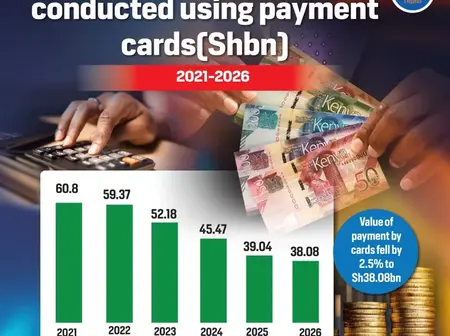
Value of transactions conducted using payment cards [Shbn]
The value of payment card transactions in Kenya has declined steadily over the past five years, falling from Sh60.8 billion in 2021 to Sh38.08 billion by September 2026, according to data from the Central Bank of Kenya (CBK).
After peaking at Sh60.8 billion in 2021, transaction values dipped slightly to Sh59.37 billion in 2022 before falling more sharply to Sh52.18 billion in 2023 and Sh45.47 billion in 2024.
The decline continued in 2025, when the value dropped to Sh39.04 billion.
By September 2026, card transaction values had fallen by a further 2.5 per cent to Sh38.08 billion.
The sustained decline points to changing payment habits, with consumers and businesses increasingly turning to mobile money and instant digital transfers.