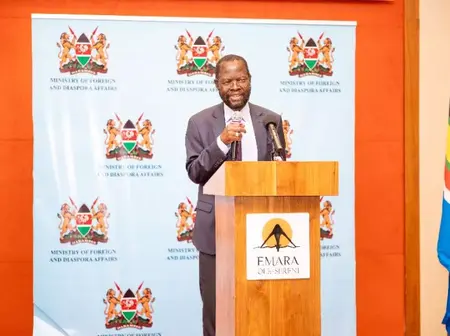
Kisumu Governor Prof Anyang’ Nyong’o has urged the business community to take advantage of the forthcoming Piny Luo Cultural Festival to expand their markets, showcase products and tap into investment opportunities expected to emerge from the three-day event.
Nyong’o said the sixth edition of the festival would provide businesses with an opportunity to reach thousands of potential customers, engage investors and connect with the Luo diaspora, turning cultural heritage into economic opportunities for the Lake Region.
Speaking during a stakeholders’ breakfast meeting in Nairobi on Wednesday, the governor said the festival should go beyond cultural celebrations and serve as a platform for trade, entrepreneurship, tourism and job creation.
The festival, scheduled for December 14–16, 2026, in Kisumu, is expected to attract approximately 20,000 participants, including business leaders, government representatives, cultural enthusiasts and members of the diaspora.
"Culture is not decoration. It is how a people remember who they are, and it is increasingly how they build their economies," Nyong’o said.
He noted that cultural activities such as music, food, crafts, storytelling and tourism had the potential to generate income, create employment for young people and stimulate businesses across the region.
The governor said the festival would feature a business-to-business (B2B) forum and trade pavilions, providing entrepreneurs with opportunities to interact with potential investors, buyers and business partners.
He urged companies in the banking, aviation, transport, energy, manufacturing and retail sectors to position themselves to benefit from the anticipated influx of visitors.
Nyong’o said participating organisations would also have an opportunity to showcase their brands, interact directly with consumers and strengthen their visibility among local and international audiences.
The festival will feature exhibitions covering cooperatives, energy and tourism, alongside health services such as cancer screening initiatives, Social Health Authority (SHA) registration and medical services by Equity Afia.
The governor said the event was designed to bring together culture and enterprise, noting that partnerships with the private sector would be important in unlocking its economic potential.
Nyong’o said Kisumu was well positioned to host the event, citing its cultural heritage and growing recognition as a creative destination.
In October 2025, UNESCO designated Kisumu a Creative City of Music, further strengthening the city's profile as a centre for cultural expression and creative enterprise.
The Piny Luo Festival was established in 2015 as a rotating regional event involving the four Luo-majority counties of Kisumu, Siaya, Homa Bay and Migori.
This year's edition will be held under the theme, Celebrating Luo Cultural Evolution and Dynamism, with the tagline, Connecting a Global Luo Community Across Africa and Beyond.
The programme will include a women's conference on December 13, followed by cultural activities, business engagements, sports competitions and a B2B forum. Women entrepreneurs who have undergone planned business training are also expected to graduate during the festival's business forum.
Meanwhile, the national government has pledged to strengthen the festival's international reach through cultural diplomacy.
Principal Secretary for Foreign Affairs Dr Abraham Korir Sing'Oei said the State Department for Foreign Affairs would incorporate the Piny Luo Cultural Festival into its annual calendar of cultural diplomacy events.
He said the move would provide a framework for sustained international partnerships, diplomatic engagement and cultural exchanges.
Sing'Oei said the ministry would work with the Kisumu County Government and festival organisers to mobilise diplomatic missions, facilitate international cultural delegations and promote creative industry partnerships.
He called for the festival to extend beyond cultural celebrations and create sustainable economic opportunities for artists, entrepreneurs and communities.
The PS noted that cultural tourism, music, film, fashion, crafts, culinary heritage and digital content had the potential to create jobs, attract investment and open international markets for local creatives.
He further emphasised the need to protect cultural identity while promoting inclusive development, noting that cultural heritage remained an important element of national identity and international cooperation.