Category: Economy&Finance

  • KRA Announces New Procedure for Kenyans Filing Customs Tax Appeals

    KRA Announces New Procedure for Kenyans Filing Customs Tax Appeals

    The Kenya Revenue Authority (KRA) has introduced new procedures for taxpayers and businesses seeking to challenge decisions made by the Commissioner for Customs and Border Control.

    The authority designated specific email and physical addresses where affected individuals and businesses should submit applications requesting a review of customs-related decisions.

    The changes provide taxpayers with two official options for presenting their applications and accompanying documents, either electronically or through physical delivery and postal services.

    Under the electronic submission arrangement, applicants have been directed to send their notices of objection and relevant supporting documents to LSBCIROStaff@kra.go.ke.

    KRA said the designated email address would also serve as the official contact point for individuals seeking clarification or additional information regarding the new arrangements.

    For those opting to submit documents physically or through the post, the authority directed applicants to address their correspondence to the Deputy Commissioner, Tax Dispute Resolution Division, Legal and Board Services Department.

    The designated office is located at Block B, 7th Floor, Ushuru Pension Towers, Elgon Road, Upper Hill, Nairobi.

    Applicants using postal services have been provided with the address: P.O. Box 48240–00100, Nairobi.

    The authority explained that the new designation was made under Section 229 of the East African Community Customs Management Act, 2004, alongside Gazette Notice No. 1036 of 2019 and other applicable legal provisions.

    The changes follow the delegation of relevant powers to the Commissioner in charge of the Legal and Board Services Department.

    According to KRA, the new arrangements took effect on the date the notice was published, November 23, 2026.

    The directive specifically concerns individuals and businesses dissatisfied with decisions issued by the Commissioner for Customs and Border Control who wish to pursue a formal review.

    KRA further urged applicants requiring assistance with the process to use the designated email address for inquiries and guidance.

    https://www.facebook.com/100063646850476/posts/1760111852787026/?app=fbl
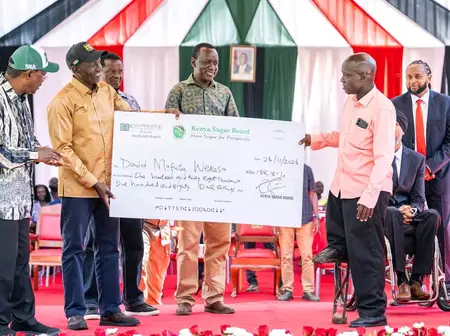
  • Amount of Money Each Famer Is Likely To Get As Ruto Gives 195M Cheque To Nzoia Sugar Company,Details

    Amount of Money Each Famer Is Likely To Get As Ruto Gives 195M Cheque To Nzoia Sugar Company,Details

    The headline figure sounds generous, yet farmers have been asking a simpler question: how much will actually reach my pocket?

    A rough sum shows why it matters. Shared among 1,000 farmers, KSh195 million would give each about KSh195,000; shared among 10,000, it shrinks to roughly KSh19,500. The number of qualifying farmers therefore decides almost everything.

    Payment has probably followed the volume of cane delivered, which means large growers have likely collected far more than small holders with a few acres.

    Farmers have also wondered whether loan, input or transport deductions have been made before cheques reached them. Until the company releases its payment schedule, those doubts will have lingered.

    The wider picture is more encouraging. President Ruto has said farmers now receive payment for cane within a week and workers are paid on time, while Managing Director Tejveer Rai has reported that KSh1.6 billion has gone to farmers this year.

    Against that, the bonus works as a modest top-up. The president has also promised to double it next year as profits improve, and he has said Mumias, Chemelil, Muhoroni, Miwani and Sony growers will receive similar cheques.

    Farmers have heard such promises before. A comparable bonus at Mumias earlier drew applause, yet it also raised questions about where the money came from and whether it could last. Growers in Bungoma have long hoped that Nzoia's recovery will prove steadier.

    Cheques of this kind have always been welcome, but what ultimately changes lives is a dependable income season after season, and that will depend on how openly the miller has shared its figures and how faithfully the government has kept its word.

    Farmers in Bungoma will be watching closely, calculators in hand, for more.

    Sources.

    https://citizen.digital/article/president-ruto-hails-rai-for-nzoia-sugar-revival-n394398

  • Simba Corporation launches MG in Kenya As it leads the Shift to Electric Mobility

    Simba Corporation launches MG in Kenya As it leads the Shift to Electric Mobility

    thumbnail

    Simba Corporation has officially launched MG in Kenya as the brand’s exclusive distributor, introducing a range of electric and petrol vehicles alongside plans to assemble MG models locally and expand charging and servicing support for owners.The launch builds on Simba Corporation’s previously announced KSh 1 billion investment in a dedicated electric vehicle assembly line at Associated Vehicle Assemblers (AVA), its assembly plant in Mombasa.

  • Why Many Kenyans Who Own Land Still Struggle With Cash Emergencies

    Why Many Kenyans Who Own Land Still Struggle With Cash Emergencies

    Across Kenya, owning a piece of land is widely treated as the ultimate proof of financial success. From small plots along Kangundo Road to acres in Nakuru, Kitengela, or Eldoret, thousands of hardworking earners pour nearly every extra shilling into buying property. Yet a surprising number of landowners find themselves borrowing mobile loans to pay routine school fees, medical bills, or monthly rent.

    ​Financial educators call this situation being asset rich and cash poor, and it happens when all your money is tied up in property that cannot be converted into cash quickly. Understanding how land fits into a balanced financial plan helps you build long-term wealth without leaving your household exposed to everyday emergencies.

    ​Unlike money held in a bank or unit trust, a plot of land cannot be liquidated overnight when an urgent bill arrives.

    ​Selling property in Kenya involves land searches, consent from the Land Control Board, valuation, and buyer due diligence, a process that often takes months. According to property market reports tracked alongside Central Bank of Kenya real estate lending surveys, distressed land sales forced by urgent cash needs frequently compel owners to accept prices well below market value. When an emergency strikes on a Tuesday morning, an illiquid title deed cannot pay a hospital deposit.

    ​Many buyers budget strictly for the advertised plot price while ignoring the ongoing expenses required to secure and maintain ownership.

    ​After paying the seller, you still face stamp duty collected by the Kenya Revenue Authority, legal fees, survey charges, fencing, and annual county land rates. Data from the Ministry of Lands and Physical Planning guidelines shows that unpaid rates and unverified ownership documentation also delay transactions and erode net returns. Treating land as a zero-cost asset drains cash reserves that could otherwise earn steady monthly income.

    ​Social media advertisements often promote off-plan plots in remote areas with promises that values will double within two years.

    ​Rushing into speculative land purchases before setting aside three to six months of living expenses leaves your household vulnerable to any sudden income disruption. Financial literacy guidelines published by the Capital Markets Authority advise investors to keep emergency reserves in highly liquid, regulated instruments such as licensed Money Market Funds before locking capital into long-term fixed assets. Having accessible cash ensures you never have to sell a good plot at a loss just to survive a tough month.

    ​A bare plot sitting idle on the outskirts of town does not pay your electricity bill or buy groceries unless you have a clear plan to develop or lease it.

    ​While urban land appreciates over time, vacant plots produce zero monthly income while tying up capital that could be compounding elsewhere. Personal finance analysts consistently encourage balancing long-term land ownership with income-producing assets, such as treasury bills offered through the Central Bank of Kenya, regulated Sacco deposits supervised by the Sacco Societies Regulatory Authority, or licensed unit trusts. Combining growth assets with cash-generating accounts keeps your monthly budget stable while your property matures.

    ​Taking high-interest personal loans to purchase non-income-generating land puts immediate strain on your monthly payslip.

    ​When loan repayments consume a large share of your net salary, you lose the flexibility to save, invest, or handle family obligations comfortably. If you plan to borrow for property, financing through a regulated Sacco at reducing-balance rates after building your deposit base is far safer than stretching your cash flow with expensive commercial credit.

    ​Owning land remains one of the strongest ways to build generational wealth in Kenya, provided it does not come at the expense of your daily financial security. When you build a liquid emergency fund first, account for all statutory taxes and fees, and balance property with cash-generating savings, you enjoy both peace of mind today and lasting asset value tomorrow.

    ​Which comes first in your financial plan, buying land or building a cash emergency fund? Share your thoughts in the comments below.

  • Affordable housing: Govt responds to concerns over Ksh200 Boma Yangu registration charge

    Affordable housing: Govt responds to concerns over Ksh200 Boma Yangu registration charge

    Affordable housing: Govt responds to concerns over Ksh200 Boma Yangu registration charge

    The government has explained how the Ksh200 registration fee paid by Kenyans seeking to join the Affordable Housing Programme is used, following questions from members of the public over the charges under the Boma Yangu initiative.

    The State Department for Housing and Urban Development clarified that the money is not simply an administrative charge but is credited to an applicant’s personal Boma Yangu account as part of their savings towards homeownership.

    In a response to a concerned Kenyan on its social media platform, the department said the payment is necessary to activate an individual’s account on the affordable housing platform.

    The clarification came after a user, Sainna Lemmy Carlito, questioned the government over the Ksh200 registration fee and additional deposits required to participate in the programme.

    “What of the 200/= fee plus Deposits? Why are you shallow in explaining procedures?” the user asked.

    Responding to the concerns, the State Department for Housing and Urban Development explained that the registration payment serves a specific purpose within the housing savings arrangement.

    “Kindly note that the KSh 200 registration fee is used to activate your personal Boma Yangu account. The amount is credited to your Boma Yangu e-wallet and forms part of your savings towards homeownership,” the department stated.

    The clarification means that the Ksh200 paid during registration is credited to the applicant’s Boma Yangu e-wallet rather than being treated as a separate payment outside their housing savings.

    The account provides a platform through which individuals interested in acquiring affordable housing can participate in the programme and accumulate savings towards purchasing a home.

    A view of the ongoing construction of the Boma Yangu Nandi Hills Estate that has reached about 75 per cent completion. PHOTO/@ray_omollo/X

    The government’s response also distinguishes between the initial registration payment and subsequent deposits that applicants may make towards their homeownership goals.

    However, the department’s response did not provide further details on the minimum deposits required or the frequency with which applicants are expected to contribute towards their housing savings.

    The exchange also raised questions about other payments associated with the Affordable Housing Programme, particularly deductions made through employers.

    After receiving the government’s explanation about the Ksh200 registration fee, the same user sought clarification on how employer deductions are handled.

    “What about the employer deductions?” the user asked in a follow-up comment.

    The department’s response, as captured in the exchange, addressed the registration fee but did not provide a further explanation concerning employer deductions.

    The clarification comes amid public interest in the financial requirements for Kenyans seeking to benefit from the government’s affordable housing initiative.

    Boma Yangu programme

    Boma Yangu is the government’s platform through which Kenyans can register their interest in acquiring homes under the Affordable Housing Programme.

    The initiative seeks to provide access to housing for households across different income categories through structured homeownership arrangements.

    Through the platform, registered individuals can create personal accounts and accumulate savings towards acquiring homes under the programme.

    The latest clarification provides applicants with an explanation of the purpose of the initial Ksh200 payment, although questions surrounding additional deposits and employer deductions remain.

  • ​”Double Bonus Coming in 2027″ What President Ruto Just Promised Sugarcane Farmers

    ​”Double Bonus Coming in 2027″ What President Ruto Just Promised Sugarcane Farmers

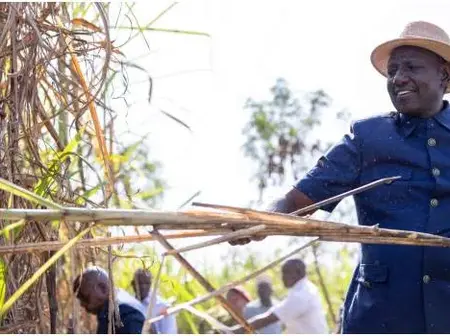
    Sugarcane farmers across Western Kenya have fresh reason to celebrate after President William Ruto signaled that their annual bonus payout will double in 2027, building on reforms reviving the local sugar sector.

    ​Speaking on Monday, November 23, 2026, at Nzoia Sugar Factory in Kanduyi, Bungoma County, the President oversaw the release of Sh195 million in bonuses to local growers at a rate of Sh597.10 per tonne of cane delivered.

    According to Kenyans.co.ke and The Star, Ruto urged farmers to plant more cane and work harder, assuring them that next year’s payout will be twice what they received today.

    ​"I want to ask cane farmers in Nzoia to work extra hard. There are a lot of opportunities in the sector," Ruto said, noting that his government is following a clear, end-to-end recovery plan rather than guesswork.

    ​The Sh195 million disbursement at Nzoia is part of a wider Sh1.2 billion bonus package set aside for farmers supplying public sugar factories, with growers at Mumias, Chemelil, Muhoroni, and Sony Sugar also scheduled to receive their share.

    For years, cane farmers watched tea and coffee growers enjoy annual bonuses while they waited months just to get their basic cane payments.

    ​Now, following the leasing of public mills to private investors and a Sh117 billion debt write-off, farmers receive weekly payments after delivery alongside subsidized fertilizer at Sh2,000 per bag.

    With national sugar production projected to hit a record 900,000 metric tonnes this year, Ruto is banking on higher farm incomes to cement political support across Western Kenya ahead of the 2027 General Election.

    ​For official agricultural programs, fertilizer subsidies, and sector updates, farmers can visit the Ministry of Agriculture and Livestock Development website.

    Source

    Link.

    https://www.facebook.com/share/p/18bQyh14y4/

  • New fund opens door to 11 top dividend stocks

    New fund opens door to 11 top dividend stocks

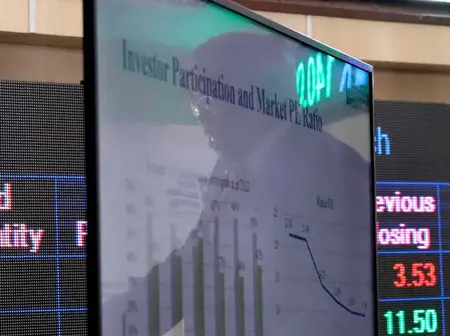
    Investors will have access to 11 of the top dividends paying stocks through a fund which is set for listing on the Nairobi Securities Exchange (NSE).

    The Leo Dividend Exchange Traded Fund (ETF) will comprise holdings in Safaricom Plc, Equity Group Holdings Plc, KCB Group Plc, Co-operative Bank of Kenya, Standard Chartered Bank Kenya, Absa Bank Kenya Plc and Stanbic Holdings Plc.

  • Alcohol Bill Could Cost 9,000 Jobs, Sh1.8bn in Taxes, Stakeholders Warn

    Alcohol Bill Could Cost 9,000 Jobs, Sh1.8bn in Taxes, Stakeholders Warn

    thumbnail

    Pubs, Entertainment and Restaurants Association of Kenya (PERAK), the Metropolitan Liquor Traders Association (MELTA), the Bodaboda Association, and the Hotel and Allied Workers Association submitted joint proposals to Parliament this afternoon on the Alcoholic Drinks and Drugs Control Laws (Amendment) Bill, 2026.

  • CSs Tuya, Wandayi Launch Electricity Projects Targeting Underserved Communities In Narok

    CSs Tuya, Wandayi Launch Electricity Projects Targeting Underserved Communities In Narok

    The two projects include the Entepes–Empash–Ilkokoyo Primary Schools electricity line and the Nturumeti–Olemigili–Enturoto line.

    According to Tuya, the developments have a combined investment of approximately KSh87 million and are aimed at extending access to electricity to communities that have remained underserved.

    The CS explained that connecting more rural households to the national grid would bring meaningful changes to everyday life, particularly for families and small business owners.

    Tuya said the projects form part of the government's wider efforts to expand essential infrastructure, stimulate economic activities in rural areas and improve living standards.

    She further noted that expanding electricity connectivity was important in achieving the national target of universal electricity access by 2030.

    The launch reflects ongoing government efforts to reach communities that have not fully benefited from the country's electricity expansion programme.

    With nearly 250 households expected to gain access, the projects are set to provide a significant boost to residents of the affected areas.

  • Africa must lean on stronger macro management as aid dries up, AERC workshop told

    Africa must lean on stronger macro management as aid dries up, AERC workshop told

    thumbnail

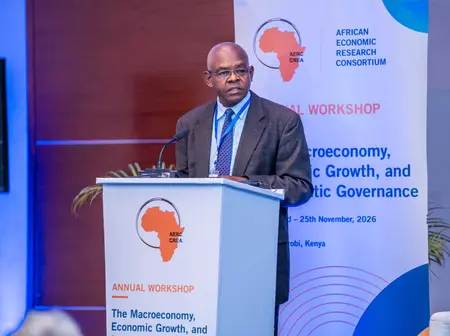
    African governments will have to rely more on sound economic management, domestic revenue and accountable institutions as foreign aid declines.That was the message at the opening of the African Economic Research Consortium (AERC) Annual Workshop 2026 on Monday.The workshop attracted 2,969 registered participants from 68 countries under the theme "The Macroeconomy, Economic Growth, and Democratic Governance".