
Listen to articleForeign nationals operating businesses in Eswatini have been given at least one year to wind down their operations as the government moves to increase opportunities for local entrepreneurs.The proposed transition period follows a government crackdown on businesses that officials say are operating contrary to the country's trading and immigration regulations.
Category: Economy&Finance
-

Kenya Railways Revises Commuter, Safari Train Schedules for Maintenance Works
Kenya Railways Corporation has moved to implement temporary schedule adjustments for select commuter and safari train services starting today, Thursday, November 12, 2026, to accommodate engineering and maintenance works along the Nairobi–Kibera–Talanta Metre Gauge Railway (MGR) corridor.Under the revised timetable, the Nairobi Central Station–Limuru commuter train will operate exclusively on Tuesdays, Wednesdays, and Thursdays, with services suspended on Mondays and Fridays.
-

Quickmart shares surge 33pc on NSE debut
Retail chain Quickmart’s share gained up to 33 percent in early trade on Thursday after listing on the Nairobi Securities Exchange (NSE).
The stock rose to Sh10 in its first trade of 1,000 shares at the opening of the market at 9.30am, compared to the Initial Public Offering (IPO) price of Sh7.50 per share.
-

Lady Working in US Army Posts Her PaySlip Revealing How Much She Earns After Taxes
A female US Army soldier has given the public a rare look at what military service pays, posting a line-by-line breakdown of her monthly paycheck on TikTok.
Cassidy Brianna Grace, who joined the military in June 2020 and holds the rank of E4, recorded the video selfie-style in her bedroom.
Her income comes from three streams. Base pay stands at KSh 495,912, while her Basic Allowance for Subsistence, a food stipend that varies with a soldier's posting, adds KSh 61,875.
The largest item is the Basic Allowance for Housing, which covers rent or mortgage costs and is tied to local property prices.
Because she lives in California, it comes to KSh 410,248 a month. Together, the three bring her gross monthly pay to approximately KSh 968,166.
Deductions take about KSh 148,839. Federal income tax accounts for KSh 47,056, Social Security KSh 30,678 and Medicare KSh 7,149.
Her life insurance under the Servicemembers' Group Life Insurance programme costs KSh 3,380, with a separate spousal policy adding KSh 520, since she is married.
She also contributes KSh 44,587 to her Roth Thrift Savings Plan, the military version of a civilian 401(k) retirement account. A small charge labelled FRHII, whose purpose she could not recall, comes to KSh 65.
State tax takes another KSh 15,209, which she said irritates her. Active-duty personnel from her home state of Pennsylvania are not legally required to pay state income tax, and because the deduction keeps appearing regardless, she gets large refunds each year.
After deductions, she takes home approximately KSh 819,327 a month. She described the amount as good, keeping her tone matter-of-fact, and said a follow-up video will show how she budgets it.
Source: https://www.facebook.com/share/1PdeSaUhG1/
-

How Kenyans Can Invest in CBK’s Ksh50 Billion Treasury Bonds
The Central Bank of Kenya (CBK) has reopened two government Treasury bonds worth a combined Ksh50 billion, giving Kenyans an opportunity to invest in government securities and earn interest.
The offer targets individual and institutional investors, with the funds expected to support the government’s budgetary requirements. The bonds are fixed-coupon securities with original terms of 15 and 30 years, although they have approximately 7.3 years and 14.3 years remaining before maturity.
Investors can apply through the CBK’s DhowCSD platform, which provides online access to government securities.
To get started, applicants must register on the DhowCSD Investor Portal or download the mobile application. They need a national identity card or passport, KRA PIN, phone number, email address, passport-size photograph and bank account details.
Applicants must then choose how much they want to invest and select their preferred bidding option. Under non-competitive bidding, investors do not specify the interest rate they are willing to accept. The minimum investment is Ksh50,000, while the maximum is Ksh50 million per CSD account.
Investors opting for competitive bidding must invest at least Ksh2 million per bond. After entering the required information, applicants should review and submit their bids through the platform.
The CBK will stop accepting applications on Wednesday, November 18, 2026, at 10am. Successful bidders can check their DhowCSD accounts on November 20 for their payment keys and the amounts payable.
Payment must be completed by November 23, 2026, which is the settlement deadline.
The bonds will also be listed on the Nairobi Securities Exchange, where they can be traded in multiples of Ksh50,000. The CBK may accept bids fully or partially, or reject them.
SOURCE:
-
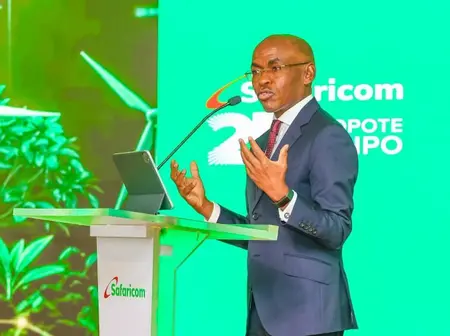
Explainer: Why Safaricom shareholders could earn bigger dividends after Ksh58.2B half-year profit
Safaricom shareholders could receive higher dividends in the financial year ending March 2027 after the telecommunications company reported a 35.9 per cent increase in half-year net income to Ksh58.2 billion.
The performance, recorded in the six months ended September 30, 2026, has strengthened expectations of a larger shareholder payout, with the company maintaining a policy of distributing 80 per cent of its consolidated net profit after tax, subject to adjustments for minority interests.
Safaricom’s latest results show that the company is building on the financial performance that enabled it to pay Ksh2 per share for the financial year ended March 2026.
However, the Ksh58.2 billion half-year profit does not automatically translate into a new dividend of a particular amount. The final payout will depend on full-year earnings and the board’s dividend decision.
Safaricom’s dividend policy provides a direct link between its profitability and shareholder returns.
Speaking after the release of the half-year results, Group Chief Finance and Innovations Officer Dilip Pal said the company had not changed its distribution policy.
“Our dividend policy has not changed, which is to payout 80 percent of consolidated net profit after tax, adjusted for minority interests,” Pal said.
This means that stronger profits can support a higher dividend, provided the earnings available for distribution also increase.
For the previous financial year, Safaricom distributed Ksh80.13 billion, equivalent to Ksh2 per ordinary share. This comprised an interim dividend of Ksh0.85 and a final dividend of Ksh1.15.
The payout was 66.7 per cent higher than the Ksh1.20 per share distributed in FY2025.
The mobile money platform generated Ksh100.1 billion in revenue during the six-month period, representing a 13.6 per cent increase from Ksh88.1 billion recorded a year earlier.
Group service revenue also grew by 13.1 per cent to Ksh226.1 billion, while earnings before interest, tax, depreciation and amortisation increased by 27.5 per cent to Ksh129.2 billion.
Safaricom Kenya recorded service revenue of Ksh216 billion, while its Ethiopian operation generated Ksh10.6 billion, a 71.6 per cent increase.
Ethiopia’s improving performance is also important because its narrowing losses could reduce the pressure that the expansion has placed on group earnings.
The company has not declared a new interim dividend alongside the half-year results.
For investors, the next important development will therefore be the board’s decision on how much of the full-year earnings will be distributed.
If earnings continue growing and the dividend policy remains unchanged, shareholders could receive a higher payout than the Ksh2 per share recorded in FY2026.
The actual amount, however, will only be established after the company announces its dividend recommendation.
-
Quickmart Officially Joins Nairobi Securities Exchange
ListedQuickmart has officially joined the Nairobi Securities Exchange (NSE), opening trading on the market at an average share price of Ksh10.Quickmart has officially joined the Nairobi Securities Exchange (NSE), opening trading on the market at an average share price of Ksh10.
-

We Are Turning Energy Priorities Into Action – Opiyo Wandayi
Energy Cabinet Secretary Opiyo Wandayi has revealed that he led a meeting with representatives of the Kenya Private Sector Alliance (KEPSA), alongside Principal Secretaries Alex Wachira and Kello Harsama and other energy sector leaders. The engagement was part of the government's continued efforts to implement resolutions reached during the 6th Presidential Roundtable (PRT).
According to Wandayi, the discussions focused on transforming the energy sector priorities identified during the presidential meeting into practical initiatives through stronger partnerships between the government and private investors.
One of the key issues discussed was mobilising private sector investment to support the development of energy infrastructure. The government recognises that cooperation with private businesses will be important in addressing existing investment barriers and ensuring that projects in the sector move forward.
The meeting also highlighted the need to expand access to reliable and affordable electricity across the country. Access to dependable power remains an important factor in supporting businesses, improving productivity and creating an environment where industries can grow.
Wandayi further reaffirmed the government's commitment to strengthening public-private partnerships while addressing challenges that could discourage investment in the energy sector.
The engagement signals continued efforts to involve private sector players in delivering the government's development priorities. However, the success of these discussions will largely depend on how quickly the agreed priorities are translated into practical projects that benefit businesses and ordinary Kenyans.
What are your views on the government's engagement with private sector leaders to improve Kenya's energy sector? Share your remarks and opinions in the comment section.
-
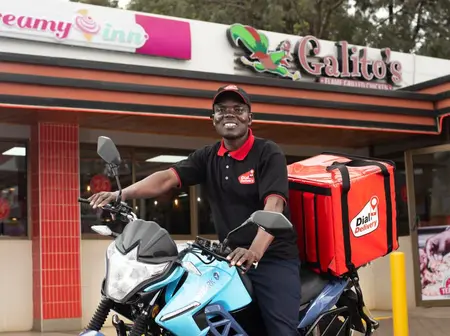
Glovo, KFC and the changing delivery market behind Simbisa’s Kutuma acquisition
Simbisa Brands has acquired the remaining 25% stake in Kutuma Kenya Limited for US$663,882 (approximately KSh85.8 million), giving the restaurant group full ownership of its Kenyan food delivery business as orders grew 59% to 3.23 million in the financial year ended June 2026.
The acquisition consolidates Simbisa’s ownership of the company operating its Dial-A-Delivery service in Kenya. Simbisa previously held a 75% stake in Kutuma, with the latest transaction bringing its ownership to 100%.
The Zimbabwe-headquartered restaurant group operates several food brands in Kenya, including Galitos, Pizza Inn, Bakers’ Inn, Chicken Inn and Creamy Inn. Its acquisition comes as delivery channels gain a larger role in restaurant commerce and Kutuma pursues ambitions to develop into a broader delivery marketplace.
Simbisa’s audited financial statements for the year ended 30 June 2026 record US$663,882 in net cash outflow from the buyout of the non-controlling interest in Kutuma Kenya Limited.
The group’s subsidiary ownership disclosures also show the change, with Simbisa’s stake increasing from 75% as at 30 June 2025 to full ownership by 30 June 2026.
Kutuma operates Simbisa’s on-demand food delivery business in Kenya through Dial-A-Delivery, serving customers ordering from the group’s restaurant brands. The acquisition brings the delivery operation entirely under Simbisa’s ownership as the company develops its digital commerce activities.
Simbisa reported that delivery orders in Kenya increased by 59% to 3.23 million in the financial year ended June 2026, compared with the previous financial year.
The growth provides an indication of the scale of the delivery operation within the group’s Kenyan business. With restaurants covering pizza, chicken, grilled meals, bakery products and desserts, Simbisa has a portfolio of brands serving different customer preferences through its delivery channels.
The growth also comes as other delivery platforms report rising activity in Kenya. Glovo reported 40% growth in Kenyan orders in October 2026, alongside a network of more than 6,000 merchants and over 2,200 active riders daily.
According to Glovo, the platform had generated more than KSh20 billion in sales for Kenyan merchant partners since entering the market in 2019. The company also announced plans to invest a further KSh10 billion in Kenya by 2030.
These figures provide context for the commercial environment in which Kutuma operates, with established platforms competing for customers, merchant relationships and transactions across food and retail categories.
Beyond delivering orders from Simbisa’s restaurant brands, Kutuma has ambitions to develop into a broader delivery marketplace, potentially extending its services to independent restaurants and other merchants.
The company has been recruiting for several positions to support its business development and technology capabilities. These include a head of technology, a brand manager and a business development specialist.
The business development role is particularly relevant to the marketplace ambition, with responsibilities centred on growing the Dial-A-Delivery Marketplace merchant network and supporting its expansion.
Glovo’s expansion into retail media illustrates the additional commercial opportunities available to delivery platforms with established customer and merchant networks. At its Future of Commerce Summit in October 2026, Glovo Kenya said 68% of searches on its platform were for product categories rather than specific brands, highlighting the role of in-app discovery in influencing customer purchases.
The company is also developing advertising products that allow brands to promote products through sponsored search, category placements and targeted campaigns. These services create additional commercial opportunities around the customer traffic and merchant relationships generated by a delivery marketplace.
Glovo has also expanded its merchant offering beyond restaurant meals, while Bolt Food partnered with Quickmart in June 2026 to make more than 12,000 supermarket products available through its platform across over 60 stores.
For Kutuma, a broader marketplace would create opportunities to extend its delivery infrastructure beyond Simbisa’s restaurant portfolio, connecting customers with a wider selection of merchants through its platform.
Simbisa’s involvement in digital food delivery predates the acquisition. In May 2019, Glovo partnered with the restaurant group to facilitate deliveries from its brands in Nairobi, including Chicken Inn, Pizza Inn, Creamy Inn, Galitos and Bakers’ Inn.
At the time, Simbisa’s Head of Business Development, Joseph Claver, said the partnership would help the group increase its consumer base and improve service delivery.
The relationship also extended to individual brands. In February 2024, Glovo partnered with Pizza Inn to make its menu available through the platform, with 68 outlets listed across its Kenyan delivery network at the time.
The value of maintaining relationships with third-party platforms while developing proprietary delivery channels was also discussed by Kuku Foods East Africa CEO Jacques Theunissen.
Kuku Foods operates KFC in Kenya, Uganda and Rwanda. Theunissen said the company had introduced its own KFC delivery application while maintaining relationships with aggregators including Glovo, Uber Eats, Bolt and Jumia.
According to Theunissen, every order placed through KFC’s application in Uganda was incremental, meaning the direct channel generated additional orders without taking business away from Glovo. He argued that working with established delivery platforms could help restaurant operators grow while developing their own customer channels.
“It’s easier to grow with somebody than to do it alone,” Theunissen said, describing the value of aggregators in providing visibility and convenience to customers.
His account provides an example of how restaurant operators can combine proprietary ordering channels with third-party delivery services, an approach relevant to the wider market in which Simbisa is developing Kutuma.
The expansion of digital ordering is also changing how restaurant businesses manage customer interactions. In the same interview, Theunissen said approximately 65% of KFC’s in-restaurant transactions in Kenya were taking place through self-service kiosks, illustrating the role of digital channels beyond home delivery.
He also described how KFC uses automated forecasting to predict demand, alongside digital processes for restaurant operations, staffing and food safety.
For Simbisa, the acquisition of Kutuma gives the group full ownership of an established delivery operation at a time when its Kenyan order volumes are growing and the subsidiary is pursuing a wider marketplace model.
The KSh85.8 million buyout consolidates Simbisa’s position in Kenya’s food delivery business while placing Kutuma at the centre of its plans to serve customers and merchants through digital ordering and delivery.
-
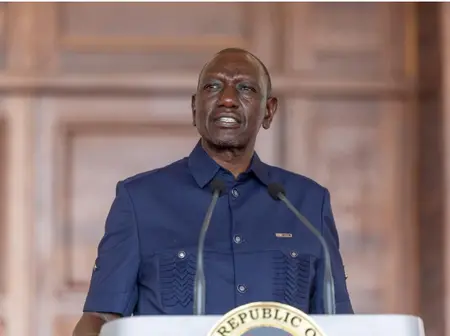
Kenya Makes Progress in Financial Crime Reforms as Government Seeks Removal From International Watch
The country was placed on the Financial Action Task Force (FATF) grey list in February 2024 following concerns about gaps in its efforts to combat money laundering and terrorism financing.
The listing means Kenya is subject to increased monitoring as it works to address identified weaknesses in its financial systems.
However, the government has made progress in implementing the required reforms. Financial Reporting Centre Director-General Naphtaly Rono told Parliament in October 2026 that Kenya had addressed 19 of the 21 action items identified by the international watchdog.
The remaining requirements include improving investigations and prosecutions involving money laundering, strengthening transparency in company ownership and ensuring that financial intelligence is effectively used to identify suspicious transactions.
Kenya is targeting April 2027 to complete the process and exit the FATF grey list.
The government has also been engaging international partners, including the European Union, as part of broader efforts to strengthen financial regulations and improve cooperation in combating financial crimes.
The reforms are important because being placed on international watchlists can expose Kenyan businesses and financial institutions to additional scrutiny when conducting cross-border transactions.
Banks and international financial institutions may introduce additional checks when dealing with transactions involving countries considered high-risk. This can increase compliance costs and delay some financial dealings.
The European Commission added Kenya to its list of high-risk third countries in 2025, requiring financial institutions covered by EU rules to apply enhanced checks to relevant transactions.
The government has introduced legislative and institutional changes to address the concerns, including amendments to anti-money laundering laws and stronger oversight of financial activities.
SOURCE: https://www.facebook.com/share/p/1CotJySf2G/