Category: Economy&Finance

  • KRA Tightens the Net on Tax Evaders: What Kenyan Businesses Need to Know

    KRA Tightens the Net on Tax Evaders: What Kenyan Businesses Need to Know

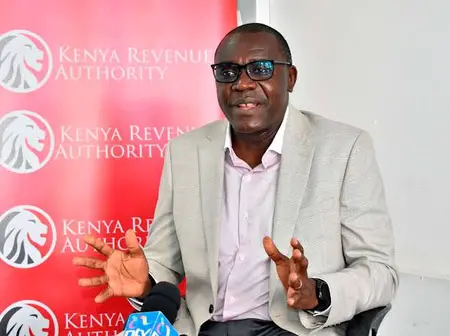
    The Kenya Revenue Authority (KRA) has launched a sweeping enforcement campaign targeting businesses suspected of tax evasion, illicit trade, and fraudulent invoicing. Deploying advanced digital surveillance tools alongside physical field audits, the taxman aims to seal revenue leakages and restore fair competition across the country’s commercial sector.

    ​At the center of the crackdown is the Electronic Tax Invoice Management System (eTIMS), which KRA investigators are using to flag fictitious invoices, undeclared sales, and discrepancies across Value Added Tax (VAT), Pay As You Earn (PAYE), and Corporate Income Tax filings. Recent enforcement operations have already exposed multi-billion-shilling fake invoicing networks and prompted industry bodies, including the Retail Trade Association of Kenya (RETRAK), to urge strict supplier due diligence to curb smuggled and counterfeit goods.

    ​For everyday business owners, the message from Times Tower is unambiguous: compliance is no longer optional. Enterprises found under-declaring income or operating outside statutory tax frameworks risk heavy financial penalties, accrued interest, agency notices, revocation of Tax Compliance Certificates, and criminal prosecution under the Tax Procedures Act. Conversely, KRA has reiterated that businesses facing genuine cash-flow constraints due to delayed government pending bills may formally apply for structured payment plans or temporary enforcement relief, provided their tax returns are filed on time.

    ​As the government pushes to meet ambitious domestic revenue targets without overburdening compliant citizens, KRA is urging traders to maintain accurate transaction records, verify supplier credentials, and reconcile their books promptly. While the intensified audits may cause short-term jitters in the market, authorities maintain that leveling the playing field will ultimately protect honest entrepreneurs, safeguard jobs, and fund vital public services.

    https://www.facebook.com/share/p/1Ewg4Gxixq/
  • Why Government Has Extended Higher Sulphur Limits in Petrol and Diesel for Six More Months

    Why Government Has Extended Higher Sulphur Limits in Petrol and Diesel for Six More Months

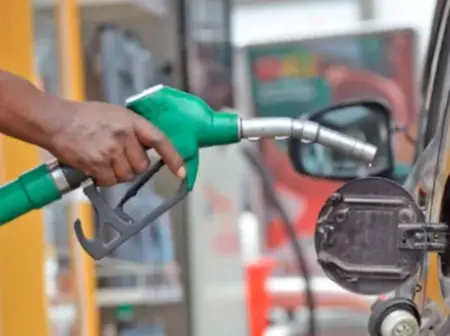
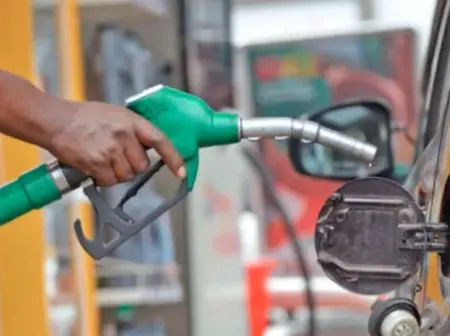
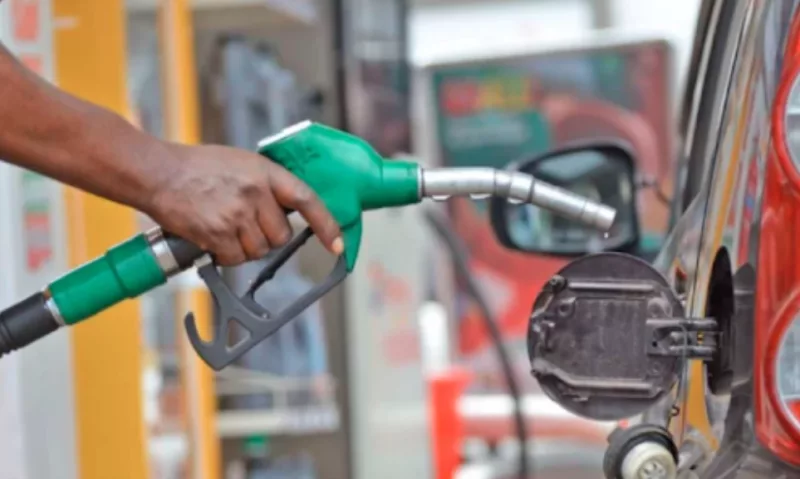
    Kenyan motorists will continue using petrol and diesel supplied under temporarily relaxed fuel quality requirements after the government extended the measure for another six months.

    The decision, announced on Wednesday, November 11, 2026, is aimed at protecting the country from possible fuel shortages caused by disruptions in international petroleum supply routes.

    Investments, Trade and Industry Cabinet Secretary Lee Kinyanjui said the extension followed a request from the Ministry of Energy and Petroleum and a recommendation by the National Standards Council.

    The temporary arrangement allows imported petrol and diesel to contain a maximum of 50 milligrams of Sulphur per kilogram, commonly written as 50mg/kg. It applies to the country's automotive gasoline and automotive gas oil standards.

    The government said continued uncertainty in the Middle East had affected global petroleum supply chains, particularly shipping through the Strait of Hormuz.

    The waterway is one of the world's most important routes for transporting oil. Disruptions can delay shipments, limit the number of suppliers available and make it harder for fuel-importing countries such as Kenya to secure supplies that meet strict quality specifications.

    Kenya relies heavily on imported refined petroleum products, making it vulnerable to international shipping disruptions and changes in global oil markets.

    Walco Oil & Gas |  Petroleum products, Lubricants, Romol Lubricants in Nairobi, Kenya

    The latest extension means the arrangement will remain in force for another six months. However, the government says it can be reviewed earlier if international supply conditions improve.

    What does this mean for motorists?

    The decision does not mean that all petrol and diesel sold in Kenya will contain 50mg of Sulphur per kilogram. It sets the maximum amount permitted under the temporary arrangement.

    Sulphur is naturally present in petroleum products. When fuel containing Sulphur is burned, it releases Sulphur dioxide, a pollutant that contributes to air pollution and can worsen respiratory problems.

    Cleaner fuels with lower Sulphur levels help reduce these emissions and support modern vehicle emission-control systems. This means the temporary adjustment raises concerns about balancing reliable fuel supplies with environmental and public health protection.

    The government has maintained that the measure is not a permanent change to Kenya's fuel quality standards. It is intended to give importers more flexibility to source fuel during the ongoing international supply challenges.

    For now, the government says its priority is to prevent shortages while monitoring developments in the global petroleum market.

    Sources: https://www.the-star.co.ke/news/2026-11-12-why-state-has-extended-high-sulphur-limit-in-petrol-diesel

  • The government has extended by a further six months the temporary adjustment of sulphur limits

    The government has extended by a further six months the temporary adjustment of sulphur limits

    Motorists and businesses across the country are assured of steady fuel supplies well into next year after the government extended a temporary adjustment on sulphur limits for imported petrol and diesel by another six months.

    ​Announced by the Cabinet Secretary for Investments, Trade, and Industry, Lee Kinyanjui, the directive maintains the maximum permitted sulphur threshold at 50 milligrams per kilogramme (50mg/kg). This temporary waiver—originally introduced on April 30, 2026—applies to Automotive Gas Oil (diesel) under Kenya Standard KS EAS 177:2025 and Automotive Gasoline (premium motor spirit) under KS EAS 158:2025, temporarily superseding the stricter 10mg/kg regional cap adopted in August 2025.

    ​The Ministry noted that the extension was necessitated by ongoing geopolitical tensions in the Middle East and persistent disruptions along critical international maritime routes, including the Strait of Hormuz. By retaining the 50mg/kg ceiling, Kenya widens its pool of compliant global petroleum suppliers, cushioning the local economy against severe fuel shortages.

    ​Addressing public concerns, officials clarified that the 50mg/kg figure represents an upper statutory limit rather than a blanket requirement, meaning not all imported fuel will contain that maximum level. Furthermore, the adjustment is strictly a supply-chain intervention and does not alter retail pump prices, which remain under the independent monthly review of the Energy and Petroleum Regulatory Authority (EPRA).

    https://www.facebook.com/share/p/1FLKLrYLCT/

  • KRA Changes Imported Car Clearance Rules, Allowing Dealers to Register Vehicles After Sale

    KRA Changes Imported Car Clearance Rules, Allowing Dealers to Register Vehicles After Sale

    Kenya has potential to be East African auto industry hub - Business Daily

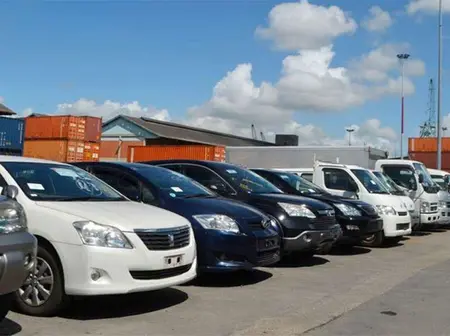
    The Kenya Revenue Authority (KRA) has introduced a new arrangement allowing licensed motor vehicle dealers to move imported second-hand cars from customs yards to their business premises before completing formal registration.

    The changes, reported on November 11 and 12, follow a directive by President William Ruto aimed at changing how imported vehicles handled by licensed dealers are released.

    Under the revised procedure, dealers must first declare imported vehicles through KRA's Integrated Customs Management System and pay all applicable customs duties, taxes and levies.

    However, they will no longer be required to pay NTSA registration fees and levies at the initial customs clearance stage. Those payments will be made after a customer purchases the vehicle.

    Before a vehicle leaves the customs-controlled facility, officers must physically inspect it and confirm that the required payments have been made.

    Dealers must also obtain a special Kenya Dealer (KD) identifier through the National Transport and Safety Authority (NTSA). The identifier will contain the dealer's number and the vehicle's chassis number, allowing authorities to track the vehicle.

    Once the checks are completed, the vehicle can be transferred to the dealer's business premises while the dealer looks for a buyer.

    After a sale, the dealer must complete the formal NTSA registration process and pay the required registration charges through eCitizen.

    The changes could ease cash-flow pressure for licensed car dealers because they will not have to complete registration before finding a customer.

    For buyers, the new process may make it easier to find imported vehicles displayed at dealers' premises.

    However, the changes do not remove import taxes, customs inspections or the requirement to register a vehicle before it is legally used on Kenyan roads.

  • Ruto Courts European Investors for Local Manufacturing and Tech Transfer

    Ruto Courts European Investors for Local Manufacturing and Tech Transfer

    Ruto announces new strategic partnership with European Union

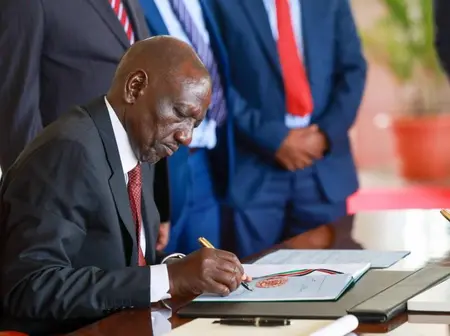
    Speaking during high-level engagements in Nairobi alongside EU leadership, the Head of State emphasized that Kenya is seeking to transition beyond traditional raw-commodity trade toward deep industrial collaborations anchored on local manufacturing, technology transfer, green energy, and infrastructure development.

    Highlighting that the European Union remains Kenya’s single largest export destination—accounting for 21 per cent of the country's global exports including tea, coffee, horticulture, and cut flowers—President Ruto urged European investors to establish local production facilities under the Economic Partnership Agreement (EPA).

    He challenged European enterprises to leverage Kenya's renewable energy capacity and strategic geographic location, declaring that the upgraded relationship should focus on mutual investment rather than aid.

    Ruto also welcomed Nairobi’s designation as the EU's fourth regional hub in Africa, noting that the status cements the capital's role as a premier diplomatic, financial, and logistical gateway across the continent.

    Beyond trade and job creation, the upgraded framework reinforces joint cooperation on regional peace, digital transformation, and climate action.

    President Ruto commended Brussels for approving an additional €75 million (approximately KSh 10.93 billion) in support of African Union-led stabilization missions in Somalia, while also opening the door for EU election observers ahead of the 2027 General Election.

    With new EU Global Gateway funding targeting digital innovation and clean transport corridors, the partnership marks a major milestone in aligning Kenya's industrial ambitions with European capital.

    What are your thoughts about this article? Share your reactions in the comment section and don't forget to share and follow for more updates.

    https://peopledaily.digital/business/ruto-announces-new-strategic-partnership-with-european-union

  • Amount lost through cyber fraud(Sh m)

    Amount lost through cyber fraud(Sh m)

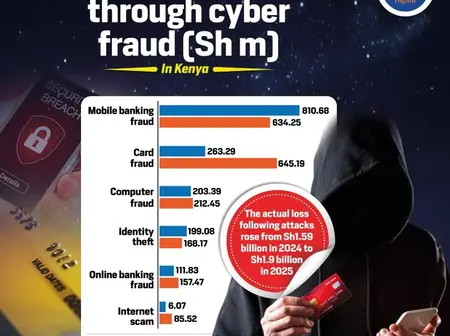
    Financial losses from cyber fraud in Kenya rose from Sh1.59 billion in 2024 to Sh1.9 billion in 2025, according to Central Bank of Kenya (CBK) data.

    Card fraud drove the surge, more than doubling from Sh263.29 million to Sh645.19 million to become the leading source of losses. While mobile banking fraud dropped from Sh810.68 million to Sh634.25 million, it remained a major threat.

    Computer fraud rose slightly to Sh212.45 million, and online banking fraud reached Sh157.47 million. Notably, internet scams spiked sharply from Sh6.07 million to Sh85.52 million, whereas identity theft declined from Sh199.08 million to Sh168.17 million.

  • Why government has extended high sulphur limit in petrol and diesel

    Why government has extended high sulphur limit in petrol and diesel

    The government has extended by a further six months the temporary adjustment of sulphur limits in imported petrol and diesel in a move aimed at maintaining uninterrupted fuel supplies amid persistent disruptions in global petroleum markets.

    Subscription

    Help us continue bringing you unbiased news, in-depth investigations, and diverse perspectives. Your subscription keeps our mission alive and empowers us to provide high-quality, trustworthy journalism. Join us today to make a difference!

  • CBK Opens Ksh50 Billion Treasury Bond Offer: How Kenyans Can Invest And Earn Interest

    CBK Opens Ksh50 Billion Treasury Bond Offer: How Kenyans Can Invest And Earn Interest

    The Central Bank of Kenya (CBK) has reopened two previously issued government Treasury bonds, offering Kenyans another opportunity to invest in government securities and earn interest over an extended period.

    The offer, announced on Tuesday, November 10, 2026, comprises a 15-year fixed-coupon bond and a 30-year fixed-coupon bond, with the government targeting a combined Ksh50 billion to finance its budgetary requirements.

    Treasury bonds are investment instruments through which individuals and institutions lend money to the government for a specified period in return for regular interest payments. Unlike ordinary bank savings accounts, investors receive interest based on the terms of the bond they purchase.

    Interested Kenyans can participate in the offer through the CBK's online DhowCSD platform, which allows investors to register, submit bids and manage their government securities investments.

    Here is a breakdown of how to purchase the reopened Treasury bonds.

    Step 1: Register on the DhowCSD platform

    Investors should begin by visiting the CBK DhowCSD Investor Portal or downloading the DhowCSD mobile application.

    Registration requires a national identity card or passport, KRA PIN, active telephone number, email address, passport-size photograph and bank account details.

    Step 2: Log in and select your preferred bond

    After registration details have been verified and approved, investors can access their accounts using the login credentials sent to their email addresses.

    They should then proceed to the investment or bids section and choose between the two available securities: the 15-year bond (FXD1/2019/015) and the 30-year bond (SDB1/2011/030).

    Step 3: Determine your investment amount

    Investors can choose non-competitive bidding, which allows them to purchase bonds without specifying their preferred interest rate.

    The minimum investment under this category is Ksh50,000, while the maximum is Ksh50 million per CSD account. Competitive bids require a minimum investment of Ksh2 million per bond.

    Step 4: Submit your application

    Enter the required investment amount and other details, carefully review the information provided and submit your bid through the platform before the deadline.

    Step 5: Confirm allocation and make payment

    Successful applicants can check their allocation and payment details under the transactions section of their DhowCSD accounts from November 20, 2026.

    All payments must be completed by November 25, 2026.

    The CBK has scheduled Wednesday, November 18, 2026, at 10:00am as the deadline for submitting applications.

    https://www.facebook.com/share/19sLjbunng/

  • CBK sets November 18 deadline for KSh50 billion Treasury bond offer

    CBK sets November 18 deadline for KSh50 billion Treasury bond offer

    The two securities are the 15-year bond, FXD1/2019/015, and the 30-year bond, SDB1/2011/030. The first carries an annual coupon rate of 12.857 per cent, while the second offers 12.5 per cent, according to the published offer details.

    The 15-year bond is due to mature on January 9, 2034, while the 30-year instrument matures on January 21, 2041. Both bonds have been reopened, meaning investors can purchase additional amounts of securities that were originally issued earlier.

    The CBK requires investors to have active DhowCSD accounts to participate in the auction. Applications can be made through the DhowCSD Investor Portal or mobile application. Investors may also seek assistance through authorized commercial banks, investment banks and stockbrokers.

    The bonds attract a withholding tax of 10 per cent on interest payments. Successful applicants will receive payment instructions through the DhowCSD platform, according to the reported auction guidelines.

    The CBK has also retained the right to allocate the securities in full or on a pro-rata basis, depending on the applications received. This means investors may not necessarily receive the full amount requested.

    The reopened bonds are intended to provide the government with additional domestic financing while offering investors an opportunity to earn interest through government securities.

    Investors are advised to review the official CBK prospectus and complete their applications before the November 18 deadline.

    Source: Central Bank of Kenya, November 2026 Treasury bond prospectus; People Daily; Business News Kenya.https://www.facebook.com/share/p/1HtwFECsNk/

  • Kenyan Farmers to Benefit from KSh32.5 Billion World Bank Funding

    Kenyan Farmers to Benefit from KSh32.5 Billion World Bank Funding

    World Bank to Inject Ksh32.5 Billion Targeting Kenyan Farmers Under New  Deal - Kenyans.co.ke

    The funding is expected to help small-scale farmers increase their harvests, access better markets and earn more money from their farming activities.

    The programme will focus on improving agriculture by providing farmers with better farming services, modern technology and financial support.

    The money will also support farmers involved in dairy farming, poultry, fruits, vegetables and other agricultural activities.

    The World Bank's funding will be channelled through the National Agricultural Value Chain Development Project, which aims to improve farming and create more business opportunities in the agricultural sector.

    The project has already reached approximately 1.32 million farmers across different parts of the country.

    It has also expanded its operations from 26 to 35 counties, giving more farmers an opportunity to benefit from the programme.

    Agriculture remains one of the most important sectors of Kenya's economy, supporting millions of households and providing employment to many people.

    However, farmers continue to face challenges such as high production costs, poor weather conditions, limited access to markets and expensive farm inputs.

    The new funding is expected to help address some of these challenges and make farming more profitable.

    The programme will also encourage farmers to adopt better farming practices and improve the quality of their products.

    The World Bank's support comes at a time when Kenya is working to strengthen food security and reduce the cost of food.

    Farmers will now be hoping that the funding reaches those who need it most and brings real improvements to their livelihoods.

    If properly implemented, the programme could create new opportunities for farmers while strengthening Kenya's agricultural sector.

    Source:https://www.facebook.com/share/p/19gtfEatxK/