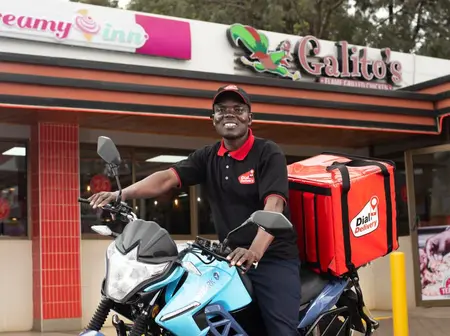
Simbisa Brands has acquired the remaining 25% stake in Kutuma Kenya Limited for US$663,882 (approximately KSh85.8 million), giving the restaurant group full ownership of its Kenyan food delivery business as orders grew 59% to 3.23 million in the financial year ended June 2026.
The acquisition consolidates Simbisa’s ownership of the company operating its Dial-A-Delivery service in Kenya. Simbisa previously held a 75% stake in Kutuma, with the latest transaction bringing its ownership to 100%.
The Zimbabwe-headquartered restaurant group operates several food brands in Kenya, including Galitos, Pizza Inn, Bakers’ Inn, Chicken Inn and Creamy Inn. Its acquisition comes as delivery channels gain a larger role in restaurant commerce and Kutuma pursues ambitions to develop into a broader delivery marketplace.
Simbisa’s audited financial statements for the year ended 30 June 2026 record US$663,882 in net cash outflow from the buyout of the non-controlling interest in Kutuma Kenya Limited.
The group’s subsidiary ownership disclosures also show the change, with Simbisa’s stake increasing from 75% as at 30 June 2025 to full ownership by 30 June 2026.
Kutuma operates Simbisa’s on-demand food delivery business in Kenya through Dial-A-Delivery, serving customers ordering from the group’s restaurant brands. The acquisition brings the delivery operation entirely under Simbisa’s ownership as the company develops its digital commerce activities.
Simbisa reported that delivery orders in Kenya increased by 59% to 3.23 million in the financial year ended June 2026, compared with the previous financial year.
The growth provides an indication of the scale of the delivery operation within the group’s Kenyan business. With restaurants covering pizza, chicken, grilled meals, bakery products and desserts, Simbisa has a portfolio of brands serving different customer preferences through its delivery channels.
The growth also comes as other delivery platforms report rising activity in Kenya. Glovo reported 40% growth in Kenyan orders in October 2026, alongside a network of more than 6,000 merchants and over 2,200 active riders daily.
According to Glovo, the platform had generated more than KSh20 billion in sales for Kenyan merchant partners since entering the market in 2019. The company also announced plans to invest a further KSh10 billion in Kenya by 2030.
These figures provide context for the commercial environment in which Kutuma operates, with established platforms competing for customers, merchant relationships and transactions across food and retail categories.
Beyond delivering orders from Simbisa’s restaurant brands, Kutuma has ambitions to develop into a broader delivery marketplace, potentially extending its services to independent restaurants and other merchants.
The company has been recruiting for several positions to support its business development and technology capabilities. These include a head of technology, a brand manager and a business development specialist.
The business development role is particularly relevant to the marketplace ambition, with responsibilities centred on growing the Dial-A-Delivery Marketplace merchant network and supporting its expansion.
Glovo’s expansion into retail media illustrates the additional commercial opportunities available to delivery platforms with established customer and merchant networks. At its Future of Commerce Summit in October 2026, Glovo Kenya said 68% of searches on its platform were for product categories rather than specific brands, highlighting the role of in-app discovery in influencing customer purchases.
The company is also developing advertising products that allow brands to promote products through sponsored search, category placements and targeted campaigns. These services create additional commercial opportunities around the customer traffic and merchant relationships generated by a delivery marketplace.
Glovo has also expanded its merchant offering beyond restaurant meals, while Bolt Food partnered with Quickmart in June 2026 to make more than 12,000 supermarket products available through its platform across over 60 stores.
For Kutuma, a broader marketplace would create opportunities to extend its delivery infrastructure beyond Simbisa’s restaurant portfolio, connecting customers with a wider selection of merchants through its platform.
Simbisa’s involvement in digital food delivery predates the acquisition. In May 2019, Glovo partnered with the restaurant group to facilitate deliveries from its brands in Nairobi, including Chicken Inn, Pizza Inn, Creamy Inn, Galitos and Bakers’ Inn.
At the time, Simbisa’s Head of Business Development, Joseph Claver, said the partnership would help the group increase its consumer base and improve service delivery.
The relationship also extended to individual brands. In February 2024, Glovo partnered with Pizza Inn to make its menu available through the platform, with 68 outlets listed across its Kenyan delivery network at the time.
The value of maintaining relationships with third-party platforms while developing proprietary delivery channels was also discussed by Kuku Foods East Africa CEO Jacques Theunissen.
Kuku Foods operates KFC in Kenya, Uganda and Rwanda. Theunissen said the company had introduced its own KFC delivery application while maintaining relationships with aggregators including Glovo, Uber Eats, Bolt and Jumia.
According to Theunissen, every order placed through KFC’s application in Uganda was incremental, meaning the direct channel generated additional orders without taking business away from Glovo. He argued that working with established delivery platforms could help restaurant operators grow while developing their own customer channels.
“It’s easier to grow with somebody than to do it alone,” Theunissen said, describing the value of aggregators in providing visibility and convenience to customers.
His account provides an example of how restaurant operators can combine proprietary ordering channels with third-party delivery services, an approach relevant to the wider market in which Simbisa is developing Kutuma.
The expansion of digital ordering is also changing how restaurant businesses manage customer interactions. In the same interview, Theunissen said approximately 65% of KFC’s in-restaurant transactions in Kenya were taking place through self-service kiosks, illustrating the role of digital channels beyond home delivery.
He also described how KFC uses automated forecasting to predict demand, alongside digital processes for restaurant operations, staffing and food safety.
For Simbisa, the acquisition of Kutuma gives the group full ownership of an established delivery operation at a time when its Kenyan order volumes are growing and the subsidiary is pursuing a wider marketplace model.
The KSh85.8 million buyout consolidates Simbisa’s position in Kenya’s food delivery business while placing Kutuma at the centre of its plans to serve customers and merchants through digital ordering and delivery.
Leave a Reply