A Kenyan man has left social media users curious after recording an unusual encounter outside his residence during what had initially been an ordinary night at home.
According to the account shared by Nairobi Express on Facebook, the man was spending a quiet evening at his residence when something unexpected caught his attention outside the house.
The unusual sighting reportedly prompted him to take out his phone and record what was happening. He captured the encounter on camera, preserving the moment that had interrupted his otherwise peaceful night.
The incident has since drawn attention, with the video expected to generate discussions among social media users as people seek to understand what exactly the man witnessed.
Night-time encounters outside residential homes can be unsettling, particularly when residents come across something they cannot immediately identify. Such experiences often leave those involved searching for explanations, especially when the incident happens unexpectedly.
The man’s decision to record the occurrence has also provided an opportunity for others to view the incident and form their own opinions about what might have happened.
As the footage circulates online, curiosity continues to surround the circumstances of the sighting. However, the exact nature of what appeared outside the man's residence has not been established from the available account.
The incident was highlighted in a Facebook post shared by Nairobi Express, which directed attention to the video showing the unusual encounter.
Kenya Power has advised households to carefully consider their electricity consumption, financial situations and payment preferences before choosing between prepaid and postpaid electricity plans. The utility says selecting the right option can help customers manage their monthly expenses and avoid unnecessary inconveniences.
The prepaid system allows customers to purchase electricity tokens in advance and load them into their meters. This arrangement gives households greater control over their spending because they can decide how much money to allocate towards electricity depending on their financial situation.
One of the major advantages of prepaid electricity is the ability to purchase tokens in small amounts. Customers can also monitor their electricity consumption regularly and adjust their usage when necessary. Since electricity is paid for before consumption, customers do not accumulate monthly electricity bills.
However, households using prepaid meters must monitor their remaining units to avoid unexpected power interruptions. Once the purchased units are exhausted, electricity supply automatically stops until the customer buys additional tokens.
Kenya Power noted that postpaid electricity can be suitable for larger households, busy families and business owners who consume significant amounts of electricity. Customers also avoid the inconvenience of constantly checking their remaining electricity balance.
Nevertheless, postpaid customers must ensure they settle their bills within the required period to avoid penalties and possible disconnection.
The utility encouraged customers to consider their household size, electricity consumption patterns, income levels and preferred payment arrangements before making a decision.
Customers can access electricity account services through Kenya Power's self-service platform by dialling *977# on their mobile phones. The myPower application also provides access to billing information and other electricity services.
The restrictions affect several industries, including healthcare, law, education, private security, finance, tourism, transport and maritime services. Kenyans hoping to secure employment in the European-Asian country are among those required to observe the rules.
According to the published guidelines, the restrictions are backed by specific Turkish laws and regulations rather than temporary administrative decisions. This means that possessing professional qualifications, experience or relevant training does not automatically give a foreign national the right to work in the affected occupations.
In the healthcare sector, foreigners are barred from working as dentists, providing medicinal services and practising veterinary medicine. They are also prohibited from serving as hospital care workers or taking up certain management and supervisory positions in private hospitals and independent healthcare facilities.
The legal profession is another area largely reserved for Turkish citizens. Foreign nationals cannot work as lawyers or notaries, become judges or prosecutors, serve as mediators in civil disputes or take up positions as concordat commissioners.
Other restrictions cover private security services, where foreigners cannot establish or manage private security companies or work as private security officers. Neighbourhood and market guard positions are also included.
In finance and administration, the prohibited occupations include certified public accountants, sworn-in certified public accountants, assistant customs consultants and cooperative board members.
The education and tourism industries have also been affected. Foreigners cannot establish or teach in schools operating in languages other than Turkish under the specified restrictions. Tourist guides and travel agency supervisors are also among the prohibited occupations.
Transport and aviation-related positions, including transport organisers, honorary traffic inspectors and trainee aviation information management officers, are covered by the regulations.
Türkiye has further restricted foreign participation in several maritime activities within its territorial waters. These include diving, exploration, piloting, captaining, navigation and working as crew members on vessels.
Commercial activities involving the export of certain marine products, including fish, oysters, mussels, sponges, pearls and corals, are also restricted.
Other occupations appearing on the list include sports counsellors, agricultural labour intermediaries, ship agency officials and employees, permanent mining supervisors and technical staff, as well as foreign medical assistants working outside approved specialist training programmes.
The publication of the list provides foreign jobseekers and employers with clearer guidance on occupations legally open to non-Turkish nationals.
Kenyans planning to relocate to Türkiye for employment are therefore advised to establish whether their intended profession is permitted before spending money on applications, travel arrangements or work permit procedures.
The restrictions apply to foreign nationals generally and are based on Türkiye's existing legal framework.
Teachers across Kenya could soon enjoy increased take-home salaries following President William Ruto's announcement of proposed changes to Pay As You Earn (PAYE) tax deductions.
The President has defended the Affordable Housing Levy, arguing that planned tax reductions could leave salaried workers with more money despite the existing 1.5 per cent Housing Levy deduction.
Speaking during the official opening of the Kenya Comprehensive School Heads Association (KECSHA) meeting in Mombasa on Thursday, November 12, 2026, Ruto announced plans to increase the monthly income exempted from PAYE taxation from KSh24,000 to KSh32,000.
Under the proposed changes, employees would not pay PAYE on the first KSh32,000 of their monthly taxable income, compared to the current threshold of KSh24,000.
The Head of State argued that the adjustment would provide meaningful financial relief to workers, including teachers, by reducing the amount of their salaries subjected to taxation.
"My competitors are sponsoring a debate saying they want to protect the payslip. We are proposing that we want to remove PAYE on the first KSh32,000 on what you earn," Ruto said.
According to the President, a teacher earning approximately KSh50,000 could enjoy an estimated KSh1,250 increase in monthly take-home pay under the proposed tax adjustments, even after accounting for Housing Levy deductions.
The announcement comes amid growing debate over statutory deductions appearing on employees' payslips, with many workers expressing concerns about the amount deducted from their monthly earnings.
Ruto maintained that the proposed PAYE relief would help employees retain more of their salaries while the government continues implementing its affordable housing programme.
Teachers and other public servants will now be keenly following developments to establish when the proposed tax changes will take effect and how the new threshold will affect their individual payslips.
A regular salary is often regarded as one of the greatest advantages of the teaching profession. For many teachers, however, the assurance of a monthly pay cheque has gradually become an invitation to borrow, acquire property, undertake ambitious investments and sustain lifestyles that their incomes can barely support.
NCBA Bank has continued to expand access to wealth management advisory services beyond Nairobi, bringing its Meet, Mingle & Money Talks series to Nakuru as part of its broader strategy to help customers build, preserve and transfer wealth.The engagement brought together customers and financial specialists for discussions on investment planning, succession, wealth preservation and financial resilience, reflecting the evolving financial needs of customers as they progress through different stages of their journeys.
Contrary to popular myth, the base cost of electricity per unit remains identical across both systems. Any variations on your receipt come from monthly taxes, fuel cost charges, and foreign exchange adjustments. Instead of tariff rates, the utility company urges households to look closely at three practical areas:
• Your Income Flow and Cash Cycle: Households with daily or weekly earnings often benefit most from prepaid tokens. Using the "Nunua mdogo mdogo" approach, you can purchase small, affordable power units whenever cash is available, avoiding the stress of raising a lump sum at the end of the month. Conversely, salaried earners with predictable monthly paychecks may prefer the convenience of paying a single consolidated postpaid bill.
• Spending Control and Budget Discipline: Prepaid meters operate just like mobile phone airtime. You pay upfront, monitor your real-time consumption on the meter display, and power cuts off automatically once units run out. This eliminates unexpected bill shocks and prevents unpaid debt from piling up. Postpaid accounts offer uninterrupted usage throughout the month, which suits busy homes that do not want the inconvenience of sudden power cutoffs during late hours, provided they have the discipline to clear the final bill on time.
• Household Size and Lifestyle: Smaller families, students, or individuals living alone can easily track and cap their daily wattage using prepaid tokens. Larger households with heavy, continuous appliance usage—such as multiple refrigerators, water heaters, or home offices—often find postpaid billing smoother for uninterrupted daily routines.
The Kenya Revenue Authority (KRA) has stepped up scrutiny of businesses seeking Value Added Tax (VAT) registration, amid concerns that some firms are being used to facilitate tax evasion schemes.
The Authority said certain businesses were applying for VAT registration not to meet their own tax obligations but to help other companies reduce the amount of tax they should pay through fraudulent arrangements.
Speaking during a stakeholder engagement in Machakos, KRA Commissioner for Micro and Small Taxpayers George Obell said the taxman was tightening checks to identify firms involved in suspicious VAT activities.
Obell explained that the Authority was reviewing its registration procedures to ensure businesses with genuine operations could access the service more easily while suspicious applications faced additional scrutiny.
The move comes after taxpayers raised concerns over delays in obtaining VAT registration. Some businesses have complained that the process takes too long, making it difficult for them to meet their compliance requirements.
According to Obell, KRA is working to make registration faster, particularly for established businesses whose operations and records can be verified.
“We have got this feedback from the taxpayers that it takes a long time, and so we have looked at that process to try and make it fairly easier, especially for established businesses,” he said.
He noted that applicants whose business activities are clear and verifiable would benefit from a smoother process.
However, firms whose operations raise questions will be subjected to further checks before their applications are approved.
“The ones that will take more time are the businesses that we are not sure about, but the ones we are sure about, we are making them easier to be able to get VAT registration and follow up so that you can comply,” Obell added.
KRA's approach is intended to balance easier access to tax services for genuine businesses with stronger measures against companies suspected of abusing the VAT system.
The Authority is also seeking to ensure that VAT registration is not used as a tool by businesses looking to create artificial tax arrangements or lower their liabilities unlawfully.
The tighter checks signal increased attention on VAT compliance as KRA works to protect revenue and address practices that undermine tax collection.
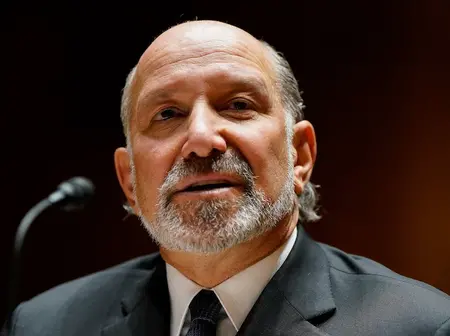
Howard William Lutnick is an American businessman and government official who has served as the 41st United States Secretary of Commerce since 2025.Born on 14 July 1961 on Long Island, New York, and raised in Jericho, he is the middle child of Solomon Lutnick, a history professor at Queens College, and Jane Lutnick, a painter and sculptor who taught at Long Island University.
The October 9 ruling marked the third consecutive victory for Raval's companies in a long-running dispute over billions of shillings in unpaid taxes.
KRA had previously pursued tax claims against several Devki Group subsidiaries. However, it abandoned demands amounting to about KSh 4 billion against Cemtech and Devki Mills before the latest tribunal decision.
The dispute dates back to tax relief agreements made between Devki Group companies and the Jubilee administration. Under the arrangements, the government had committed to cover VAT on machinery and other imports used in the company's industrial projects.
The deal included a 16 per cent VAT exemption on machinery and clinker imported for a cement plant in West Pokot in 2015, alongside machinery brought into the country by Devki in 2020.
The agreement later faced challenges when Treasury Cabinet Secretary John Mbadi informed the affected companies in a letter dated October 2, 2024, that the government could not legally use public funds to settle their tax obligations.
Mbadi maintained that the arrangement had no legal backing under existing tax laws. KRA subsequently issued tax demands against the companies.
However, the Tax Appeals Tribunal ruled that Maisha Mabati's circumstances were different from those of other companies involved in similar disputes.
The tribunal found that KRA had been a direct party to the agreement involving the Treasury and Maisha Mabati. The authority had also issued written approvals and exemption codes, which it repeatedly renewed.
These approvals allowed the company to import machinery for its KSh 1 billion manufacturing plant in Lukenya.
The tribunal observed that KRA could not approve the arrangement, facilitate its implementation and later demand taxes that the company had been allowed to avoid paying.
Maisha Mabati also presented records showing that KRA had previously written off Cemtech's outstanding VAT arrears under Section 37F of the Tax Procedures Act.
The provision gives the tax commissioner powers to refrain from assessing or recovering unpaid taxes under certain circumstances.
The company argued that it should receive similar treatment, citing the tax authority's previous actions involving another Devki subsidiary.
The dispute has raised questions about the legal status of tax agreements between the government and private investors, particularly where KRA is directly involved in approving the arrangements.
In a separate development, KRA has given multinational companies operating in Kenya until November 30, 2026, to declare their tax status under the Minimum Top-Up Tax framework.
The requirement falls under Section 12G of the Income Tax Act and applies to companies covered by the global minimum tax rules.
Affected businesses must submit their group details, identify their ultimate parent companies and provide the names and PINs of their Kenyan entities through mttsupport@kra.go.ke.
They are also required to file the relevant returns, declare any additional tax payable and settle their liabilit