
A customer explaining a missing delivery does not need a machine to pretend it has feelings. She needs it to understand the problem, avoid making up an answer, and reach someone who can resolve it.Humanized AI should therefore be judged by practical respect. Does it handle the customer’s language?
Category: Technology
-
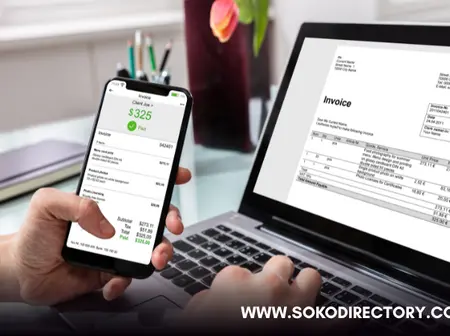
The AI Native Company Starts with the Invoice Queue
The most useful AI project in a small company may never appear in a product launch. It might reconcile orders, flag overdue invoices, or identify stock that will run out before the next delivery. The glamour is limited. The commercial value can be substantial.An AI-native organization designs workflows around what software can reliably assist, while assigning people clear responsibility for exceptions and decisions.
-

Kenya Among 57 Countries in Melania Trump’s Global Technology Coalition
Kenya is among 57 countries participating in Melania Trump’s Fostering the Future Together coalition, which is seeking to expand children's access to artificial intelligence, digital literacy and education technology.Artificial intelligence is increasingly shaping how people learn, work and interact with the world.
-

Safaricom introduces Sh10 hourly Wi-Fi package targeting low-income households
Safaricom has introduced an hourly Wi-Fi service that lets customers access broadband internet for as little as Sh10, in a move aimed at extending connectivity to low-income households and individuals who cannot afford conventional monthly internet subscriptions.The tokenised Wi-Fi service, highlighted in the company's FY2026 Sustainable Business Report, is being piloted in Kibera and Kawangware, two densely populated Nairobi neighbourhoods where the cost of regular internet subscriptions can limit access to digital services.
-
M-Kopa phone loans: Why unlocking a financed device could land you in court
Kenyans who modify financed smartphones to bypass security restrictions could face criminal investigations if their actions involve knowingly handling suspected stolen property or participating in unlawful activities.
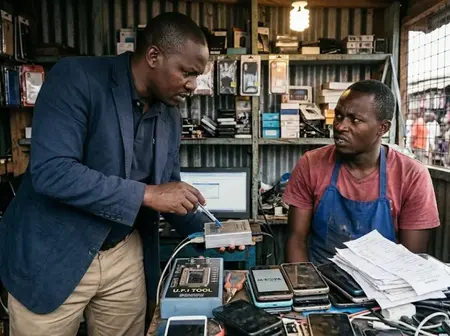
The issue has come under scrutiny following a police investigation at a phone repair workshop in Mathare, Nairobi, where officers reported to have recovered 71 mobile phones and specialised electronic equipment linked to alleged attempts to bypass M-Kopa’s security systems.
The case highlights the legal risks surrounding the unlocking of smartphones acquired through instalment financing, particularly where customers have outstanding payments.
Investigators are said to have established that approximately 365 phones had passed through equipment recovered during the operation. M-Kopa identified 24 of 29 examined handsets as its devices, with 23 allegedly showing signs of interference with security software.
A further 18 phones associated with the company’s financing arrangements were reportedly identified, with a combined value of Ksh303,487.
The investigation centres partly on Section 323 of Kenya’s Penal Code, which deals with possession of suspected stolen property.
The provision allows prosecution where a person is found possessing property reasonably suspected to have been stolen or unlawfully obtained and cannot satisfactorily account for its possession.
A person convicted under this provision faces imprisonment of up to one year.
However, this does not mean every customer who defaults on M-Kopa instalments or every technician who unlocks or repairs a financed phone automatically commits a criminal offence.
The prosecution must establish the elements of the offence using evidence. The circumstances surrounding possession and the explanation given by the accused are important considerations.
There is also a distinction between breaching a financing agreement and possessing suspected stolen property.
Missing instalments can trigger contractual consequences, including restrictions on the financed device. However, default alone does not establish criminal guilt.
Similarly, modifying a smartphone’s software does not automatically prove that the device is stolen or that the technician knows it was unlawfully obtained.
The investigation followed complaints received by M-Kopa in February 2025 concerning phones reported stolen or lost. The company formally reported the matter to police on July 10, 2025.
Investigators subsequently searched a repair workshop in the Mradi area of Mathare, Nairobi.
During the operation, officers are reported to have recovered 71 handsets, computers, laptops, external storage devices and specialised flashing equipment, including Pandora, Chimaera and U.F.I tools.
Forensic examination indicated that approximately 365 phones had passed through the equipment.
M-Kopa identified 24 of 29 examined handsets as belonging to the company, with 23 claimed to be showing signs of security software interference.
Investigators also identified 18 additional financed devices valued at approximately Ksh303,487. Seventeen were reportedly active on loan records but appeared inactive on the company’s device management system.
The technician associated with the workshop denied knowingly handling stolen property, maintaining that customers brought phones to his business for ordinary repairs, software diagnosis and replacement of damaged components.
He also challenged the police search and seizure of equipment he valued at approximately Ksh555,000.
The dispute reached the High Court after the technician challenged Section 323, arguing that its application violated constitutional protections, including the presumption of innocence.
On November 5, 2026, the High Court dismissed his constitutional petition, allowing the criminal proceedings at Makadara Law Courts to continue.
The court clarified that reasonable suspicion must be based on ascertainable facts. It also noted that operating a repair shop or possessing phones and diagnostic equipment does not, by itself, establish criminal wrongdoing.
The ruling did not amount to a conviction. Prosecutors must still prove the allegations in the criminal trial.
M-Kopa allows eligible Kenyans to acquire smartphones through an initial payment followed by scheduled instalments. Its remote-management system can restrict or deactivate financed devices when customers fall behind on repayments, subject to the applicable agreement.
The company’s SIM security features also restrict certain devices to registered SIM cards, meaning unauthorised SIM changes can trigger restrictions.
Some customers may consider taking their phones to technicians to remove security applications or bypass remote controls. However, modifying a phone does not automatically clear outstanding instalments or remove contractual obligations.
For repair technicians, the Mathare case highlights the importance of maintaining customer records, job cards and receipts, and establishing the nature of requested software modifications.
For customers, the safest option when a financed phone is locked is to contact M-Kopa through official support channels and retain repayment confirmations.
The case raises wider questions about digital security, consumer rights and the responsibilities of independent repair businesses as smartphone financing expands in Kenya.
Ultimately, criminal liability depends on the evidence and the specific offence charged, not simply on whether a phone has been unlocked.
-

Forex traders Kenyan Prince and Abeid FX robbed of iPhones
Forex traders Kenyan Prince and Abeid have appealed to people who stole their iPhones to return the devices, with the two making separate pleas while explaining what they stood to lose if the phones were not recovered.Speaking in a TikTok video on Wednesday, November 11, 2026, Abeid addressed the person who took his iPhone 18 Pro Max, saying he was willing to buy the individual another phone if they returned his device.
-

iPhone 18e Leaks Reveal Expected Upgrades, Major Changes in 2027
PAY ATTENTION: Mark TUKO.co.ke as a preferred source, and our content will appear higher in your Google feed!
Elijah Ntongai is an experienced editor at TUKO.co.ke, with more than four years in financial, business, labour and technology research and reporting. His work provides valuable insights into Kenyan, African, and global trends.
Apple's next affordable smartphone, the iPhone 18e, is shaping up to be a modest update rather than a major overhaul, with early leaks pointing to a processor swap as the headline change while much of the device's design and core hardware remains largely unchanged.

Weibo-based leaker Fixed Focus Digital indicated on Monday, November 11, 2026, that the A20 chip is currently the only upgrade that can be identified with any confidence.

George Ruto’s Mood matatu ditches bucket seats for normal seats in latest renovation upgrade
The source noted that the standard iPhone 18 and the iPhone 18e are expected to share certain manufacturing processes, which would make sweeping upgrades to the more affordable model unlikely.
PAY ATTENTION:TUKO is in WhatsApp Channels now! Subscribe and read news in your favourite messenger.
A separate leaker, Digital Chat Station, shared additional details reportedly tied to the device.
According to those claims, the iPhone 18e will feature a 6.12-inch LTPS OLED display running at 60Hz, a specification consistent with Apple's established approach of using lower refresh rates to separate budget models from its premium lineup.
The A20 processor is said to be built on a 2nm manufacturing process, which could bring gains in both performance and power efficiency relative to previous generations.
On the camera side, the handset is expected to carry a single 48MP rear sensor, while the front-facing camera may be upgraded to 24MP, potentially making the selfie shooter one of the few meaningful hardware improvements alongside the new chip.
Fixed Focus Digital also raised the possibility that the iPhone 18e could retain the traditional display notch rather than adopt Dynamic Island, mirroring a correct prediction the same leaker made about the iPhone 17e ahead of its release.

Humanoid robot joins 24 human athletes in ice race, drops out after just 3 kilometers
Apple's release calendar has already shifted noticeably. In September 2026, the company unveiled the iPhone 18 Pro lineup and its foldable iPhone Duo without introducing the standard iPhone 18, departing from its long-standing autumn schedule.
Leaks now suggest Apple intends to release the iPhone 18e, the standard iPhone 18 and the iPhone Air 2 together in spring 2027.
Pricing will likely be a critical factor in how the market receives the device.
Apple raised entry-level iPhone prices by USD 100 in September 2026, pushing the iPhone 17e's starting price to USD 699, well above what many consumers had anticipated for the company's budget tier.
Should Apple hold the iPhone 18e at a similar price while delivering the A20 chip, the device could attract buyers who value processing power and long-term software support over premium display technology or multi-camera systems.
A further price increase, however, could test consumer appetite for a handset that otherwise changes relatively little from its predecessor.

Man stuns crowds as he flies using futuristic gravity jet suit at NASA Expo
All reported specifications and the spring 2027 launch date remain unconfirmed, and Apple has not made any official announcements regarding the iPhone 18e.

In other news, Apple confirmed that 33 iPhone models, starting with the iPhone 11 released in 2019, are eligible for its iOS 27 update launched on September 14, 2026.
However, Apple Intelligence features require at least 8GB of RAM, restricting access to 15 models beginning with the iPhone 15 Pro series, while advanced Siri AI capabilities requiring 12GB of RAM are limited to six newer models.
Compatible devices will receive other upgrades, including Liquid Glass design refinements, Safari improvements, AirPods customisation options and enhanced Screen Time controls, regardless of their AI eligibility.
Apple also announced performance improvements of up to 30% faster app launches, 70% faster photo loading and 80% faster AirDrop transfers across eligible devices, although some AI features will face regional restrictions.
Source: TUKO.co.ke
-
Government opens AI-powered cybersecurity centre as businesses face growing digital risks
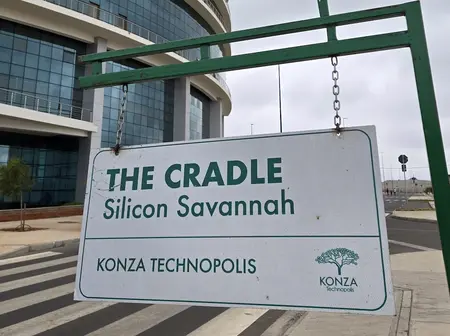
Kenya’s cybersecurity services market is gaining another provider as the government opens a shared Security Operations Centre (SOC) at Konza Technopolis, offering public institutions and private companies access to specialised network monitoring and incident response.
The facility introduces a subscription-based model under which businesses will pay annual fees according to the digital infrastructure they want monitored and protected. This includes servers, firewalls and routers, giving organisations access to centralised security operations without having to establish their own facilities and maintain dedicated teams of cybersecurity specialists.
The model addresses a challenge facing businesses that depend on digital systems but cannot justify the cost of operating a full security operations centre. Continuous network surveillance requires specialised technology, trained analysts and the capacity to investigate suspicious activity at any time. By sharing these capabilities across participating organisations, the Konza facility offers another route to enterprise cybersecurity services.
The centre will use artificial intelligence (AI) to monitor networks, detect suspicious activity and coordinate responses to cyber incidents. Its services will include continuous monitoring, threat intelligence, proactive threat hunting and incident response, covering threats such as hacking, ransomware and phishing.
The Konza facility enters a market where telecommunications and technology companies already offer managed security services to businesses. Safaricom, for example, has introduced a Managed Security Operations Centre (MSOC) as part of its enterprise cybersecurity portfolio, providing continuous monitoring and security event analysis for organisations that need specialist protection.
Safaricom has also positioned managed cybersecurity services as an option for smaller businesses that lack the personnel and resources to operate dedicated security teams. Its cybersecurity proposition reflects a wider enterprise technology market in which organisations can outsource specialised functions rather than invest in all the required infrastructure internally.
The Konza model introduces a government-backed alternative, with government institutions enrolling in the service and private companies accessing it through annual subscriptions. The pricing structure is based on the scale of infrastructure supported, connecting the cost of the service to the number and type of assets requiring protection.
For businesses, the value of a managed SOC extends beyond receiving alerts when suspicious activity occurs. Security teams must investigate those alerts, distinguish genuine threats from routine network activity and coordinate responses when systems or accounts are compromised. Centralised monitoring brings these capabilities together, helping organisations manage security across multiple digital assets.
The facility will also provide threat intelligence and proactive threat hunting. These functions allow security teams to examine emerging attack methods, identify weaknesses and investigate unusual activity before it develops into a more serious incident.
The launch adds another facility to Kenya’s wider effort to organise cybersecurity protection across government institutions and critical infrastructure. Earlier plans reported by TechTrendsKE included the establishment of a National Cybersecurity Agency and a National Cybersecurity Operations Centre to coordinate national responses to cyber incidents.
The proposed agency was intended to bring together government ministries, regulators, security agencies, private companies and other institutions involved in protecting digital infrastructure. Its planned responsibilities included cybersecurity strategy, critical information infrastructure protection and coordination of incident responses.
The Konza facility adds an operational dimension to this broader institutional framework by providing monitoring and response capabilities that participating organisations can access through a central platform. Government institutions are among its initial users, placing public-sector systems within the scope of the shared cybersecurity service.
This is particularly relevant as government agencies move more administrative processes and public services onto digital platforms. Their websites, applications, databases and network infrastructure form part of the systems citizens and businesses rely on to interact with public institutions.
Konza Technopolis Development Authority chief executive John Paul Okwiri said the facility would strengthen Kenya’s ability to protect the infrastructure supporting its digital economy.
“As Kenya expands its digital economy and brings more public services online, the security of our digital infrastructure must remain a priority,” Okwiri said. “The security operations centre will strengthen our capacity to detect and respond to cyber threats while supporting a secure, resilient and trusted digital ecosystem.”
The demand for centralised cybersecurity monitoring comes as Kenya records large volumes of malicious activity targeting digital infrastructure. The Communications Authority of Kenya’s latest cybersecurity report recorded 2.7 billion detected cyber threat incidents between July and September 2026, a 14.45% increase from the preceding quarter.
Brute-force activity accounted for another significant category of threats. The authority recorded more than 44.9 million attempts during the three-month period, representing an 85.41% increase. These attacks involve repeated attempts to guess passwords or access credentials, potentially allowing attackers to enter systems where authentication controls are weak.
Government institutions were among the sectors most affected, alongside internet service providers and cloud companies. Attackers targeted web applications, email systems, network devices and remote access infrastructure, all of which support the delivery of digital services and the management of organisational information.
The figures also reflect the challenges facing organisations that depend on connected systems. A single institution may operate several websites, internal applications, remote access services and network devices, creating multiple points that require monitoring and security management.
The Communications Authority’s figures represent detected threat events and attempted attacks, rather than confirmed intrusions or compromised government databases. They nevertheless illustrate the volume of malicious activity that cybersecurity teams must identify, investigate and manage.
The growing threat environment has also prompted practical security responses from government institutions. In October, Kenyan agencies were directed to address critical vulnerabilities affecting PHP-based websites and applications, including identifying affected systems, applying security updates and reviewing logs for suspicious activity. Such work highlights the importance of maintaining visibility across infrastructure rather than relying solely on periodic security assessments.
Financial institutions face another dimension of the cybersecurity challenge as fraud involving digital channels continues to affect banking operations and customers. The Central Bank of Kenya (CBK) reported that banking fraud losses increased to Sh1.9 billion in 2025 from Sh1.59 billion in 2024, while the number of reported cases rose from 353 to 385.
The amount exposed to fraud also increased to Sh2.03 billion from Sh1.96 billion. Card fraud losses more than doubled, reaching Sh645.2 million from Sh263.3 million, while internet scam losses climbed to Sh86.5 million from Sh6.1 million.
The changing pattern of fraud illustrates the different risks facing organisations operating digital financial services. Card-related fraud, online scams and compromised credentials can involve different attack methods, requiring institutions to combine transaction monitoring, identity protection and network security.
The banking figures also demonstrate why cybersecurity spending has become an operational concern for companies handling sensitive information and financial transactions. Detecting suspicious network behaviour and coordinating responses can help organisations investigate potential compromises before they cause wider disruption, although financial fraud also requires controls beyond network monitoring.
The cybersecurity centre adds to Konza Technopolis’ role as a host of government technology infrastructure. The government has established a National Data Centre at the technopolis to host public-sector systems and provide cloud services, supporting the computing and storage requirements of digital government operations.
Konza has also been associated with the KRA Disaster Recovery Centre, which supports the continuity of critical tax administration systems. These facilities address different infrastructure requirements, from hosting government applications and data to maintaining access to essential systems when disruptions occur.
The new SOC extends that infrastructure portfolio into cybersecurity monitoring and incident response. While the data centre provides hosting and cloud capabilities, the security operations facility gives participating institutions access to services designed to identify threats and coordinate responses across their networks and devices.
For businesses, the annual subscription model also connects Konza’s infrastructure investments to the wider enterprise technology market. Organisations that need specialist monitoring can access the shared service while continuing to manage their own systems and operations, adding another option to Kenya’s managed cybersecurity sector.
-

Samsung overtakes smartphone rivals as Lipa Mdogo Mdogo drives growth
Samsung Electronics has become Africa’s leading smartphone manufacturer for the first time since entering the market in 1995, overtaking its competitors in both revenue and unit sales.The milestone has partly been driven by its flexible instalment payment model, locally known as lipa mdogo mdogo, which allows customers to pay for devices in small daily or weekly amounts.
-

How to Refresh DStv After Payment
Knowing how to refresh DStv after payment helps restore your television channels when they remain unavailable even after you have paid your subscription. Sometimes, your decoder may take time to receive payment confirmation or update its viewing status. If you have cleared your DStv bill but are still seeing error messages such as E16, E30 or E32, you can follow several methods to refresh your decoder and restore your channels.