
Listen to articleThe conference will also elect five ITU officials and members of the ITU Council, which serves as the organisation's governing body.Kenya is seeking re-election to the International Telecommunication Union (ITU) Council, joining other member states at the organisation's highest decision-making conference in Doha, Qatar, from November 9 to 27.
Category: Technology
-
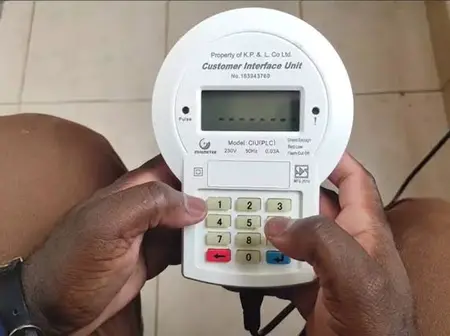
KPLC Token Showing “Failed” ? Do These 3 Simple Things Before Calling Kenya Power
For thousands of Kenyan households, this sudden error triggers panic about spoiled food, interrupted work, or spending the night in darkness.
Fortunately, Kenya Power has clarified that most token rejections stem from minor communication hiccups rather than permanent hardware damage.
Before calling a technician or waiting on customer care lines, follow these three practical steps to restore your electricity supply immediately.
1. Reconnect and Power Up Your Keypad
Your Customer Interface Unit (CIU)—the small indoor keypad—relies on a steady signal to talk to the main meter box outside.
Weak batteries or loose wall sockets frequently break this wireless link.
Start by unplugging the keypad from the wall, removing old batteries, and inserting fresh alkaline cells.
Next, plug the unit directly into an active wall socket rather than a crowded extension cable, as heavy electronics create signal interference.
2. Verify Your Meter Number and Digit Sequence
A single mistyped number among the 20 digits automatically triggers a rejection.
Carefully cross-check your M-Pesa confirmation SMS against the digits you entered, and confirm the units match your exact house meter.
Dial 000 and press Enter on your keypad, or use the official USSD code *977#, to verify your active meter number.
If your meter requires a pending software update code, enter the reset sequence first before loading new units.
3. Check the Main Breaker and Reset the Connection
If the screen still displays an error, inspect your main meter box outside and confirm the main circuit breaker switch is flipped to "ON".
Switching the main breaker off for twenty seconds and turning it back on clears temporary memory freezes.
However, if your screen displays a "Bypass" warning, stop immediately and report the fault via the MyPower App, as tampering alerts require official Kenya Power intervention.
SOURCE
-

4 Things Kenyans Should Think Twice About Before Posting on Social Media
Social media has become part of everyday life for many Kenyans. From Facebook and TikTok to WhatsApp and X, people use these platforms to share opinions, discuss current affairs and express their frustrations.
However, not everything shared online is harmless. A post written in anger or excitement can sometimes expose someone to legal trouble.
There are four things social media users should be particularly careful about before publishing anything online.
1. Defamatory Statements
Making false claims about another person can lead to a defamation case.
For instance, publicly calling someone a thief, fraudster or criminal without evidence could damage their reputation and expose the person making the statement to legal action.
Freedom of expression does not give anyone unlimited rights to damage another person's reputation.
2. Threatening Messages
Threatening someone through Facebook, WhatsApp or other platforms can also attract legal consequences.
Even when such messages are written out of anger or presented as jokes, their content and circumstances may expose the sender to prosecution under Kenyan law.
3. Sharing Private Pictures Without Consent
Sharing another person's intimate photographs or videos without permission is another serious mistake.
Some people use private images to embarrass, blackmail or punish former partners. However, Section 37 of Kenya's Computer Misuse and Cybercrimes Act addresses the wrongful distribution of intimate or obscene images.
4. Copying Other People's Creative Work
Downloading someone's photograph, article, video or design does not automatically make it yours.
Presenting another person's work as your own could violate copyright laws. Kenya's Copyright Act protects creators and their original work.
Social media users should also understand that deleting an inappropriate post does not automatically remove possible legal responsibility.
As more Kenyans embrace digital platforms, understanding online responsibilities is becoming increasingly important.
Before sharing that angry comment, making an accusation or uploading someone else's private information, it is worth taking a moment to think.
Sometimes, one careless post can create a legal problem that takes much longer to resolve than it took to publish it.
Source:
https://nc4.go.ke/documents/computer-misuse-and-cybercrimes-act-2018?utm_source=chatgpt.com
By Suzzy Owiti
-

DCI Expands Biometric PCC Services To Turkana And West Pokot – What Took 14 Days Now Takes 5 Minutes
The latest expansion of the Multi-Biometric Identification System, MBIS, has seen the technology installed at Lodwar and Kapenguria Huduma Centres, respectively, bringing faster, more efficient and technology-driven services within closer reach of residents in the two counties.
The move is part of the Government's commitment to bringing essential services closer to the people. For many years, residents of Turkana and West Pokot had to travel long distances to Nairobi or other major towns to process their PCCs. That journey cost time and money. It also delayed jobs, travel, and other opportunities. Now, they can get the service closer to home.
Powered by modern biometric technology, the system has revolutionised PCC processing, significantly reducing turnaround time while enhancing the accuracy and efficiency of criminal identification. What previously took at least 14 working days can now be accomplished in less than five minutes, marking a remarkable leap in service delivery.
That change is huge for ordinary Kenyans. A PCC, also known as a Certificate of Good Conduct, is required for many things. It is required for jobs. It is required for visas and travel. It is required for work permits. It is required for some business licences. It is required for adoption and other legal processes. When it took 14 days, many people lost opportunities. When it takes five minutes, opportunities open faster.
To ensure seamless integration and effective utilisation of the technology, Huduma Centre personnel received hands-on training on system operations and the processing of PCC applications, equipping them with the requisite skills to deliver efficient and responsive services.
Officials say training was important. The system uses fingerprints and other biometric data. Staff must know how to capture the data correctly. They must know how to process applications. They must know how to help applicants who may not be familiar with technology. The training, officials say, will ensure residents get good service from day one.
The rollout forms part of the broader Government transformation agenda, which seeks to modernise policing through the adoption of innovative technologies, strengthen institutional efficiency and place citizen-centred service delivery at the heart of public service.
Supporters of the move say it is a step in the right direction. They say Turkana and West Pokot have long been left behind in service delivery. They say bringing MBIS to Lodwar and Kapenguria shows the government is serious about equity. They say all Kenyans, no matter where they live, deserve fast and modern services.
They say the system will also improve accuracy. Biometric technology reduces errors. It reduces cases of mistaken identity. It makes criminal identification more reliable. That, they say, is good for security and for innocent Kenyans who may have been wrongly flagged in the past.
Residents of Turkana and West Pokot are encouraged to visit Lodwar and Kapenguria Huduma Centres, respectively, and experience the convenience of modernised PCC processing.
Residents who spoke about the rollout said they are happy. They say they have waited for this for long. They say they used to spend thousands of shillings travelling to Nairobi for a PCC. They say they used to sleep in towns, waiting for results. Now, they say, they can save that money and time.
Others say the government should do more. They say other counties also need the same service. They say internet connectivity in Turkana and West Pokot is still a challenge. They say Huduma Centres must have reliable power and internet for the system to work. They say staff must be present and helpful, not absent.
Others say the government should also reduce the cost of PCC. They say even if the service is fast, it must be affordable for young people and job seekers. They say many young people are unemployed and cannot afford high fees.
Officials say the expansion will continue. They say the goal is to have MBIS in all Huduma Centres across the country. They say technology is the future of policing and public service.
For now, residents of Turkana and West Pokot can visit Lodwar and Kapenguria Huduma Centres for their PCCs.
One thing is clear. The DCI has expanded its biometric PCC services to Turkana and West Pokot. What took 14 days can now take less than five minutes. For residents of the two counties, service has come closer home.
https://www.facebook.com/share/1RyJN957y7/
-

How to Install Bluetooth Drivers on Windows 11
Knowing how to install Bluetooth drivers on Windows 11 can help you connect wireless devices such as headphones, speakers, keyboards, mice and smartphones to your computer. If your Bluetooth is missing, not working or failing to detect nearby devices, you may need to install or update its drivers.
-

SportPesa Aviator Multiplier of the Week climbs to 109,470.31x
SportPesa Aviator has delivered another notable multiplier moment, with a reported weekly high of 109,470.31x on the Kenya platform. The figure highlights how far a multiplier can climb during a single Aviator round. The 109,470.31x multiplier is the central talking point, but it is important to distinguish the peak reached during a round from the multiplier at which an individual player may have cashed out.
-

How Digital Entertainment is Reshaping Leisure Time in Kenya’s Growing Cities
Entertainment used to mean you had to actually go somewhere.Something’s been shifting in Nairobi these past 18 months, and I can’t stop noticing it everywhere I look.Entertainment used to mean you had to actually go somewhere. Bars down on Kimathi Street, clubs in Westlands, maybe the cinema at Junction.
-

How to Install Play Store on a Laptop
Knowing how to install Play Store on a laptop allows you to access Android applications and games using a computer. Google Play Store is designed mainly for Android devices, so it does not have a standard installation version for Windows laptops. However, you can use an Android emulator to run the Play Store on your laptop and download compatible applications.
-

TVET Scholars Meet in Nairobi to Explore AI and Smart Technology Opportunities
TVET scholars have come together in Nairobi to explore how artificial intelligence (AI) and modern technology can create new employment opportunities for young people.
The scholars, who are embracing changes in the technology sector, were encouraged to use their technical skills and knowledge to develop solutions that can help them become self-employed.
The gathering focused on the growing importance of AI and smart technologies in shaping the future of work. Participants were urged to move beyond traditional employment expectations and look at how technology can help them create their own jobs.
The push comes at a time when technology is changing how businesses operate and how people earn a living. AI is increasingly being used in different sectors, creating new opportunities for people with the right skills and knowledge.
TVET institutions play an important role in preparing young people for the job market by offering practical and technical training. Through such programmes, learners can acquire skills that are useful in industries that are rapidly adopting digital technologies.
The scholars were encouraged to remain open to learning new technologies and improving their abilities to remain competitive in the changing job market.
They were also challenged to see technology as more than a tool for completing tasks, but as an opportunity to develop businesses, offer services and solve problems within their communities.
The meeting highlighted the need for young people to adapt to technological changes instead of waiting for traditional employment opportunities.
As Kenya continues to invest in technical education and digital transformation, embracing AI and smart technology could open new paths for graduates seeking employment and business opportunities.
source:https://www.facebook.com/share/p/1LjYRQh6si/
-

Hackers Hijack Digital Billboards in Multiple Countries, Broadcast Explicit Videos
According to an interview published by The Cairo Report, a representative of the group said members discovered thousands of exposed systems during the two-hour search. The attackers claimed they exploited weaknesses in remote advertising management software rather than physically accessing individual billboards.
However, the reported number of vulnerable systems and the precise technical method have not been independently verified.
The most prominent incident occurred along the 26th of July Axis in Giza, Egypt, where a large digital billboard displayed explicit footage instead of its usual advertisements. Videos circulating online showed motorists recording the incident, with the screen displaying aliases associated with the hacking group.
Egypt's Interior Ministry confirmed that an international company contracted by the local advertising operator had suffered a cyberattack. According to the ministry, the incident resulted in unauthorised footage appearing on digital advertising screens in several countries simultaneously. Authorities said legal proceedings had been initiated.
Al Arabia United, the company operating the affected Egyptian billboard, also acknowledged unauthorised access and said it had switched off the screen while investigations continued.
In Malaysia, the Kluang Municipal Council confirmed that several public LED screens had been compromised and displayed obscene material. Authorities subsequently shut down the affected displays and began investigations with the service provider.
In Brazil, an advertising screen in Campo Maior, Piauí, also displayed sexually explicit content. Its operator confirmed a cyberattack, suspended the display and reported the incident to police.
The group additionally claimed to have accessed systems in Iraq and China, although those claims have not received the same level of independent confirmation.
Cybersecurity researchers at Malwarebytes said the incidents highlight the risks associated with internet-connected advertising infrastructure, particularly inadequate protection of remote-management systems.
Investigations into the incidents are continuing.