Category: Economy&Finance

  • Regional businesses drive KCB Group’s Q3 profits to Sh58.6bn

    Regional businesses drive KCB Group’s Q3 profits to Sh58.6bn

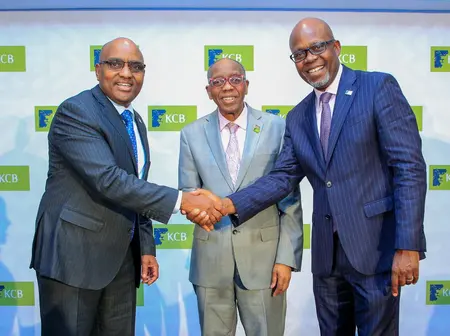
    KCB Group's net profit rose 24 per cent to Sh58.6 billion in the nine months to September 2026, driven by stronger regional operations, more digital transactions, and improved asset quality.

    This is despite declining interest rates that continue to reshape the banking industry's earnings environment.

    Earnings per share rose 24.3 per cent to Sh17.80, underscoring improved shareholder returns.

    Total income grew 12.3 per cent to Sh167.8 billion, up from Sh149.4 billion a year earlier, supported by increased lending activity and higher transaction volumes.

    This outpaced the 6.1 per cent growth in operating costs, helping improve the cost-to-income ratio to 43.7 per cent from 46.2 per cent.

    The results point to the benefits of the group's investments in technology, distribution and regional expansion, which have helped it generate more income without a corresponding increase in operating expenses.

    A significant driver was non-funded income, which rose 21.8 per cent to Sh54.9 billion, accounting for nearly a third of total income.

    Funded income, largely generated from lending, increased by a slower 8.2 per cent to Sh112.9 billion.

    The growth in transaction-based earnings reflects the group's push to diversify revenue sources amid declining interest rates, which have put pressure on traditional lending margins.

    KCB's mobile lending business recorded a 26 per cent increase in disbursements to Sh492 billion in the third quarter, equivalent to about Sh1.8 billion daily.

    Foreign exchange income also increased 65.1 per cent, supported by higher transaction volumes, particularly through Trust Merchant Bank (TMB) in the Democratic Republic of Congo.

    The group has also expanded services on its unified mobile banking application, incorporating money market funds, Pesalink and bill payment solutions to generate additional transaction income.

    The strategy comes at a time when banks are experiencing narrowing lending margins.

    Latest data by the Central Bank of Kenya (CBK) show the spread between average lending and deposit rates narrowed to 7.46 percentage points in July, its lowest level in 10 months, putting pressure on lenders that depend heavily on interest income.

    KCB's regional subsidiaries continued to provide an important growth engine, contributing 33.4 per cent of group net profit.

    Profit after tax from businesses outside Kenya increased by 24.3 per cent to Sh19.6 billion, supported by improved performance in Burundi, South Sudan, Uganda and the Democratic Republic of Congo.

    The group's total assets expanded 15.4 per cent to Sh2.4 trillion, supported by a 15 per cent increase in customer deposits to Sh1.8 trillion and an 11 per cent rise in gross loans to Sh1.4 trillion.

    Its Kenyan banking business remained the largest contributor, with profit after tax increasing 20.7 per cent to Sh40.8 billion and its balance sheet expanding 13 per cent to Sh1.6 trillion.

    In September, KCB increased its stake in TMB from 85 per cent to 98 per cent, strengthening its position in the Democratic Republic of Congo, one of the region's major banking markets.

    The increased ownership gives the group a greater share of earnings from the subsidiary while reinforcing its regional diversification strategy.

    The lender also recorded an improvement in asset quality, with gross non-performing loans falling 17.1 per cent to Sh184.1 billion from Sh222.1 billion a year earlier.

    Consequently, the non-performing loan ratio declined to 13.3 per cent from 17.8 per cent, while loan loss provisions fell 9.1 per cent to Sh16.6 billion.

    The cost of risk, which measures credit losses relative to the loan book, improved to 1.7 per cent from 2.1 per cent.

    According to the banking regulator, industry-wide gross non-performing loans stood at Sh688.2 billion in June 2026, down from Sh728.5 billion a year earlier, as lower borrowing costs eased repayment pressure on some customers.

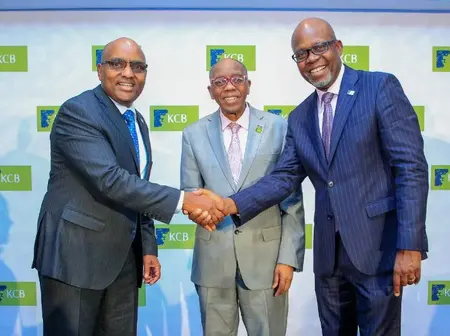
    Commenting on the results, KCB Group chief executive Paul Russo attributed the performance to investments in technology, customer experience and regional capabilities.

    The group's operating costs increased by 6.1 per cent, slower than income growth, while return on equity stood at 22.1 per cent and return on assets improved to 3.5 per cent.

    Its capital position also remained strong, with core capital to risk-weighted assets at 18 per cent against a statutory minimum of 10.5 per cent. Total capital adequacy stood at 21.1 per cent, above the 14.5 per cent regulatory threshold.

    The group also disbursed Sh20.8 billion in green loans during the third quarter and screened projects worth Sh451 billion under its environmental and social due diligence framework in the nine months.

    Chairman Joseph Kinyua said strong capital buffers would provide room to absorb economic shocks while supporting future expansion.


  • Inside the Dangote empire and the rise of three daughters shaping his businesses

    Inside the Dangote empire and the rise of three daughters shaping his businesses

    thumbnail

    What you need to know:Aliko Dangote’s father, Mohammed Dangote, was a Hausa business associate of his maternal great-grandfather, Alhassan Abdullahi Dantata, West Africa’s wealthiest resident and the richest African during the colonial era. Aliko’s mother, Mariya Dantata, was the eldest daughter of Alhassan’s son, Sanusi Dantata, a wealthy groundnut merchant from Kano.

  • Rironi-Mau Summit Highway: What happens to homes and businesses on land marked for acquisition?

    Rironi-Mau Summit Highway: What happens to homes and businesses on land marked for acquisition?

    Rironi-Mau Summit Highway: What happens to homes and businesses on land marked for acquisition?

    The expansion of the Rironi-Mau Summit Highway could affect homes, businesses and privately owned property in Kiambu, Nyandarua and Nakuru counties after the National Land Commission (NLC) announced plans to compulsorily acquire additional parcels of land for the multibillion-shilling road project.

    In a Gazette notice dated November 13, 2026, the commission invited people with an interest in the affected properties to attend public inquiries to establish the propriety of the proposed acquisition, compensation claims and other related matters.

    The notice, issued on behalf of the Kenya National Highways Authority (KeNHA), also provides for the deletion, correction and addition of parcels previously identified for acquisition.

    However, being listed in the notice does not mean that an entire home, business or parcel will automatically be taken over. The acquisition concerns specific portions of land identified in the official schedules.

    Here is what property owners and other affected parties need to know about the process, their compensation rights and the steps they should take.

    Rironi-Mau Summit Road

    Under the Land Act, 2012, the government can compulsorily acquire private property for a public purpose, provided the constitutional and legal requirements are met and just compensation is paid.

    The National Land Commission oversees the process, while KeNHA is the acquiring authority for the Rironi-Mau Summit Highway expansion.

    The process involves identifying the land required, publishing acquisition notices, conducting inspections and valuations, and inviting interested parties to present their claims.

    The latest November 13 notice is particularly important because it identifies parcels to be added, corrected or deleted from the acquisition schedule.

    This means landowners should not rely solely on earlier notices. They need to establish whether their specific parcel number appears in the latest schedule and whether the entire property or only a portion is affected.

    According to the NLC notice, public inquiries are scheduled to begin on December 1, 2026, at various chiefs’ offices in the affected areas. Property owners should confirm their specific hearing date and venue from the official schedule.

    Compensation is not restricted to the person whose name appears on a title deed.

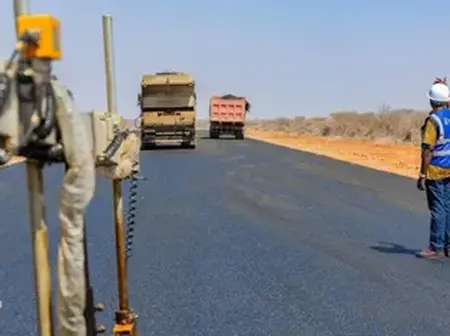
    The current progress of the Rironi Mau Summit. PHOTO//@davis_chirchir/X

    The NLC is required to establish all persons with legally recognisable interests in the affected property before making individual compensation awards.

    These may include registered landowners, co-owners, qualifying leaseholders and other persons who can demonstrate a compensable interest.

    The Land Act also provides for compensation to certain people occupying land in good faith without title, subject to specific legal conditions.

    For instance, where an acquisition forces someone to relocate their residence or business, reasonable relocation expenses may be considered. Losses arising from damage to other property, reduced earnings or severance of land may also be considered where supported by evidence.

    Consequently, a business owner operating on affected property should not assume that only the landowner has a claim. They should present evidence of their interest and any losses arising from the acquisition.

    The government has not announced a fixed compensation rate for the additional parcels identified along the highway.

    Instead, the NLC will assess the affected properties and determine the compensation payable based on the applicable valuation criteria under the Land Act.

    MPs visit Rironi-Mau Summit to assess its progress after Transport CS Davis Chirchir explained delays. PHOTO/https://web.facebook.com/ParliamentKE

    The assessment takes into account the value of the land, its characteristics and qualifying improvements. It may also consider damage caused by separating the acquired portion from the remaining property, effects on other property and actual earnings, and reasonable relocation expenses.

    For example, if the government acquires part of a parcel containing a residential house, the assessment may need to consider how the acquisition affects the remaining property.

    Similarly, where a business loses access, suffers reduced profits or is forced to relocate, the affected party may present supporting evidence for consideration.

    Under Section 111 of the Land Act, compensation may take several forms, including:

    The law provides that the landowner may elect the form of compensation, subject to the statutory provisions.

    Importantly, the NLC must issue a written compensation award identifying the amount and form of compensation payable to each person it determines has an interest in the property.

    The NLC has asked individual claimants to submit a written compensation claim alongside supporting documents before or on the date of their respective inquiry.

    The required documents include:

    Companies claiming compensation must submit their certificate of incorporation, CR12, company KRA PIN certificate and identification and PIN documents for their directors.

    The documents can be submitted at the NLC offices at Ardhi House, 3rd Floor, Room 305, along 1st Ngong Avenue in Nairobi, or through the commission’s county coordinator offices in Kiambu, Nakuru and Nyandarua.

    The commission has also directed interested parties to inspect the affected land plans at its offices during official working hours.

    The public inquiry provides an opportunity for affected parties to challenge aspects of the proposed acquisition and present evidence supporting their compensation claims.

    Under Section 112 of the Land Act, interested parties have a right to be heard, produce evidence, call witnesses and question witnesses during the inquiry.

    Landowners who dispute the commission’s valuation should present supporting documents, including independent valuation reports where available, evidence of property improvements and records of business earnings where relevant.

    The NLC subsequently prepares a written compensation award for each person it determines has an interest in the property.

    A person dissatisfied with the award may seek legal recourse through the procedures provided under the Land Act, including applying to court to determine the amount of compensation.

    Davis Chirchir speaking during an inspection of the ongoing Rironi–Mau Summit Road construction works on November 10, 2026.

    The additional land acquisition comes as the government pushes to complete the wider highway project, which is being implemented through a public-private partnership.

    Transport Cabinet Secretary Davis Chirchir has previously announced plans to open the Rironi-Naivasha section to motorists before December 2026, while President William Ruto has targeted completion of the wider Rironi-Mau Summit section by April 2027.

    The highway is expected to improve connectivity between Nairobi, Nakuru and the western parts of Kenya, while supporting movement of goods along the Northern Corridor.

    However, for families and businesses whose property falls within the acquisition schedule, the immediate concern remains establishing the exact portion required, presenting compensation claims and understanding their legal rights before the government takes possession.

    David Njeru Nthua, known professionally as David Nthua, is a Kenyan digital journalist with over six years of experience. He began his journalism career with Opera News in May 2020 and currently works as a Politics and Breaking News Writer at People Daily Digital. He holds a Bachelor of Science in Information Technology from Mount Kenya University, Main Campus, Thika. Phone: 0708015379 Email: | Facebook: @davidnthuake | X: @davidnthuake

  • What Estonia, Kenya can teach each other

    What Estonia, Kenya can teach each other

    thumbnail

    Kenyan startups raised close to a billion dollars in 2025. According to Startup Genome, the figure was about $984 million, putting Kenya among Africa’s top destinations for venture capital. I’ve watched that number grow, and I’m proud of the founders behind it.

  • Government rolls out new strategy to fight illicit trade after Sh826 billion losses exposed

    Government rolls out new strategy to fight illicit trade after Sh826 billion losses exposed

    thumbnail

    Listen to articleA new national assessment estimates that illegal business activities cost Kenya 9.3 per cent of its GDP annually, prompting the government to unveil a seven-pillar strategy to strengthen enforcement and dismantle illicit trade networks.The government has launched a new national strategy to tackle illicit trade after a fresh assessment revealed that illegal business activities cost Kenya approximately Sh826 billion annually, threatening legitimate businesses, government revenue and consumer safety.

  • NLC Explains KSh1.3 Billion Compensation Plan for Isiolo-Mandera Road

    NLC Explains KSh1.3 Billion Compensation Plan for Isiolo-Mandera Road

    The National Land Commission (NLC) has defended its role in compensating landowners affected by the construction, of the Isiolo-Mandera highway following concerns raised by the World Bank over delays in the process.

    In a statement issued on Wednesday, November 18, 2026, the commission dismissed claims that it was responsible for the delays, saying its mandate in the compensation process was limited to land valuations and preparation of compensation schedules.

    NLC explained that it was responsible for assessing affected properties, verifying assets and determining the value of land and other developments belonging to Project Affected Persons (PAPs).

    However, the commission said the processing and disbursement of compensation funds were handled by the Kenya National Highways Authority (KeNHA), following directives from the World Bank.

    "The National Land Commission (NLC) wishes to clarify media reports regarding concerns raised by the World Bank over alleged delays in land valuation and compensation of Project Affected Persons (PAPs) under the Horn of Africa Gateway Development Project (HOAGDP)," the commission stated.

    It added that KeNHA was responsible for handling payments to affected landowners as part of the project's implementation arrangements.

    The clarification came after the World Bank raised concerns that delays in land compensation were affecting progress on the 740-kilometre Isiolo-Mandera highway.

    In a letter addressed to Treasury Cabinet Secretary John Mbadi, Roads and Transport Cabinet Secretary Davis Chirchir and Lands Cabinet Secretary Alice Wahome, the bank's Kenya Division Director, Qimiao Fan, warned that the compensation challenges were slowing down construction.

    The bank said contractors had not received unrestricted access to sections of land required for the project, making it difficult to carry out planned works.

    It further warned that the delays were increasing project costs, with additional expenses estimated at more than KSh1.2 billion every month.

    The concerns have placed renewed attention on the compensation process, which is a key requirement before contractors can access and work on the affected sections of the highway.

    NLC's statement sought to distinguish its valuation responsibilities from KeNHA's role in processing and paying compensation.

    LINK: https://www.kenyans.co.ke/news/129492-nlc-reveals-ksh13-billion-compensation-northern-kenya-road-project?utm_source=Facebook&utm_medium=MN&fbclid=IwZXh0bgNhZW0CMTEAcGRvZgRzcnRjBmFwcF9pZA80MDk5NjI2MjMwODU2MDkAAR_9JqiMVJ_z-G5zOcZISBX3ZN8HzVyLCLDmREldDLZUxFw5LcvC6JxJK9eYmQ_aem_ExMJuH8lACiYs-GrAhp3PQ

  • Why Diesel Prices Remain High Despite Global Drop

    Why Diesel Prices Remain High Despite Global Drop

    Kenyans hoping for cheaper diesel following a decline in international fuel prices have received disappointing news after new figures revealed that the cost of importing the commodity into the country has continued to rise.

    An analysis by EBC Financial Group shows that international diesel prices dropped by 6.1% in October 2026. However, Kenya's diesel import costs increased by 6.7% during the same period.

    According to figures from the Energy and Petroleum Regulatory Authority (EPRA), the landed cost of diesel increased to $1,137.09 per cubic metre in October, up from $1,065.38 in September.

    This means motorists have not enjoyed the expected relief from falling global prices.

    The difference is partly explained by the timing of fuel purchases and deliveries. Kenya imports fuel through cargoes that may have been purchased when international prices were higher.

    As a result, a drop in global prices does not immediately translate into cheaper fuel at local petrol stations.

    However, the government has stepped in to prevent another increase.

    A total of KSh4.6 billion was reportedly deployed from the Petroleum Development Levy Fund to cushion consumers against higher import costs.

    Without this intervention, diesel prices in Nairobi would have increased by KSh10.54 per litre.

    Consequently, EPRA maintained the price of diesel in Nairobi at KSh227.76 per litre until December 14, 2026.

    The development comes as Kenyans continue dealing with high transport and household expenses. KNBS figures show that annual inflation increased to 7.3% in October from 6.8% in September.

    Diesel prices had also increased by 32.5% over the previous 12 months.

    With another fuel review approaching, motorists will be watching closely to see whether import costs decline and whether the government can sustain its intervention.

    For now, cheaper international diesel has not translated into cheaper fuel for Kenyans.

  • Mbadi Announces When Proposed PAYE Tax Adjustment Bill Will Reach Parliament

    Mbadi Announces When Proposed PAYE Tax Adjustment Bill Will Reach Parliament

    Kenyans could soon get a clearer picture of proposed changes to Pay As You Earn (PAYE) tax after Treasury Cabinet Secretary John Mbadi revealed that the proposed adjustment Bill will be tabled in Parliament next week.

    The announcement is likely to attract attention from salaried workers, employers and businesses across the country, as any changes to PAYE could affect how much employees take home at the end of each month.

    Mbadi said the proposed Bill would be presented to Parliament for consideration, setting the stage for lawmakers to examine the planned tax adjustments.

    The proposed changes are expected to offer relief to low-income earners who have been paying income tax under the existing tax bands.

    According to the proposal, Kenyans earning KSh32,333 or less per month will be exempted from PAYE, up from the current tax-exempt threshold of KSh24,000.

    This means workers earning KSh32,333 could save approximately KSh2,083 in monthly PAYE deductions if the proposal becomes law.

    However, the changes will not take effect immediately after the Bill is tabled. Parliament must first debate and approve the proposed amendments before they can be implemented.

    Mbadi has expressed confidence that lawmakers will give the proposal priority when they resume sittings in February 2027, following the December recess.

    The development comes as the government continues facing public attention over taxation and the cost of living, with many salaried Kenyans keen to see how proposed tax relief will affect their monthly earnings.

    The coming parliamentary discussions will therefore be important in determining when workers can finally benefit from the proposed changes.

    The big question is whether Parliament will approve the Bill in time for Kenyans to enjoy the expected tax relief in 2027.

  • KCB Group Q3 2026 Profit After Tax Rises 24% to Sh58.6 Billion as Assets Hit Sh2.4 Trillion

    KCB Group Q3 2026 Profit After Tax Rises 24% to Sh58.6 Billion as Assets Hit Sh2.4 Trillion

    thumbnail

    KCB Group PLC has reported a 24% increase in profit after tax to Sh58.6 billion for the nine months ended September 30, 2026, supported by strong income growth, improved asset quality and enhanced operating efficiency.KCB Group Plc‘s earnings per share rose by 24.3% to Sh17.80, reflecting sustained profitability across its regional banking operations and subsidiaries.

  • Why Financial Literacy and Side Hustles Are Shaping Everyday Conversations Among Kenyans

    Why Financial Literacy and Side Hustles Are Shaping Everyday Conversations Among Kenyans

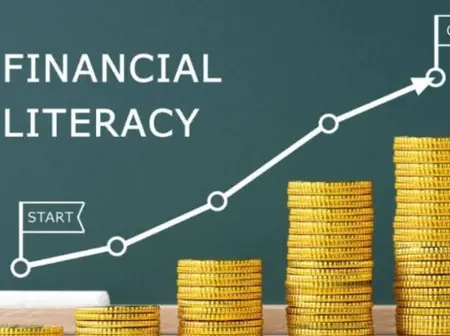
    Across matatus in Nairobi, social media timelines, and local markets in Kisumu, Mombasa, and Eldoret, one topic consistently sparks lively debate among Kenyans: how to navigate the rising cost of living while building lasting wealth. Over the past few years, the way Kenyans react to economic changes has shifted from passive frustration to proactive self-education. Today, citizens are actively sharing financial knowledge, exploring digital opportunities, and rethinking traditional views on money.

    One of the most noticeable reactions among Kenyans is the growing appetite for practical financial literacy. Rather than relying solely on formal employment, many young people and working professionals are turning to community savings groups, SACCOs, and Money Market Funds to make their money work harder. Conversations on platforms like X and TikTok frequently feature everyday Kenyans breaking down complex topics such as treasury bills, land buying, and emergency funds into simple, relatable advice. This peer-to-peer learning culture has empowered thousands to make smarter financial decisions and avoid common debt traps.

    Another major shift is the normalization of the side hustle. For many Kenyans, having a single source of income is no longer seen as enough. From agribusiness and online freelancing to small-scale retail and content creation, citizens are finding creative ways to supplement their earnings. What makes this trend particularly inspiring is the willingness of Kenyans to share their wins and failures openly. When someone discovers a legitimate way to earn extra income or save on household expenses, the information spreads rapidly through WhatsApp groups and family circles, lifting entire communities along the way.

    At the same time, Kenyans have become much sharper consumers who value transparency and accountability. Whether it is scrutinizing mobile loan interest rates, comparing supermarket prices, or questioning public spending, citizens are quick to call out unfair practices. Humor and satire remain powerful tools in how Kenyans process tough times, often turning stressful situations into viral memes that unite people across different backgrounds. Yet behind the humor lies a deep sense of resilience and determination to demand better standards in both business and leadership.

    Education beyond the classroom is also playing a critical role in this transformation. Many Kenyans are embracing short digital courses in technology, marketing, and vocational skills to stay competitive in a changing job market. Parents and mentors are increasingly encouraging young people to pair academic certificates with practical, problem-solving skills that can generate income immediately.

    Ultimately, the true strength of Kenyans lies in their adaptability and spirit of harambee—pulling together in times of need. By continuing to share verified information, supporting local businesses, and educating one another on personal finance, everyday citizens are turning economic challenges into stepping stones for growth.

    What financial lesson or side hustle tip has helped you the most this year? Share your thoughts in the comments below and pass this article along to a friend who might find it helpful.https://www.cma.or.ke/