Treasury Cabinet Secretary John Mbadi has announced that the proposed tax changes are expected to be presented to Parliament next week after undergoing a review by the Attorney General.
Speaking during a Citizen TV interview on Tuesday, November 17, Mbadi confirmed that his office had completed preparing the proposed legislation and forwarded it for legal examination.
The CS explained that he had already signed the Bill the previous week, adding that the government was determined to have it reach lawmakers before Parliament begins its December recess.
The proposed amendments seek to increase the monthly tax-free income threshold from Ksh24,000 to Ksh32,333. If approved, the changes would reduce the income tax burden on thousands of employees across the country.
Workers earning Ksh32,333 or less could benefit from complete exemption from PAYE under the proposed arrangement. Those earning higher salaries could also experience changes in their monthly deductions depending on the final tax structure.
However, the proposal must pass through Parliament before becoming law. This means employees will continue operating under the existing tax arrangements until the necessary legislative process is completed.
Mbadi expressed confidence that lawmakers would give the proposal priority, describing the planned changes as an important measure that could offer relief to working Kenyans.
The timing has attracted attention because Parliament is expected to begin its long December break in the first week of the month. Lawmakers are scheduled to resume sittings in February 2027, potentially extending the waiting period if the Bill is not approved before the recess.
For millions of salaried workers, the proposed changes could provide additional income for household expenses, education, transport and savings. However, the actual benefits will depend on Parliament's decision and the final provisions of the legislation.
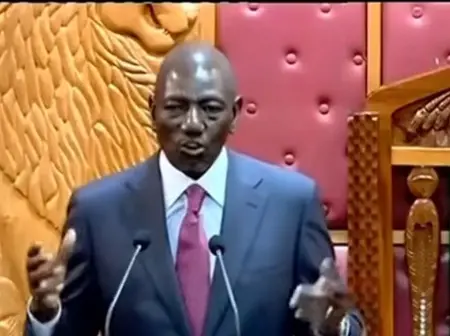
President William Ruto’s claims of economic recovery during his State of the Nation Address have come under scrutiny, with a review of the speech comparing the government’s assertions against figures from the Kenya National Bureau of Statistics (KNBS) and the Central Bank of Kenya.
The analysis highlights a contrast between improvements in some macroeconomic indicators and the financial pressures many households continue to face.
During his address, Ruto pointed to a decline in commercial lending rates from 17.2 per cent to 14.4 per cent, while noting that the Kenyan shilling had remained relatively stable at around KSh130 against the US dollar.
However, the figures do not tell the entire story of the cost of living. Official statistics cited in the analysis show annual inflation reaching 7.3 per cent in October 2026, with food prices rising by 10.2 per cent and transport costs also recording significant increases.
The agricultural sector has presented another area of debate, particularly over the production figures used to demonstrate progress. While the administration highlighted gains in agricultural output and export earnings, KNBS data placed maize production at 45.8 million bags, below the higher figures cited by the Executive. Coffee production, meanwhile, recorded a 3.8 per cent increase.
The differences have raised questions about how government performance claims are measured and how closely the reported gains reflect conditions experienced by ordinary Kenyans.
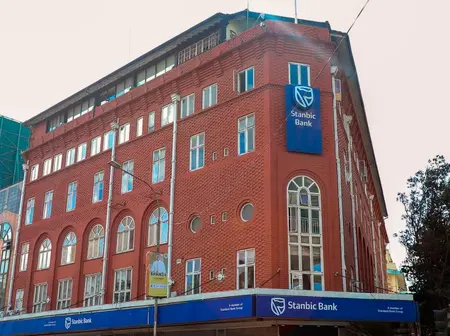
Stanbic Bank Kenya has frozen Sh9.1 billion (1.15 billion rand) worth of dividends that Vodacom Group received from Safaricom after a High Court decision threw the bank’s ability to recover a Sh40.2 billion loan advanced to the South African firm into uncertainty.
The loan was used to pay the Treasury an upfront dividend, which is to be recovered from future dividends accruing on the government’s remaining stake of 20 percent in the telco.
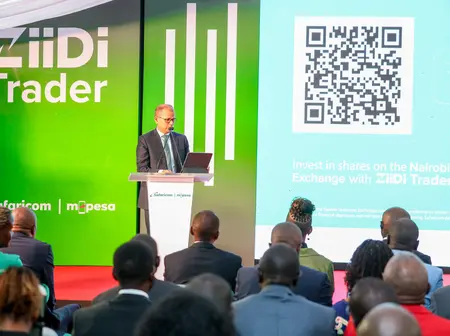
Safaricom’s Ziidi Trader is becoming an important distribution channel for Kenya’s securities market, with the mobile investment platform accounting for approximately 60% of applications in Quickmart’s KSh15 billion initial public offering. The disclosure by Capital Markets Authority Chairman Ugas Mohamed adds to earlier evidence of the platform’s role in bringing retail investors into major share transactions, including the Kenya Pipeline Company (KPC) IPO.
The figures point to a growing role for mobile-based investment services in connecting individual investors with the Nairobi Securities Exchange (NSE). Ziidi’s contribution to Quickmart’s offer follows its involvement in ordinary share trading, where the platform previously accounted for more than half of recorded purchase orders over a reported trading period in February and March 2026.
Between February 5 and March 10, Ziidi Trader processed 268,936 of the 433,498 share-purchase orders recorded by the NSE, according to figures reported by TechTrendsKE. This represented approximately 62.04% of purchase orders during the period. The average purchase value was KSh2,621, providing an indication of the transaction sizes passing through the platform.
The purchase-order figures measure trading activity rather than the value of shares bought. They also offer a different measure of adoption from the proportion of IPO applications submitted through Ziidi. Taken together, however, the figures show that the platform has established a substantial presence in both primary-market applications and secondary-market trading.
The Quickmart transaction follows an earlier demonstration of Ziidi’s reach during the KPC IPO. TechTrendsKE’s reporting on the offer put the number of retail applications submitted through the platform at approximately 36,000, against about 73,000 retail applications in total. This represented roughly 49.3% of applications in that investor category.
The Quickmart figure of approximately 60% suggests Ziidi accounted for a larger proportion of applications in the later offer. The two transactions provide evidence of repeat usage across separate public share offerings, although their investor classifications and application structures are not necessarily identical.
Ziidi’s adoption figures also offer context for its position in the market. Earlier reporting put its registered user base at approximately 511,000, with 84,000 accounts having actively purchased shares. The difference between those figures illustrates why registrations alone provide an incomplete measure of investment activity. Actual share purchases offer a more direct indication of customers using the service to participate in the market.
The platform was introduced in February 2026 through a partnership between Safaricom and the NSE, under the oversight of the Capital Markets Authority. It allows customers to access listed securities through the M-PESA ecosystem, with Kestrel Capital involved in the operating arrangement.
Its entry into the market also coincided with wider efforts to make share ownership accessible to smaller investors. The NSE introduced single-share trading in August 2025, lowering the minimum quantity required to purchase listed equities. In its November 17 reporting, TechTrendsKE noted that the number of junior equity investors had increased from 236 in December 2025 to 497 in September 2026, with their shareholdings valued at approximately KSh120 million.
These developments provide useful context for Ziidi’s growth. Mobile access and lower minimum purchase quantities address different barriers to participation, but both expand the routes through which individuals can enter the securities market.
Quickmart’s listing provides the latest example of the platform’s involvement in public share offerings. The supermarket’s KSh15 billion IPO involved the sale of two billion existing shares at KSh7.50 each, representing 50% of its issued share capital.
The offer attracted applications worth approximately KSh18.4 billion against the available shares, translating into a subscription rate of 122.7%, according to TechTrendsKE’s November 6 reporting. The transaction therefore attracted demand above the amount available for allocation.
The CMA chairman subsequently disclosed that local retail investors contributed approximately KSh2.9 billion to the offer, with Ziidi Trader handling around 60% of applications. His announcement places the platform within a transaction that attracted substantial participation from foreign, institutional and individual investors.
Quickmart’s IPO also provides a useful distinction between application activity and final ownership. Following the allocation, Kenyan and East African retail investors received approximately 199.64 million shares, equivalent to about 5% of the retailer’s issued share capital, according to the November 12 listing report.
The offer was a secondary share sale, meaning the proceeds went to existing shareholders rather than directly to Quickmart. The distinction is relevant when assessing Ziidi’s contribution: the platform facilitated access to an existing investment opportunity, rather than providing a funding channel for the supermarket’s operations.
Quickmart shares opened at KSh10 on their NSE debut, against the KSh7.50 offer price, giving the retailer an implied market capitalisation of approximately KSh40 billion. The listing followed an IPO valuation of KSh30 billion.
Ziidi Trader forms part of Safaricom’s broader effort to extend M-PESA into investment and wealth-management services. The company has developed a portfolio that includes Ziidi Money Market Fund, Ziidi Shari’ah and the share-trading platform, each serving a different investment purpose.
Safaricom’s financial results for the six months ended September 2026 show the scale of this wider business. The company reported 3.4 million active wealth-management customers and assets under management of KSh25.6 billion. Wealth-management revenue reached KSh100 million, representing growth of 69.8% against the comparable reporting period.
Those figures should not be attributed to Ziidi Trader alone. They cover Safaricom’s broader wealth-management activities, including money market and Shari’ah-compliant investment products. The company has not separately disclosed Ziidi Trader’s active customer numbers, trading volumes or transaction value in the results covered by the November reporting.
Safaricom’s wider financial services business also generated KSh7.1 billion in revenue during the six months to September 2026, an increase of 55.3%, according to the company’s results reported by TechTrendsKE. Chief Financial Services Officer Boniface Mungania is overseeing a business that encompasses payments, credit and investment services.
For Safaricom, the expansion into securities distribution adds another use case to its existing mobile customer network. Its partnership with the NSE gives the company a route into share trading and IPO applications without requiring it to operate as a standalone stock exchange.
The commercial opportunity lies in connecting a large existing digital financial services customer base to products that traditionally required engagement with capital-markets intermediaries. The Quickmart and KPC transactions demonstrate the platform’s ability to handle substantial application activity, while the NSE purchase-order figures show that its role also extends into routine trading.
The NSE’s investor base provides a wider measure of the market in which Ziidi operates. TechTrendsKE’s November 6 reporting put the exchange’s investor base at approximately 2.36 million, reflecting participation beyond the customer numbers associated with any single investment platform.
The CMA has also been developing its supervisory approach as participation in capital markets expands across money market funds, exchange-traded funds, real estate investment trusts and digital investment services. Its risk-based supervision approach, digital market surveillance and enforcement against unlicensed investment providers form part of the regulatory framework discussed in the authority’s November 4 reporting.
Greater digital access therefore operates alongside the need for investor protection and oversight. Platforms distributing investment products must operate within the capital-markets framework governing the securities and services they make available, while investors remain exposed to the ordinary risks associated with changes in share prices and market conditions.
For Ziidi, the record across KPC, Quickmart and ordinary NSE trading offers several measures of market adoption. Its reported share of IPO applications has grown between the two transactions, while its share of purchase orders shows that customers are also using the service outside public offers.
The development gives Safaricom a more substantial role in the infrastructure through which Kenyans access listed investments. As the NSE attracts retail applicants through major share offerings and smaller transactions, mobile distribution is becoming an important part of how those investors reach the market.
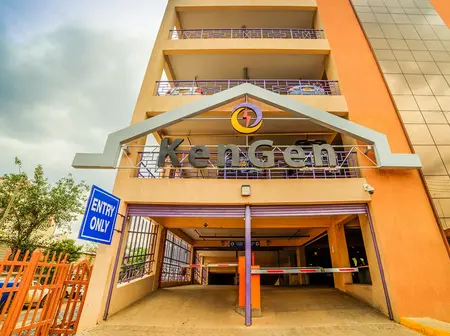
KenGen(Kenya Electricity Generating Company) is gearing up to host the third edition of the Sustainable Energy Conference (SEC) 2026 from 24th to 27th November 2026. The event takes place at the Geothermal Spa in Olkaria, Naivasha.The three-day conference brings together energy leaders, policymakers, financiers, and industry players from across the world to advance Africa’s green energy transition under the theme Powering Africa’s Green Industrial Revolution.
Listen to articleRuto said the Fund’s value had increased from Sh288 billion in 2022 to Sh850 billion as of November 2026, putting it on course to reach the Sh1 trillion mark by June 2027.Monthly contributions to the National Social Security Fund (NSSF) have increased sixfold since 2023, rising from Sh1.4 billion to more than Sh8.5 billion, as the Fund’s total value grows to Sh850 billion, President William Ruto has announced.
In this storyKenya has produced several chefs who have worked at some of the world’s luxurious hotels, restaurants, and establishments.Their achievements include heading kitchens in foreign countries and developing menus for world-famous establishments.In this article, WoK features 7 Kenyan chefs who work at top International companies.
Publishers contracted to print textbooks for Grade 11 have slowed down production, with some suspending printing altogether over delayed government payments for previously supplied books, raising concerns about preparedness of schools for the January 2027 transition.
According to the Kenya Publishers Association (KPA), only 30 percent of the required Grade 11 textbooks stock has been printed, with publishers warning that the Sh7 billion payment backlog could further disrupt production and delivery, if it is not cleared in time.
KCB Group has delivered a strong financial performance, with net profit for the nine months’ period ended September 30th 2026 increasing 23.9% to KSh 58.63 billion, compared to KSh 47.32 billion in the corresponding period last year. Pre-tax profit grew 25.5% to KSh77.90 billion.
Standard Chartered Bank and the trustees of its pension scheme have been ordered to pay 629 former employees Sh773.78 million in legal costs following a protracted dispute over pension payments.
The Retirement Benefits Appeals Tribunal assessed the costs and ruled that the retirees were entitled to the amount after years of legal battles over the management and calculation of their pension benefits.