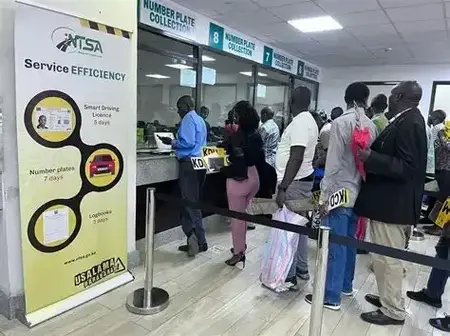
The National Transport and Safety Authority (NTSA) has announced a four-hour system downtime on Thursday.In a notice issued on Wednesday, November 11, the NTSA Communications Team confirmed that the downtime is due to scheduled system maintenance.Consequently, the system will be available from 8.pm to midnight on November 19.
Category: Economy&Finance
-
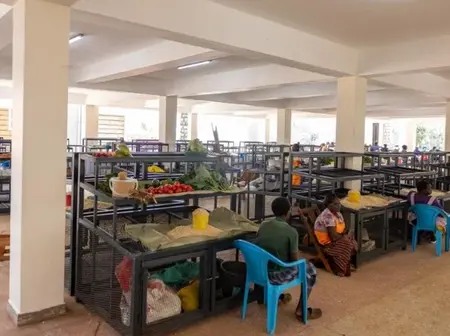
Ruto promises 600 modern markets, 1.8 million title deeds in economic transformation drive
Listen to articleThe government will construct 600 modern markets at a cost of Sh57 billion as Ruto reports issuing 1.8 million title deeds since August 2022 and proposes scrapping stamp duty on land transactions worth Sh1 million or less.President William Ruto has announced a Sh57 billion programme to construct 600 modern markets across the country, promising better trading facilities for small-scale traders while reporting progress in issuing title deeds to communities affected by historical land ownership disputes.
-
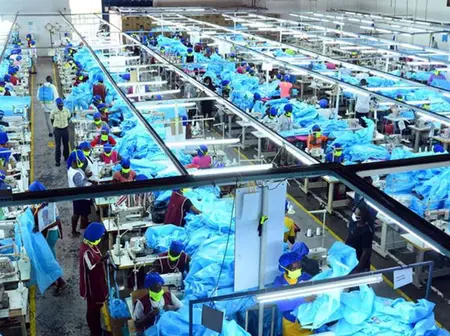
Kenya’s US exports double to Sh116bn as solar cells fuel trade surge
Kenya’s exports to the United States more than doubled to Sh116.1 billion in the nine months to September as high-tech products like solar photovoltaic cells join clothing, coffee and flowers in driving shipments.
The value of goods shipped to the US rose from Sh57.52 billion, reflecting a 101.83 percent jump as the American market becomes key to local exporters.
-
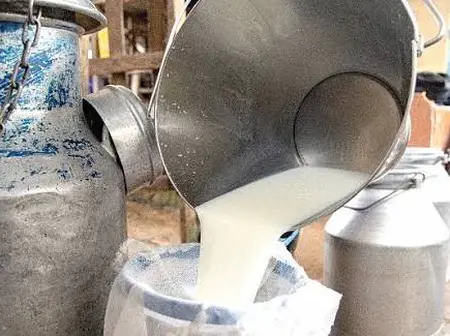
Kenya’s Milk Deliveries to Processors Drop Again Despite Record Dairy Output
The drop follows record production last year. Fresh milk output reached 5.5 million tonnes in 2025, according to the KNBS Economic Survey 2026. That was a 3.5 percent rise from the previous year.
Reports indicate the decline has continued. The Kenya Dairy Board (KDB) said deliveries fell 3.7 percent to 81.3 million litres in July. KDB data cited in reports later put August deliveries at about 75 million litres.
KDB has described the situation as temporary. It says seasonal production conditions are to blame. According to reports, dry weather has reduced milk output in parts of the country.
Prices have felt the pressure. According to KNBS, fresh packeted milk prices rose 6 percent in September. Some popular brands have reportedly disappeared from supermarket shelves.
The Consumers Federation of Kenya (COFEK) has raised concern over the falling intake. It wants the Ministry of Agriculture to publish a recovery plan with monthly milk intake targets. The group also wants emergency fodder and feed support for affected dairy counties.
Dairy farming in Kenya is largely driven by small-scale producers. They supply most of the milk that reaches formal processors. This makes the sector sensitive to weather shocks, according to reports.
Earlier this year, KNBS data showed intake hit a 22-month low of 74.4 million litres in February after a severe drought.
Source: https://web.facebook.com/share/p/1FZwaXqf6b/
-
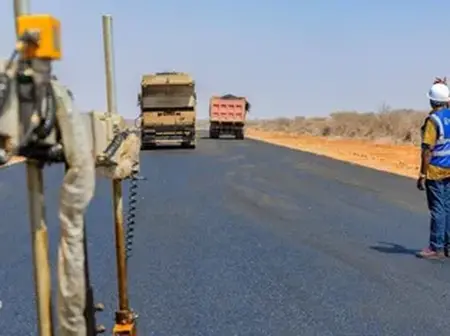
NLC Breaks Silence on Ksh1.3 Billion Paid to Landowners Along Isiolo-Mandera Highway
In a statement issued on Wednesday, November 18, the commission clarified that it is not responsible for releasing compensation money to affected landowners, distancing itself from criticism over delays that have disrupted construction.
NLC explained that its mandate is limited to assessing land and property, verifying assets and preparing compensation schedules. The Kenya National Highways Authority (KeNHA), working under World Bank project guidelines, handles the processing and disbursement of funds.
The clarification followed concerns raised by the World Bank over delays in compensating Project Affected Persons (PAPs), which have reportedly affected contractors' access to sections of the proposed highway.
World Bank Division Director Qimiao Fan had warned Treasury, Roads and Transport and Lands officials that the delays were increasing project expenses by more than Ksh1.2 billion every month.
Responding to the concerns, NLC outlined progress made across several sections.
For the Isiolo-Kulamawe-Modogashe stretch, KeNHA is awaiting World Bank approval to release Ksh554.9 million to 1,280 affected individuals.
On the Wajir-Kotulo section, compensation worth Ksh824 million has been approved for 1,619 people. Another Ksh497 million has been cleared for 296 affected persons along the Isiolo-Kachuru stretch.
The commission also reported completing asset verification for more than 1,105 people along the Dimu-Elwak section, with valuation expected to be finalised by the end of November.
However, NLC identified court disputes, insecurity, uncollected compensation offers and difficulties tracing some landowners as obstacles slowing down the exercise.
The approximately 740-kilometre highway, being implemented under the Horn of Africa Gateway Development Project, was 60 per cent complete as of October 26.
Initially expected to be completed in January 2028, the project now faces an extended timeline of around 2030.
https://www.kenyans.co.ke/news/129492-nlc-reveals-ksh13-billion-compensation-northern-kenya-road-project
-
NSSF contributions rise to Sh8.5bn as Ruto targets Sh1 trillion fund
President William Ruto delivers the State of the Nation address at Parliament Buildings, Nairobi, on November 18, 2026.President William Ruto has announced a sixfold increase in monthly contributions to the National Social Security Fund (NSSF), with collections rising from Sh1.4 billion in 2023 to more than Sh8.5 billion, as the government targets Sh1 trillion in workers’ retirement savings by June 2027.The President said the fund’s total assets had grown from Sh288 billion in 2022 to Sh850 billion in
-

Ruto Announces Ksh10 Billion NYOTA Expansion Targeting 200,000 More Young Entrepreneurs
The expansion is expected to inject an additional Ksh10 billion into youth-owned businesses, providing financial support to aspiring entrepreneurs seeking to establish or expand their ventures.
Making the announcement during his State of the Nation Address on Wednesday, November 18, Ruto said more than 133,000 young people had already benefited from the programme through business training, mentorship and startup financing.
The President explained that NYOTA was designed to help skilled young Kenyans turn their abilities and business ideas into sustainable sources of income, particularly those struggling to secure startup capital.
He cited the example of Javan Simiyu from Bungoma County, who invested his NYOTA grant in welding equipment and subsequently established a business generating more than Ksh30,000 in monthly income.
Ruto said Simiyu's experience demonstrated how access to financial support could help young people transform their skills into profitable businesses.
Government Targets 600,000 Youths for Tenders
Beyond providing startup capital, the government is also working to connect young entrepreneurs with business opportunities through the NYOTA-AGPO Digital Training Programme.
The initiative offers free training lasting 10 weeks and targets young people, women and persons with disabilities.
Participants are expected to acquire digital and business management skills while receiving assistance with business registration and Access to Government Procurement Opportunities (AGPO) certification.
Ruto said the programme aims to prepare 600,000 Kenyans to participate in government procurement and access contracts.
He maintained that supporting young entrepreneurs should extend beyond giving them money, noting that access to markets and business opportunities was equally important.
Hustler Fund Loans Reach Ksh94 Billion
The President also provided an update on the Hustler Fund, revealing that cumulative borrowing through the programme had reached Ksh94 billion.
According to Ruto, more than seven million Kenyans have established credit histories through the facility.
He added that approximately 700,000 borrowers had qualified for higher credit limits of up to Ksh150,000 without requiring collateral.
The government says the NYOTA and Hustler Fund initiatives are part of its wider strategy to expand financial inclusion, support small businesses and create employment opportunities for young Kenyans.
https://peopledaily.digital/news/200000-youth-to-get-ksh50k-each-as-ruto-expands-nyota-funding
-
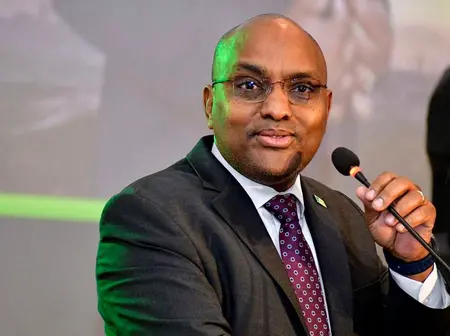
KCB posts Sh57bn profit, raises stake in DRC unit
KCB Group has reported a 24.2 percent net profit growth to Sh57.1 billion in the nine months to September riding on increased lending and forex income.
The Kenyan banking multinational had posted a net income of Sh46 billion a year earlier.
-

SACCO vs Chama: How Kenyans Can Build Wealth Through Collective Savings
Image: Crowdfunding Concept. Paper Cut Out Human Figures Around The Stack Of Hundred Dollar Bills
What can Sh1,000 a month achieve? On its own, it may seem modest.
But if 100 people save the same amount every month, they raise Sh100,000 monthly or Sh1.2 million in a year.
That is the power of collective savings: bringing people and resources together to pursue financial goals that may be harder to achieve individually.
The idea was explored during the Co-op Bank Youth Forum on Friday, under the theme Cooperatives 101 – The Power of Coming Together to Build Wealth.
Hosted by Violetta Ngina, the session featured Nicholas Kamonye, Managing Director and CEO of Co-op Consultancy.
Kamonye has worked with cooperatives since joining Co-op Bank in 2005, advising on microfinance, financial modelling, strategic planning and business development.
He is a Certified Public Accountant (K) and an ICPAK member.
How collective savings build wealth
Savings and Credit Cooperative Societies (SACCOs) give members a structured way to pool savings, access credit and participate in an institution they collectively own.
The model has a significant footprint in Kenya.
By December 2024, regulated SACCOs held assets worth approximately Sh1.08 trillion, with 7.39 million members and Sh749.43 billion in deposits.
For members, the benefits go beyond saving.
Depending on a SACCO’s policies, accumulated savings can support access to loans for business, education, housing and other investments.
Members may also participate in decisions through annual general meetings, including electing leaders and reviewing the institution’s performance.
SACCOs and Chamas: Understanding the difference
Both SACCOs and chamas bring people together around shared financial goals, but they do not operate in the same way.
A chama is often an informal savings or investment group whose members agree on how to contribute and use their pooled funds.
A registered SACCO, on the other hand, operates under a formal cooperative structure, with defined membership rules, governance systems and financial reporting requirements.
SACCO members are also owners of the institution.
Their participation comes with rights and responsibilities, including understanding how the organisation is managed and how decisions are made.
What to consider before joining a SACCO
Collective savings depend on trust and accountability.
Before joining, prospective members should examine a SACCO’s financial performance, leadership, fees, dividend policy, loan terms and withdrawal rules.
They should also verify its regulatory status.
The Sacco Societies Regulatory Authority (SASRA) supervises deposit-taking SACCOs and specified non-deposit-taking SACCOs.
However, regulation does not remove every financial risk, making individual due diligence essential.
Ultimately, the strength of a cooperative lies in members working towards shared financial goals while holding their institution accountable.
Small, consistent contributions can build a substantial pool of resources, but sound management and informed participation are what help sustain it.
The conversation on financial growth continues every Friday.
Tune in to Co-op Bank’s social media channels for the weekly Youth Forum, where industry experts share practical insights on saving, investing, entrepreneurship and building financial independence.