Category: Economy&Finance

  • Ruto Reveals What Helped Kenya Shilling Recover From KSh162 to KSh129 Against Dollar

    Ruto Reveals What Helped Kenya Shilling Recover From KSh162 to KSh129 Against Dollar

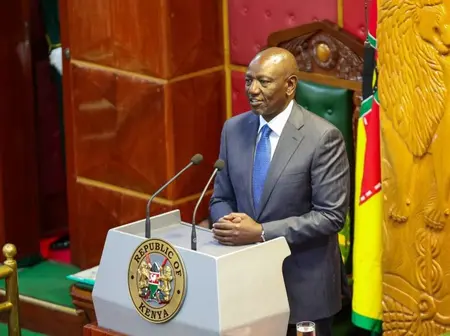
    Speaking during the State of the Nation Address on Wednesday, November 18, 2026, the President said the shilling had strengthened from nearly KSh162 against the dollar in 2022 to approximately KSh129, where it has remained relatively stable.

    Ruto attributed the turnaround to economic reforms, improved foreign exchange reserves and renewed confidence in Kenya's economy.

    He said his government inherited an economy facing several challenges, including high inflation, expensive borrowing, pressure on the local currency and concerns over the country's ability to meet its international financial obligations.

    According to the President, measures introduced to address these challenges have helped restore stability and protect the economy from external shocks.

    One of the developments he highlighted was the growth in foreign exchange reserves, which increased from $7.3 billion in 2022 to a peak of $15.3 billion in 2026.

    Ruto argued that stronger reserves had improved Kenya's capacity to handle international financial pressures and meet its foreign currency obligations.

    He also cited the successful repayment of a $2 billion Eurobond obligation in June 2024 as an important step towards rebuilding investor confidence.

    On inflation, the President said Kenya's average rate declined from 9.6 per cent in 2022 to 4.1 per cent in 2025, although rising food and energy prices have created fresh pressure.

    The Head of State further disclosed that commercial bank lending rates had dropped from an average of 17.2 per cent in November 2024 to approximately 14.4 per cent in September 2026.

    Ruto maintained that currency stability, manageable inflation and cheaper credit were important for businesses, farmers and ordinary households.

    He said the government's economic strategy was focused on lowering the cost of essential goods, increasing productivity, creating employment and expanding opportunities for businesses.

    However, sustaining the shilling's performance remains dependent on managing external debt obligations, global commodity prices and the country's demand for foreign currency.

    https://peopledaily.digital/business/ruto-explains-why-kenya-shilling-has-remained-stable-at-129-against-the-dollar
  • Ruto Announces 71 Million Bag Maize Harvest as He Defends Fertiliser Subsidy Programme

    Ruto Announces 71 Million Bag Maize Harvest as He Defends Fertiliser Subsidy Programme

    Speaking during his State of the Nation Address on Wednesday, November 18, 2026, Ruto credited the growth to government interventions aimed at making farm inputs affordable and improving agricultural productivity.

    The President particularly defended the fertiliser subsidy programme, saying it had significantly reduced the financial burden on farmers and encouraged higher production.

    He revealed that the cost of a 50-kilogramme bag of fertiliser had dropped from KSh7,500 in 2022 to KSh2,000, with the government distributing 38.5 million bags under the subsidy initiative.

    Ruto also disclosed that approximately 9 million farmers had been registered, while access to improved seeds, soil testing and agricultural extension services had been expanded.

    To illustrate the impact of the interventions, he highlighted the experience of Laban, a maize farmer from Rongai in Nakuru County.

    According to the President, Laban's production from five acres increased from 75 bags in 2022 to 125 bags last year after accessing subsidised fertiliser, better seeds and agricultural advisory services.

    Ruto further linked the increase in local production to a reduction in Kenya's dependence on imported maize.

    He said maize imports declined from 9.9 million bags in 2022 to 3.3 million bags in 2025.

    The President also pointed to changes in the cost of maize flour, revealing that the average price of a two-kilogramme packet dropped from KSh230 in September 2022 to KSh152 in September 2026.

    Despite the reported gains, maintaining the country's food production levels could face challenges from unpredictable weather patterns.

    The anticipated El Niño-related rainfall outlook presents both opportunities and risks, with heavy rains potentially benefiting crops while also exposing farmers to flooding, waterlogging and crop destruction.

    Ruto's administration now faces the challenge of sustaining agricultural productivity while protecting farmers against climate-related disruptions and ensuring that increased maize production translates into affordable food for Kenyan households.

    https://peopledaily.digital/business/ruto-claims-kenyas-maize-production-hit-71m-bags-as-el-nino-threatens-food-security

  • Ruto says NSSF assets hit Ksh850B, targets Ksh1T by June 2027

    Ruto says NSSF assets hit Ksh850B, targets Ksh1T by June 2027

    Ruto says NSSF assets hit Ksh850B, targets Ksh1T by June 2027

    President William Ruto has announced that the National Social Security Fund (NSSF) has grown its asset base to Ksh850 billion, up from Ksh288 billion in 2022, as the government targets Ksh1 trillion by June 2027.

    Speaking during his State of the Nation Address, Ruto said monthly contributions to the fund had increased six-fold since 2023, rising from Ksh1.4 billion to Ksh8.5 billion.

    “Since 2023, monthly NSSF contributions have increased six-fold, from Ksh1.4 billion every month to Ksh8.5 billion,” he said.

    The president repeated the figures as he outlined the growth of the retirement savings scheme, asking members of Parliament to take note of the increase.

    “Did you hear that? Let me repeat. Since 2023, monthly NSSF contributions have increased six-fold,” he said.

    The growth in contributions has increased the amount of money available to the fund for investment, with the government expecting the asset base to cross the Ksh1 trillion mark within the next seven months.

    Ruto said the expansion of the fund was part of efforts to give effect to the constitutional right to social security, which is guaranteed under Article 43.

    “Article 43 of our Constitution guarantees every Kenyan the right to social security,” he stated.

    “To give practical effect to this right, we have mobilised NSSF savings from employees matched by their employers.”

    He identified three objectives behind the reforms: securing dignified retirement for workers, building a stronger national savings culture and mobilising domestic resources for development.

    “Our ambition is the growth of our national savings,” he said.

    “We have set out to secure dignified retirement, build a stronger savings culture, and mobilise domestic resources for national development.”

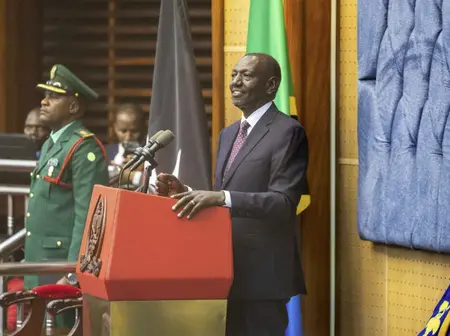
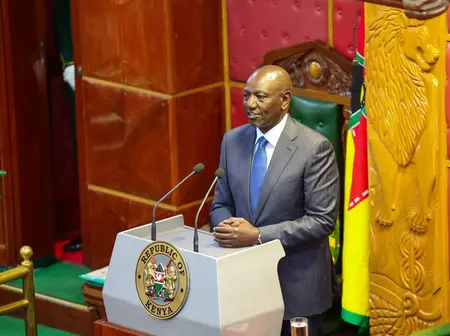
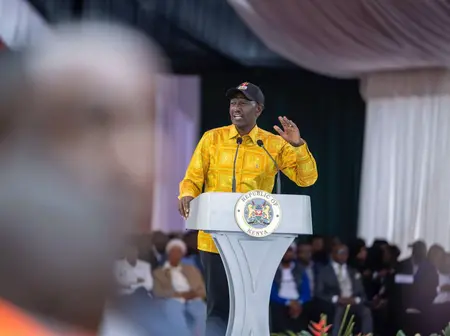
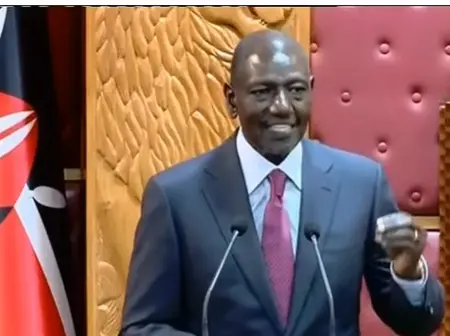
    President William Ruto during the State of the Nation Address on Wednesday, November 18, 2026.PHOTO/A screengrab by PD Digital/K24TV

    The contributions are made by employees and matched by their employers, creating a pool of savings that the fund can invest over the long term.

    The latest figures represent an increase of Ksh562 billion in the fund’s asset base since 2022, when its value stood at Ksh288 billion.

    The increase in monthly contributions follows changes to the NSSF contribution structure, which raised the amounts remitted by employees and their employers.

    Under the arrangement, both parties contribute towards workers’ retirement savings, with the amounts determined by the applicable contribution rates and salary limits.

    The government has positioned the growing savings pool as an important source of domestic financing for national development.

    Through investments made using members’ contributions, the fund is expected to support long-term economic activities while generating returns for workers when they retire.

    The expansion also forms part of the administration’s wider push to increase domestic savings and mobilise local resources to finance development projects.

    Ruto’s announcement comes as the government seeks to strengthen the role of NSSF in retirement planning and reduce dependence on external sources of financing.

  • Ruto Unveils KSh57 Billion Plan to Build 600 Modern Markets Across Kenya

    Ruto Unveils KSh57 Billion Plan to Build 600 Modern Markets Across Kenya

    Speaking during his State of the Nation Address on Wednesday, November 18, 2026, the President said the facilities would include additional trading spaces, storage units and cold rooms to improve the handling and preservation of agricultural produce.

    Ruto said the initiative was intended to address challenges that have affected farmers and small-scale traders, particularly limited access to reliable markets and losses caused by inadequate storage facilities.

    He explained that the government wanted agricultural producers to move beyond selling raw commodities by creating opportunities for processing and value addition within counties.

    The Head of State also revealed progress in the establishment of county aggregation and industrial parks, disclosing that the government had spent KSh8.5 billion on projects spread across 34 counties.

    According to Ruto, 15 of the planned industrial parks have already been completed, with additional resources directed towards acquiring shared manufacturing equipment.

    These facilities are expected to connect farmers with processors and manufacturers, allowing agricultural products to undergo processing closer to their areas of production.

    The President cited Kisii County as an example, pointing to a modern market recently inaugurated in Fort Ternan and an avocado-focused aggregation and industrial park.

    He said the projects would create opportunities for farmers to earn more by accessing facilities that support processing and marketing of their produce.

    Ruto further explained that the government's strategy covered several agricultural sectors, including maize, coffee, dairy and fisheries.

    He maintained that improving market access, lowering production expenses and increasing productivity would help farmers retain a greater share of the value generated from their work.

    The KSh57 billion market programme is also expected to create employment opportunities within counties and strengthen local businesses.

    However, the success of the initiative will depend on the timely completion of the facilities, proper management and their accessibility to farmers and small-scale traders.

    https://peopledaily.digital/business/ruto-announces-ksh57b-for-600-modern-markets-across-kenya

  • President Ruto explains how fertiliser subsidy led to a drop in unga prices

    President Ruto explains how fertiliser subsidy led to a drop in unga prices

    thumbnail

    President William Ruto on November 18, 2026, defended his administration’s agricultural reforms, saying reduced fertiliser prices and increased food production have helped ease pressure on households, with a drop in unga (maize flour) prices.Speaking during his fourth State of the Nation Address in Parliament, Ruto said the Kenya Kwanza government had pursued agricultural transformation by lowering the cost of farm inputs, increasing food supply and ensuring farmers receive better returns for their produce.

  • Ruto Explains Why Kenyan Shilling Has Stabilised Against US Dollar

    Ruto Explains Why Kenyan Shilling Has Stabilised Against US Dollar

    thumbnail

    President William Ruto has attributed the stability of the Kenyan shilling against the US dollar to improved foreign exchange reserves, lower inflation and increased confidence in the country’s economy.Speaking during the State of the Nation Address in Parliament on Wednesday, November 18, 2026, Ruto said the shilling had stabilised at around Sh129 against the US dollar, recovering from nearly Sh162.

  • Ruto Credits Fertiliser Subsidies for Doubling Maize Production to 71 Million Bags

    Ruto Credits Fertiliser Subsidies for Doubling Maize Production to 71 Million Bags

    thumbnail

    President William Ruto has attributed a sharp increase in Kenya’s maize production to the government’s fertiliser subsidy programme, saying output rose from 34.3 million bags in 2022 to 71 million bags in 2025.The President said the government had distributed more than 38 million bags of subsidised fertiliser to nearly two million farmers since 2022, as part of efforts to lower production costs and improve agricultural output.

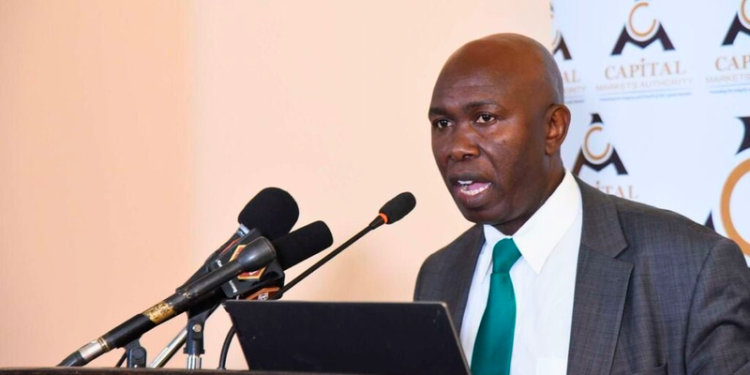
  • CMA Licences Four New Fund Managers, Approves Two New Brokers

    CMA Licences Four New Fund Managers, Approves Two New Brokers

    thumbnail

    The Capital Markets Authority (CMA) has licensed four new fund managers and approved two new brokerage firms in a move to expand Kenya’s regulated investment, derivatives, and commodities markets.The approvals, announced on November 18, include four Fund Manager licences, one Derivatives Broker licence and one Coffee Broker licence.

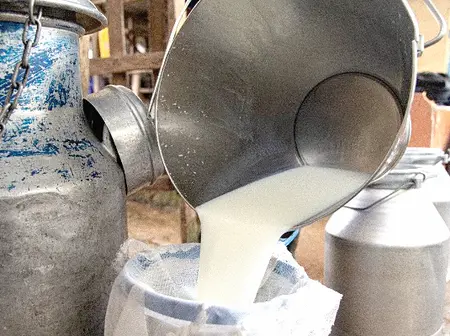
  • Kenya Records Sharp Drop in Milk Deliveries to Processors as September Figures Emerge

    Kenya Records Sharp Drop in Milk Deliveries to Processors as September Figures Emerge

    Data published by the Kenya National Bureau of Statistics (KNBS) shows that milk received by formal-sector players fell from 79.1 million litres in August to 74.8 million litres in September.

    The latest figures represent a 5.4 per cent monthly decline, equivalent to approximately 4.3 million litres.

    The downward trend has also affected the sector's cumulative performance this year. Between January and September 2026, formal milk intake stood at 750.2 million litres, representing a 2 per cent reduction compared to the same period in 2025.

    This means processors and other organised dairy outlets collected approximately 15.1 million fewer litres during the nine months.

    KNBS data further reveals that milk collections had performed better earlier in the year before gradually declining.

    Formal-sector intake reached 89.3 million litres in March and peaked at 90.3 million litres in April. Collections subsequently stood at 88.9 million litres in May, 84.4 million litres in June and 83 million litres in July.

    The decline continued in August and September, when collections dropped to 79.1 million and 74.8 million litres, respectively.

    However, the statistics do not establish whether the reduced collections resulted from lower milk production, seasonal changes or shifts in how farmers marketed their milk.

    Formal milk intake measures deliveries entering organised channels, including processing companies, rather than the entire volume produced by Kenyan dairy farmers.

    The figures, sourced from the Kenya Dairy Board, provide an important indicator of activity in the country's organised dairy market.

    The latest performance will be of interest to dairy farmers, cooperatives and processors as they monitor milk supply trends and their implications for the industry.

    For farmers who depend on milk sales for household income, the changing collection figures highlight the importance of maintaining reliable production and access to formal markets.

    https://peopledaily.digital/business/knbs-kenyas-formal-milk-intake-falls-5-4-in-september-as-deliveries-to-processors-decline

  • Ruto Announces Sh57 Billion for Construction of 600 Modern Markets Across Kenya

    Ruto Announces Sh57 Billion for Construction of 600 Modern Markets Across Kenya

    thumbnail

    President William Ruto has announced a Sh57 billion investment in the construction of 600 modern markets across the country to improve trading conditions, expand market access and increase farmers’ earnings.Speaking during the State of the Nation Address on Wednesday, November 18, 2026, Ruto said the markets would be equipped with trading spaces, storage facilities and cold rooms to help traders and farmers handle their produce more efficiently.