Category: Economy&Finance

  • Kenya’s stock market expansion brings tougher scrutiny of investors, ownership and money trails

    Kenya’s stock market expansion brings tougher scrutiny of investors, ownership and money trails

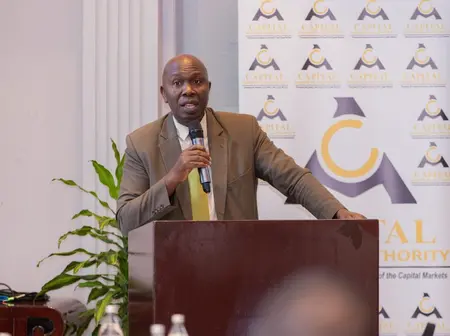
    CMA CEO Wyckliffe Shamiah speaking at a Capital Markets Authority event announcing new unit trust fund approvals and expanded regulated investment products in Kenya.

    Kenya’s stock market is drawing investors through channels that did not exist in their current form a few years ago. A retail customer can now access listed shares through a mobile investment platform, while foreign funds and institutional investors are taking positions in companies listed on the Nairobi Securities Exchange (NSE). The growth is creating a larger pool of customers for brokers and investment managers to serve, with different ownership arrangements and sources of capital to account for.

    The Capital Markets Authority (CMA) wants financial intermediaries to strengthen how they establish who those customers are, where their money comes from and who ultimately controls the assets being invested. Its proposed revised anti-money laundering and counter-terrorism financing guidelines would require stockbrokers and collective investment scheme managers to carry out customer due diligence when opening accounts, with additional scrutiny for investors and transactions considered higher risk.

    The draft, published for stakeholder feedback on November 10, follows a review of the capital markets guidelines introduced in 2015. It is a proposal rather than an implemented set of requirements. Its significance lies in the compliance responsibilities it would place on intermediaries as investment access spreads across conventional brokerage accounts, fund managers and digital distribution platforms.

    Safaricom’s expansion into investment services offers a useful measure of how quickly the distribution of financial products is changing. The company reported 3.4 million active wealth-management customers in the six months to September 2026, compared with 1.3 million in the corresponding period a year earlier. Assets under management reached KSh25.6 billion, up from KSh15.1 billion.

    Those figures cover Safaricom’s broader wealth-management business, rather than NSE share traders alone. Its Ziidi services include money-market funds and Ziidi Trader, which gives M-PESA users access to shares listed on the exchange.

    Earlier reporting on Ziidi Trader showed how mobile access is changing the mechanics of retail participation. Between February 5 and March 10, the platform processed 268,936 share-purchase orders, representing 62.04% of the 433,498 orders recorded at the NSE over that period. The average individual purchase was KSh2,621, according to the figures reported at the time.

    The platform’s structure also introduces several parties into the investment process. Kestrel Capital manages the omnibus arrangement through which shares are held, according to the earlier reporting. That structure does not itself indicate a compliance problem, but it makes the allocation of customer-identification and record-keeping responsibilities between the platform, broker and custodian an important part of the regulatory picture.

    For the CMA, the growth of digital distribution means that investor verification cannot be treated simply as a matter of collecting documents at a traditional brokerage counter. Intermediaries need to establish the identity of the underlying customer and maintain records that allow them to understand the ownership and movement of invested funds.

    The NSE’s own figures point to a much larger market. Reporting on the exchange’s September 2026 performance put its investor base at 2.36 million, up from approximately 2.027 million at the beginning of the year. Equity turnover reached KSh395 billion in the first nine months of 2026, compared with KSh145 billion for the whole of 2025.

    The turnover figure requires some context. A KSh204.3 billion Safaricom block trade accounted for approximately 51.7% of the reported nine-month total. It would therefore be misleading to interpret the increase as a uniform rise in ordinary retail trading. Even so, the figures show the scale of activity that brokers and other market intermediaries are handling.

    Under the proposed guidelines, customer due diligence would apply to investors opening accounts with stockbrokers and collective investment scheme managers. The information identified in the source material includes the customer’s source of funds, residential address and bank statements. Other documentation cited includes employer references, professional-body membership details and information establishing beneficial ownership.

    The draft also provides for enhanced checks on customers considered to present higher risks. These include politically exposed persons, investors using nominee accounts, customers operating cash-intensive businesses, people with complex ownership structures and certain foreign investors. Unusually high-volume retail traders are also among the categories identified for closer examination.

    The requirements place greater emphasis on understanding the circumstances behind an investment, rather than relying exclusively on the identity documents used to open an account. A broker may know the name of the person placing an order, for example, but still need to establish who owns or controls the account, how the investment is financed and whether the transaction fits the customer’s known financial profile.

    For foreign investors, the proposed documentation includes embassy certification. That requirement sits within a wider set of checks intended to establish customer identity and the legitimacy of funds entering the market. The proposal also points to beneficial ownership information, which is relevant where an investment is made through a company, trust, nominee or other legal arrangement.

    The CMA’s approach would require institutions to assess customers according to their risk profiles. Higher-risk customers would face enhanced scrutiny, while institutions would be expected to monitor account activity and identify transactions that warrant further examination.

    This is not the same as treating every wealthy investor, foreign customer or active trader as a suspected offender. A high-value transaction or an unusual trading pattern may warrant further checks, but neither establishes that money laundering has occurred. The purpose of risk-based due diligence is to identify circumstances requiring investigation, not to presume wrongdoing from a customer’s wealth, nationality or trading frequency.

    The ownership of companies entering the NSE illustrates why beneficial ownership has become a relevant part of the proposed requirements.

    Quickmart’s November listing provides a recent example. The IPO attracted 18,492 applications, while foreign investors received 1.1 billion shares, equivalent to 27.5% of the company. Institutional investors received 17.5%, and foreign investors ultimately held 52.9% of the retailer, according to TechTrendsKE’s reporting on the listing and allocation.

    The presence of international funds and institutional investors does not in itself indicate elevated financial-crime risk. It does, however, create different verification requirements from those associated with an individual buying shares through a personal account. Investment vehicles can have several layers of ownership, and intermediaries may need to establish the natural persons or entities exercising ultimate control.

    The NSE’s international relationships are also developing. Nigerian Exchange Group acquired a 10% stake in the Nairobi bourse in November, in a transaction intended to deepen links between African capital markets. The exchange has also pursued international relationships that could widen access to securities and investors beyond Kenya.

    For brokers and fund managers, cross-border participation can mean dealing with different corporate structures, jurisdictions and documentation. The proposed checks on foreign investors and complex ownership arrangements are therefore relevant to the market’s changing composition. They are not a blanket restriction on international investment.

    Kenya has also been building a wider framework for identifying the people behind legal entities and financial arrangements. The Trust Administration Act, assented to in September 2026, introduced requirements for trust ownership information and created another source of data for authorities and reporting institutions. The reforms form part of the country’s wider efforts to address deficiencies identified under the Financial Action Task Force framework.

    The proposed CMA guidelines would bring those concerns into the day-to-day relationship between capital-markets intermediaries and their customers. Brokers and fund managers would have to establish whether the information provided about an investor and the ownership of their assets is sufficient for the level of risk identified.

    The proposed requirements would expand the amount of personal and financial information that intermediaries need to collect and retain. Bank statements, residential addresses, employment details and beneficial ownership records can expose customers to harm if they are accessed or disclosed without authorisation.

    A data breach at the Business Registration Service (BRS), reported by TechTrendsKE on November 17, provides a recent example of the risks associated with holding large volumes of business and ownership information. The incident exposed information relating to more than two million businesses, including addresses, email contacts, telephone numbers and shareholder or beneficial ownership details. The Office of the Data Protection Commissioner closed its investigation after BRS implemented corrective measures, without issuing a financial penalty.

    The BRS incident did not involve the CMA proposal or establish a breach by a capital-markets intermediary. Its relevance is the sensitivity of the information involved. Financial institutions collecting more detailed customer records will need to protect those records through appropriate access controls, security measures and data-handling practices.

    AML obligations and data-protection duties serve different purposes, but they apply to the same information. Institutions must collect and retain information required for compliance while ensuring that customer records are handled lawfully and protected against unauthorised access. The proposed expansion of due diligence therefore carries operational responsibilities beyond the initial collection of documents.

    The CMA’s expectations also extend beyond account opening. The draft calls for continued monitoring of customer activity, risk assessments and the reporting of suspicious transactions to the Financial Reporting Centre (FRC). Where an institution cannot satisfy its due-diligence obligations, the proposed framework allows for the termination of a customer relationship, alongside the possibility of a suspicious-transaction report where the circumstances warrant one.

    This places responsibility on intermediaries to maintain processes that work after an account has been approved. A customer’s risk profile can change, and transactions may require examination against information gathered during onboarding. The ability to identify and escalate suspicious activity will depend on the quality of customer records and the institution’s monitoring arrangements.

    The FRC’s capacity is relevant to the wider enforcement environment. TechTrendsKE reported in May that the centre receives more than 10,000 suspicious transaction and activity reports annually, compared with 34 when it began operations in 2012. The centre has also sought additional resources to support its work as Kenya pursues reforms linked to its FATF grey-list status.

    The NSE is also preparing to extend its trading day. From January 1, 2027, the exchange plans to move its closing time from 3pm to 4pm, adding an hour to the daily trading session. The NSE has linked the change to improving access for domestic and international investors.

    An additional hour does not, by itself, create a new money-laundering risk. It does mean that intermediaries will need to support the expanded trading session while maintaining their existing surveillance and compliance responsibilities. Transaction monitoring under AML rules is a continuing obligation, not something confined to the hours when the exchange is open.

    For the CMA, the wider challenge is to apply consistent standards across a market whose customers, products and distribution channels are becoming more varied. A person investing a few thousand shillings through a mobile platform, a foreign fund buying into a listed company and an investor using a complex corporate structure do not present identical due-diligence requirements.

    The draft’s risk-based approach recognises those differences. Its eventual effect will depend on how the final guidelines define the required checks, how institutions apply them to existing and new customers, and how the responsibilities of brokers, fund managers and digital distribution partners are put into practice.

    For investors, the immediate development is a proposal under consultation, not a new set of rules already in force. For the institutions handling their money, however, the direction is clear: access to Kenya’s capital markets will need to be supported by stronger systems for establishing who is investing, who owns the assets and where the funds originate.
  • Ruto’s Big Relief Plan: PAYE Scrapped For Sh32K earners, Cheaper Phones and Land Deals

    Ruto’s Big Relief Plan: PAYE Scrapped For Sh32K earners, Cheaper Phones and Land Deals

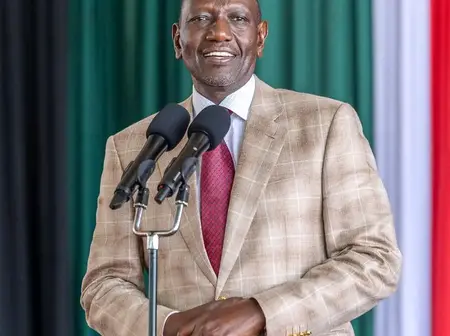
    President William Ruto has announced a series of proposed measures aimed at easing the financial burden on Kenyan households and putting more money into the pockets of workers and families.

    Speaking during his State of the Nation Address in Parliament today, Ruto said the government is seeking to introduce tax relief measures targeting low income workers, property buyers and mobile phone consumers.

    Under the proposed changes, workers earning Sh32,333 or less per month would be exempted from paying Pay As You Earn (PAYE), a move the government says will increase disposable income for lower income households.

    Ruto also announced plans to remove stamp duty on land transactions valued at Sh1 million or less. The proposal is expected to reduce the cost of transferring relatively low-value properties and make land transactions more affordable for ordinary Kenyans.

    In another measure, the President said the government plans to eliminate the 25 percent import duty on mobile phones. The move could lower the cost of mobile devices and improve access to digital technology.

    The proposals form part of the administration's broader efforts to ease economic pressure on Kenyans while supporting household spending and access to essential goods and services.

    Source

  • Ruto Says NSSF Contributions Rise Sixfold to Sh8.5 Billion Monthly

    Ruto Says NSSF Contributions Rise Sixfold to Sh8.5 Billion Monthly

    thumbnail

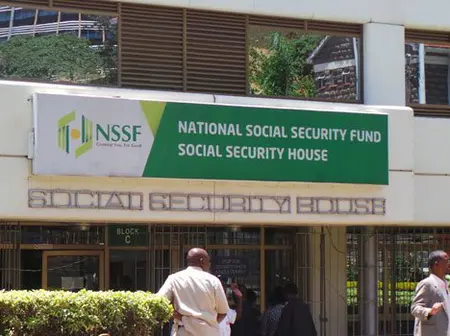
    President William Ruto has announced that monthly contributions to the National Social Security Fund (NSSF) have increased sixfold, from Sh1.4 billion in 2023 to more than Sh8.5 billion.Speaking during the State of the Nation Address in Parliament on Wednesday, November 18, 2026, Ruto said the growth had strengthened the Fund’s financial position and increased its capacity to pay members’ retirement benefits.

  • 200,000 youth to get Ksh50K each as Ruto expands NYOTA funding

    200,000 youth to get Ksh50K each as Ruto expands NYOTA funding

    200,000 youth to get Ksh50K each as Ruto expands NYOTA funding

    President William Ruto is targeting another 200,000 young entrepreneurs for KSh50,000 startup grants under the NYOTA programme, expanding government support for youth seeking capital to start or grow businesses.

    The additional beneficiaries will receive Ksh50,000 each, with the programme expected to inject a combined Ksh10 billion into youth-led enterprises if all the grants are disbursed.

    Speaking on Wednesday, November 18, 2026, during his State of the Nation Address on November 18, Ruto said more than 133,000 young entrepreneurs had already received training, mentorship and startup capital under NYOTA.

    The programme is targeting young Kenyans with business ideas and skills but limited access to financing, particularly those unable to raise capital to purchase equipment or establish income-generating ventures.

    Ruto cited the case of Javan Simiyu from Bungoma County, who used his grant to buy welding equipment and has since built a business generating more than Ksh30,000 monthly, according to the President.

    “His story demonstrates the difference between possessing a skill and having the means to turn that skill into an income,” Ruto said.

    The government is seeking to extend the programme beyond startup grants by helping beneficiaries access markets, secure contracts and expand their businesses.

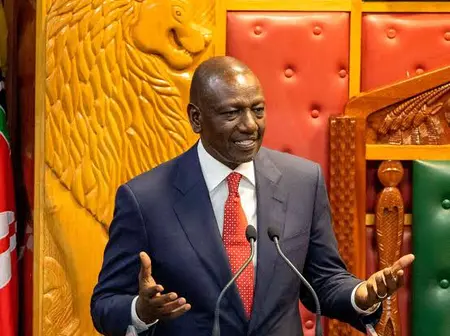
    President William Ruto during the State of the Nation Address on Wednesday, November 18, 2026.PHOTO/PD digital screengrab from a video posted by State House/Youtube

    Ruto said the government was linking NYOTA beneficiaries to public procurement opportunities through the NYOTA–AGPO Digital Training Programme.

    The free 10-week initiative targets young entrepreneurs, women and persons with disabilities, equipping them with digital and business skills while facilitating business registration and AGPO certification.

    The programme is expected to enable 600,000 Kenyans to qualify for government procurement opportunities, potentially opening access to tenders and contracts that could help small businesses grow.

    “This will enable 600,000 Kenyans to qualify for government contracts, grow their enterprises and have an income,” Ruto said.

    The President said youth empowerment must go beyond providing initial capital, arguing that businesses need opportunities to secure markets, employ other people and become financially sustainable.

    “But our ambition cannot end with start-up grants. We must enable these young enterprises to grow, secure markets, employ others and become sustainable businesses,” he said.

    President William Ruto speaks during Hustler Fund event. PHOTO/@WilliamsRuto/X

    Ruto also highlighted the Hustler Fund, saying it had expanded access to credit for Kenyans who previously faced barriers because of collateral requirements and limited borrowing histories.

    More than 7 million Kenyans have established credit records through the fund, with cumulative borrowing reaching Ksh94 billion, according to the President.

    He added that 700,000 borrowers had become established customers with credit limits of up to Ksh150,000 without collateral.

    “700,000 are now established borrowers with a limit as high as Ksh150,000 without any collateral,” Ruto said.

    The government is positioning the grants, digital training and credit facilities as part of a broader push to help young Kenyans transition from unemployment and informal work into entrepreneurship.

    The impact of the programmes will ultimately depend on whether beneficiaries can build sustainable businesses, access reliable markets and generate income beyond the initial government funding.

  • Reality check: The founders’ manifesto

    Reality check: The founders’ manifesto

    Kenya votes on August 10, 2027. Already, in quiet rooms, manifestos are being drafted, thick with promises, and the people who will pay for those promises are rarely in the room. Founders watch from the back, as we always do, with payroll in one pocket and hope in the other.

    The Swahili have a proverb for this season: Ahadi ni deni (A promise is a debt). Every candidate is about to sign the largest IOU of their lives, and we are the creditors. So let us do what founders do with any IOU. Read the terms.

  • Kartasi to pay tax on Sh100m flood payout after beating KRA’s payroll tax claim

    Kartasi to pay tax on Sh100m flood payout after beating KRA’s payroll tax claim

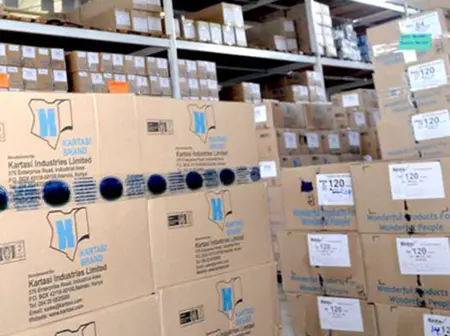
    The Tax Appeals Tribunal has overturned a Sh57.4 million Pay As You Earn (PAYE) tax assessment against stationery maker Kartasi Products, ruling that the taxman could not treat unexplained cash differences as employee benefits without identifying recipients.

    But it upheld tax on Sh100 million the company received from an insurer for inventory lost in floods, finding compensation for trading stock replaced is business income.

  • Kenya Records Drop in Milk Intake Despite Growth in Dairy Production – KNBS

    Kenya Records Drop in Milk Intake Despite Growth in Dairy Production – KNBS

    Kenya has recorded a decline in milk deliveries to processing companies despite an increase in national dairy production, raising concerns about milk supply and distribution in the country.

    Milk processing at Brookside Dairy factory in Ruiru.

    According to the Kenya National Bureau of Statistics (KNBS) Leading Economic Indicators report released on Wednesday, November 18, 2026, milk received by formal-sector processors dropped to 74.8 million litres in September, compared to 79.1 million litres recorded in August. This represents a decline of approximately 5.4 per cent within one month.

    The report further revealed that cumulative milk intake between January and September 2026 fell by 2 per cent to 750.2 million litres, compared to the corresponding period in 2025.

    Photo collage of a farmer sieving milk and an individual ready to drink milk in a cup

    The decline comes despite Kenya's growing position as Africa's leading milk producer. Government figures indicate that annual milk production increased from 4.6 billion litres to 5.4 billion litres, surpassing Egypt's output.

    Several factors have contributed to the reduced deliveries to processors. Prolonged dry weather has affected pasture and fodder availability, reducing milk yields among farmers. Additionally, some farmers have reportedly opted to sell milk directly to consumers rather than supply processing companies in search of better returns.

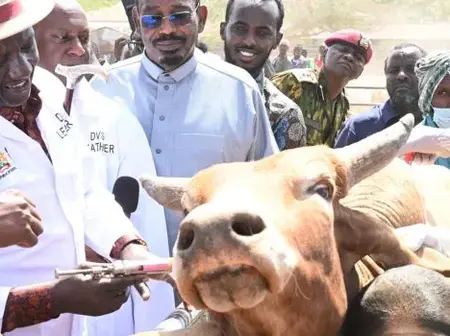
    President William Ruto vaccinates a cow at the Launch of Garissa County Livestock Vaccination Drive, February 6, 2025.

    To address the situation, the government announced plans to pay dairy farmers KSh65 per litre delivered to processors, alongside an additional quarterly bonus of KSh2 per litre.

    The latest figures highlight the need to strengthen milk collection, distribution and processing systems to ensure that increased national production translates into reliable supplies for consumers.

    https://www.kenyans.co.ke/news/129482-kenya-records-drop-milk-intake-despite-growth-dairy-production-knbs

  • President Ruto Announces Ksh1.2 Billion Bonus for Kenyan Sugarcane Farmers

    President Ruto Announces Ksh1.2 Billion Bonus for Kenyan Sugarcane Farmers

    The Head of State unveiled the payout on Wednesday, November 18, 2026, while delivering his fourth annual State of the Nation Address to a joint sitting of Parliament in Nairobi. The move introduces end-of-year bonus earnings for cane growers, placing them on a similar footing with tea and coffee farmers who traditionally receive annual payouts.

    Addressing lawmakers inside the National Assembly Chamber, President Ruto explained that the money will ensure growers share directly in the ongoing turnaround of the local sugar industry.

    The President stated that the Ksh1.2 billion package aims to share the industry's improving fortunes, with payments starting next week. Official figures show a 60 percent rise in local sugar production and a 57 percent increase in cane crushed from January to October 2026, driven by debt write-offs, timely deliveries, and higher farmgate prices rising from Ksh4,500 to Ksh5,500 per tonne in key sugar belts.

    While the recovery builds on earlier pilot programs for companies like Mumias and South Nyanza, stakeholders remain cautious. Concerns have been raised regarding the Crops Laws (Amendment) Bill, 2026, unpaid arrears for former mill workers, and consumer retail prices, even as the upcoming holiday-season payout brings immediate relief.

    As the payout approaches, families across Western and Nyanza look ahead to the festive season. Do you think this bonus and the recent mill reforms will make sugarcane farming profitable again for ordinary growers?

  • President Ruto Explains How His Government Reduced the Cost of Unga From Ksh 230 to Ksh 152

    President Ruto Explains How His Government Reduced the Cost of Unga From Ksh 230 to Ksh 152

    Speaking on Wednesday, November 18, 2026, during his fourth State of the Nation Address at a joint parliamentary sitting in Nairobi, the Head of State attributed the drop to increased domestic production.

    National maize production rose significantly from 44 million bags in 2022 to 71 million bags last year following targeted agricultural reforms.

    Consequently, Kenya reduced its reliance on foreign grain as maize imports dropped from 9.9 million bags to 3.3 million bags over the same period.

    The President explained that the government achieved this milestone by cutting the cost of a 50-kilogram bag of fertiliser from KSh 7,500 in 2022 to KSh 2,000 this year.

    Through the subsidy programme, the state has distributed 38.5 million bags of affordable fertiliser while registering nearly nine million farmers across the country.

    Furthermore, the administration expanded access to improved seeds, soil testing, and agricultural extension services to boost crop yields.

    Ruto stated that the government remains determined to sustain high production levels so that food becomes more affordable for households while farmers continue earning better returns.

    The administration plans to maintain this momentum by supporting farmers with affordable inputs and services that improve overall harvest efficiency.

    Data from the Kenya National Bureau of Statistics had earlier placed the national average retail price of a two-kilogram packet of sifted maize flour at KSh 152.89 in August 2026, down from KSh 157.15 in July.

    https://www.facebook.com/groups/thekenyatimes/permalink/1829725471623130/?mibextid=rS40aB7S9Ucbxw6v

  • KCB nine-month profit surges 24 per cent to Sh58.6 billion as bad loans shrink

    KCB nine-month profit surges 24 per cent to Sh58.6 billion as bad loans shrink

    thumbnail

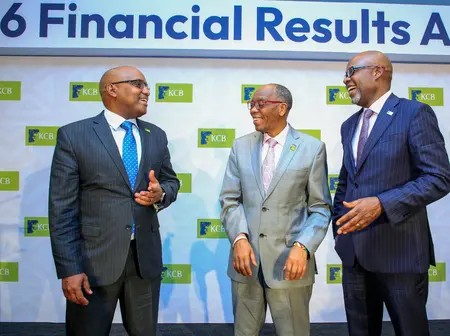
    KCB Group posted a 24 per cent increase in its profit after tax to Sh58.6 billion in the nine months to September 2026.The Group says the improvement in earnings emanated from rising fee income, tighter cost control and a sharp fall in bad loans.Earnings per share went up by 24.3 per cent to Sh17.8, as return on equity was 22.1 per cent, and return on assets improved to 3.5 per cent from 3.1 per cent last year.