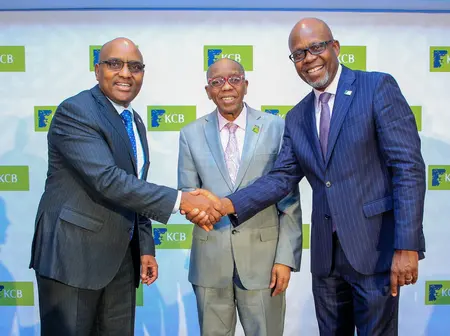
KCB Group has posted a 24% increase in profit after tax to KSh58.6 billion for the nine months ended September 2026, supported by higher income, lending growth and improved operating efficiency.The lender’s earnings per share rose by 24.3% to Sh17.8, while total assets expanded 15.4% to Sh2.4 trillion, according to results released on November 18, 2026.
Category: Economy&Finance
-
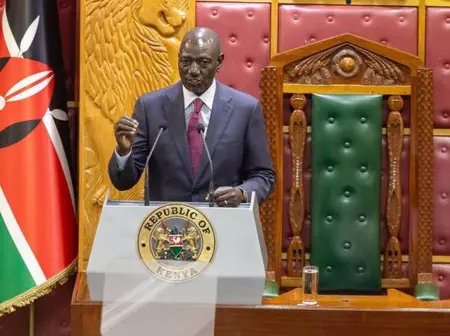
SHA Has Registered 25 Million More Kenyans Than NHIF – Ruto
GrowthPresident William Ruto has highlighted the growth in health insurance registration under SHA, saying the new system has registered more Kenyans than NHIF.President William Ruto has highlighted the growth in health insurance registration under the Social Health Authority (SHA), saying the new system has registered significantly more Kenyans than the defunct National Hospital Insurance Fund (NHIF).
-
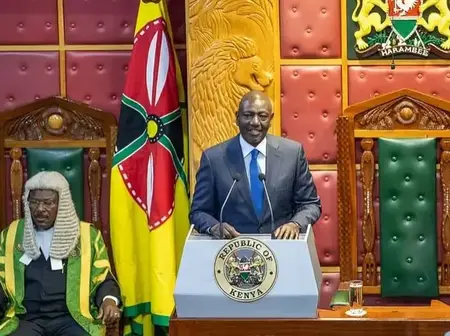
Ruto Announces PAYE Exemption, Stamp Duty Relief in New Tax Proposals
President William Ruto has unveiled a series of tax proposals aimed at reducing the cost of living, increasing household incomes, and creating more economic opportunities for Kenyans. The proposals were announced during his State of the Nation Address in Nairobi and form part of the government's broader efforts to ease financial pressure on citizens.
Among the most significant proposals is the exemption of workers earning KSh 32,333 or less per month from paying Pay As You Earn (PAYE) tax. If approved by Parliament, the measure will allow low-income earners to take home more of their salaries, providing much-needed relief at a time when many households are facing rising living costs.
Speaking during the address, President Ruto emphasized the government's commitment to improving the lives of ordinary Kenyans.
“Our task is far from complete, but our purpose remains clear: to make everyday life more affordable and productive effort more rewarding.”
The president also proposed the removal of stamp duty on land transactions valued at KSh 1 million and below. The move is expected to make property ownership more affordable, particularly for first-time buyers and low-income families looking to acquire land.
In another major announcement, the government plans to scrap the 25 percent import duty on mobile phones. According to Ruto, reducing the cost of mobile devices will expand access to digital services, online employment opportunities, and technology-driven economic activities, especially among young people.
The proposed tax reforms are part of a wider strategy to stimulate economic growth, increase disposable income, and improve the financial well-being of Kenyan citizens. The measures will now be considered by Parliament before they can be implemented.
If approved, the proposals could bring significant relief to millions of Kenyans by lowering tax obligations, reducing the cost of property transactions, and making technology more affordable and accessible. Many observers view the measures as a positive step toward addressing long-standing concerns about the high cost of living and supporting economic empowerment across the country.
-
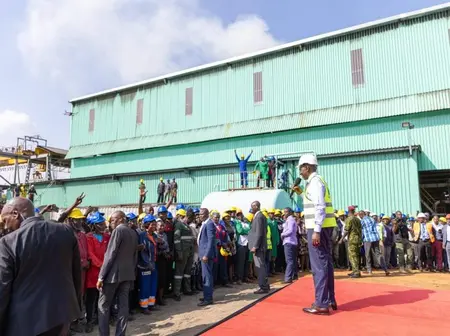
Ruto Announces KSh1.2 Billion Reward for Sugarcane Farmers, Reveals When Payments Will Begin
Speaking during his State of the Nation Address on Wednesday, November 18, Ruto said the sugar industry had registered significant growth between January and October 2026, pointing to progress in efforts to restore the struggling sector.
According to the Head of State, sugar production increased by 60 per cent during the 10-month period, while the amount of sugarcane crushed by factories went up by 57 per cent.
He said the improved performance had prompted the government to introduce the financial reward to ensure farmers also benefit from the industry's recovery.
Ruto confirmed that KSh1.2 billion would be distributed to growers, adding that the first payments would be made from next week.
The announcement is expected to bring relief to thousands of farmers who depend on sugarcane cultivation for their livelihoods, particularly in Western Kenya and other sugar-producing regions.
The President maintained that reviving the sector should go beyond improving factory operations, arguing that farmers must also experience better earnings from their agricultural activities.
He said the government wanted increased production to translate into improved household incomes and renewed economic activity in communities that rely heavily on sugarcane farming.
The latest figures also point to increased activity among sugar factories, which have been at the centre of government efforts to restore Kenya's sugar industry.
However, Ruto did not provide specific production figures in tonnes or indicate how the KSh1.2 billion bonus would be distributed among individual farmers.
The announcement formed part of the President's wider presentation on agricultural reforms and efforts to improve the incomes of Kenyan households.
He also highlighted livestock insurance programmes aimed at protecting pastoralist families against losses caused by drought, particularly in areas vulnerable to harsh weather conditions.
https://peopledaily.digital/business/ruto-announces-ksh1-2b-bonus-for-sugarcane-farmers-as-production-rises-60
-
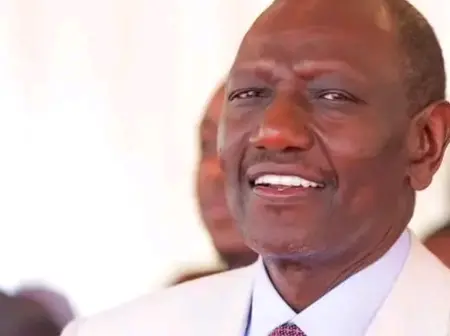
“From Sh230 to Sh152” Ruto Claims an Unga Price Win and Production Of 71 Million Bags of Maize
President William Ruto has told Parliament that maize flour prices have fallen and maize production has surged, but official statistics tell a more complicated story.
"The average price of 2kg maize flour declined from a high of KSh230 in September 2022 to an average of KSh152 in 2026," Ruto said during his State of the Nation address.
"National maize production increased from 44 million bags in 2022 to 71 million bags last year."
He also said national milk production had increased from 4.5 billion litres to 5.52 billion litres, as he outlined measures meant to cut the cost of living and put more money in Kenyans' pockets.
The flour figure is broadly supported.
The Kenya National Bureau of Statistics put the national average retail price of 2kg sifted maize flour at Sh152.89 in August 2026, but that remains above the Sh120 target Ruto had promised.
The maize claim is more contested.
The 2026 Economic Survey says maize production improved only 2.4 per cent to 45.8 million bags in 2025, a figure far below the President's.
Even the starting point varies: other official statements put 2022 output at 34.3 million bags, not 44 million.
The dairy claim fares better. The same survey confirms milk production rose 3.5 per cent to 5.5 billion litres in 2025.
Ruto credits the fertiliser subsidy, saying 38 million bags have been subsidised since 2022, cutting the price from Sh7,500 to Sh2,000.
He also said maize imports fell from 9.9 million bags to 3.3 million bags.
He added that the price paid to dairy farmers had risen from Sh35 to Sh60 per litre.
In 2024, a Citizen fact-check found his milk production claim inconsistent with KNBS data.
For households, the number that matters is what a packet of unga costs at the shop, and that has fallen.
But whether the credit belongs to a record harvest, imports or other factors is the argument that the numbers cannot settle.
Expect opposition leaders and economists to keep testing the President's statistics.
Link:
https://www.facebook.com/share/1FAFrjs1EM/
-
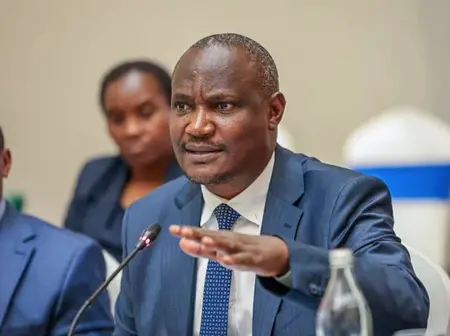
Proposed PAYE changes could raise take-home pay as Treasury plans Sh32,333 tax-free monthly threshold
Millions of Kenyan employees could soon take home more pay following proposed changes to the Pay As You Earn (PAYE) framework, which seek to raise the tax-free income threshold and reduce the amount deducted from workers' monthly earnings.The proposed reforms could bring financial relief to teachers, civil servants, private-sector employees and other salaried Kenyans who have continued to grapple with rising living costs, statutory deductions and growing household responsibilities.
-
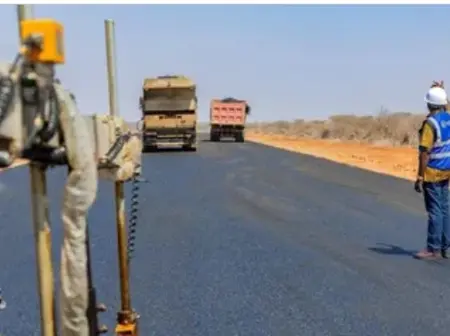
NLC Reveals KSh1.3 Billion Compensation Details as Delays Threaten Northern Kenya Highway
In a statement issued on Wednesday, November 18, 2026, the commission defended its handling of land valuation and asset verification, saying the responsibility for processing and disbursing compensation payments rests with the Kenya National Highways Authority (KeNHA).
NLC explained that its mandate is limited to assessing land and property belonging to affected residents, verifying assets and preparing compensation schedules. KeNHA is responsible for processing payments and releasing the money to Project Affected Persons (PAPs), in line with the World Bank's implementation requirements.
The clarification followed concerns raised by the World Bank over delays in compensating residents whose land is required for the Horn of Africa Gateway Development Project (HOAGDP).
In a letter addressed to Treasury Cabinet Secretary John Mbadi, Roads and Transport Cabinet Secretary Davis Chirchir and Lands Cabinet Secretary Alice Wahome, World Bank Division Director Qimiao Fan warned that unresolved compensation issues were slowing down construction.
The bank estimated that delays were generating additional project costs of more than KSh1.2 billion every month because contractors could not obtain unrestricted access to sections of land earmarked for construction.
It also disclosed that only 1,281 out of 1,669 identified project-affected persons had received compensation at the time of its assessment, raising concerns about the pace of land acquisition.
Responding to the concerns, NLC outlined the progress made across several sections of the highway, including compensation approvals and ongoing payment processes involving billions of shillings.
Along the Isiolo-Kulamawe-Modogashe section, the commission said KeNHA was awaiting the World Bank's no-objection approval to proceed with payments amounting to KSh554.9 million for 1,280 affected people.
For the Wajir-Kotulo section, NLC said it had approved compensation worth KSh824 million for 1,619 affected persons.
The commission also approved KSh497 million in compensation for 296 affected people along the Isiolo-Kachuru section.
Meanwhile, asset verification had been completed for more than 1,105 affected persons along the Dimu-Elwak section. NLC said the valuation exercise was expected to be completed by the end of November 2026.
The commission maintained that these activities demonstrated progress in the land acquisition process, despite the challenges affecting the wider project.
However, it identified several obstacles that have complicated compensation and delayed the release of land for construction.
These include court cases involving disputed compensation claims, insecurity in some areas, landowners who have not collected their compensation offers and difficulties tracing certain property owners.
The Isiolo-Mandera highway is part of the Horn of Africa Gateway Development Project, a major infrastructure programme intended to improve transport connections across northern Kenya and strengthen regional trade links.
The approximately 740-kilometre road was reported to be 60 per cent complete as of October 26, 2026.
It was initially expected to be completed by January 2028, but the completion timeline was subsequently pushed towards 2030 following project implementation challenges.
While NLC maintains that it has completed key valuation and approval processes, the World Bank's concerns point to the need for faster compensation payments to prevent further delays and additional project costs.
Source
-
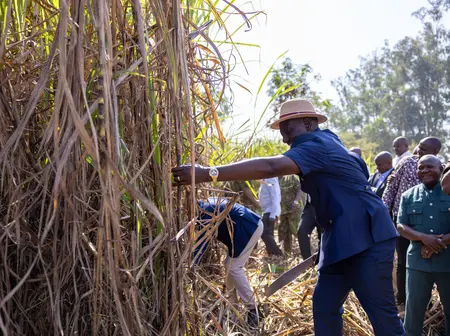
Good News for Sugarcane Farmers as Ruto Announces Sh1.2 Billion Bonus Payments Starting Next Week
President William Ruto has announced a major financial boost for sugarcane farmers, with the government setting aside Sh1.2 billion in bonuses expected to start reaching beneficiaries next week.
The announcement is expected to bring relief to thousands of farming families who depend on sugarcane growing for their daily income.
Ruto said the money would reward farmers for their contribution to the revival of the sugar industry and ensure they directly benefit from the changes being introduced in the sector.
The bonus programme is part of the government's wider efforts to improve farmers' earnings, strengthen sugar production and restore struggling sugar factories.
The President's announcement comes as he steps up engagements with leaders from Western Kenya, a region where sugarcane farming supports thousands of households and businesses.
On November 17, Ruto met leaders from the region at State House, Nairobi, ahead of his planned development tour covering several counties. The revival of the sugar industry featured among the issues highlighted during the engagement.
Counties such as Kakamega, Bungoma and Busia have many families whose livelihoods depend on sugarcane farming.
The government has also pointed to improvements in the sector, including increased payments to farmers and efforts to restore operations at public sugar factories.
In October, Ruto said payments to sugarcane farmers had increased from approximately Sh4,500 to Sh5,500 per tonne, while national sugar production had risen from about 500,000 tonnes in 2022 to approximately 850,000 tonnes in 2026.
The Sh1.2 billion bonus is therefore another measure aimed at improving the financial position of farmers and encouraging more production.
However, farmers will be watching closely to see how quickly the payments reach their accounts and whether the programme delivers the promised relief.
The announcement places sugarcane farmers at the centre of Ruto's latest agricultural commitments as his administration pushes to revive the industry.
-

From Ksh37,000 Teaching Salary To Safaricom Billboards Across Nairobi, Teacher Cillah
This is not a story about luck. This is a story about a Kenyan teacher who refused to be poor.
Teacher Cillah was earning Ksh37,000 per month as a teacher. Ksh37,000. In Nairobi, that is rent, food, transport, and nothing left. That is survival, not life.
Today, her face is on Safaricom billboards across Nairobi. The biggest company in Kenya. The biggest brand in East Africa. Her face is smiling at Kenyans from Mombasa Road, Thika Road, Westlands, CBD.
And she is reportedly cashing in around Ksh250,000 from her latest gig.
From Ksh37,000 salary to Ksh250,000 per gig. That is 7 months salary in one deal.
Who Is Teacher Cillah?
Teacher Cillah is a Kenyan teacher turned content creator. She started by posting funny, relatable videos about teaching, about classroom life, about Kenyan parents, about CBC, about life as a teacher.
Kenyans loved her. Students loved her. Parents loved her. Teachers loved her.
She was real. She was funny. She was not pretending to be rich. She was showing the real life of a Kenyan teacher – waking up early, marking books, dealing with naughty pupils, surviving on Ksh37,000.
Her followers grew. 100K. 500K. 1 Million. Now over 1M followers across TikTok, Instagram and Facebook.
Brands noticed. Safaricom noticed.
Why Did Safaricom Choose Her?
Safaricom does not pick just anyone for a billboard. Safaricom picks faces that Kenyans trust. Faces that Kenyans love. Faces that sell.
Teacher Cillah is that face.
She is not a celebrity who lives in Karen and drives a Range Rover. She is a teacher. A mama. A hustler. A Kenyan who understands ordinary Kenyans.
When she says "Safaricom is the best network," Kenyans believe her. Because she is one of them.
That is why Safaricom put her on billboards across Nairobi.
Ksh250,000 For One Gig – Is That Real?
Reports say Teacher Cillah is cashing in around Ksh250,000 from her latest gig with Safaricom.
But it is not just about the money. It is about what it represents.
It means a teacher's talent is worth more than a teacher's salary. It means content creation can pay more than employment. It means Kenyans are now valuing creators.
Kenyans React: "Teacher, We Are Proud Of You!"
One Kenyan wrote: "From Ksh37,000 to Ksh250,000 per gig. Teacher Cillah, you have shown us that teaching is not the end. Your talent is your salary."
Another wrote: "I am a teacher earning Ksh37,000. Teacher Cillah has given me hope. I will start creating content today."
Another wrote: "Safaricom, thank you for choosing a real Kenyan, not a politician's child. Teacher Cillah deserves it."
What Can Kenyan Teachers Learn?
1. Your salary is not your limit. Your talent is your limit.
2. Start where you are. Teacher Cillah started with a phone in the classroom.
3. Be consistent. She posted every day, even when no one was watching.
4. Be real. Kenyans love real stories, not fake lifestyles.
5. Don't quit your job too early. She built her brand while still teaching.
Teacher Cillah did not become rich overnight. She taught in the morning, created content in the evening, edited at night, posted at midnight.
Now Nairobi is looking at her on billboards.
From Ksh37,000 to Ksh250,000. From classroom to billboard. From teacher to brand.
Teacher Cillah, we salute you. You have shown every Kenyan teacher, every Kenyan hustler, that your beginning is not your ending.
https://www.facebook.com/share/v/1ASSSXGRCc/
-
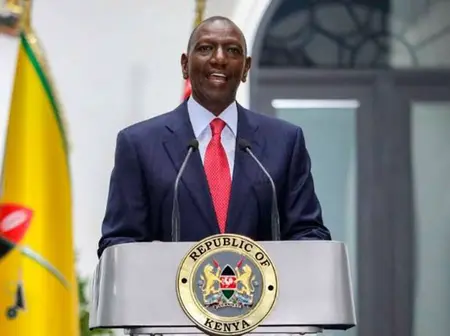
Ruto Says Kenya’s Maize Production Rises to 71 Million Bags From 44 Million in 2022
President William Ruto has said Kenya’s maize production increased to 71 million bags, up from 44 million bags in 2022, attributing the growth to the government’s fertiliser subsidy programme and increased access to farm inputs.Speaking during the State of the Nation Address on Wednesday, November 18, 2026, Ruto said increased domestic production had reduced the country’s dependence on maize imports and helped lower the cost of food.