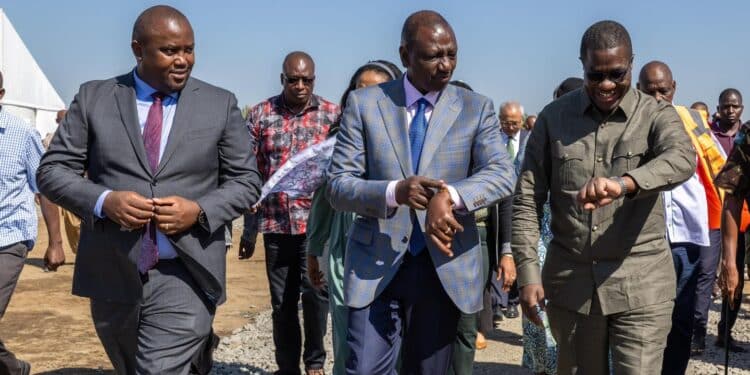
Kenya is preparing to enter the global crude oil market, with production from the South Lokichar oil fields in Turkana County expected to begin in December 2026.Energy and Petroleum Cabinet Secretary Opiyo Wandayi said on November 18 that the drilling rig would be activated on Friday, November 20, marking a key step towards commercializing the country’s oil reserves and preparing for exports.
Category: Economy&Finance
-
Equity Bank explains how Kenyans seeking socio-economic development support can submit proposals
Equity Bank has explained how Kenyans with socio-economic development ideas can approach the financial institution for guidance on available support opportunities.
Responding to the question on Thursday, November 19, 2026, the bank identified five areas in which it supports development initiatives, including financial inclusion, entrepreneurship, education, agribusiness and sustainable community development.
“Yes, we are committed to supporting socio-economic development through initiatives that promote financial inclusion, entrepreneurship, education, agribusiness, and sustainable community development,” the bank responded.
The lender encouraged individuals with specific proposals or concepts to share them through its official email address, for further guidance.
“If you have a specific proposal or concept in mind, we encourage you to share via email to info@equitybank.co.ke, and we will be glad to advise on the available avenues for support,” the response stated.
Kenyans interested in seeking support for their socio-economic development ideas have been directed to submit their proposals through the bank’s email address.
The bank’s response indicates that applicants should have a specific proposal or concept to present when making contact.
However, Equity Bank did not outline a formal application process, meaning interested individuals will need to seek clarification directly from the institution on the requirements and available opportunities.
These include financial inclusion, which focuses on expanding access to financial services, entrepreneurship, education, agribusiness and sustainable community development.
The areas cover both economic empowerment and community-based development, providing a broad indication of the types of initiatives the bank is interested in supporting.
However, the lender did not disclose specific funding amounts, eligibility requirements, application deadlines or whether the support would be provided through grants, loans, partnerships or other arrangements.
The clarification therefore provides an initial contact point for Kenyans seeking institutional support for their ideas, while the actual opportunities available will need to be established directly with the bank.
Prospective applicants are encouraged to explain their proposals clearly when contacting the institution and seek details on the applicable support arrangements.
-
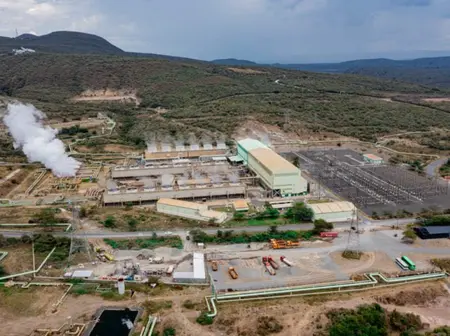
How KenGen plans to add 5,540MW to Kenya’s electricity capacity by 2034
Kenya Electricity Generating Company (KenGen) is seeking investors to finance a pipeline of power generation projects targeting an additional 5,540 megawatts (MW) of electricity capacity by 2034.
The power producer hopes to use the upcoming Sustainable Energy Conference 2026 in Olkaria to attract local and international financiers to support the proposed expansion, which is expected to contribute towards the government’s ambition of increasing Kenya’s installed electricity generation capacity to 10 gigawatts (GW).
The conference, scheduled for November 24 to 27, comes as Kenya seeks to expand electricity production to meet growing demand from households, businesses and industries.
KenGen Managing Director and Chief Executive Officer Eng. Peter Njenga says the proposed expansion is ambitious but aligns with the government’s broader electricity generation target.
“The 5,540 is quite ambitious. But if you remember, our President has challenged the energy sector to increase our installed capacity to 10 gigawatts,” Njeng said.
But what does KenGen’s 5,540MW plan involve, which projects are being considered, and how will investors contribute to its implementation?
KenGen is targeting an additional 5,540MW of electricity generation capacity by 2034 through new power projects and upgrades to existing facilities.
The target represents a pipeline of proposed investments rather than electricity capacity that has already been secured or commissioned.
Much of the proposed capacity is still subject to feasibility studies, financing arrangements and other project development requirements.
The expansion is part of efforts to increase electricity supply as Kenya positions itself to accommodate additional industrial activity and growing energy consumption.
Which projects are included in the plan?
KenGen has identified several major projects that could contribute to the planned expansion.
They include:
The projects are at different stages of development, meaning their implementation will depend on technical assessments, financing and other necessary approvals.
Developing large electricity generation facilities requires substantial capital, making investment partnerships important to KenGen’s expansion strategy.
The company is therefore using the Sustainable Energy Conference to engage potential financiers, development partners and other stakeholders interested in funding energy infrastructure.
Ahead of the November 24-27 meeting, KenGen has signed partnership agreements with 11 organisations, including the Energy and Petroleum Regulatory Authority (EPRA) and the Geothermal Development Company (GDC).
The agreements are intended to strengthen investment mobilisation and cooperation across the energy sector.
Njeng said the conference would provide an opportunity for potential investors to examine the proposed projects, assess their viability and discuss possible financing arrangements.
“So the financiers, the investors, people who are looking out for projects that they can fund, we can have further discussions and we’ll be able to tell you how far we are and the viability of those projects that we are embarking on,” he said.
This means the conference will not only focus on attracting money but also on connecting KenGen with investors who can assess individual projects and determine their suitability for financing.
Apart from generating more electricity, KenGen wants to expand the commercial use of the geothermal power produced in Olkaria.
The initiative seeks to connect electricity generation with industrial development by attracting enterprises that require reliable power for their operations.
The park has so far attracted five investors, with KenGen hoping to secure additional commitments during the upcoming conference.
The company’s strategy is to make geothermal energy a foundation for industrial growth, business investment and employment opportunities.
If implemented, the proposed projects would increase Kenya’s electricity generation capacity and support the government’s long-term ambition of reaching 10GW of installed capacity.
The expansion would also diversify the country’s generation sources through investments in hydropower, solar and nuclear energy, alongside improvements to existing power plants.
However, the 5,540MW target remains an investment ambition rather than a guaranteed addition to the national grid by 2034.
The pace of implementation will depend on whether KenGen secures the required financing, completes feasibility studies, obtains necessary approvals and delivers the projects within the proposed timelines.
The Sustainable Energy Conference 2026 will therefore provide KenGen with an opportunity to turn its proposed project pipeline into concrete investment commitments.
Rono is a digital journalist with a proven track record in newsroom leadership and content creation. Currently a Digital Writer for People Daily Digital, Emmanuel’s career is rooted in a lifelong passion for storytelling. Let's talk here: or
-
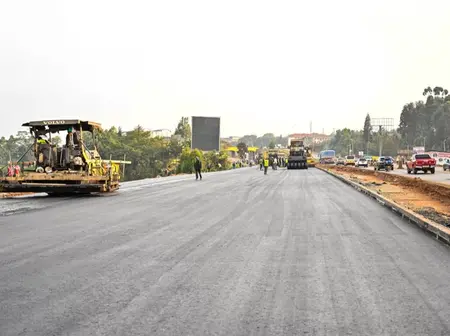
Foreign firms face local banking, insurance rules in proposed law
Foreign investors and contractors undertaking projects in Kenya could soon be required to use local banks, insurance companies, transport providers and other professional services as government moves to retain more business earnings within the economy.
Under the new Local Content Bill, 2025 passed by Parliament and awaiting the President's assent, the proposed law seeks to compel foreign companies operating in the country to give priority to Kenyan suppliers, manufacturers and service providers, limiting the amount of money flowing abroad through procurement and service contracts.
Under the framework, foreign contractors could be required to insure their vehicles with Kenyan insurance companies, procure legal and financial services locally and engage domestic transport fir instead of relying entirely on foreign providers.
Thika Town MP, Alice Ng’ang’a, who sponored the bill said it was developed to address an economic imbalance in which multinational companies operate in Kenya, but channel a significant share of their business earnings and procurement spending outside the country.
She said the legislation initially proposed that at least 80 per cent of employees in companies operating in Kenya be Kenyan citizens, while 60 per cent of goods and services be sourced locally.
It also proposed that all agricultural produce used by companies be procured locally, although the legislators acknowledged that some products are unavailable in sufficient quantities or are not produced in Kenya.
“Do they insure their vehicles with the insurance companies that are Kenyan? Do they procure their legal services from local companies? Do they procure their financial services from local companies, their transport services from local companies? Those are the things we are going to look into,” said Ng’ang’a.
She argued that allowing foreign companies to undertake major projects while sourcing most of their supporting services and supplies from outside the country denies local businesses opportunities to participate in the economy.
The Bill seeks to increase domestic economic participation by ensuring that international investors contribute to the growth of local enterprises beyond employing Kenyan workers and paying taxes.
Ng’ang’a said some of the proposed requirements, particularly those involving financial services, could be implemented immediately because local institutions already have the capacity to serve foreign companies.
Other requirements, especially those involving agricultural and manufactured products, could be introduced gradually, with a possible one-year transition period to allow businesses to adjust existing supply arrangements.
The proposed legislation has also attracted the attention of local manufacturers, who see an opportunity to expand their market access through increased procurement by multinational companies.
Through the Kenya Association of Manufacturers, local industries have called for sector-specific localisation targets rather than a blanket requirement for 60 per cent local sourcing.
"We are advocating for a local content framework that genuinely strengthens Kenyan manufacturing by creating opportunities for local enterprises while recognising the different capabilities and supply-chain realities across industries," KAM chief executive, Tobias Alando, told the Star.
They have also argued that different industries have varying production capacities and supply-chain requirements, warning that rigid procurement requirements could disrupt operations where specialised raw materials are unavailable locally.
Manufacturers want exemptions for imported inputs that cannot be sourced locally in the required quantities, quality or specifications.
They have further called for tax incentives, affordable financing, infrastructure investment and technology transfer programmes to help domestic fir build the capacity needed to supply large companies.
The industry argues that local content requirements should be accompanied by deliberate investment in domestic production capacity to ensure Kenyan businesses can meet international quality, pricing and reliability standards.
Small and medium-sized enterprises could also benefit from increased opportunities to supply goods and services to large foreign companies, particularly in manufacturing, logistics, agriculture, construction and distribution.
The proposed framework is expected to strengthen linkages between local manufacturers, farmers and multinational companies, potentially creating new markets for locally produced agricultural inputs and industrial materials.
However, manufacturers have cautioned that the law must protect Kenya's export competitiveness and remain consistent with regional and international trade commitments.
-
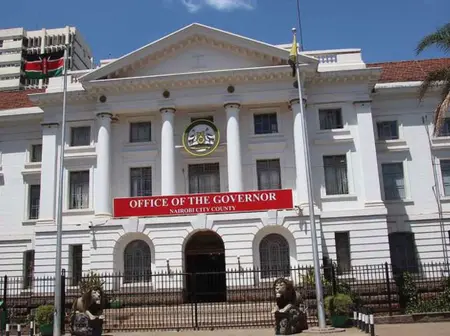
Counties Owe Ksh172.5 Billion in Unpaid Bills as Nairobi Tops List
The report warns that some counties appear unable to settle obligations for services already delivered. Nairobi accounts for the largest share of the bills older than three years, with Ksh.49.1 billion outstanding.
The report also identifies Ksh.46.7 billion in pending bills accumulated during the 2025/26 financial year. It lists a further Ksh.30.6 billion as one to two years old and Ksh.22.9 billion as three to four years old.
Nairobi also owes suppliers Ksh.86.9 billion – the highest amount of any county and more than half of the total pending bills owed to suppliers by all counties.
The Parliamentary Budget Office is seeking action, warning that the scale of Nairobi’s unpaid bills poses a significant risk to businesses and economic activity.
Its proposals include a matching-funds arrangement in which the national government contributes Ksh.1 for every Ksh.2 Nairobi pays. Another option would see the national government match each shilling paid by the county. Either arrangement could shift part of the county’s obligations to the national government.
The Budget Office says clearing Nairobi’s pending bills by 2030 could improve cash flow for suppliers and contractors and strengthen business confidence.
The report also raises concerns about stalled projects. Nairobi has the most, with 57, followed by Kakamega with 26, Baringo with 23, Machakos with 22, and Kilifi with 10. The remaining counties each have fewer than 10 stalled projects.
The Budget Office is urging counties to complete viable stalled projects before starting new ones, arguing that finishing existing projects could deliver economic returns sooner.
-
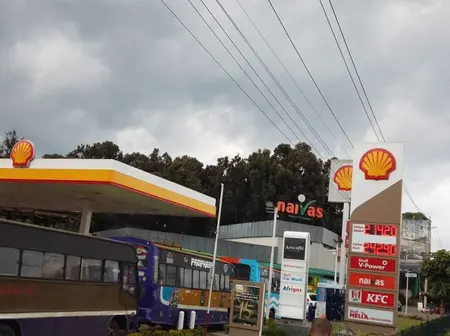
Kenya fuel prices: Diesel hits Ksh219 as oil shock threatens household budgets
Kenyan households face another warning sign in the cost-of-living battle: fuel is becoming significantly more expensive, and the pressure is spreading beyond motorists to businesses, commuters, and families.
Diesel averaged Ksh219.04 per litre nationally in September 2026, up from Ksh172.64 during the same month last year. That is an increase of Ksh46.40 per litre, or approximately 26.9 per cent.
At the same time, international crude oil prices climbed above US$110 per barrel, adding to concerns over energy costs in an economy that relies on imported petroleum products.
The figures, contained in the Kenya National Bureau of Statistics (KNBS) September 2026 Leading Economic Indicators report, offer a revealing picture of the pressure building in Kenya’s fuel market.
For households already balancing transport, food, rent and school expenses, the concern is no longer limited to the price displayed at petrol stations. It is how higher energy costs could filter into everyday spending.
The KNBS report’s records the international benchmark at US$110.59 per barrel in September 2026.
That was a sharp increase from US$86.44 in August 2026 and US$70.61 in September 2025.
The September figure represented a monthly jump of approximately 28 per cent and an annual increase of nearly 57 per cent.
The same table shows how volatile the market has been. The OPEC reference basket reached US$116.36 per barrel in March 2026, eased over the following months and climbed again in September.
For Kenya, movements in international crude prices matter because petroleum products are imported. However, global crude prices do not translate automatically or immediately into local pump prices. Exchange rates, shipping costs, taxes, levies and domestic pricing arrangements also influence what consumers pay.
Premium motor gasoline averaged Ksh214.95 per litre in September 2026, compared with Ksh185.59 in September 2025. The difference is Ksh29.36 per litre, an increase of about 15.8 per cent.
Diesel recorded a bigger rise, climbing from Ksh172.64 to Ksh219.04 per litre. That is Ksh46.40 more for every litre purchased.
Kerosene also became more expensive. Its national average price increased from Ksh155.96 to Ksh192.56 per litre, a rise of Ksh36.60, or approximately 23.5 per cent.
The average price of a 13-kilogramme LPG cylinder rose from Ksh3,151.65 to Ksh3,419.24 over the same period, an increase of Ksh267.59.
These figures show that the pressure is not confined to one type of fuel. Petrol, diesel, kerosene and cooking gas all cost more than they did a year earlier.
Diesel’s increase deserves particular attention because it is widely used in commercial transport and other economic activities. Higher operating expenses can put pressure on businesses moving food, construction materials and other goods across the country.
Transport operators may face higher costs, while traders and manufacturers must manage the expense of moving supplies and finished products. Depending on market conditions, some of those costs may eventually be passed on to consumers.
Households also face direct pressure. Commuters may spend more getting to work, while families using kerosene or LPG have to budget more for essential energy needs.
The KNBS figures do not prove that fuel prices alone caused increases in food prices, fares or other household expenses. They do, however, show why energy costs remain an important part of Kenya’s wider cost-of-living picture.
The bigger concern is the ripple effect. When fuel becomes more expensive, the cost of moving people, producing goods and delivering services can rise too.
For Kenyan families, the real test is how much of that additional expense will eventually find its way into the weekly shopping budget.
-
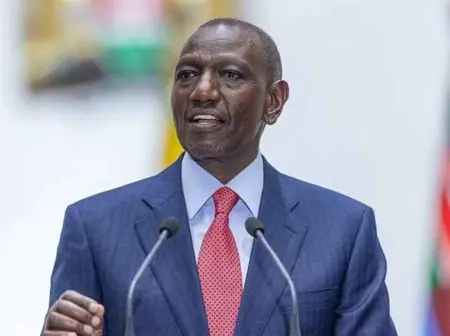
Ruto Says Subsidised Fertiliser Has Increased Kenya’s Maize Production to 71 Million Bags
President William Ruto has credited the government’s fertiliser subsidy programme for increasing Kenya’s maize production from 44.3 million bags in 2022 to 71 million bags last year.
Speaking during his State of the Nation Address, Ruto said his administration had reduced the price of a 50-kilogramme bag of fertiliser from KSh7,500 in 2022 to KSh2,000 this year.
He revealed that the government had distributed 38.5 million bags of subsidised fertiliser, benefiting nearly nine million registered farmers across the country.
According to the President, the intervention has helped farmers reduce production costs, improve yields and increase the supply of food in the market.
Ruto also reported that maize imports had declined from 9.9 million bags in 2022 to 3.3 million bags, reflecting increased domestic production.
The President further pointed to a reduction in the average price of two kilogrammes of sifted maize flour, commonly known as unga, from a high of KSh230 in September 2022 to KSh152 in September this year.
To illustrate the impact of the programme, Ruto highlighted the experience of Laban Cheptarus, a maize farmer from Rongai, Nakuru County.
According to the President, Cheptarus increased his harvest from 75 bags in 2022 to 125 bags last year on the same five acres of land after accessing subsidised fertiliser, improved seeds and agricultural extension services.
Beyond maize farming, Ruto highlighted improvements in other agricultural sectors, including coffee, tea, dairy and sugarcane.
He said national milk production had increased from 4.5 billion litres to 5.52 billion litres, while average farmer earnings had risen from KSh32 to as high as KSh60 per litre last month.
In the coffee sector, the President reported that export earnings had doubled from KSh26 billion to KSh52.1 billion, while average cherry prices had increased from KSh69 to as much as KSh130 per kilogramme.
Ruto maintained that his administration would continue investing in agricultural productivity, arguing that increased food production would help lower household expenses while improving farmers’ earnings.
-
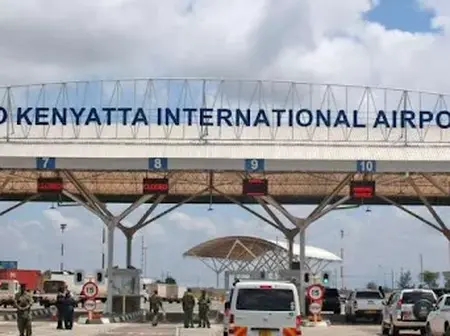
Taxi operators, travelers in firing line as KAA raises airport charges
Families dropping off relatives to the airport and taxi operators could pay more to park under a proposed commercial fees review by the Kenya Airports Authority.
The draft Commercial Charges Order, 2026, proposes a new tariff for parking at the JKIA parking silo, with rates higher than the existing charges for ordinary vehicles.
It also provides for higher rental rates at the hangar buildings, airside commercial spaces, retail spaces, parking garage, terminals and commercial zones.
KAA further wants an automatic five per cent increase every year on rent and other applicable commercial charges once the order takes effect.
Under the proposed rates, a saloon, minivan or pick-up would pay Sh150 for up to 30 minutes at the parking silo, compared with the existing Sh100 rate.
Parking for between 30 minutes and one hour would cost Sh200, up from Sh150.
A stay of one to two hours would attract Sh400, against the existing Sh300, while two to four hours would cost Sh500, compared with Sh400.
The proposed silo charge rises to Sh750 for four to six hours, Sh1,000 for six to eight hours and Sh1,500 for eight to 12 hours.
For stays of 12 to 24 hours, the proposed charge is Sh2,250, compared with Sh1,800 under the existing saloon, minivan and pick-up tariff.
Each additional 24 hours would cost Sh2,500, against the current Sh2,000.
In the reviewed rates, the parking silo tariff would attract a further 10 or 20 per cent adjustment during high occupancy.
The proposals also extend to other airports, including Moi International Airport in Mombasa, Kisumu and Eldoret, where different parking rates will apply.
At Moi International Airport, a saloon, minivan or pick-up would pay Sh150 for up to one hour, Sh300 for one to two hours and Sh400 for two to four hours.
The charge rises to Sh800 for four to eight hours, Sh1,200 for eight to 12 hours and Sh1,800 for 12 to 24 hours.
Trucks and buses would pay Sh300 for the first hour and Sh2,400 for a stay of between 12 and 24 hours.
At Kisumu airport, the proposed tariff for saloon vehicles is Sh100 for the first 30 minutes, Sh200 for one to two hours and Sh300 for two to four hours.
Pick-ups and SUVs would attract higher charges, including Sh1,800 for 12 to 24 hours.
At Eldoret airport, saloon vehicles would pay Sh100 for up to 30 minutes, Sh200 for one to two hours and Sh250 for two to four hours.
The proposed tariffs also provide for additional daily charges for vehicles staying beyond 24 hours at these airports.
Taxi operators face higher costs with the six-month seasonal parking sticker for yellow taxi operators at JKIA set to rise from Sh10,440 to Sh15,000 for saloons and SUVs.
For pick-ups, vans, Nissan vehicles, minibuses and canters, the proposed charge rises from Sh10,440 to Sh20,000. The rate for trucks, buses and limousines increases from Sh13,920 to Sh25,000.
Tour operators and shuttle service providers who are airport residents would also pay more for six-month seasonal stickers.
The proposed rate for saloons and SUVs rises from Sh12,060 to Sh15,000, while pick-ups and vans move from Sh12,060 to Sh20,000.
For trucks, buses and limousines, the proposed charge rises from Sh16,082 to Sh25,000.
Commuter buses would pay Sh35,000, up from Sh28,944, while an authorised shuttle carrying up to 25 passengers would pay Sh40,000, against the current Sh25,056.
An access fee will apply for ride-hailing and cab vehicles for every completed airport trip. At JKIA, the proposed fee is between Sh150 and Sh250 per trip.
The schedule lists Sh150 for Moi International Airport, Sh100 for Wilson Airport, Eldoret and Kisumu airports, and Sh25 for the lowest airport category.
The per-trip charge would recur with each completed journey. Whether and how the fee would be passed on to passengers is not addressed in the draft.
Separately, the proposed annual airport taxi permit for vehicles at JKIA is listed at between Sh120,000 and Sh260,000. The schedule gives a range of Sh60,000 to Sh100,000 for some other airport categories.
The authority says the last review of rental rates and charges was undertaken in the 2015-16 financial year and that it engaged the Ministry of Lands in October 2023 to review rates for key airports.
At JKIA, the draft raises the rent for hangar buildings from Sh720 to Sh2,160 per square metre, while airside commercial space away from aprons rises from Sh360 to Sh2,460.
Retail space in the parking garage would rise from Sh1,762 to Sh2,400, while the rate for Terminal 2 doubles from Sh1,200 to Sh2,400.
Service charges of between five and 25 per cent will apply for a combination of utilities and services provided by KAA and tenants.
It also sets out new charges for telecommunications infrastructure, temporary promotional sites and the storage of unserviceable or abandoned aircraft.
-
Kenyans pay more to borrow as bank overdraft rates hit 13%, savings returns fall
Kenyans relying on bank overdrafts to cover emergencies, business expenses and month-end bills are facing higher borrowing costs, even as returns on savings accounts remain almost unchanged.
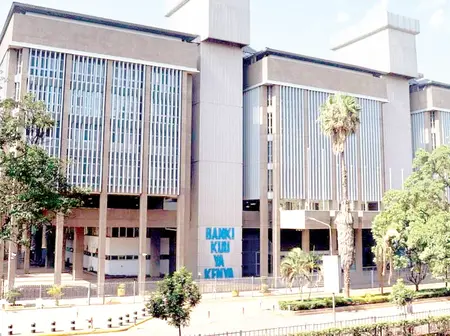
The average bank overdraft rate in Kenya rose from 12.50 per cent to 13 per cent in September 2026, while the average savings rate edged down from 3.54 per cent to 3.53 per cent, highlighting the widening gap between the cost of accessing money and the returns customers earn from keeping it in banks.
The latest figures from the Kenya National Bureau of Statistics (KNBS) show that lending rates also increased during the month, adding to the cost of borrowing for individuals and businesses seeking credit from banks.
The average lending rate climbed from 14.34 per cent in August to 14.40 per cent in September, while the average deposit rate increased marginally from 6.91 per cent to 6.94 per cent.
The changes mean borrowers faced slightly higher interest rates while savers experienced almost no improvement in returns from savings accounts.
The increase in overdraft rates could affect customers who regularly dip into their accounts before payday or use bank facilities to manage short-term cash-flow shortages.
An overdraft allows customers to spend beyond their available account balance up to an agreed limit, but the facility attracts interest and other charges depending on the bank and terms of use.
With the average overdraft rate rising to 13 per cent from 12.50 per cent, customers using the facilities could face higher interest costs if they maintain similar borrowing balances for the same period.
The increase comes alongside a slight rise in the average lending rate, which moved to 14.40 per cent from 14.34 per cent, reflecting a marginal increase in the cost of bank credit during the month.
While the changes may appear small in percentage-point terms, the actual cost to borrowers depends on how much they owe, how long they borrow and the terms attached to their credit facilities.
For Kenyans holding money in ordinary savings accounts, the latest figures offer little improvement in returns.
The average savings rate slipped from 3.54 per cent in August to 3.53 per cent in September, meaning the return offered on savings barely moved during the period.
Meanwhile, commercial banks’ weighted average deposit rate rose from 6.91 per cent to 6.94 per cent.
The difference between deposit rates and savings rates reflects the fact that banks offer different rates across deposit products, depending on the account type, conditions and customer arrangements.
The marginal increase in the average deposit rate contrasts with the slight decline in savings returns, leaving ordinary savers with little change in the rates captured in the latest banking data.
For customers deciding whether to leave money in a savings account or seek other ways of earning returns, the figures highlight the importance of checking the interest rate attached to individual products rather than assuming all deposits earn the same amount.
The September figures reveal a contrasting movement in Kenya’s banking market, with overdraft costs moving upwards while savings returns remained largely flat.
The overdraft rate stood at 13 per cent against an average savings rate of 3.53 per cent, a difference of 9.47 percentage points. However, the two rates apply to different banking products and should not be treated as directly equivalent prices.
For households, the figures come at a time when access to credit and the ability to build savings remain important in managing everyday financial obligations. For businesses, overdrafts are often used to bridge cash-flow gaps, pay suppliers and cover expenses before revenue comes in.
The KNBS data does not explain why banks adjusted the rates or establish how individual customers will be affected, since actual charges and returns vary by institution and product.
But the latest movement offers a snapshot of the cost of borrowing and the returns available to depositors in September 2026, with overdraft rates rising, lending rates edging higher and savings rates moving slightly lower.
For Kenyans using bank credit to manage expenses, the figures underline the importance of comparing borrowing terms, while savers may need to examine the rates offered on their specific accounts to determine how much their money is earning.
-
How govt plans to raise Ksh5T to transform Kenya over 10 years
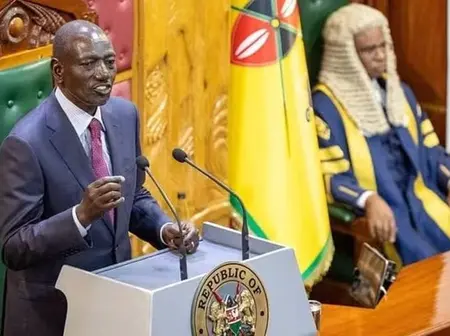
President William Ruto has unveiled a Ksh5 trillion financing plan to transform Kenya’s economy over the next decade, outlining how the government intends to mobilise funds for infrastructure development, job creation and improved public services without placing an unsustainable burden on taxpayers.
The plan, announced during his fourth State of the Nation Address at Parliament Buildings on Wednesday, November 18, 2026, seeks to move Kenya beyond economic stabilisation towards what the President described as First World standards of prosperity within a generation.
Ruto said the ambitious programme would require long-term financing beyond ordinary government expenditure, with increased domestic savings, pension contributions and proceeds from public asset sales expected to play a central role.
“Our transformation programme is estimated to require Ksh5 trillion over the next 10 years. We must therefore mobilise long-term capital in ways that protect debt sustainability, safeguard public resources and avoid placing an unsustainable burden on taxpayers,” he said.
But how does the government intend to raise the money, and what projects will the financing support?
One of the key sources of financing identified by Ruto is the National Social Security Fund (NSSF), which collects retirement contributions from Kenyan workers and their employers.
According to Ruto, monthly contributions to NSSF have increased sixfold since 2023, rising from Ksh1.4 billion to more than Ksh8.5 billion.
The Fund’s total value has also grown from Ksh288 billion in 2022 to Ksh850 billion as of November 2026, with the government targeting KSh1 trillion by June 2027.
Ruto said the Fund had awarded members a 17 per cent interest on their savings for the 2024/2025 financial year.
The government intends to use the growing pool of domestic savings to support long-term investments while ensuring workers continue earning returns on their retirement contributions.
However, this means pension savings must be invested prudently, with the interests and retirement security of contributors protected.
Another major component of the financing strategy is the National Infrastructure Fund (NIF), which Ruto said would provide a framework for mobilising capital for large development projects.
The President recalled that he had proposed the establishment of the Fund during his previous State of the Nation Address before Parliament passed the enabling legislation.
The money is expected to come from the divestiture of mature public assets, with the government seeking to convert proceeds from the sale of selected state investments into financing for new infrastructure.
The Fund will also mobilise additional capital from pension funds, institutional investors, development finance institutions and other partners.
Rather than relying entirely on government revenue and borrowing, the arrangement is intended to attract investment from different sources to finance major national projects.
The proposed investments include roads, airports, railways, energy, water and irrigation infrastructure.
Ruto also identified the Sovereign Wealth Fund as another instrument for financing Kenya’s long-term development ambitions.
Unlike the National Infrastructure Fund, which is primarily designed to mobilise capital for infrastructure investments, the Sovereign Wealth Fund is intended to provide a framework for saving, investing and preserving national wealth for future generations.
The President said the two funds would help the country build a stronger financial base while ensuring that national resources generate lasting economic benefits.
He, however, emphasised that both institutions must operate under transparent governance structures, proper investment assessments and accountability mechanisms.
“These financing instruments must operate under transparent governance, rigorous project appraisal and clear accountability. Every investment must be justified by the economic and social value it creates,” he said.
The Ksh5 trillion target reflects the government’s ambition to finance major development projects without relying excessively on conventional government borrowing and annual budget allocations.
Large infrastructure projects require substantial capital and take years to complete, making long-term financing arrangements necessary.
The government is therefore seeking to pool resources from pension contributions, public asset divestiture and institutional investors to support projects expected to expand the economy’s productive capacity.
Ruto argued that increased domestic savings would allow Kenya to invest more in its development while strengthening financial security for workers.
The strategy is also intended to protect the country’s debt sustainability and prevent future generations from inheriting excessive financial obligations.
If successfully implemented, the programme is expected to expand infrastructure, improve access to essential services and create employment opportunities.
Investments in roads, railways and airports could improve transport and trade, while energy and water projects could support businesses, agriculture and industrial production.
The government also expects the programme to contribute to the creation of millions of productive jobs and improve Kenya’s competitiveness.
For workers, the increased role of NSSF in mobilising domestic savings is expected to strengthen retirement security, provided the contributions are managed prudently and deliver sustainable returns.
However, the success of the Ksh5 trillion ambition will depend on how effectively the government mobilises the funds, selects projects and manages the institutions entrusted with public resources.
Transparency, accountability and protection of workers’ savings will be particularly important as the government seeks to turn the proposed financing framework into completed projects.
Ruto said Kenya must pursue development while maintaining fiscal discipline, arguing that the country should leave future generations with productive assets, stronger national savings and manageable financial obligations.
Rono is a digital journalist with a proven track record in newsroom leadership and content creation. Currently a Digital Writer for People Daily Digital, Emmanuel’s career is rooted in a lifelong passion for storytelling. Let's talk here: or