
The Capital Markets Authority (CMA) has approved nine new investment fund sub-funds and an Alternative Investment Fund, expanding the range of investment opportunities available to Kenyan investors.The approvals, announced on Wednesday, November 18, cover investment products from Kuza Asset Management, ICEA LION Asset Management, Tradiam Asset Managers Old Mutual, and CIC Asset Management.
Category: Economy&Finance
-

KenGen Seeks Investors for 5,540MW Power Expansion
Kenya is preparing for a major expansion of its electricity generation capacity, with the Kenya Electricity Generating Company (KenGen) seeking investors to finance projects expected to add 5,540 megawatts (MW) to the national power supply by 2034.The ambitious plan includes large hydropower developments, a proposed nuclear power plant, solar energy projects and upgrades to existing electricity generation facilities.
-

Kenya’s food security paradox: Bigger maize harvests, millions still hungry
President William Ruto’s latest address on food security has presented an ambitious picture of Kenya’s agricultural transformation, but the figures contained in his own speech reveal a difficult question: why are millions of Kenyans still struggling with hunger despite a sharp increase in maize production?
The President said Kenya’s maize production had increased from 34.3 million bags in 2022 to 71 million bags in 2025, while the government had distributed more than 38 million bags of subsidised fertiliser to nearly two million farmers since 2022.
He also said the price of a 50-kilogramme bag of fertiliser had fallen from Ksh7,500 to Ksh2,000, representing a 73 per cent reduction.
These figures form a central part of the administration’s argument that lowering farmers’ production costs can increase agricultural output and strengthen national food security.
However, the same address acknowledged that 2.7 million Kenyans were facing crisis levels of food insecurity, with hundreds of thousands of children and pregnant and breastfeeding women requiring nutritional support.
The contrast exposes a fundamental weakness in measuring food security primarily through agricultural production.
A country can produce more maize without necessarily ensuring that every household can afford sufficient and nutritious food.
Kenya’s agricultural challenge is increasingly about the relationship between production, household incomes and the cost of accessing food.
While increased maize production is an important indicator of agricultural performance, it does not independently establish whether households are eating adequately.
Food security depends on several interconnected factors, including availability, affordability, access, nutritional quality and the ability of households to maintain access to food throughout the year.
This distinction is particularly important for households that depend on irregular incomes, small-scale farming or food purchases from markets.
Even when national production improves, the benefits may not automatically reach households struggling with purchasing power.
Ruto acknowledged this wider challenge in his address, arguing that producing more food is not enough if people cannot access sufficient, safe, affordable and nutritious diets.
He cited an estimated 6.9 per cent economic cost of malnutrition, underscoring that the consequences extend beyond agriculture into healthcare, education, productivity and national economic growth.
The implication is that Kenya’s food security performance must be judged not only by the number of bags harvested but also by whether families can afford balanced meals.
Perhaps the most consequential part of the President’s address was his emphasis on shifting agricultural investment towards large-scale irrigation.
Ruto said his administration was pursuing plans to construct at least 50 mega dams, 200 medium and small dams, alongside thousands of micro dams.
The programme is intended to bring an additional 2.5 million acres under irrigation within the next five to seven years.
The proposal reflects an acknowledgement that Kenya’s dependence on rainfall continues to expose agricultural production to climate shocks, particularly in arid and semi-arid regions.
His statement that Kenya must no longer allow clouds to determine whether people eat captures the policy direction behind the proposed infrastructure expansion.
However, the ambition also raises questions about financing, implementation timelines, water distribution, maintenance and the actual number of farmers who will benefit.
The President said the National Infrastructure Fund would mobilise domestic and international capital, alongside public-private partnerships, to finance major infrastructure without unnecessarily increasing the public debt burden.
But the success of the irrigation programme will depend on more than the construction of dams.
Water must reach farms, irrigation systems must remain operational, farmers must access affordable inputs, and agricultural produce must have reliable storage, processing and markets.
Without these complementary investments, expanded water infrastructure may fail to translate into the expected improvements in food production and household incomes.
Ruto also placed school feeding at the centre of his administration’s nutrition strategy.
He said approximately three million learners currently benefit from school meals, with the government intending to extend the programme across all 47 counties from 2027 and reach 10 million learners by 2030.
The programme is significant because it links three policy objectives: improving children’s nutrition, supporting school attendance and creating a dependable market for smallholder farmers.
Through home-grown school feeding, the government wants public food procurement to support local agricultural production while ensuring learners receive nutritious meals.
However, expanding the programme to 10 million learners will require substantial and sustained financing, reliable procurement systems and effective monitoring to ensure meals reach the intended beneficiaries.
It also raises the question of whether local farmers will have the capacity, financing and infrastructure to consistently supply the programme.
The school meals ambition therefore presents another test of whether agricultural policy can deliver benefits beyond national production statistics.
He specifically urged legislators to follow public money through to the delivery of fertiliser, irrigation projects and school meals.
This is particularly important given that Article 43 of the Constitution guarantees every person the right to be free from hunger and to have adequate food of acceptable quality.
The President also cited the Kampala Declaration, which sets continental agricultural targets, including increasing agri-food output by 45 per cent by 2035, reducing post-harvest losses by 50 per cent and mobilising $100 billion in investment.
However, the bigger question for Kenya is how these commitments will be reflected in measurable improvements in household food security.
The administration’s agricultural achievements should therefore be assessed alongside the number of households still unable to afford adequate food, the reliability of water access, the performance of irrigation investments and improvements in child nutrition.
Ultimately, Kenya’s food security test will not be settled by the number of fertiliser bags distributed, dams announced or maize bags harvested.
It will be determined by whether these investments make food consistently available and affordable to ordinary households.
For an administration that has placed farmers at the centre of its economic transformation agenda, the next measure of success is ensuring that increased agricultural production translates into fewer hungry Kenyans.
-
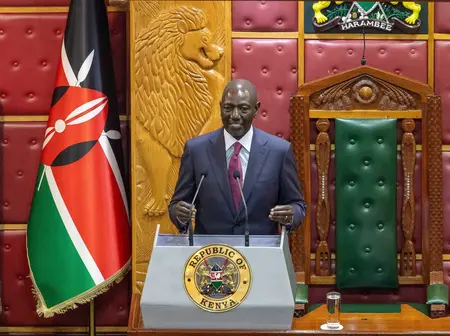
Ruto promises relief for cash-strapped varsities with Sh18 billion payment in coming weeks
President William Ruto has announced the approval of Sh18 billion to settle outstanding debts owed to public and private universities, a move expected to ease financial pressure on institutions struggling with funding challenges.The President said the money was being processed at the National Treasury and would be disbursed in the coming weeks to clear the outstanding obligations.
-

Keproba, EATTA partner to boost value-added Kenyan tea exports
THE Kenya Export Promotion and Branding Agency (KEPROBA) and the East Africa Tea Trade Association (EATTA) have signed a five-year partnership to boost value addition, branding and market diversification in the tea sector.
This, as Kenya seeks to earn more from its leading export commodity.
The agreement seeks to shift the industry from reliance on bulk tea exports towards branded, packaged and specialty products that command higher prices in international markets.
The partnership will support tea exporters to adopt modern packaging and branding solutions, promote specialty, orthodox, green, purple and premium teas, and expand into emerging markets across Africa, Asia, Europe, the Middle East and the Americas.
The two organisations will also facilitate direct engagement between Kenyan exporters and international buyers, share market intelligence and support compliance with international standards and certification requirements.
A key focus will be developing and promoting the 'Kenya Tea Story' under the Made in Kenya brand to strengthen recognition of Kenyan tea and distinguish it from competing products in global markets.
Kenya's tea exports reached $1.44 billion (about Sh185.8 billion) in 2025, up 2.6 per cent from $1.40 billion (Sh180.6 billion) recorded in 2024, according to International Trade Centre data.
The country maintained its position as the world's leading tea exporter by volume, accounting for 30 per cent of global exports, and ranked third by export value, with a 17.3 per cent market share.
Pakistan, Egypt, the United Kingdom, Kazakhstan and the United Arab Emirates were the leading destinations for Kenyan tea.
However, the industry remains heavily dependent on bulk black tea, which accounts for 96.3 per cent of total exports, exposing exporters to price fluctuations and limiting the value captured locally.
KEPROBA acting chief executive Austin Macheso said the partnership will help reposition Kenya from being primarily a supplier of raw tea to a source of premium, differentiated and branded products.
"Kenyan tea is among the finest in the world, yet too much of it leaves our shores without carrying the Kenyan name. This partnership with EATTA is about changing that," he said.
Macheso said the collaboration would help exporters package, brand and market their products while strengthening the country's reputation in international markets.
EATTA managing director George Omuga said the agreement will create opportunities for producers, exporters and other players across the tea value chain.
He said the sector's long-term sustainability would depend on increased productivity, value addition, branding, market diversification and stronger engagement with international buyers.
"Tea remains one of Kenya's most important export commodities, supporting millions of livelihoods, rural economies and employment opportunities while contributing significantly to foreign exchange earnings," Omuga said.
The partnership is expected to strengthen coordination between the two institutions in export promotion, market development and branding, while opening opportunities for Kenyan businesses to capture a larger share of the value generated by tea in international markets.
-

Two Meru markets ready for handover as government reviews delayed projects

Two Economic Stimulus Programme (ESP) markets in Meru County are ready for commissioning and handover as the government intensifies efforts to complete stalled and ongoing development projects across the country.
Mwichune ESP Market in South Imenti and Kiirua ESP Market in Buuri East are among the projects identified for handover following a field verification exercise conducted by a multi-agency government team.
Meru County Commissioner George Omolo said the exercise had established the status of various national government projects, with completed facilities being prepared for handover while challenges affecting ongoing works were being documented for intervention.
Speaking during a stakeholders and citizen engagement forum organised by the State Department for National Government Coordination in collaboration with National Government Administrative Officers (NGAO), Omolo said the government was working to ensure projects translate into tangible benefits for residents.
“We have assessed and verified projects that have been completed and are ready for handing over while others are ongoing. Where we have identified challenges as we visited the projects, we have our team that is working on a comprehensive report to task the relevant authorities and agencies to unlock those bottlenecks,” he said.
Meru has 10 ESP markets under the national government programme, with several others at advanced stages of construction.
Kangeta Market in Igembe Central is 92 per cent complete, while Athiru Market in Igembe South has reached 93 per cent. Mujwa Market in Central Imenti is 89 per cent complete, with Gatimba Market in the same sub-county standing at 75 per cent.
Construction is also ongoing at Gikumene, Timau, Kamachege, Nchiru and Mulika ESP markets.
The government team also inspected six modern market projects in Mikinduri, Kianjai, Maua, Laare, Mutuati and Gakoromone.
Economic Affairs Advisor in the Office of the Prime Cabinet Secretary Jamshed Ali said public feedback gathered during the exercise would guide government interventions to address implementation challenges.
“We have seen significant progress here in the implementation of government projects in the various counties we have visited. In Meru County residents have given us very positive feedback that will help us through the multi-agency team to recommend urgent interventions,” Ali said.
Beyond market infrastructure, the verification exercise assessed 31 Affordable Housing Programme projects spread across Meru's 17 sub-counties.

Meru Affordable Housing Phase One and Two in North Imenti have attained 87 per cent and 83 per cent completion respectively, while Timau Affordable Housing in Buuri West stands at 48 per cent.
The Uruu project in Tigania West is 25 per cent complete, while other developments are underway in Maua, Nkubu and Mikinduri.
The institutional housing programme has also seen completed student hostels handed over to Meru National Polytechnic and Tigania Technical and Vocational College on November 5, 2026.
Construction is continuing at five other institutions, including Meru University and Karumo Technical Training Institute.
Omolo said the government was also keen to ensure citizens benefited from the projects through improved access to services and economic opportunities.
“We must ensure that citizens get value for the taxes they pay, and services must be delivered as a constitutional right to every Kenyan,” he said.
Other projects inspected included road developments, the completed Meru County Aggregation and Industrial Park and Jitume ICT Hubs in various institutions.
-

Jambojet Reveals How It Cut Fuel Costs by 16% in Four Years
Jambojet has cut its fuel expenditure by 16 per cent in four years, highlighting how changes in routine airline operations can help businesses manage rising costs without necessarily investing in new aircraft.The regional carrier has achieved the reduction by changing how its aircraft use fuel before, during and after flights.
-

30,000 Cooperatives Face Government Crackdown Over Unpaid Returns
Thousands of cooperative societies across Kenya could lose their registration from January 2027 as the government prepares to take action against institutions that have failed to meet basic legal requirements, including filing annual returns.The crackdown will initially target societies that have remained non-compliant despite being registered to operate in the country.
-

Ruto Defends Legacy, Touts Ksh850 Billion NSSF Savings
Delivering his four-year scorecard in Parliament on Wednesday, President William Ruto positioned the rapid growth of the National Social Security Fund (NSSF) as the cornerstone of his administration’s strategy to mobilize domestic capital and drive economic growth.The Head of State revealed that approximately 400,000 beneficiaries have received Ksh40.1 billion in NSSF payouts over the past three years, labeling it a historic milestone.
-

30,000 cooperatives in spotlight as government begins cleanup
The government will gazette the first batch of non-compliant cooperative societies for cancellation and liquidation in January 2027, as it steps up efforts to clean up the sector and strengthen governance.
More than 30,000 cooperative societies are registered in the country, but only about 4,000 have complied with the requirement to file annual returns, raising concerns over accountability and the protection of members’ savings and investments.
Symon Mburia, acting Commissioner of Cooperatives Development said the government will take action against societies that fail to meet statutory requirements, warning that non-compliance had exposed members to exploitation by poorly managed institutions.
“Cooperatives exist for the members. If we cannot protect members and their savings, then there is no reason for us to have those cooperatives,” he said, adding that he would rather work with 4,000 to 5,000 properly managed societies than retain thousands that fail to serve their members.
Mburia said the government was also working to conclude long-standing liquidation cases, some of which had left agricultural cooperatives unable to resolve ownership and management issues involving their property and land.
Giving a presentation during the Fifth Cabinet Secretary and Cooperative Leaders Dialogue Forum in Naivasha, the State Department outlined plans to develop standards and circulars to promote uniform management of cooperatives across counties.
The government is also consulting stakeholders on new Cooperative Regulations and working with the Co-operative University of Kenya and the Institute of Certified Secretaries to develop a governance code, known as Mwongozo, for the sector.
The proposed measures are intended to strengthen accountability, improve leadership and provide clearer guidance on the management of cooperative societies.
Mburia said the State Department was also developing a Kenya Cooperative Transformation Strategy and plans to strengthen coordination with county governments through designated liaison officers in every county.
He noted that the government was also restructuring its processes for registration, liquidation and inquiries, while working towards a central cooperative register that brings together information from societies registered at both county and national levels.
A Cooperative Management Information System (CMIS) is expected to automate 35 government processes, 18 of them directly accessible to the public.
The digital platform is intended to make services such as applications for borrowing powers and submission of statutory documents accessible remotely, reducing the need for cooperative officials to travel to Nairobi to complete administrative processes.
The government is also encouraging cooperatives to embrace collaboration and pool resources to undertake investments that individual societies may not manage on their own.
An example is agricultural cooperatives investing jointly in fertiliser and farm-input manufacturing to reduce reliance on imports, while stronger societies could support those facing liquidity challenges.
The presentation identified individualism and internal competition, governance weaknesses, inadequate capitalisation, slow technology adoption, low uptake of climate-smart practices and gender inequality as some of the challenges facing the cooperative movement.
Cooperative Alliance of Kenya CEO Daniel Marube said closer collaboration between the national and county governments is necessary to address challenges facing the sector, given that key cooperative functions are devolved.
Marube was speaking during the forum, which brought together more than 450 cooperative leaders and administrators, representatives of all 47 counties, government agencies, financial institutions and development partners.
He said the sector needs stronger engagement between the two levels of government, particularly on registration, governance and auditing, to ensure that cooperatives received coordinated support.
Marube also called for deliberate efforts to attract young people into the movement, noting that the country’s population was predominantly young while many cooperative leaders were above 55 years.
“Cooperatives need to review their products and services to respond to the needs of younger generations and make the movement more relevant to them,” he said.
The forum also addressed emerging risks associated with technology and financial fraud, with leaders receiving guidance on cybersecurity and measures to protect members’ funds.
The dialogue was held under the theme, “Repositioning the Cooperative Business Model for Sustainability, Competitiveness and Intergenerational Prosperity.”