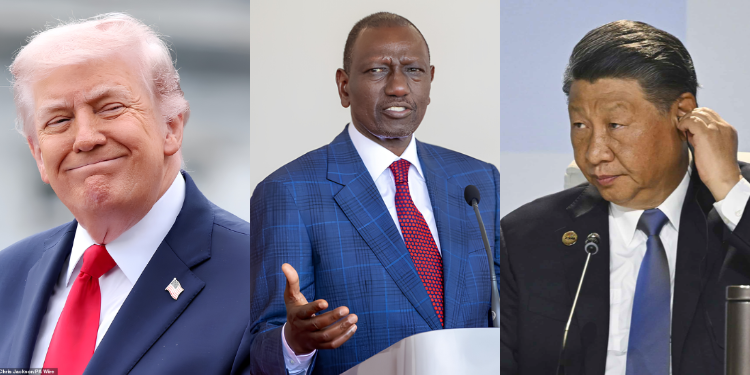
An American-led consortium has won the tender for the strategic Mrima Hill rare earths and niobium project in Kwale County, while a Chinese joint venture secured two other mineral projects as the government concluded a competitive bidding process for key deposits.Mining, Blue Economy and Maritime Affairs Cabinet Secretary Hassan Ali Joho announced the outcome of the tender process on November 19, saying the successful bidders emerged after a rigorous evaluation of their legal compliance, technical capability and financial strength.
Category: Economy&Finance
-

KNBS Reports Decline in Kenya’s Milk Consumption Despite Rising Production
Kenya's formal dairy sector recorded a decline in milk deliveries to processors in September 2026, raising concerns about the consistency of supply despite the country's growing milk production.
Data from the Kenya National Bureau of Statistics (KNBS) showed that milk intake by processors dropped to 74.8 million litres during the month, down from 79.1 million litres recorded in August.
The decline represented a reduction of approximately 4.3 million litres in deliveries within one month.
In its Leading Economic Indicators report, KNBS confirmed that milk intake in the formal sector had fallen between August and September, reflecting a slowdown in the volume of milk reaching processing facilities.
The figures also showed that cumulative milk intake between January and September 2026 declined by 2 per cent to 750.2 million litres compared to the corresponding period in 2025.
The drop suggests that processors received less milk during the first nine months of the year than they did over a similar period last year.
Monthly comparisons further indicated that formal-sector milk intake remained below the corresponding 2025 levels in February, May, June, July, August and September.
The trend points to continued pressure on milk deliveries, with the sector recording lower intake in several months despite the country's position as a major dairy producer.
The latest statistics come at a time when Kenya is seeking to strengthen its dairy industry and improve the availability of milk for consumers and processors.
President William Ruto recently said Kenya had overtaken other African countries to become the continent's largest milk producer, highlighting the growth recorded in the sector.
However, the latest KNBS figures show that higher national production does not necessarily translate into increased deliveries to formal processors.
The difference may reflect challenges in how milk moves through the supply chain, although the report did not identify specific reasons for the September decline.
For dairy processors, consistent deliveries are important in maintaining production levels and meeting demand for processed milk and other dairy products.
The latest figures therefore highlight the need to monitor the gap, between overall dairy production and the amount reaching formal processing facilities.
LINK: https://www.kenyans.co.ke/news/129482-kenya-records-drop-milk-intake-despite-growth-dairy-production-knbs?fbclid=IwZXh0bgNhZW0CMTEAcGRvZgRzcnRjBmFwcF9pZA80MDk5NjI2MjMwODU2MDkAAR_6bzGynv533IQYXJqmxS7NrIKIzzsK02i06_ycYW0fG5aadi-5RNCXCl0qkA_aem_Xi9N11oihqedc7IJxEuxFg
-

Safaricom responds after customer claims money disappeared during Ziidi Trader share purchase
Safaricom PLC has asked a customer who claimed money disappeared while attempting to purchase shares through its Ziidi Trader service to submit transaction details as the company investigates the complaint.
“You stole my money through your Ziidi traders. How can you try to buy shares and your money disappear?” the customer asked.
In response, Safaricom apologised and requested the customer’s personal and transaction details to enable it to follow up on the complaint.
The telecommunications company first asked Muroki to send their phone number, name, identification number and the M-Pesa message showing the attempted share purchase.
“Kindly inbox your number, name, ID and share the M-PESA message for the shares you attempted to buy,” Safaricom responded.
In a subsequent reply, the company again apologised and directed the customer to send their phone number, name, ID number and additional information about the transaction.
Safaricom also asked the customer to indicate when the incident occurred, saying the details would help its team investigate the matter.
“Please DM your phone number, name, ID number and share more details on the transaction and when it happened to enable us follow up on the issue,” the company stated.
The company did not publicly confirm whether the transaction had failed, whether the money had been deducted from the customer’s M-Pesa account or whether a refund was due.
It also did not indicate whether the complaint was an isolated incident or part of a wider problem affecting other Ziidi Trader users.
The customer’s allegation therefore remains unverified based on the public exchange, with Safaricom yet to provide a detailed explanation or disclose the outcome of its investigation.
-

Gov’t Names Companies Set to Mine Rare Earth Minerals, Copper in Kenya
MiningThe Ministry of Mining has named companies selected to undertake the development of strategic mineral deposits in Kwale, Samburu and Tharaka Nithi counties.The Ministry of Mining, Blue Economy and Maritime Affairs has named companies selected to undertake the development of strategic mineral deposits in Kwale, Samburu and Tharaka Nithi counties.
-

Joho unveils 3 firms selected to explore Kenya’s key mineral deposits
Mining Cabinet Secretary Hassan Joho has announced the award of three major mining tenders targeting niobium, rare earth elements, chromite and copper deposits in Kwale, Samburu and Tharaka Nithi counties.
The awards mark a major step in the government's plan to commercialise Kenya's mineral resources and attract international investors to develop deposits that have remained largely untapped.
In a statement, Joho said the Ministry of Mining had issued Notices of Intention to Award to the highest-scoring bidders following a competitive tendering process that began with the opening of bids on October 21, 2026.
The Mrima Hill Niobium, Rare Earth Elements and Other Minerals Project in Kwale County was awarded to Frontier Minerals Consortium, comprising Frontier Minerals LLC, Bunker Hill Mining Corp, ReElement Technologies and American Resources Corporation.
The Kang’ura Chromite Development Project in Samburu county and the Kamacabi Copper Development Project in Tharaka Nithi county were both awarded to a joint venture between Fangda Special Steel Technology Co. Ltd and Sinohydro Corporation.
Joho said the successful bidders were selected after undergoing a rigorous three-stage evaluation process designed to establish their technical capacity, financial strength and commitment to responsible mining.
The assessment covered legal compliance, tax obligations, geological expertise, mineral processing and beneficiation plans, local employment commitments, environmental protection and financial capacity.
The technical evaluation required bidders to attain a minimum pass mark of 80 per cent.
"Our commitment from the outset was to ensure that Kenya attracts only world-class, technically capable, and financially sound partners who share our vision for in-country value addition, environmental stewardship, and shared prosperity," Joho said.
The CS said the government had deliberately prioritised the identification of qualified investors before initiating formal community engagement processes to ensure residents understand the companies seeking to undertake mining activities in their areas.
He said host communities must be assured that investors have the technical experience and financial capacity to honour commitments on environmental safety, cultural heritage, employment and community development.
However, the tenders for the Lali Hills Manganese Project in Tana River county and the Kiritiri Coltan Project in Embu county did not attract responsive qualifying bids and will be handled separately in accordance with the law.
Joho said the successful bidders would not immediately begin prospecting, as they must first engage host communities, landowners, county governments and other stakeholders and obtain the requisite statutory consents.
"No prospecting operation can proceed without the social licence and formal consents of the people on the ground," he said.
The investors will also be required to submit applications for prospecting licences through the Ministry's Online Mining Cadastre portal, attach the necessary documentation and pay prescribed fees.
The applications will then be subjected to independent scrutiny by the Mineral Rights Board, which will make recommendations before the CS grants the respective licences.
Earlier this year, the government gazetted key mineral deposits, including niobium, rare earth elements, chromite, copper, manganese and coltan, paving the way for their commercial exploitation through competitive public tendering.
-
Standard Chartered Kenya posts 13% growth in profit before tax to Shs14.9B
19 November 2026 Nairobi, Kenya – Standard Chartered Bank Kenya Limited has today released its results for the period ended 30 September 2026. Birju Sanghrajka, Chief Executive Officer and Head of Coverage, said: “We maintained strong momentum in the first nine months of 2026, delivering 13 per cent year-on-year growth in profit before tax to Shs14.9 billion, supported by growth in noninterest income.Balance sheet remains strong, with net loans increasing by 16 per cent and deposits by 18 per cent compared to December 2025.
-

Nairobi–Thika Road: How much more will commuters pay under new toll plan?
Commuters travelling between Nairobi and Thika could face higher matatu fares under a proposed Ksh100 billion highway project that will introduce toll charges along the busy corridor.
The proposed tolling arrangement could increase operating costs for public service vehicle (PSV) operators, raising the possibility that some of the additional expenses could eventually be passed on to passengers through higher fares.
The National Treasury has listed the Nairobi–Thika–Juja–Kenol–Sagana–Marua highway among proposed Public-Private Partnership (PPP) projects expected to rely on private-sector financing.
According to the 2027 Budget Policy Statement, the project will operate under a user-pay model, meaning motorists will be required to pay toll charges to use the highway once the arrangement is implemented.
Current indicative fare estimates show that travelling from Nairobi CBD to Thika costs approximately Ksh100 during off-peak hours, with standard fares reaching Ksh150 and peak-hour fares going up to Ksh200.
For a commuter paying Ksh150 each way, the daily return journey costs Ksh300, translating to Ksh1,500 weekly for five working days.
Over 22 working days, the commuter spends approximately Ksh6,600 monthly on transport.
However, a potential fare adjustment could significantly increase the monthly expense.
A hypothetical 10 per cent increase would push the one-way fare from Ksh150 to Ksh165, raising the monthly transport bill to Ksh7,260.
A 20 per cent increase would push the fare to Ksh180, translating to Ksh7,920 monthly, while a 30 per cent adjustment would raise the one-way fare to Ksh195, taking the monthly bill to Ksh8,580.
This means commuters could spend between Ksh660 and Ksh1,980 more every month under the illustrative scenarios.
These figures are projections based on hypothetical fare adjustments and do not represent confirmed increases or announced toll charges.
The proposed tolling arrangement could introduce an additional operating expense for matatu operators using the highway.
The project is estimated to cost Ksh100 billion and is expected to operate under a 30-year contract, with the Government targeting financial close in the 2028/29 financial year.
The Treasury explains that under the proposed arrangement, “the private party bears the commercial and demand risks and there is no Government payment or contingent liability to Government.”
This means the private investor is expected to recover the investment through toll collections rather than relying on direct Government payments.
For PSV operators, the eventual impact will depend on the toll rates, charging points and whether public transport vehicles will be subjected to different charges from private motorists.
Despite the potential implications for commuters, the Treasury has not disclosed the proposed toll rates, specific charging points or the exact date when motorists will start paying.
The proposal also raises questions about whether matatu operators will absorb the additional costs or transfer some of the expense to passengers.
The Treasury says, “Public Private Partnerships (PPPs) remain an important mechanism for mobilizing private sector capital, expertise and innovation for the delivery of public infrastructure and services.”
The highway project also carries an estimated cumulative maximum contingent liability exposure of Ksh120 billion in FY 2028/29 and FY 2029/30. This represents projected fiscal risk exposure and is not the amount motorists will pay.
Other proposed toll-funded infrastructure projects include the Mombasa Northern Bypass and the Nairobi Southern Bypass.
The Treasury says PPP projects will undergo assessments to establish affordability, value for money and potential financial obligations arising from their contracts.
The proposed Nairobi–Thika highway tolling arrangement remains subject to the necessary approvals and completion of contractual agreements.
-

Can Kenya account for every civil servant on the payroll?
Every month, the Treasury releases billions of shillings to pay Kenya’s public servants. The most basic test of any employer is whether it knows who is receiving that money. On the evidence of its own audits, the Kenyan government does not.
The Public Service Commission (PSC) found in its 2024 compliance report that staff registers carried 17,000 more names than there were officers in post. Kenya Railways listed 3,287 employees; only 2,026 were at work. The Kenya Broadcasting Corporation had 231 ghost workers and State House 156 unposted staff. A separate forensic audit commissioned by the Ministry of Public Service has since flagged Sh6.2 billion in suspected payroll fraud: duplicate salaries, many employees sharing one bank account, altered records, and people listed as employed before they were born.
These are not clerical slips. Nobody is hired before birth by accident. As an accountant, I can say plainly that a payroll does not fill itself with fiction. Every false entry is keyed, approved and paid by someone with access to the system.
The counties tell the same story. Vihiga’s own human resource audit found ghost workers earning Sh32 million a month. Lamu probed 112 names that had drawn salaries for years. In Garissa, 321 names with no personnel files were still issued Unique Personal Numbers, the very control meant to keep ghosts out. The Controller of Budget has reported counties paying Sh2 billion in salaries outside the official payroll system in a single quarter.
Kenyans have heard this before. Every administration has promised to purge the payroll, and every fresh audit finds the same schemes under new names. Striking a few names off the list does not end a fraud that has run for years.
The present crackdown is the right instinct. In May, Public Service Cabinet Secretary Geoffrey Ruku directed all government institutions onto a single, tamper-proof human resource system. In July he handed the audit to the Directorate of Criminal Investigations (DCI), which is verifying the personal numbers of 1,054,425 national and county employees. The World Bank has made payroll cleanup a condition of budget support worth about Sh94 billion. Outside pressure of that kind often makes governments finish what they start.
But software will not save us. Systems are run by people, and the people who manage payrolls are often the ones who profit from them. CS Ruku has himself admitted that cartels have infiltrated the public service. The Union of Kenya Civil Servants goes further, alleging that the fraud begins at the PSC, where fictitious employees are approved. That is an allegation, not a finding, and the commission deserves the chance to answer it. It also deserves an independent inquiry rather than a denial.
Some will argue that the numbers are overstated. The 17,000 figure compares registers with officers found in post, and some flagged entries will prove to be poor record-keeping, staff on leave or transfers not yet captured. That is fair. But it is an argument for publishing more, not less. If most flagged names are innocent, the government loses nothing by showing the reconciliation. If they are not, the public is entitled to know.
Those who expose the fraud have paid for it. Reports describe whistleblowers facing demotion, transfer, threats and, in some documented cases, violence. A government serious about its payroll cannot leave them exposed.
The ask is specific. The DCI and the Ministry of Public Service should publish how many flagged entries have been confirmed as fraud, how much has been recovered and how much remains unaccounted for. The Director of Public Prosecutions should charge the officers who created, approved and protected ghost names; a ghost cannot be prosecuted, but the people who built it can. Parliament should give payroll whistleblowers real protection in law. And the Controller of Budget should approve no salary release for any ministry, agency or county still paying staff outside the central system.
Kenya will be able to say it accounts for every civil servant when each salary can be traced to a verified person, in a funded post, paid into that person’s own account, and an independent auditor can confirm it year after year. That day has not come. Until the people who built the ghost payroll are convicted, every new audit will end the same way: a bigger number, a fresh promise and public money paid to people who do not exist.
CPA Enock Nyanchoga Monari is Managing Partner, Burmon Global Consulting.
-

TikTok, ICC launch digital skills training for small businesses
TikTok and the International Chamber of Commerce (ICC) have launched a digital commerce training programme targeting small businesses in Kenya and across Sub-Saharan Africa.
The Digital Commerce Labs (DCL) programme was launched in Nairobi on Wednesday, bringing together hundreds of entrepreneurs, digital creators, business associations and industry representatives.
The initiative aims to equip thousands of small businesses with digital skills to help them grow, reach new customers and expand into new markets.
The programme will offer online and in-person training covering digital marketing, content creation, building an online presence and the use of artificial intelligence tools in e-commerce.
Speaking during the launch, TikTok Head of Global Institution Engagement Kushal Prakash said digital commerce was changing how businesses operate across Sub-Saharan Africa.
“Through our partnership with ICC, we are committed to making sure that the benefits of that transformation reach every small business owner in this region,” he said.
He noted that TikTok was helping businesses gain visibility and influence purchasing decisions through trends such as #TikTokMadeMeBuyIt.
Director of Business Development, Marketing and Trade at the Micro and Small Enterprises Authority (MSEA) Dr Caroline Kaua said micro, small and medium enterprises play an important role in Kenya's economy through job creation, supporting livelihoods and driving entrepreneurship.
She said businesses needed the right skills and tools to adapt to changing consumer behaviour as more people use digital platforms to discover and purchase products.
Kaua added that the programme would help entrepreneurs strengthen their online presence, reach new customers and explore new markets.
ICC Deputy Secretary General Julian Kassum said digital commerce could promote inclusive economic growth by creating opportunities for entrepreneurship, trade and job creation.
The programme will begin with self-paced online modules developed by local experts. Participants will learn how to build a digital presence, create effective content, use AI-driven e-commerce tools and prepare their businesses for domestic and international growth.
Virtual classrooms featuring live, trainer-led sessions will complement the online learning.
The launch also featured a discussion with three Kenyan entrepreneurs who have incorporated digital platforms into their businesses.
They included Cherie Kihato, founder of Savannah Space and a TikTok 2026 Global Discover List creator; Alix, founder of Mammacita in Pink; and Emmy Rono, Executive Director of Urembo Craft.
They shared their experiences using digital content to showcase products, communicate their brands and connect with potential customers.
The launch comes as social commerce continues to grow in Kenya.
A GSMA survey found that 49 per cent of Kenyan businesses sell online exclusively through social media, while another 13 per cent combine social platforms with websites or online marketplaces.
More than 40 per cent of internet users in Nigeria, Kenya and South Africa have also purchased products through social commerce platforms.
The figures highlight the growing role of digital platforms in business and the need for entrepreneurs to develop skills to turn online engagement into business growth.
-

Nairobi Thika Road: Commuters face new daily expense as govt plans highway tolls
Motorists using the busy Nairobi–Thika highway could soon face additional transport costs under a proposed Ksh100 billion infrastructure project that will introduce toll charges along the Nairobi–Thika–Juja–Kenol–Sagana–Marua corridor.
The National Treasury has listed the highway among proposed Public-Private Partnership (PPP) projects expected to rely on private-sector financing, with motorists required to pay toll charges to generate revenue for the investor.
According to the 2027 Budget Policy Statement, the project will operate under a user-pay model, meaning motorists will have to pay for using the highway once the tolling arrangement is implemented.
The Treasury explains that under this arrangement, “the private party bears the commercial and demand risks and there is no Government payment or contingent liability to Government.”
The proposed Ksh100 billion project is expected to operate under a 30-year contract, with the Government targeting financial close in the 2028/29 financial year.
For thousands of people who rely on the highway for their daily journeys to and from Nairobi, the proposal raises concerns about the possibility of an additional commuting expense.
Matatu operators, taxi drivers, private motorists and businesses transporting goods along the corridor could also be affected by the eventual tolling charges.
However, the Treasury has not disclosed the proposed toll rates, specific charging points or the exact date when motorists will start paying.
The proposal comes as the Government increasingly turns to private-sector financing to deliver major infrastructure projects.
The Treasury says, “Public Private Partnerships (PPPs) remain an important mechanism for mobilizing private sector capital, expertise and innovation for the delivery of public infrastructure and services.”
The highway project also carries an estimated cumulative maximum contingent liability exposure of Ksh120 billion in FY 2028/29 and FY 2029/30. This is a projected fiscal risk exposure and should not be confused with the amount motorists will pay or a confirmed Government payment.
Other proposed toll-funded infrastructure projects include the Mombasa Northern Bypass and the Nairobi Southern Bypass, which have a proposed arrangement covering operation, maintenance and tolling.
The planned charges are likely to raise questions about affordability, particularly among regular commuters who depend on the Nairobi–Thika corridor to access workplaces, schools and businesses.
The Treasury says PPP projects will undergo assessments to establish affordability, value for money and potential financial obligations arising from their contracts.
The proposed tolling arrangement remains subject to the necessary approvals and completion of contractual agreements.