Category: Economy&Finance

  • Driven Into a Lending Crisis If CBK Enforces These New Capital Rules Before the 2027 Polls — Details

    Driven Into a Lending Crisis If CBK Enforces These New Capital Rules Before the 2027 Polls — Details

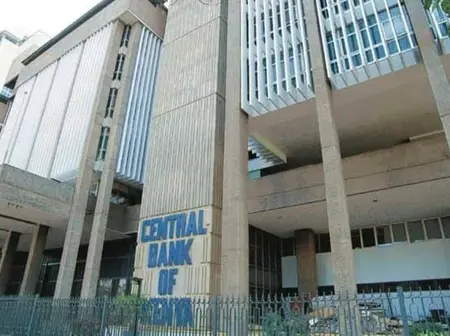
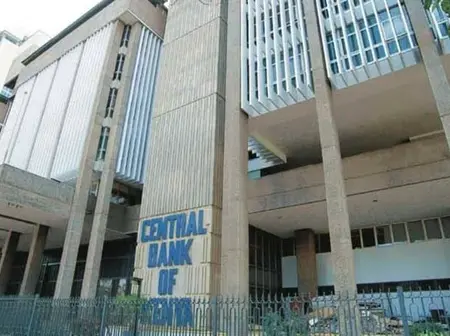
    Why Kenyan banks want new capital rules delayed until after 2027 polls

    Spearheaded by the Kenya Bankers Association (KBA), the lobby argues that a one-year pause is essential to cushion the economy against typical election-cycle slowdowns and allow deeper consultation on how the reforms affect credit growth, dividend payouts, and capital raising.

    Under the proposed framework targeting Domestic Systemically Important Banks (D-SIBs)—Kenya’s largest lenders—institutions would be required to hold additional Common Equity Tier 1 capital buffers ranging from 0.5 per cent to 2.5 per cent of their risk-weighted assets.

    Furthermore, the rules restrict dividend distributions for lenders whose core capital dips below 8.625 per cent of their loan book, compelling banks to retain more earnings to absorb potential losses.

    KBA Chief Executive Raimond Molenje cautioned that micro, small, and medium enterprises (MSMEs) alongside the agricultural sector face the highest risk of credit tightening if major lenders are forced to hold back capital during an election year.

    Private-sector credit growth recently rebounded to a multi-year high of 10.6 per cent in September 2026—up from a 2.9 per cent contraction in January—buoyed by easing lending rates and risk-based credit pricing.

    Bankers warn that introducing stringent capital surcharges right now could stall that hard-won lending momentum.

    The request unfolds alongside separate regulatory friction over Kenya’s statutory transition toward a Ksh10 billion minimum core capital floor by 2029, underscoring heightened sensitivity across the banking sector as regulators balance financial stability against election-year economic resilience.

    What are your thoughts about this articles? Share your reactions in the comment section and don't forget to share and follow for more updates.

    https://peopledaily.digital/business/why-kenyan-banks-want-new-capital-rules-delayed-until-after-2027-polls
  • Did Your SACCO Make Kenya’s Top 20 List? SASRA Releases Latest Rankings

    Did Your SACCO Make Kenya’s Top 20 List? SASRA Releases Latest Rankings

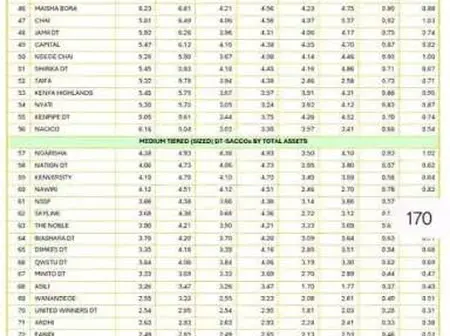
    Kenya's savings and credit cooperative societies (SACCOs) are facing increased attention following the release of a new report ranking the country's leading deposit-taking SACCOs.

    The Sacco Societies Regulatory Authority (SASRA) has published its latest annual supervision report, highlighting the financial performance of deposit-taking SACCOs across the country.

    The SACCO Supervision Annual Report 2025, released by @sasra_ke , provides  an overview of how regulated SACCOs rank by assets. 📈 Take a look and see  where your SACCO stands. #SASRA #SACCOs #Coopera

    The report ranks the institutions according to their total assets, providing a picture of the biggest players in Kenya's SACCO sector. It also shows the financial strength of different societies and the level of competition among them.

    According to the report, joining the top 20 list is not easy. SACCOs must have a substantial amount of assets to secure a position among the country's leading financial institutions.

    The rankings also reveal a very small difference between the total assets of the two biggest SACCOs. This shows how closely the leading institutions are competing for the top position in the sector.

    SACCOs play an important role in Kenya's economy by helping members save money, access loans and invest in different activities. They have become an important source of financial support for individuals, businesses and communities.

    The latest rankings provide members and potential investors with an opportunity to understand how their SACCOs compare with other institutions in the country.

    However, a high position in the rankings does not automatically mean that a SACCO is the best choice for every member. Customers should also consider factors such as service quality, loan terms, financial stability and management.

    Members are now keen to know whether their SACCO has secured a place among Kenya's 20 largest deposit-taking societies.

    Source:https://www.facebook.com/share/p/1QLQ1r9sQ8/

  • Is Your Money Inside the Ksh3.5 Billion Payout? Check What Happened

    Is Your Money Inside the Ksh3.5 Billion Payout? Check What Happened

    Govt clears Ksh3.5B of Ksh3.9B sugar arrears as PS Rono warns millers against fresh debts

    The payout marks a major step toward resolving longstanding financial obligations that have weighed heavily on households and workers across Kenya’s sugar-growing regions.

    Clearing the bulk of the verified Ksh3.9 billion liability provides much-needed liquidity to growers who depend on cane proceeds for school fees, farm inputs, and daily upkeep, as well as employees who endured prolonged salary delays during transitions in the sector.

    Alongside the disbursement, PS Rono issued a firm warning to millers not to incur new debts, underscoring that sector reforms and leasing arrangements are meant to place operations on a sustainable footing rather than recycle past liabilities.

    Officials have emphasised that timely payments to farmers and sound financial management by millers are vital to sustaining cane deliveries, boosting milling efficiency, and maintaining stability across state-owned and leased factories.

    With a portion of the Ksh3.9 billion balance still pending settlement, stakeholders across the sugar belt are looking for swift completion of the remaining payments alongside strict compliance with financial obligations.

    Timely settlement of remaining dues, strict debt discipline by millers, and transparent cane pricing remain essential to securing lasting recovery in Kenya’s sugar sector.

    What are your thoughts about this articles? Share your reactions in the comment section and don't forget to share and follow for more updates.

    https://peopledaily.digital/business/govt-clears-ksh3-5b-of-ksh3-9b-sugar-arrears-as-ps-rono-warns-millers-against-fresh-debts

  • KRA waives Ksh64.39B in penalties, interest and fines for close to a million taxpayers

    KRA waives Ksh64.39B in penalties, interest and fines for close to a million taxpayers

    KRA waives Ksh64.39B in penalties, interest and fines for close to a million taxpayers

    The Kenya Revenue Authority (KRA) has waived Ksh64.39 billion in penalties, interest and fines for 984,489 taxpayers under its ongoing tax amnesty programme, as the December 31 deadline approaches.

    In a media statement released on Monday, November 23, 2026, the tax authority said it had waived Ksh31.9 billion in interest, Ksh32.5 billion in penalties and Ksh11.5 million in fines as of Monday, November 16, 2026.

    “The Kenya Revenue Authority has waived Ksh 64.39 billion in penalties, interest and fines for 984,489 taxpayers under the ongoing Tax Amnesty Programme, enabling them to regularise their tax affairs,” the statement read.

    During the same period, taxpayers paid Ksh29.1 billion in outstanding principal tax, bringing the programme closer to its end-of-year deadline.

    “This milestone underscores the programme’s role in supporting taxpayers to address outstanding tax obligations and provides an opportunity for others to benefit before the 31st December 2026 deadline,” KRA said.

    The tax amnesty programme allows eligible taxpayers to receive a full waiver of qualifying penalties, interest and fines on tax debts accrued up to December 31, 2025.

    The relief was reintroduced under the Finance Act, 2026, which amended Section 37E of the Tax Procedures Act.

    However, the programme does not eliminate the principal tax owed. Taxpayers with outstanding principal tax must settle it in full by December 31, 2026, to qualify for the relief.

    Those unable to pay the entire amount at once can apply for a structured payment plan through the iTax platform, provided they clear the qualifying principal tax within the amnesty period.

    KRA said taxpayers do not need to submit separate applications to benefit from the programme, as the system automatically determines eligibility once the required conditions are met.

    Taxpayers who have already cleared their principal tax but still have outstanding qualifying penalties, interest or fines may also receive the waiver automatically.

    Those with unfiled returns can qualify by submitting the outstanding returns for eligible periods. Taxpayers with disputed liabilities may also benefit if their cases are resolved within the amnesty period and the agreed principal tax is fully paid before the deadline.

    The authority has urged taxpayers to check their iTax profiles or visit the nearest KRA office to confirm their eligibility and resolve outstanding obligations.

    The programme closes on December 31, 2026. Taxpayers who fail to meet the qualifying conditions by the deadline risk losing the relief on unpaid qualifying debts, with applicable penalties and interest remaining payable.

    KRA has made the programme guidelines available on its website and encouraged eligible taxpayers to complete the process before the deadline.

  • Beyond Agriculture: Exploring the Industries Driving Kenya’s Economic Growth and Development.

    Beyond Agriculture: Exploring the Industries Driving Kenya’s Economic Growth and Development.

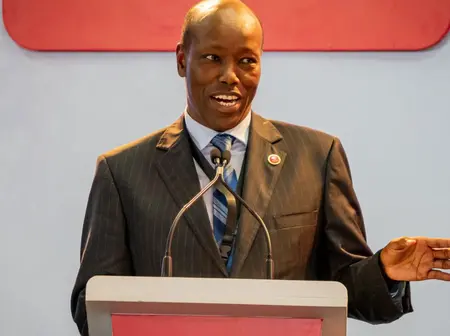
    Cabinet Secretary Lee Kinyanjui has reaffirmed Kenya’s standing as one of Africa’s largest and most diversified economies, underscoring the nation's vast potential for both domestic and international investors. Speaking during a high-level economic forum in Nairobi, the Cabinet Secretary emphasized that Kenya’s strategic geographic location, coupled with a robust regulatory framework and a youthful, tech-savvy workforce, continues to position the country as East Africa’s premier commercial and financial hub.

    ​Unlike many regional peers that rely heavily on a single commodity, Kenya boasts a multi-sectoral economic foundation. Key drivers include a thriving agricultural sector, a rapidly expanding manufacturing base, a globally recognized financial technology ecosystem, and a resilient tourism and hospitality industry. According to CS Kinyanjui, this deliberate diversification has enabled the country to weather global economic shocks while maintaining steady growth trajectories.

    ​"Our strength lies in the breadth of our economic base and the ingenuity of the Kenyan people," Kinyanjui noted during his address. "From green energy generation to digital innovation, Kenya is not merely adapting to global shifts; we are actively shaping the future of commerce on the continent."

    ​The Cabinet Secretary further pointed out ongoing government reforms aimed at streamlining business registration, enhancing infrastructure connectivity, and fostering public-private partnerships. These statutory measures are designed to lower the cost of doing business and unlock new opportunities in value addition and export-oriented manufacturing.

    ​As the nation continues to implement its long-term development blueprint, the Ministry remains focused on translating macroeconomic stability into tangible opportunities for ordinary citizens. CS Kinyanjui concluded by urging stakeholders to capitalize on Kenya’s stable investment climate, assuring them of the government’s unwavering commitment to policy predictability and sustainable, inclusive economic growth.

    https://www.facebook.com/share/p/19iQeN3g2d/

  • Inside the High-Stakes Push by Banks to Delay CBK’s Tough New Rules by a Full Year

    Inside the High-Stakes Push by Banks to Delay CBK’s Tough New Rules by a Full Year

    Why Kenyan banks want new capital rules delayed until after 2027 polls

    Highlighted in reports and industry commentary on Monday, November 23, 2026, the push by the Kenya Bankers Association (KBA) targets planned rules that would require designated domestic systemically important banks to hold additional Common Equity Tier 1 capital buffers of between 0.5 per cent and 2.5 per cent of risk-weighted assets.

    Lenders contend that more time is needed to assess how the requirements will affect credit growth, dividend payouts, and banks’ ability to raise fresh capital.

    The request comes at a delicate moment as private-sector credit gradually recovers and banks expand lending to small and medium-sized enterprises.

    Bankers argue that forcing higher capital retention during an election cycle could make lenders more cautious, raising borrowing costs or slowing loan approvals when businesses already face broader economic headwinds.

    The debate also overlaps with ongoing adjustments under the statutory minimum core capital schedule—which requires lenders to climb from Sh1 billion to Sh5 billion by December 31, 2026, and toward Sh10 billion by December 2029—even as the Central Bank of Kenya (CBK) and the National Treasury have differed over timelines and enforcement.

    While the CBK maintains that stronger capital buffers safeguard financial stability, lenders warn that abrupt rule changes risk dampening market momentum.

    Balanced consultation, clear transition timelines, and prudential safeguards remain essential to keeping banks resilient while supporting affordable credit in 2027.

    What are your thoughts about this articles? Share your reactions in the comment section and don't forget to share and follow for more updates.

    https://peopledaily.digital/business/why-kenyan-banks-want-new-capital-rules-delayed-until-after-2027-polls
  • Nzoia Sugar Farmers Set to Receive KSh 1.2 Billion Bonus Payment as Ruto Announces Major Relief

    Nzoia Sugar Farmers Set to Receive KSh 1.2 Billion Bonus Payment as Ruto Announces Major Relief

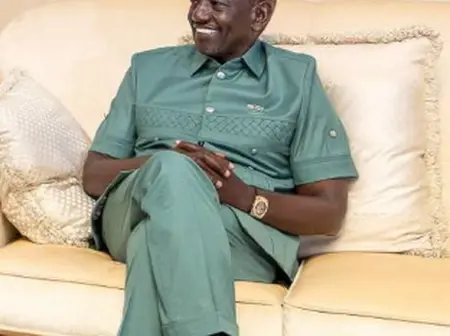
    Sugarcane farmers supplying Nzoia Sugar Company are expected to receive a major financial boost following the announcement of a KSh 1.2 billion bonus payment by President William Ruto.

    The announcement has brought hope to many farmers who have faced financial challenges while supplying sugarcane to the factory.

    Speaking during his visit to Bungoma County on November 19, 2026, President Ruto said the government was preparing to release the money to support farmers and improve their earnings.

    He explained that sugarcane farmers deserved to enjoy the same benefits as tea and coffee farmers, who receive bonuses from their agricultural produce.

    According to reports, about 13,949 farmers who supplied sugarcane to Nzoia Sugar Company between January and September 2026 qualify for the expected payment.

    The Kenya Sugar Board is expected to oversee the payment process and ensure that eligible farmers receive their money. The amount each farmer receives will depend on the quantity of sugarcane delivered to the factory during the stated period.

    The expected bonus comes at a time when the government is making efforts to revive the sugar industry and improve the lives of farmers in Western Kenya.

    For many years, sugarcane farmers have complained about delayed payments, high production costs and difficulties in managing their farms. Some have also struggled to pay school fees and meet other family needs because of low earnings.

    Nzoia Sugar Company resumed operations in January 2026, bringing renewed hope to farmers who depend on the factory for their income.

    The factory's operations are expected to create better opportunities for farmers and support economic activities in the surrounding communities.

    The government has continued to emphasise the importance of supporting local sugar factories to reduce challenges in the industry and improve sugar production.

    The KSh 1.2 billion bonus payment is therefore expected to provide financial relief to thousands of farmers.

    If released as announced, the money will help farmers meet their financial needs and encourage them to continue supplying sugarcane to Nzoia Sugar Company.

    source:https://www.facebook.com/share/v/198sapZqfM/

  • David Ndii Shares Archival Supermarket Price List In Heated Online Debate Over Cost Of Living

    David Ndii Shares Archival Supermarket Price List In Heated Online Debate Over Cost Of Living

    Ndii pulls out old supermarket price list after Kenyan asks what happened to prices of essential goods

    The exchange, which unfolded on the social media platform X on Monday, November 23, 2026, quickly gained widespread traction across Kenyan digital spaces and thrust the long-term trajectory of retail pricing, wage growth, and everyday affordability back into the centre of national economic discourse.

    By posting the archival retail advertisement, Ndii sought to contextualize contemporary shelf prices against historical benchmarks, prompting citizens, analysts, and commentators to weigh how nominal price shifts compare with changes in disposable income over decades.

    While supporters of the economist’s framing argued that long-run price movements reflect broader structural transformations and global monetary cycles, critics contended that historical comparisons do little to ease immediate cash-flow pressures confronting ordinary families at the supermarket till.

    The online exchange comes against the backdrop of sustained household budget strain across Kenya, following Ndii's recent remarks attributing retail milk stockouts to rising demand from affordable housing workers.

    According to the latest Kenya National Bureau of Statistics (KNBS) consumer price data, inflation has climbed steadily throughout the year—driven primarily by rising expenses in food, transport, and household energy, which together account for over 57 per cent of typical household expenditure.

    With staples such as fresh milk, wheat flour, beef, cooking oil, and petrol registering noticeable price increases, the debate highlights the widening gap between official macroeconomic stabilization narratives and the daily reality of stretching stagnant earnings to cover basic needs.

    https://peopledaily.digital/news/ndii-pulls-out-old-supermarket-price-list-after-kenyan-asks-what-happened-to-prices-of-essential-goods

  • Matatu SACCOs and Mobility Firms Push Electric Buses as Kenya’s Transit Landscape Evolves

    Matatu SACCOs and Mobility Firms Push Electric Buses as Kenya’s Transit Landscape Evolves

    How 102 Chinese-technology electric buses are transforming Kenya’s matatu industry and public transport

    For decades, matatus and commuter buses have kept millions of Kenyans moving daily while relying heavily on imported petroleum and contributing to urban air pollution and noise.

    The arrival and daily operation of these electric buses mark a practical test of whether zero-tailpipe-emission vehicles can meet the demanding schedules, passenger loads, and profit margins of Kenyan public transport.

    Behind this transition is a mix of Chinese original equipment manufacturer technology, local assembly and financing models, and growing participation by matatu savings and credit cooperative societies.

    Mobility providers and financing partners have introduced leasing and pay-as-you-drive structures aimed at lowering the steep upfront cost of electric buses compared with conventional diesel units, while bundling maintenance, insurance, and access to fast-charging depots.

    For SACCOs and fleet owners weighing daily operating costs against fluctuating fuel prices, predictable per-kilometre expenses and lower routine engine wear offer an appealing alternative on busy urban corridors.

    Passengers, drivers, and conductors are also experiencing tangible day-to-day differences on routes where electric buses operate.

    Quieter cabins, smoother acceleration, and the absence of diesel exhaust make commutes more pleasant in congested city traffic, while Kenya’s high share of renewable electricity generation strengthens the environmental case for moving commuters onto electric power.

    At the same time, operators must carefully plan charging windows, daily mileage limits, and route coverage so buses stay on schedule during peak morning and evening rushes.

    What are your thoughts about this articles? Share your reactions in the comment section and don't forget to share and follow for more updates.

    https://peopledaily.digital/business/how-102-chinese-technology-electric-buses-are-transforming-kenyas-matatu-industry-and-public-transport

  • Why the Stalled Exit From the Botched Adani Power Deal Has Treasury Panicking

    Why the Stalled Exit From the Botched Adani Power Deal Has Treasury Panicking

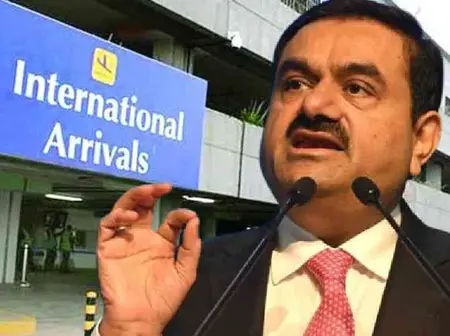
    How stalled exit from cancelled Adani deal exposes Kenya to high claims

    According to disclosures highlighted in court and public finance reports on Monday, November 23, 2026, the exposure stems from the 30-year public-private partnership (PPP) agreements signed between the Kenya Electricity Transmission Company (KETRACO) and Adani Energy Solutions.

    Unlike the proposed Jomo Kenyatta International Airport concession—which had not reached final execution—the power transmission contracts had already achieved commercial close before Ruto announced their termination in November 2024 following integrity concerns and U.S. legal proceedings involving Adani executives.

    However, High Court proceedings in mid-2026 revealed that the government had not filed formal documentation proving that the KETRACO–Adani agreements were legally terminated in line with contractual procedures.

    Legal and infrastructure analysts explain that a presidential directive, while politically decisive, does not automatically extinguish binding commercial obligations unless accompanied by formal termination notices, mutual settlements, or verified grounds for default.

    Because PPP frameworks typically protect private developers against unilateral state cancellation once commercial close is reached, leaving the contracts in legal limbo strengthens the investor’s hand to demand compensation for incurred development costs, financing commitments, and expected returns.

    Remarkably, the projected Sh44 billion termination bill surpasses the original Sh41 billion estimated construction value of the two transmission projects themselves.

    While legal experts note that Kenya could contest claims by citing integrity and public-interest grounds, protracted international arbitration carries heavy financial and sovereign risk.

    What are your thoughts about this articles? Share your reactions in the comment section and don't forget to share and follow for more updates.

    https://www.standardmedia.co.ke/business/business/article/2001562819/how-stalled-exit-from-cancelled-adani-deal-exposes-kenya-to-high-claims