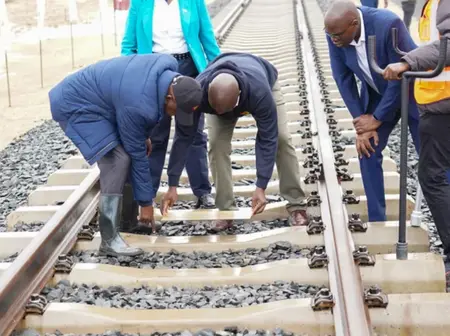
The affected land is located in Nakuru, Narok, Bomet and Kisumu counties. Members of the public have been asked to inspect the plans at NLC offices in Nairobi and at county coordinator offices in Narok, Kericho and Bomet during working hours.
NLC also directed anyone with an interest in the listed land to attend the inquiry before the official deadline. They must bring a written compensation claim, a national identity card, a Kenya Revenue Authority PIN, land ownership documents and bank account details.
The latest notice follows an earlier announcement made on October 9, which listed 59 parcels in North Mugirango Constituency, Nyamira County. The November notice has excluded those parcels from the acquisition list. Kenya Railways had set aside KSh25 billion for land compensation.
Construction of the railway is already underway in Narok and other sections. Kenya Railways Managing Director Philip Mainga said most of the project is expected to be completed by June 2027, with the remaining work finished by 2028. The railway is expected to transport up to 22 million tonnes of cargo annually, reduce pressure on roads, and improve the movement of goods to and from Mombasa.
Link source:https://www.facebook.com/share/p/1FDj5xkaR1/
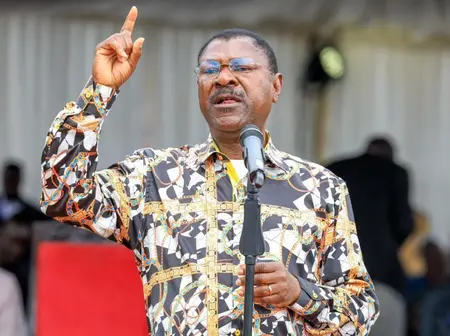
National Assembly Speaker Moses Wetang’ula has warned against proposals to convert land belonging to Nzoia Sugar Company into rice fields, insisting that the land must remain dedicated to sugar production.
Speaking on Monday, November 23, 2026, during the Nzoia Sugar Company bonus payment event, Wetang’ula dismissed reports that the company’s land could be used for rice farming, arguing that Kenya needs to strengthen domestic sugar production.
“We want Kenya to be self-sufficient in sugar production. Tusiwasikize wale manabii wa uongo,” Wetang’ula said, urging residents to ignore what he described as misleading claims.
He expressed disbelief at reports that a retired chief had suggested on radio that Nzoia’s land should be used to grow rice.
“I have heard someone who was a retired chief going on radio saying that the Nzoia farm now wants to grow rice. What madness!” he said.
The Speaker argued that Nzoia’s purpose was defined by legislation passed by Parliament, which he said established the company’s role and the use of its land.
He cited Navakholo MP Emmanuel Wangwe and the area senator as among those involved in the legislation, insisting that the land was legally designated for sugar production.
“Hii si kiwanja ya mpunga. Tuko na mpunga kule Budalangi, Ahero, Mwea, na mahali pengine,” he said, arguing that rice farming already takes place in established production areas, including Budalangi, Ahero and Mwea.
His remarks come amid renewed attention on the future of the sugar industry and the government’s efforts to improve returns for cane farmers.
President William Ruto has announced a Ksh1.2 billion bonus for sugarcane farmers, including those supplying Nzoia Sugar Company, with disbursement expected to begin in the week following his November 18 announcement.
Ruto said the payment was intended to extend bonus arrangements enjoyed by tea and coffee farmers to sugarcane growers.
According to information from the Kenya Sugar Board cited in earlier reporting, 13,949 farmers who delivered cane to Nzoia between January and September 2026 qualified for the bonus, although individual payments had yet to be communicated.
The planned payout comes as the government highlights efforts to address longstanding challenges in the sugar sector, including delayed payments to farmers and irregular salaries for factory workers.
Ruto has said farmers who previously waited up to seven months for payment after delivering cane were now receiving their money within a week. He has also cited a reduction in fertiliser prices from Ksh7,000 to Ksh2,000 per 50-kilogramme bag.
Wetang’ula’s remarks add to the debate over how Nzoia’s land should be used as the government seeks to improve sugar production and farmers’ earnings.
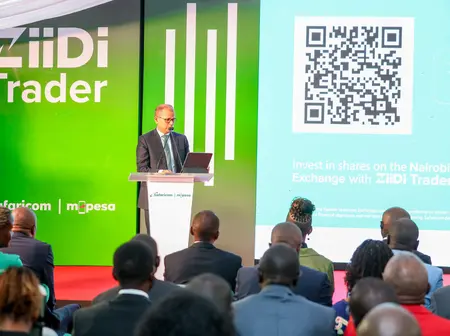
Ziidi Trader accounted for 54.21% of equity transactions recorded by the Nairobi Securities Exchange (NSE) between its launch in March and October 31, giving Safaricom’s mobile share-trading platform a substantial role in the market’s day-to-day activity.
The platform processed 1,318,851 transactions out of 2,432,819 equity deals recorded by the exchange during the period. Yet only 176,477 of its 1.1 million registered users had bought at least one share, leaving roughly 84% of those who signed up without a recorded purchase.
The figures show how mobile distribution has become an important route into the stock market, even as a relatively small proportion of Ziidi’s registered audience has progressed to buying securities. Its contribution to transaction volumes is significant, but the number of people who have actually invested remains a separate measure of the platform’s reach.
The figures also come as the NSE handles a growing volume of large institutional transactions. Recent share transfers involving Safaricom, NCBA Group and Kenya Pipeline Company (KPC) have generated substantial commissions for investment banks and stockbrokers, adding another dimension to the business being conducted through the exchange.
Ziidi’s 1.32 million transactions included 866,405 purchases and 452,416 sales, according to the latest figures. Its average ticket size stood at KSh3,349.65 on October 30, down from KSh4,818 in August.
The platform’s activity is spread across ordinary exchange trading and public share offers. During the KPC initial public offering in March 2026, Ziidi facilitated approximately 36,000 of the 73,000 retail orders. It also received 12,426 applications in the Quickmart IPO, covering 22.73 million shares valued at KSh170.54 million.
Renaissance Capital has also used the platform to market global depositary receipts representing shares in Dangote Refinery.
These transactions have demonstrated Ziidi’s ability to distribute investment opportunities to M-Pesa customers. The platform is jointly offered by Safaricom, the NSE and Kestrel Capital, allowing users to buy and sell listed shares through their phones without opening a conventional brokerage account. Existing M-Pesa customer identification details are used for onboarding, while Kestrel manages the omnibus account through which the shares are held.
The number of people signing up for Ziidi has increased substantially since its launch, but the proportion making a first share purchase has remained broadly unchanged.
Earlier figures reported by TechTrendsKE put registrations at approximately 511,000, with 84,000 active buyers. The latest disclosure puts registrations at 1.1 million and active buyers at 176,477. Both populations have more than doubled, while the conversion rate has stayed close to 16%.
The gap points to a challenge beyond attracting customers to a digital trading service. A registered user still needs to select a listed company, assess the investment and decide how much money to commit.
Market participants have identified limited investor awareness and uncertainty over which shares to buy as barriers to wider participation. Eric Ruenji, founder and chairman of Theo Capital Holdings, has said that many prospective investors are interested in joining the platform but do not know what to purchase.
He has also cautioned against allowing Ziidi to become associated only with IPO participation, given the need to sustain activity in the secondary market.
The NSE is preparing to list the Wall Street Africa Banking Index exchange-traded fund, which is expected to provide exposure to 12 banking stocks through a single investment product. The fund could offer an alternative to investors who are unsure which individual bank shares to select, although its listing alone does not establish whether more registered Ziidi users will begin trading.
The exchange is targeting nine million active retail investors by the end of 2029. Ziidi’s ability to bring more M-Pesa customers into the market will be relevant to that ambition, but the current figures show that registrations and active participation are still moving at different rates.
The retail activity recorded through Ziidi is taking place alongside large transactions involving institutional investors, companies and the government. Three major share deals involving Safaricom, NCBA and KPC were valued at a combined KSh356.5 billion, forming the bulk of the KSh367 billion in block trades cited in recent market reporting.
The largest was the government’s transfer of a 15% stake in Safaricom to South Africa’s Vodacom for KSh204 billion on June 30. SBG Securities represented Vodacom, while KCB Investment Bank acted for the Treasury. At a reported commission rate of about 1%, each intermediary stood to earn an estimated KSh2 billion.
Nedbank’s acquisition of a 66% stake in NCBA for KSh110 billion was concluded on November 3. Dyer & Blair Investment Bank handled the transaction for Nedbank, while NCBA Investment Bank represented most of the sellers. Reported commission rates of between 1% and 1.1% could translate into at least KSh1 billion for each side.
On October 21, Nigerian businessman Aliko Dangote acquired a 24.76% stake in KPC for KSh42.5 billion from a group of state-linked shareholders. Rock Investment Bank represented Dangote, while KCB Investment Bank acted for the sellers. At a reported rate of approximately 1%, each side stood to earn about KSh425 million.
The fees are estimates based on reported commission rates rather than confirmed final payments. Together, the transactions illustrate the scale of institutional business being handled by the exchange’s intermediaries. They are separate from Ziidi’s reported transaction count and should not be treated as activity generated by the mobile platform.
The NSE introduced its block trading board in 2023 for transactions exceeding KSh3 billion and representing at least 5% of an issuer’s total issued shares. The facility provides an exchange channel for significant ownership changes, making these transactions visible to the investing public.
The increase in large transactions has coincided with a sharp improvement in the financial performance of Kenya’s stockbrokers and investment banks.
The industry reported combined revenue of KSh9.88 billion in the first half of 2026, up from KSh3.7 billion in the corresponding period a year earlier. Net profit rose to KSh3.59 billion from KSh1.15 billion.
Brokerage commissions more than doubled to KSh2.8 billion from KSh1.6 billion, while advisory fees increased to KSh2.54 billion from KSh292,031. These earnings reflect activity across the wider industry, including trading, corporate transactions and advisory mandates. They cannot be attributed to Ziidi or the three block trades alone.
Faida Investment Bank recorded revenue of KSh2.69 billion, while Standard Investment Bank reported KSh2.07 billion. The two firms accounted for nearly half of the industry’s reported revenue. Fund management has also become an important source of income for several intermediaries.
The figures mark a recovery from the first half of 2023, when the industry recorded revenue of KSh2 billion and net profit of KSh365 million following a prolonged period of weak market activity.
Safaricom’s HY27 results provide further context on the growth of its investment and financial-services operations, but the figures do not offer a separate performance breakdown for Ziidi Trader.
For the six months ended September 30, 2026, the company reported 3.4 million active wealth-management customers and total wealth-management assets under management of KSh25.56 billion. It separately reported Ziidi assets under management of KSh23.36 billion, up 82.9%.
Safaricom also recorded KSh7.12 billion in financial-services revenue, an increase of 55.3%. These results cover a broader business that includes savings, lending and insurance. The 3.4 million wealth-management customers should not be confused with Ziidi Trader registrations, while the KSh23.36 billion in Ziidi assets should not be presented as assets held specifically through the share-trading product.
The results show the scale of Safaricom’s investment business, while the separate Ziidi Trader figures reveal how many registered customers have entered the equity market. For the NSE, the next measure of progress will be whether the expanding mobile audience translates into a larger number of people buying and selling listed securities.
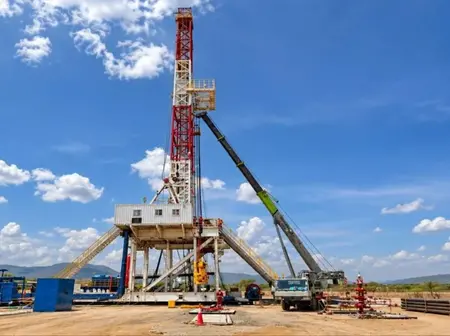
Kenya has started drilling crude oil in Turkana County’s South Lokichar Basin, 14 years after the discovery of oil in the area. The move puts the country on course to become an oil producer.Energy and Petroleum Cabinet Secretary Opiyo Wandayi presided over the spudding ceremony at the Amosing 1 and 2 oilfields on Friday, November 20, 2026.
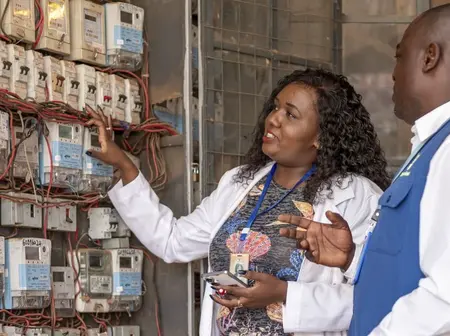
In a notice published in the Kenya Gazette on Friday, November 20, 2026, the regulator outlined three additional charges that will apply to electricity consumption during the November billing period.
The adjustments bring the extra cost to approximately Ksh4.56 for every unit of electricity consumed, adding pressure on households and businesses already dealing with rising living expenses.
The new charges include a Fuel Energy Cost Charge of Ksh3.54 per kilowatt-hour (kWh), a Foreign Exchange Fluctuation Adjustment of Ksh1.0031 per kWh and a Water Resource Management Authority (WRMA) levy of Ksh0.013606 per kWh.
Combined, the three components amount to Ksh4.5567 per unit of electricity.
The fuel energy cost component is intended to recover expenses associated with electricity generation using fuel-powered plants, particularly thermal facilities that depend on diesel.
EPRA considers the different sources of electricity supplied to the national grid, including thermal, geothermal and diesel-generated power, alongside electricity imports when determining the applicable adjustment.
The regulator also introduced a foreign exchange adjustment to account for currency-related costs and gains affecting companies operating in the electricity sector.
These include Kenya Power, Kenya Electricity Generating Company (KenGen) and independent power producers.
According to EPRA's November announcement, the three categories of electricity sector players recorded combined foreign exchange gains of approximately Ksh1.16 billion in October 2026.
Another component is the WRMA levy, which applies to electricity acquired from qualifying hydropower stations with installed generation capacity of at least one megawatt.
EPRA reported that 314.19 million units were purchased from eligible hydropower generators in October, providing the basis for calculating the November charge.
The latest adjustment comes after electricity consumers experienced another increase during the October billing period, when additional charges amounted to approximately Ksh4.10 per unit.
The trend has continued over recent months, with adjustments of Ksh4.16 and Ksh4.70 per unit reported in September and August respectively.
The repeated increases have raised concerns among consumers over the cost of electricity and its impact on household budgets and business operating expenses.
With the November adjustments now in effect for the applicable meter readings, consumers are expected to encounter the additional charges in their electricity bills and token purchases.
The actual amount payable will depend on electricity consumption and other applicable components of the prevailing tariff.
Trade Cabinet Secretary Lee Kinyanjui is pitching Kenya as a stable, diversified economy and arguing that growth in the region has to be shared, as the country courts investors and widens its export markets.
The message echoes themes he has repeated through the year.
In July, he urged exporters to see Africa as a growth frontier, with the EAC, COMESA and the wider continent offering substantial and largely untapped opportunities, according to The Star.
In October, he told businesses at KCB's PowerTalk forum to boost local production and expand into regional markets to create jobs and cut reliance on imports.
Predictability has been his other theme.
After the US Senate approved extending AGOA to December 2028, he said the move would give manufacturers certainty to plan production.
He noted that apparel exports under AGOA reached KSh 60.6 billion in 2024 and support more than 66,000 direct jobs, according to The Standard.
The EU is another pillar. In July, he unveiled a 10-year strategy to make use of duty-free, quota-free access to the 27-member EU market under the Kenya-EU economic partnership agreement, which took effect on July 1, 2024. The EU accounts for about 21 per cent of Kenya's annual exports, according to The Star.
Continental ties are also in focus. South Africa lifted duties on Kenyan tea and coffee after President William Ruto's state visit, a step officials described as boosting intra-African trade, according to The Star.
Challenges remain. In July, he acknowledged a widening gap between exports and imports despite economic growth, with the 2026 Economic Survey showing exports rising just 0.6 per cent to KSh 1.119 trillion.
He has also conceded Kenya is not yet where it wants to be, while arguing that it remains the best-ranked in the region once investors weigh the full picture.
In January, he told state corporations under his ministry that prosperity demands coordinated, unified action, adding that no engine moves alone.
Whether the pitch translates into deals and a narrower trade deficit will be the test.
In a statement issued on Monday, November 23, 2026, the authority disclosed that as of November 16, the waivers comprised Ksh32.5 billion in penalties, Ksh31.9 billion in interest, and Ksh11.5 million in fines.
Enacted under the Finance Act, 2026, the amnesty covers tax liabilities administered under the Tax Procedures Act for periods ending on or before December 31, 2025.
Taxpayers with no principal tax balances automatically qualify for a full waiver of historical penalties and interest, while those carrying unpaid principal arrears for pre-2026 periods must settle the principal in full by December 31, 2026, to unlock relief.
Liabilities under objection, Alternative Dispute Resolution, or court proceedings also qualify provided disputes are concluded and agreed principal amounts paid before year-end.
KRA emphasized that the process is fully automated on the iTax platform, meaning eligible taxpayers do not need to lodge separate manual applications once qualifying conditions are satisfied.
However, penalties and interest accruing from January 1, 2026 onward—as well as amounts already settled prior to the programme’s rollout—are excluded.
With the December 31, 2026 deadline fast approaching, KRA has urged individuals and businesses to verify their iTax ledgers or visit nearby service centres to regularize their compliance status before standard enforcement resumes.
What are your thoughts about this articles? Share your reactions in the comment section and don't forget to share and follow for more updates.
The Sacco Societies Regulatory Authority (SASRA), in its 2025 Sacco Supervision Annual Report, has revealed the latest ranking of the country's leading deposit-taking SACCOs based on their total assets.
The report shows that Mwalimu National DT remained Kenya's biggest SACCO, with its assets rising from KSh 68.89 billion in 2024 to KSh 76.31 billion in 2025.
However, Stima DT came remarkably close to taking the lead after recording significant growth during the same period.
Its total assets increased from KSh 66.51 billion to KSh 75.27 billion, leaving a difference of approximately KSh 1.04 billion between the two leading institutions.
Interestingly, Stima DT had a slightly larger loan portfolio, valued at KSh 57.49 billion, compared to Mwalimu National's KSh 56.98 billion.
Kenya National Police DT secured third position with assets worth KSh 66.40 billion, while Harambee DT followed in fourth place with KSh 41.29 billion.
Tower DT completed the top five with KSh 34.56 billion in total assets.
Kenya's 20 largest SACCOs by total assets
The rankings revealed considerable differences in financial strength among the country's leading deposit-taking SACCOs.
Unaitas DT occupied sixth position with assets worth KSh 29.60 billion, followed by Imarisha DT, which recorded KSh 28.14 billion.
Afya DT ranked eighth with KSh 21.95 billion, down from KSh 22.79 billion in the previous year. It was the only SACCO among the top 10 whose assets declined.
United Nations DT secured ninth position with KSh 19.67 billion, while Hazina DT completed the top 10 with KSh 18.71 billion.
The remaining institutions were also closely ranked, with several SACCOs recording assets between KSh 14 billion and KSh 18 billion.
Mentor DT took 11th position with KSh 18.47 billion, narrowly ahead of Gusii Mwalimu DT, which had KSh 18.40 billion.
Transnation DT followed in 13th position with KSh 17.95 billion, while Winas DT occupied 14th place with KSh 16.90 billion.
Apstar DT came 15th with KSh 16.42 billion, followed by Invest and Grow DT at KSh 16.18 billion.
Imarika DT secured 17th position with KSh 15.74 billion, while Bandari DT ranked 18th with KSh 15.07 billion.
Qona DT occupied 19th position with KSh 14.80 billion, while Boresha DT completed the top 20 with KSh 14.70 billion.
The rankings indicate that a deposit-taking SACCO needed assets of at least KSh 14.70 billion to secure a place among the country's 20 largest institutions in 2025.
What the rankings reveal about Kenya's SACCO sector
The figures highlight the growing financial strength of Kenya's leading cooperative institutions and the increasingly competitive nature of the sector.
Mwalimu National maintained its overall lead, but Stima DT's rapid expansion brought the two institutions remarkably close.
The rankings also demonstrate that total assets alone do not tell the entire story of a SACCO's financial activities. Stima DT's larger loan portfolio, for instance, shows a difference in lending activity despite its second-place overall ranking.
For Kenyans considering where to save or invest through a SACCO, the figures provide a useful starting point for understanding the size of major institutions.
Prospective members should also examine financial performance, liquidity, governance, dividend history, membership requirements and regulatory compliance before committing their money.
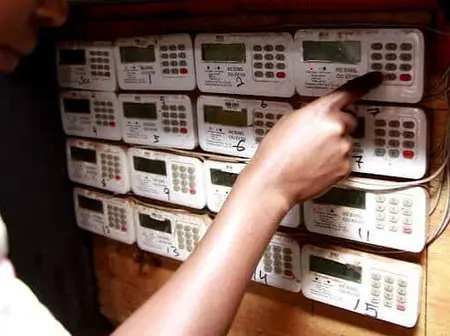
Electricity consumers in Kenya could face changes in their November power bills following adjustments announced by the Energy and Petroleum Regulatory Authority (EPRA).
The regulator oversees electricity pricing and regularly reviews additional charges that Kenya Power includes in customers' monthly bills. These adjustments are meant to cover changes in the cost of generating and supplying electricity.
The three key areas include the Fuel Energy Cost Charge, Foreign Exchange Fluctuation Adjustment and Water Resource Management Authority (WRMA) levy.
The Fuel Energy Cost Charge covers expenses incurred when using fuel to generate electricity in thermal power stations. The amount can change depending on fuel prices and the cost of electricity generation.
The second adjustment relates to foreign exchange fluctuations. It helps electricity suppliers recover costs arising from changes in the value of the Kenyan shilling against foreign currencies. Some electricity supply agreements and loans are paid for in foreign currencies.
The third adjustment is the WRMA levy, which supports water resource management. It is linked to electricity generated from qualifying hydropower stations.
In October, EPRA announced a fuel energy charge of KSh 3.22 per kilowatt-hour, a foreign exchange adjustment of KSh 0.87 and a water management levy of approximately KSh 0.0134 per unit. Together, the three charges amounted to about KSh 4.10 per unit for the applicable meter readings.
The impact on individual households depends on the number of electricity units consumed and the applicable charges.
Consumers are encouraged to monitor their electricity usage and check their Kenya Power statements to understand the different charges included in their bills.
The adjustments are separate from the standard electricity tariff, taxes and other applicable costs.
Speaking on Monday, November 23, 2026, during a sugarcane bonus disbursement event at Nzoia Sugar Factory in Webuye West, Bungoma County, the Head of State noted that the once-written-off miller is now paying workers and remitting taxes.
Ruto emphasized that the government's ongoing reforms are restoring financial stability across the entire Western Kenya sugar belt after years of economic decline.
"A company that was once written off in Nzoia and was unable to pay taxes is now paying its workers and remitting taxes to the government. We will also make additional investments to ensure the company's long-term stability," Ruto said.
For over a decade, major factories in the region—including Mumias Sugar Company in Kakamega and Nzoia Sugar Company in Bungoma—suffered from crippling debts, aging machinery, and delayed payments that pushed thousands of families into poverty.
Many residents lost hope as cane rotted in the fields while other state-owned millers in the neighboring Nyanza sugar belt, such as Chemelil, Muhoroni, and Sony Sugar, also teetered on the brink of total collapse.
However, the current administration changed course by writing off KSh117 billion in historical sector debts, enacting the Sugar Act 2024, and adopting a private leasing model to rescue the struggling factories.
Today, growers supplying both Mumias and Nzoia receive their cane payments within seven days, alongside inaugural annual bonus payouts that have injected hundreds of millions of shillings directly into local households.
Workers who previously went months without salaries are also enjoying steady monthly pay, reviving small businesses across Bungoma, Kakamega, Busia, and Vihiga counties.
Because sugarcane farming remains the primary economic lifeline of the Luhya community, political observers note that reviving both Mumias and Nzoia could significantly strengthen Ruto's voter appeal in Western Kenya ahead of the 2027 general election.