Category: Economy&Finance

  • Good News As KCB Announces Top Job Vacancies for Kenyans With Degrees

    Good News As KCB Announces Top Job Vacancies for Kenyans With Degrees

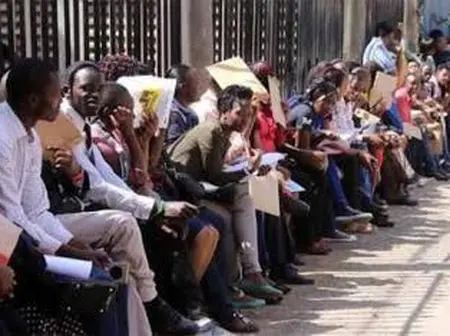
    KCB Group has announced five full-time job vacancies in Kenya, opening up opportunities, for experienced professionals seeking positions in the banking sector.

    The available roles cut across the lender's investment banking, treasury and bancassurance divisions. The positions target candidates with relevant academic qualifications, professional certifications and several years of experience in their respective fields.

    According to the recruitment information, all five vacancies are based in Kenya and require applicants to hold a bachelor's degree from a university recognised by the Commission for University Education (CUE).

    Candidates are also expected to have between five and seven years of relevant work experience, depending on the position. The requirements suggest the bank is looking for professionals with a strong understanding of the financial services industry and the ability to handle specialised responsibilities.

    The investment banking and treasury roles are expected to attract applicants with experience in financial markets, corporate finance and banking operations. The positions offer an opportunity for qualified professionals to take up responsibilities in areas that support the bank's business and financial activities.

    The bancassurance vacancies, meanwhile, are aimed at candidates familiar with the relationship between banking and insurance services. Professionals in this area help connect customers with insurance products through banking channels.

    KCB has set different application deadlines for the five positions, with the closing dates falling between Tuesday, November 24, and Friday, November 27, 2026.

    Interested candidates have been advised to review the specific job descriptions and confirm that they meet the academic, professional and experience requirements before submitting their applications.

    Applications are being received through the KCB Group careers portal, where applicants can access details of the available positions and the qualifications required for each role.

    The bank has encouraged qualified professionals to submit their applications before the respective deadlines. Applicants should also ensure that the information provided in their applications is accurate and that all required documents are included.

    The recruitment exercise provides opportunities for experienced Kenyans seeking to advance their careers, in investment banking, treasury management and bancassurance.

    LINK: https://www.tuko.co.ke/business-economy/647596-kcb-posts-top-job-vacancies-kenyans-degrees/?fbclid=IwZXh0bgNhZW0CMTEAcGRvZgRzcnRjBmFwcF9pZA80MDk5NjI2MjMwODU2MDkAAR8_BUcWhNx4H6-PHZXNxpbz60Lj9h_yDoxu4DsahN5n_mW6eGisDKUMf4lJcQ_aem_4MrtHjNuIXziE1dTbcBaaQ
  • KRA Waives Sh64.39 Billion in Tax Penalties and Interest Under Amnesty Programme

    KRA Waives Sh64.39 Billion in Tax Penalties and Interest Under Amnesty Programme

    thumbnail

    The Kenya Revenue Authority (KRA) has waived Sh64.39 billion in penalties, interest and fines under its ongoing Tax Amnesty Programme, offering relief to nearly one million taxpayers.The authority said 984,489 taxpayers had benefited from the programme, which allows eligible individuals and businesses to clear outstanding tax obligations without paying accumulated penalties, interest and fines.

  • Kenya Faces Estimated Sh44 Billion Termination Payment on Adani Power Deal, PPP Report Shows

    Kenya Faces Estimated Sh44 Billion Termination Payment on Adani Power Deal, PPP Report Shows

    Kenya Electricity Transmission Company - Wikipedia

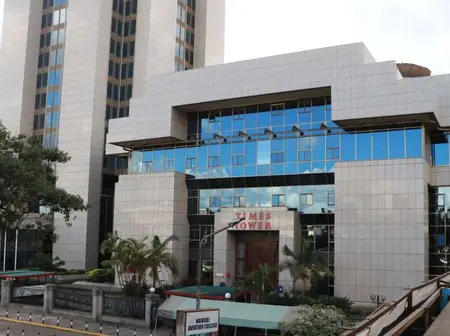
    The report shows the government had not completed the termination as of June 2026, nearly two years after President William Ruto announced the cancellation. It states that the termination process between the Kenya Electricity Transmission Company (KETRACO) and Adani, which began in FY 2024/25, was still ongoing at the end of FY 2025/26.

    Earlier estimates were lower or unavailable. A government report cited by Capital FM in January said termination costs were yet to be determined. Business Daily reported last year that, based on lawyers' estimates, Kenya would pay Adani at least Sh5 billion if it terminated the deal, whereas a negotiated mutual separation would involve a smaller payout. Serrari Group, citing the Treasury's PPP Directorate, reported a potential Sh7.3 billion liability in December 2025.

    Ruto cancelled the 30-year deal on November 21, 2024, a day after a US indictment of Adani executives. Business Daily reported last year that Kenya had not issued a formal termination notice to Adani.

    The report identifies 12 PPP projects with combined estimated termination payments of Sh400.34 billion as of June 2026. Applying a six per cent termination probability, it places the maximum contingent liability at about Sh24 billion.https://x.com/moneyacademyKE/status/2124802814916415841?a=UF784V9LP64UIaXqUN4&s=20

  • EPRA Announces KSh 3.54 Fuel and Hydropower Charges for November Electricity Bills

    EPRA Announces KSh 3.54 Fuel and Hydropower Charges for November Electricity Bills

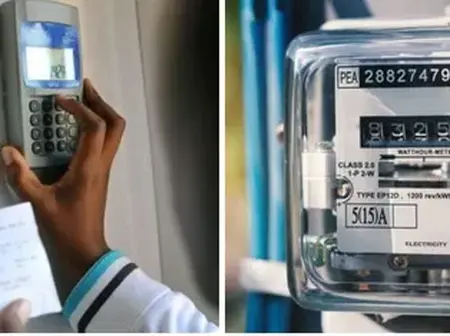
    Kenyan households and businesses will pay additional charges on their electricity bills in November, following three adjustments announced by the Energy and Petroleum Regulatory Authority (EPRA).

    In a Gazette Notice dated Friday, November 20, the regulator set the combined charges at approximately KSh 4.56 per kilowatt-hour (kWh), for electricity consumed during the November 2026 billing cycle.

    The adjustments comprise a Fuel Energy Cost Charge of KSh 3.54 per kWh, a Foreign Exchange Fluctuation Adjustment of KSh 1.0031 per kWh and a Water Resource Management Authority (WRMA) levy of KSh 0.013606 per kWh.

    Together, the three charges amount to KSh 4.5567 per unit of electricity consumed. The adjustments will apply to meter readings taken in November.

    The fuel energy cost charge is intended to help recover expenses incurred in generating electricity using fuel, particularly at thermal power plants that rely on diesel.

    EPRA considers the cost of fuel used by power producers when calculating the charge. The generation sources considered include diesel, geothermal and other thermal power plants, as well as electricity imported from neighbouring countries.

    In its notice, the regulator said the November fuel charge would stand at 354 Kenya cents per kilowatt-hour.

    "Pursuant to Clause 1 of Part III of the Schedule of Tariffs 2023, notice is given that all prices for electrical energy specified in Part II of the said Schedule will be liable to a fuel energy cost charge of plus 354 Kenya cents per kWh for all meter readings to be taken in November 2026," EPRA stated.

    The foreign exchange fluctuation adjustment, which stands at KSh 1.0031 per kWh, reflects changes in currency exchange rates that affect the cost of electricity-related expenses. Such costs may include payments for imported power and other obligations denominated in foreign currencies.

    The WRMA levy is the smallest of the three adjustments, standing at KSh 0.013606 per kWh. It is associated with water resource management charges.

    The additional costs will be reflected in electricity bills, based on consumption recorded during the November billing period. This means customers who use more electricity will pay a higher total amount in variable charges.

    LINK: https://www.kenyans.co.ke/news/129599-epra-sets-ksh354-fuel-charge-hydropower-levy-november-electricity-consumers?fbclid=IwZXh0bgNhZW0CMTEAcGRvZgRzcnRjBmFwcF9pZA80MDk5NjI2MjMwODU2MDkAAR9ccE3UYp9GLiL90uZLj62AIqMjcd6zq1VAJ3Vwo4YIqMia4IYpxK-kT1CnXw_aem_NqkK4vSPFRvfyVnysTSdpg

  • Are You One of the 984,489? KRA Just Quietly Wiped Out Ksh 64.39B in Tax Penalties—Check Your iTax

    Are You One of the 984,489? KRA Just Quietly Wiped Out Ksh 64.39B in Tax Penalties—Check Your iTax

    KRA waives Ksh64.39B in penalties, interest and fines for close to a million taxpayers

    Disclosing the figures on Monday, November 23, 2026, the tax authority stated that the relief comprises Sh32.5 billion in waived penalties, Sh31.9 billion in accrued interest, and Sh11.5 million in fines.

    The programme is aimed at easing the burden of legacy tax arrears while encouraging businesses and individual taxpayers to regularize their compliance records voluntarily.

    Reintroduced under the Finance Act, 2026 through an amendment to Section 37E of the Tax Procedures Act, the amnesty window runs from July 1 to December 31, 2026, and applies exclusively to tax obligations incurred on or before December 31, 2025.

    According to KRA, the relief process is fully automated on the iTax platform, meaning eligible taxpayers do not need to lodge separate formal applications.

    Those who had already settled their principal taxes for periods up to December 2025—or who owed only late-filing penalties after submitting outstanding returns—receive automatic 100 percent waivers.

    Meanwhile, taxpayers with unpaid pre-2026 principal balances qualify once they settle the principal sum in full, either as a lump sum or through an approved iTax payment plan, before the December 31 deadline.

    KRA has reminded the public that any penalties, interest, or principal liabilities arising from January 1, 2026 onward do not qualify for amnesty and remain payable in full. Customs duties governed under the East African Community Customs Management Act are similarly excluded.

    With slightly over five weeks remaining before the programme expires, the authority urged taxpayers with unresolved disputes or pending principal balances to finalize payments promptly to avoid full enforcement recovery next year.

    What are your thoughts about this article? Share your reactions in the comment section and don't forget to share and follow for more updates.

    https://peopledaily.digital/business/kra-waives-ksh64-39b-in-penalties-interest-and-fines-for-close-to-a-million-taxpayers

  • CS Lee Kinyanjui Pitches Kenya’s Diversified Economy to Regional and Global Investor

    CS Lee Kinyanjui Pitches Kenya’s Diversified Economy to Regional and Global Investor

    Speaking on Monday, November 23, 2026, during the opening session of the Africa Trade Development Forum (ATDF) 2026 in Addis Ababa, Ethiopia, Kinyanjui framed Kenya’s economic breadth—spanning agriculture, manufacturing, financial services, technology, energy, and regional logistics—as a key buffer against external shocks and a major draw for multinational enterprises seeking an East African base.

    "Kenya is one of Africa’s largest and most diversified economies," Kinyanjui stated during the forum’s investment pitch session, pointing to the country’s strategic geographic position, educated workforce, and established commercial infrastructure—anchored by the Port of Mombasa—as foundational advantages for investors looking to serve both domestic and regional markets.

    The Cabinet Secretary’s remarks align with the Ministry of Investments, Trade and Industry’s broader campaign to shift Kenya’s economic model from heavy reliance on raw commodity exports toward value addition, local manufacturing, and export diversification. Throughout 2026, Kinyanjui has used international business forums—including engagements tied to the extension of the African Growth and Opportunity Act (AGOA) and bilateral trade discussions with global partners—to pitch priority investment opportunities in textiles, agro-processing, the digital economy, clean energy, and manufacturing.

    While Kenya’s diversified services, digital innovation, and agricultural sectors have helped sustain steady growth, local manufacturers and exporters continue to navigate high energy costs, technical trade barriers, and global supply chain pressures. By spotlighting the economy’s structural strengths and ongoing regulatory reforms at regional trade forums, Kinyanjui aims to position Kenya not merely as a consumer market, but as a competitive production and commercial hub for Eastern and Central Africa.

  • Wetang’ula Draws Red Line on Nzoia Sugar Land Conversion, Defends Cane Farmers’ Future

    Wetang’ula Draws Red Line on Nzoia Sugar Land Conversion, Defends Cane Farmers’ Future

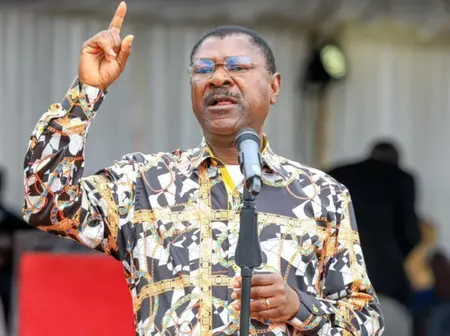
    Speaking on Monday, November 23, 2026, during an event organised to celebrate bonus payments to sugarcane farmers, Wetang’ula dismissed suggestions that the factory's land could be diverted to rice farming.

    He argued that Kenya should be strengthening its domestic sugar industry rather than considering changes that could undermine the country's ability to produce enough sugar for local consumption.

    The Speaker expressed frustration over claims reportedly made by a retired chief during a radio discussion, suggesting that Nzoia's agricultural land could be converted into rice fields.

    Wetang’ula questioned the reasoning behind such proposals, maintaining that the company was established to support sugar production and that its land should serve that purpose.

    He further argued that Parliament had provided a legal framework governing the company's operations and the intended use of its property.

    To reinforce his position, Wetang’ula pointed to established rice-producing regions, including Budalangi, Ahero and Mwea, saying the country already had designated areas suitable for the crop.

    His remarks come as the sugar industry undergoes renewed efforts to improve farmers' earnings, factory operations and the overall performance of local sugar production.

    Meanwhile, President William Ruto has announced a KSh1.2 billion bonus package for sugarcane farmers, extending a payment arrangement previously enjoyed by tea and coffee growers.

    According to information from the Kenya Sugar Board, 13,949 farmers who supplied Nzoia Sugar Company with cane between January and September 2026 qualified for the payment.

    The government has also highlighted changes aimed at improving farmers' welfare, including faster payments for delivered cane and reduced fertiliser prices.

    Wetang’ula's intervention has added fresh weight to the debate over Nzoia's future, with the Speaker insisting that protecting sugarcane production must remain a priority.

    Link;

    https://peopledaily.digital/news/wetangula-warns-against-plans-to-turn-nzoia-sugar-farm-into-rice-fields

  • The 2027 Election-Year Budget Blueprint: Who Wins Big—And Who Will Foot the Bill?

    The 2027 Election-Year Budget Blueprint: Who Wins Big—And Who Will Foot the Bill?

    What the 2027 Budget Policy Statement means for ordinary Kenyans

    Framed around sustaining the Bottom-Up Economic Transformation Agenda (BETA) ahead of the August 2027 General Election, the blueprint focuses on five core pillars: agricultural transformation, healthcare under the Social Health Authority (SHA), affordable housing, support for micro, small, and medium enterprises (MSMEs), and expansion of the digital and creative economy.

    For ordinary citizens, these priorities translate into continued state backing for farm input subsidies to stabilize food prices, expanded Primary Care Networks under Taifa Care, and ongoing credit access through initiatives such as the Hustler Fund.

    At the same time, the fiscal roadmap signals tighter discipline in public spending and revenue administration as the Treasury works to narrow the fiscal deficit to KSh 1.229 trillion, or 5.4 percent of GDP, while trimming reliance on costly short-term domestic borrowing.

    By shifting toward concessional external financing and mobilizing private capital through newly established vehicles like the National Infrastructure Fund, the government aims to ease pressure on local interest rates and free up commercial bank credit for households and small businesses.

    However, meeting revenue targets without sharp tax hikes relies heavily on broadening the tax base, curbing exemptions through a Tax Expenditure Management Framework, and enforcing strict digital compliance.

    While macroeconomic indicators point to relative stability—with inflation holding within the central bank’s target band and foreign exchange reserves strengthened—ordinary Kenyans will measure the policy statement’s success by tangible relief in daily living costs.

    What are your thoughts about this article? Share your reactions in the comment section and don't forget to share and follow for more updates.

    https://peopledaily.digital/insights/what-the-2027-budget-policy-statement-means-for-ordinary-kenyans

  • People willing to settle in Ireland’s abandoned homes stand to receive up to KSh 19 million

    People willing to settle in Ireland’s abandoned homes stand to receive up to KSh 19 million

    Under the government’s vacant property refurbishment grant scheme, eligible applicants can receive substantial financial support to restore homes that have been left unoccupied for extended periods.

    The initiative is aimed at encouraging people to settle in towns and villages where abandoned properties have become a concern, while helping to increase the availability of housing.

    The grant can provide up to €50,000 for renovating a vacant property and up to €70,000 for an abandoned home. The higher amount is equivalent to approximately KSh 19 million, depending on the prevailing exchange rate.

    The scheme is particularly attractive to people considering relocating to Ireland, including those interested in purchasing older properties and transforming them into permanent residences.

    However, the financial support is not automatically awarded to everyone who moves to Ireland. Applicants must meet specific eligibility requirements, and the property must qualify under the programme.

    The home must generally have been vacant for at least two years, while applicants are required to demonstrate that the property will be used as their principal private residence or made available for rent.

    The grant is also intended to cover approved renovation costs rather than provide unrestricted cash to recipients.

    The programme does not require recipients to be Irish citizens, but applicants must satisfy the relevant property and grant conditions. The initiative is therefore not a direct payment for relocating to Ireland, but financial assistance for people who acquire qualifying homes and undertake approved renovation wowork

    Source

    https://www.facebook.com/share/1B1hENnw3U/

  • Consumer rights: What to do when your Black Friday purchase arrives faulty

    Consumer rights: What to do when your Black Friday purchase arrives faulty

    thumbnail

    You wait days for your Black Friday deal. The delivery rider hands over the package. You unbox the gadget, press the power button, and the screen stays blank.The excitement disappears instantly. Realising your new online purchase is defective is incredibly frustrating.Fortunately, Kenyan consumer protection laws guard your money.