
Kenya’s sugar production has nearly doubled to 900,000 metric tonnes this year, up from 472,773 tonnes recorded in the 2022/2023 financial year, following government reforms in the sugar sector.Principal Secretary for Agriculture Paul Rono attributed the increase to government interventions aimed at supporting sugarcane farmers, lowering production costs and improving the performance of local sugar factories.
Category: Economy&Finance
-

UK Announces 41,000 Seasonal Farm Jobs for Foreign Workers, Offers KSh 2,270 Hourly Pay
The United Kingdom has opened applications for its Seasonal Worker visa, creating opportunities for foreign nationals, including Kenyans, to take up temporary jobs in farms and poultry production.
The programme allows successful applicants to work in the UK for up to six months, mainly in fruit and vegetable harvesting, as well as selected poultry-related roles.
For the 2026 and 2027 seasons, the UK has set aside 41,000 positions for horticulture workers and another 1,900 slots for poultry workers. The scheme has also been extended through 2029, giving agricultural employers more certainty when planning their workforce needs.
The horticulture route covers activities such as picking fruits and vegetables, while the poultry category has 12 approved job roles. These include butchers, poultry processors, poultry catchers and food operatives.
However, the poultry route operates within a specific recruitment period. Workers must arrive between October 2 and December 31 each year, while applications must close by November 15.
Application costs and expected earnings
Applicants are required to pay a visa fee of £340, equivalent to approximately KSh 61,200. They must also show that they have access to at least £1,270, or about KSh 227,700, in personal savings.
The money must have been held for at least 28 consecutive days before applying, unless the sponsoring employer confirms that it will provide financial maintenance.
Successful applicants are not required to pay an immigration health surcharge because of the short duration of the visa. However, they cannot access public funds or bring family members to the UK under the arrangement.
Workers aged 21 and above can earn at least £12.71 per hour under the cited UK minimum wage rate, translating to roughly KSh 2,270. This is considerably higher than Kenya's general labour minimum wage of approximately KSh 15,200 per month.
The earnings may appear attractive to jobseekers, although workers should factor in living expenses. Farm accommodation is commonly charged at around £77, equivalent to KSh 13,800, per week.
Kenya's recruitment arrangements
The Kenyan government has promoted overseas agricultural employment through the Mkulima Majuu programme. The State Department for Diaspora Affairs has partnered with HOPS Labour Solutions and the Youth Enterprise Development Fund to support recruitment.
The initiative has targeted agricultural training institutions, including Bukura Agricultural College and Sigalagala National Polytechnic.
Risks facing seasonal workers
Despite the potential earnings, applicants have been cautioned about the conditions attached to the visa. Workers are tied to the employer named in their certificate of sponsorship and cannot freely move to another job.
This arrangement can leave employees dependent on one employer for both work and accommodation. Researchers have raised concerns that the structure may increase the risk of exploitation, particularly where workers borrow money to pay recruitment-related costs.
A 2026 academic study warned that the scheme's design could heighten labour exploitation risks. Advocacy groups have also raised concerns that recruitment debts, and limited employment choices may expose some workers to abusive conditions.
LINK: https://www.tuko.co.ke/business-economy/647585-uk-opens-seasonal-work-visa-foreign-farm-workers-pick-fruits-vegetables-poultry/?fbclid=IwZXh0bgNhZW0CMTEAcGRvZgRzcnRjBmFwcF9pZA80MDk5NjI2MjMwODU2MDkAAR9_tv55cwg6h_YMKN78KosC-wzlSxK7ogDyktuVBFO4yrLRlkVXUA7NtnL8DA_aem_Dgv_6Zrw8B1vTqN71jJ5XA
-
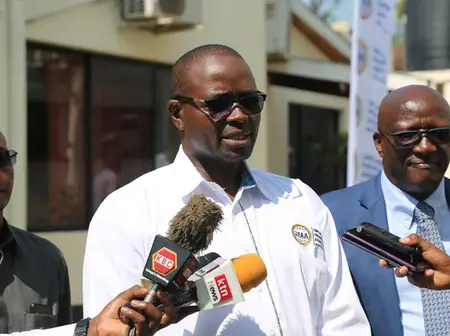
30-Day Countdown: What Kenyans Need to Know Before Unclaimed Money Is Released.
Families across the country are one step closer to recovering long-forgotten inheritances after the Unclaimed Financial Assets Authority (UFAA) issued a mandatory 30-day statutory notice ahead of releasing millions of shillings in unclaimed wealth.
Published in accordance with the Unclaimed Financial Assets Act (No. 40 of 2011) and its accompanying 2016 Regulations, the official "No Objection" notice invites members of the public to review the list of verified claimants and lodge any competing claims or legal objections before payouts are finalized. If no valid disputes are filed at the Authority’s headquarters in Westlands, Nairobi, within 30 days of publication, the funds will be disbursed directly to the approved beneficiaries.
For many households, these assets—ranging from dormant bank balances and uncollected corporate dividends to matured insurance policies—represent life-changing financial relief left behind by loved ones who passed away without disclosing their portfolios. The statutory notice serves as a crucial transparency safeguard, ensuring that estates are distributed fairly and protecting rightful heirs from fraudulent claims.
Kenyans who suspect they or their late relatives may have forgotten funds held in trust can verify their status free of charge. Searches can be conducted online via the eCitizen portal, on the official UFAA website (ufaa.go.ke), by dialing the USSD code *361#, or in person at any Huduma Centre nationwide.
To lodge a claim, original owners must submit Form 4A alongside a certified copy of their National ID, KRA PIN, and bank details. Beneficiaries claiming on behalf of deceased relatives must complete Form 4B and attach a death certificate alongside valid succession documents, such as a Grant of Probate or Letters of Administration. The Authority reminds the public that claiming assets is entirely free and warns against fraudsters demanding upfront facilitation fees.
https://www.facebook.com/share/p/1Av2MxhxYV/
-
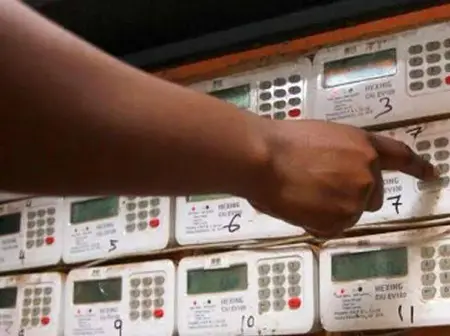
Higher Electricity Bills: How EPRA’s November tariff increase could affect households.
Households and businesses across Kenya are set to dig deeper into their pockets this month following new monthly electricity tariff adjustments announced by the Energy and Petroleum Regulatory Authority (EPRA).
Pursuant to the 2023 Schedule of Tariffs, EPRA published a formal Kenya Gazette notice dated November 20, 2026, introducing three statutory pass-through charges. Combined, these adjustments add approximately Ksh 4.56—specifically Ksh 4.5567—to every kilowatt-hour (kWh) of electricity consumed during the November 2026 billing cycle.
The largest driver of the upward revision is the Fuel Energy Cost Charge, which the regulator set at Ksh 3.54 per kWh to recover expenses incurred by thermal power generators. In addition, consumers will pay a Foreign Exchange Fluctuation Adjustment of Ksh 1.0031 per kWh, shielding power sector players from currency shifts between the Kenyan shilling and major foreign currencies. Completing the trio is the Water Resource Management Authority (WRMA) levy, set at Ksh 0.013606 per kWh to support the conservation of water catchment areas vital for hydropower generation.
These monthly adjustments apply uniformly to all meter readings taken in November 2026, affecting both prepaid token buyers and postpaid customers. For an average household consuming 100 units a month, the combined charges translate to roughly Ksh 456 in additional costs before standard statutory taxes—such as the 16 percent Value Added Tax (VAT), the Rural Electrification Programme levy, and the EPRA levy—are factored in.
While EPRA reviews these pass-through components monthly based on prevailing fuel prices, exchange rates, and hydrology levels, the latest adjustment arrives at a time when many families and small enterprises are already navigating tight household budgets.
https://www.facebook.com/share/p/1JPpWVfVfZ/
-
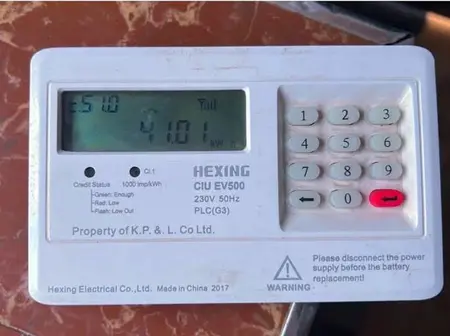
EPRA Increases Electricity Charges by KSh4.56 per Unit in November 2026
The adjustments were communicated through Gazette notices dated Friday, November 20, 2026, and comprise a Fuel Energy Cost Charge, a Foreign Exchange Fluctuation Adjustment and a Water Resource Management Authority (WRMA) levy.
The fuel energy cost charge accounts for the largest portion of the increase, standing at KSh3.54 per kWh. The charge is intended to recover expenses incurred in generating electricity using fuel, particularly at thermal power plants that depend on diesel.
The foreign exchange fluctuation adjustment adds KSh1.0031 per kWh. It accounts for currency-related costs and fluctuations affecting electricity sector players, including Kenya Power, Kenya Electricity Generating Company (KenGen) and independent power producers.
Meanwhile, the WRMA levy contributes KSh0.013606 per kWh. The charge applies to electricity purchased from qualifying hydropower stations with a generation capacity of at least one megawatt.
EPRA reportedly indicated that 314.19 million units of electricity were purchased from qualifying hydropower stations in October, providing the basis for calculating the November levy.
The latest adjustment comes after electricity consumers faced an additional KSh4.10 per unit in October 2026, according to previous tariff reports.
The successive adjustments are expected to increase electricity expenses for households and businesses, particularly those with high monthly consumption.
However, the KSh4.56 adjustment represents additional monthly pass-through charges rather than a complete revision of the underlying base electricity tariff.
Consumers will therefore continue paying the applicable base tariff alongside the additional charges, taxes and other statutory levies reflected in their electricity bills.https://web.facebook.com/share/p/19ftc4tGDV/
-

A pattern, not a one-off
September is part of a longer trend.Between January and September, imports rose 24.3% to KSh2.56 trillion, outpacing a 19.8% rise in exports to KSh1.01 trillion, so the cumulative deficit grew 27.4% to KSh1.55 trillion.Earlier in the year, the deficit reached KSh998.2 billion in the first six months, the fastest first-half widening in four years, even as exports hit a record KSh632.3 billion.
-

UFAA Lists Kenyans Seeking Deceased Relatives’ Money, Gives Public 30 Days to Challenge Claims
In a Gazette notice dated November 20, 2026, the authority invited anyone with concerns about the eligibility of the listed claimants to submit objections within the stipulated period.
UFAA warned that if no objection is received within 30 days of the notice's publication, it would proceed with payments to the listed individuals.
The notice provides an opportunity for family members, beneficiaries and other interested parties to challenge claims they believe could result in unclaimed assets being handed to the wrong people.
The published list includes individuals claiming deceased persons' assets, alongside entries involving public offices, towns, county commissioners' offices and public trusts acting on behalf of families or beneficiaries.
The process is intended to help protect the interests of rightful beneficiaries before the authority releases funds held in its custody.
Under the Unclaimed Financial Assets Act, 2011, financial institutions are required to surrender qualifying dormant assets to UFAA after the legally prescribed period when owners cannot be traced or have not made contact.
The assets may include forgotten bank deposits, insurance benefits, pension payments, unpaid dividends and other financial holdings that have remained unclaimed.
Financial institutions are expected to make efforts to contact owners before transferring qualifying assets to the authority, which is responsible for safeguarding the funds until they are claimed.
Kenya's unclaimed financial assets have continued to grow, with the Draft National Policy on Unclaimed Financial Assets, 2026, estimating the total value at approximately KSh394 billion.
The figure represents a substantial increase from KSh241 billion recorded in 2018, reflecting the growing volume of money and other financial assets that remain unclaimed across the country.
The assessment covered several categories, including dormant bank accounts, pension benefits, insurance payouts, unpaid dividends, mobile money balances and other financial claims.
By December 2025, UFAA had received approximately KSh41 billion in unclaimed assets but had returned only KSh2.8 billion to 37,390 beneficiaries, highlighting the difficulties involved in reconnecting Kenyans with their money.
The survey also identified more than 18,000 potential asset-holding institutions, although fewer than 2,000 had submitted reports by December 2025. UFAA's database, meanwhile, contained more than 10 million potential beneficiaries.
The financial services sector accounts for approximately 62 per cent of the country's unclaimed assets, making banks and other financial institutions a major source of the funds held by the authority.
Kenyans seeking to establish whether they or their deceased relatives have unclaimed financial assets can use UFAA's USSD service by dialling *361# or visit the authority's official website at ufaa.go.ke.
The National Treasury also published the Draft National Policy on Unclaimed Financial Assets, 2026, on November 12, proposing changes aimed at making the claims process easier, particularly for people seeking smaller amounts.
The proposals include stronger reporting requirements for banks, insurance companies and other institutions holding unclaimed assets, as well as provisions to expand the types of assets covered.
The draft policy further proposes incorporating digital assets, including dormant cryptocurrency wallets and stablecoins, into the unclaimed assets framework. This comes amid growing cryptocurrency activity in Kenya, with reported transactions reaching KSh740 billion in the year to June 2026.
The Treasury has scheduled public participation forums across 11 locations, beginning November 23, with meetings planned in Mombasa, Kisii, Garissa, Kisumu, Kitui, Kitale, Meru, Eldoret, Nyeri, Nakuru and Nairobi. The final forum is scheduled for December 4 at the Kenya School of Government.
While the proposed changes are still undergoing public participation, the existing Unclaimed Financial Assets Act remains in force. UFAA maintains that there is currently no deadline for Kenyans to claim their unclaimed financial assets.
Source
-

Wetang’ula Defends Nzoia Sugar Lease, Says Farmers Now Receive Payments Within Seven Days
He expressed satisfaction with the reported improvements at the mill, particularly the introduction of faster payments to farmers, digital cane weighing and more reliable salary payments for employees.
According to a report published by The Star on November 20, 2026, farmers supplying Nzoia Sugar are now receiving payments within seven days of delivering their sugarcane. The mill has also paid approximately KSh1.5 billion to farmers since resuming operations.
The factory was taken over by West Kenya Sugar Company, part of the Rai Group, on May 10, 2025, under a 30-year lease agreement. Milling operations resumed in January 2026 following rehabilitation of the factory.
Kenya News Agency previously reported that the company introduced a digital Smart Weighment System to improve transparency in weighing sugarcane and provide farmers with real-time confirmation of their deliveries.
The new management has also retained more than 900 employees who were working at the factory when the takeover took place.
Nzoia Sugar has additionally made payments to the government. According to The Star, the miller remitted KSh739 million to the government through payments made in 2025 and 2026.
Wetang’ula maintained that the improvements demonstrated the importance of private sector participation in managing struggling public enterprises.
He said the priority should remain improving farmers' earnings, protecting workers' interests and ensuring the factory operates sustainably.
The leasing of Nzoia Sugar forms part of wider government reforms targeting the revival of state-owned sugar factories, many of which previously struggled with financial difficulties, outdated machinery and delayed payments.
The Speaker's remarks come as the government continues efforts to strengthen Kenya's sugar industry and improve local production.https://www.facebook.com/share/p/19Asg4f2R7/
-

Residents Await KSh1.8 Billion Project to Transform Transport and Boost Local Businesses
Residents of Kimilili and Kapsokwony in Bungoma County could benefit from improved transport as plans to upgrade the Kimilili–Kapsokwony Road continue to draw attention.
The road is an important connection for residents, traders, farmers and other road users who travel between different parts of the area. Its improvement is expected to make movement easier and support business activities.
According to the Kenya Rural Roads Authority (KeRRA), the proposed project covers approximately 8.5 kilometres. It includes the Maeni–Mkulima section, which covers 1.9 kilometres, and the Mkulima–Kapsokwony section, which covers 6.6 kilometres.
The project is expected to involve upgrading the road to bitumen standards. Once completed, the improved road could make transport more comfortable and reduce some of the difficulties experienced by motorists.
The road is also important to farmers who depend on transport to take their agricultural produce to markets. Better road conditions could make it easier to move farm products, reduce transport challenges and improve access to customers.
Small business owners could also benefit from improved movement of goods and customers. Traders who depend on transport services may find it easier to carry out their daily activities.
However, the project still faces a funding challenge. In a response presented to Parliament in August 2026, the Ministry of Roads and Transport said the estimated cost of upgrading the road was approximately KSh1.8 billion.
The Ministry also stated that no funds had been allocated for the project in the 2025/2026 and 2026/2027 financial years. Construction is expected to begin once the required funding becomes available.
In the meantime, KeRRA said it continues to carry out routine maintenance to keep the road accessible to road users.
The proposed upgrade remains important for the development of Kimilili and surrounding areas. Residents will be looking forward to the availability of funds and the start of construction.
A better road could improve transport, support local businesses and create new opportunities for communities that depend on this important route.
source:https://www.facebook.com/share/v/1FFGcXwuRn/
-

Safaricom Responds to GlobalPay Virtual Visa Outage
OutageSafaricom has responded to an outage affecting its GlobalPay Virtual Visa service, assuring customers that efforts were underway to resolve the challenges.Safaricom has responded to an outage affecting its GlobalPay Virtual Visa service, assuring customers that efforts were underway to resolve the challenges.In an update on Monday, November 23, the telecommunications company acknowledged the disruption following reports of difficulties accessing or using the virtual payment service.