Category: Economy&Finance

  • Mrima Hill: How Kenyan govt is preparing to secure 10% stake in Ksh8T mineral project

    Mrima Hill: How Kenyan govt is preparing to secure 10% stake in Ksh8T mineral project

    Mrima Hill: How Kenyan govt is preparing to secure 10% stake in Ksh8T mineral project

    The Kenyan government is positioning itself to secure a direct ownership stake in the development of the Ksh8 trillion Mrima Hill mineral deposits following the selection of a US-led consortium to develop the strategic mineral resource in Kwale County.

    The Government could secure a 10 per cent free-carried interest in the large-scale mining operation under provisions of the Mining Act, 2016, allowing it to acquire an ownership stake without contributing capital towards purchasing the shares.

    The development follows Mining Cabinet Secretary Hassan Ali Joho’s November 19, 2026 announcement naming Frontier Minerals Consortium the successful bidder for the Mrima Hill Niobium, Rare Earth Elements and Other Minerals Development Project.

    The consortium comprises Frontier Minerals LLC, Bunker Hill Mining Corp, ReElement Technologies and American Resources Corporation.

    The selection marks a major step towards commercialising the mineral deposits, which have remained largely untapped despite decades of geological exploration.

    However, the award is currently at the Notice of Intention to Award stage, with the consortium expected to proceed to negotiations towards securing a prospecting licence before undertaking exploration and other development activities.

    Section 48 of the Mining Act, 2016, provides for Government participation in large-scale mining operations through a free-carried interest.

    Under the provision, the State is entitled to a 10 per cent interest in the share capital of a large-scale mining operation without making a financial contribution towards acquiring the shares.

    The provision is particularly significant for Mrima Hill because the Government has classified niobium and rare earth elements among its strategic minerals.

    The Government had already signalled its intention to enforce the requirement before selecting the successful investor.

    In the Kenya Gazette dated March 27, 2026, the Ministry of Mining, Blue Economy and Maritime Affairs included an explicit requirement for prospective investors to understand Kenya’s laws on free-carried interest and State involvement in strategic minerals.

    The requirement appeared as the 12th condition under the qualifying criteria in Gazette Notice No. 4262, which invited expressions of interest from companies seeking large-scale mining rights at Mrima Hill.

    This means Frontier Minerals Consortium will be expected to comply with Kenya’s applicable mining laws as it progresses towards obtaining the necessary mineral rights.

    The statutory 10 per cent interest does not prevent the Government from negotiating additional participation with the mining licence holder.

    However, neither the Gazette notice nor the announcement of the successful bidder specifies a separately negotiated shareholding for the Government at Mrima Hill.

    Frontier Minerals Consortium brings together four companies with expertise in mining, mineral processing, refining and critical mineral supply chains.

    Bunker Hill Mining Corp is expected to provide mining and processing expertise, including exploration, resource definition, mine planning and feasibility studies.

    ReElement Technologies brings advanced mineral separation and refining technology, while American Resources Corporation contributes expertise in critical mineral processing and supply chains.

    Frontier Minerals LLC serves as the consortium’s project vehicle.

    Following the selection, the consortium is expected to enter exclusive negotiations with the Kenyan Government for the prospecting licence.

    The proposed development will also require further technical studies, regulatory approvals and engagement with communities in the project area.

    The consortium has indicated that it intends to work with the Government and local stakeholders to develop the project while recognising the environmental and cultural significance of Mrima Hill to the Digo community.

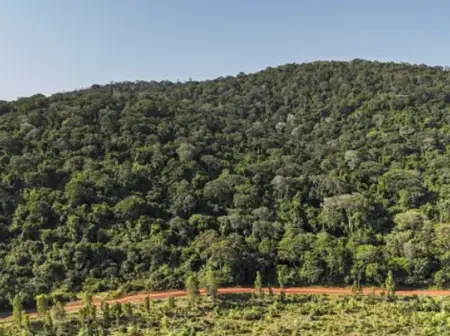
    Mrima Hill is located approximately 65 kilometres southwest of Mombasa and contains deposits of niobium and rare earth elements, which are increasingly important in modern manufacturing.

    According to the Ministry of Mining, geological mapping conducted in 2022 confirmed the presence of five elements at the site: niobium, yttrium, thorium, strontium and lanthanum.

    The March 2026 Gazette notice identified a project area covering approximately 31.9 square kilometres.

    Resource estimates published in the notice indicate 5.8 million tonnes of indicated niobium resources at 1.41 per cent niobium oxide and 48.7 million tonnes of indicated rare earth resources at 4.4 per cent total rare earth oxides.

    The prospect also contains inferred resources estimated at 17.5 million tonnes of niobium at 1.41 per cent niobium oxide and 110.7 million tonnes of rare earth elements at 5.61 per cent total rare earth oxides.

    The Government, however, acknowledged in the tender document that it had not prepared an economic viability report for the prospect.

    Beyond securing an ownership interest, the Government is seeking to ensure that the mining project generates economic benefits through local processing and value addition.

    The Gazette notice required prospective investors to demonstrate the ability to design and commission an on-site processing and beneficiation plant.

    The requirement is intended to ensure that Kenya processes minerals locally and contributes to global supply chains rather than relying solely on exporting unprocessed mineral resources.

    Investors were also required to demonstrate commitments to environmental protection, land rehabilitation, water management and community engagement.

    For Frontier, these requirements will form part of the regulatory and development framework as it advances towards prospecting and subsequent mining approvals.

    The free-carried interest provision offers Kenya an opportunity to participate directly in the ownership of the mining operation without financing the acquisition of its initial 10 per cent stake.

    The Government could also benefit from royalties, taxes, employment opportunities, investment in infrastructure and the development of local mineral-processing capacity, subject to the applicable legal and commercial arrangements.

    The Mining Act further allows the State to negotiate additional participation beyond the statutory interest.

    However, the 10 per cent ownership provision should not be confused with an entitlement to 10 per cent of the estimated Ksh8 trillion mineral value.

    The actual returns will depend on the project’s economic viability, development costs, production levels, market prices and the final agreements between the Government and the successful investor.

    With Frontier Minerals Consortium now selected, attention will turn to the negotiations, prospecting licence, community engagement and technical studies that will determine whether the long-awaited Mrima Hill project becomes a commercially viable mining operation.
  • Wetang’ula Sends Strong Warning Over Plans to Convert Nzoia Sugar Land Into Rice Farms

    Wetang’ula Sends Strong Warning Over Plans to Convert Nzoia Sugar Land Into Rice Farms

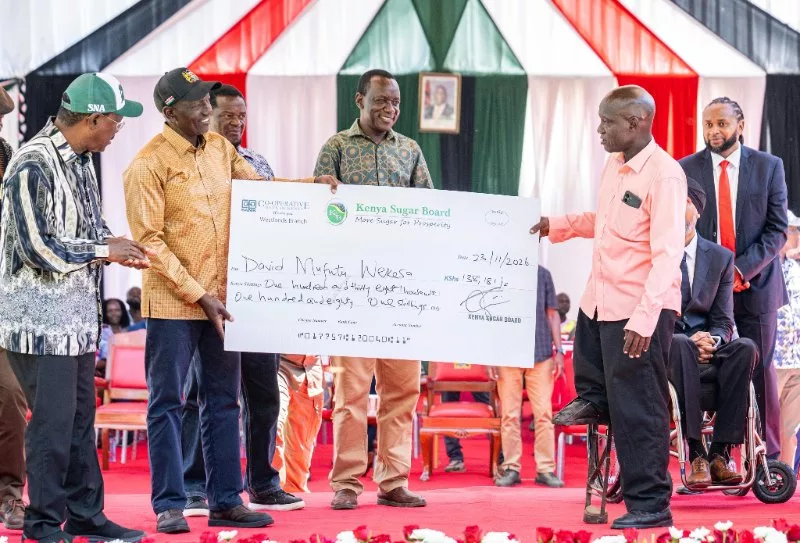
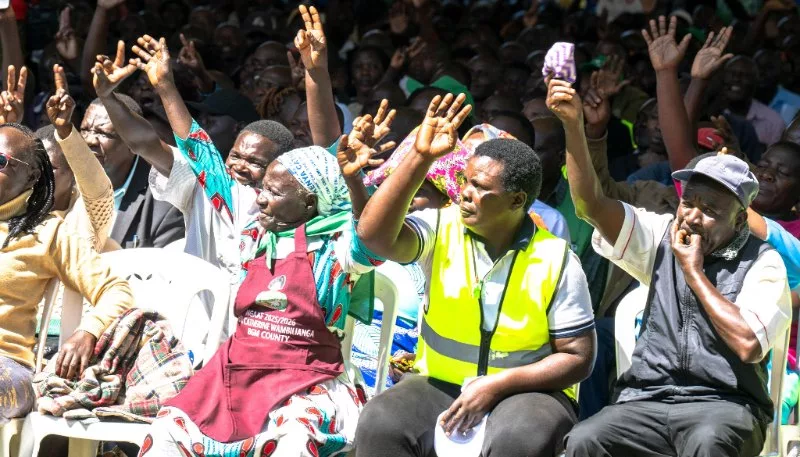
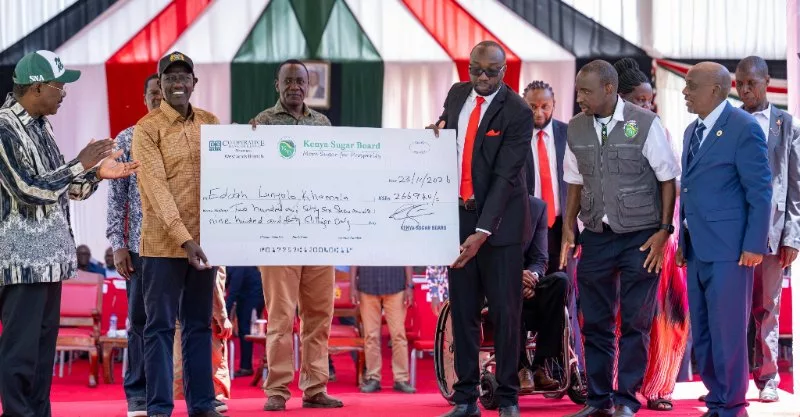
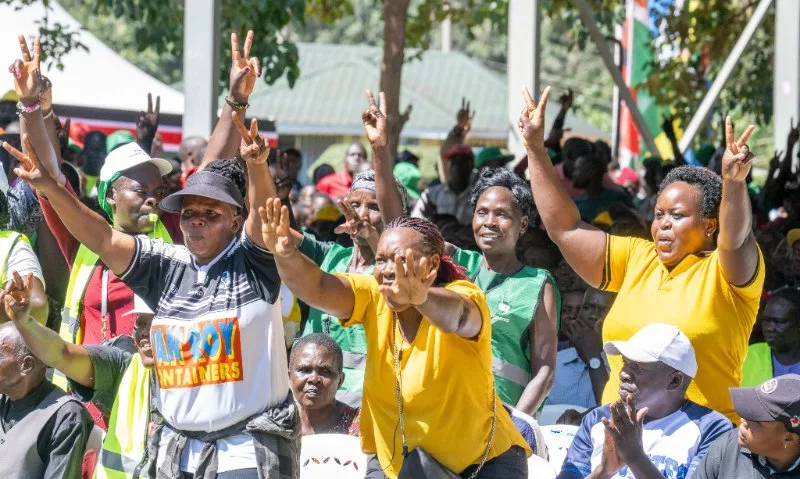
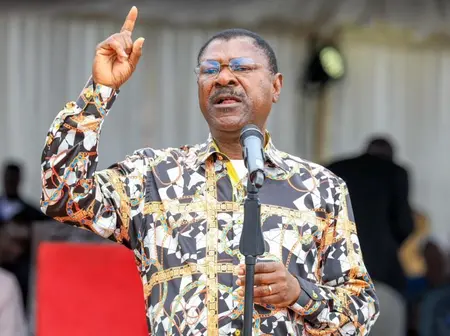
    Speaking on Monday, November 23, 2026, during the bonus payment event for sugarcane farmers at Nzoia Sugar Company, Wetang’ula dismissed claims that the factory's agricultural land could be converted into rice fields.

    He argued that Kenya should concentrate on increasing domestic sugar production instead of diverting land reserved for the industry to other agricultural activities.

    "We want Kenya to be self-sufficient in sugar production. Tusiwasikize wale manabii wa uongo," Wetang’ula declared.

    The Speaker expressed concern over reports that a retired chief had suggested during a radio interview that Nzoia's land should be used for rice farming.

    He maintained that the company's mandate and land use were guided by legislation passed by Parliament, insisting that the property was intended to support sugar production.

    Wetang’ula also pointed out that Kenya already had established rice-growing areas, including Budalangi, Ahero and Mwea, arguing that Nzoia's agricultural land should not be diverted from its intended purpose.

    His remarks come as the government moves to improve the performance of the sugar industry and increase earnings for farmers who supply cane to local factories.

    President William Ruto recently announced a KSh1.2 billion bonus package for sugarcane farmers, with payments expected to cover eligible growers supplying different factories, including Nzoia.

    According to figures from the Kenya Sugar Board cited in earlier reports, 13,949 farmers who delivered sugarcane to Nzoia between January and September 2026 qualified for the bonus.

    The government has also highlighted reforms targeting delayed payments to farmers, workers' salary arrears and the high cost of farm inputs.

    Ruto has previously said sugarcane farmers were now receiving payments within a week of delivering their produce, compared to waiting periods that could extend to seven months.

    The price of fertiliser has also reportedly dropped from KSh7,000 to KSh2,000 for a 50-kilogramme bag.

    Wetang’ula's intervention adds to the debate over the future of Nzoia Sugar Company's land as farmers await improved returns from the sugar industry.

    https://peopledaily.digital/news/wetangula-warns-against-plans-to-turn-nzoia-sugar-farm-into-rice-fields

  • Good News for Sugarcane Farmers as Ruto Announces KSh195 Million Bonus at Nzoia

    Good News for Sugarcane Farmers as Ruto Announces KSh195 Million Bonus at Nzoia

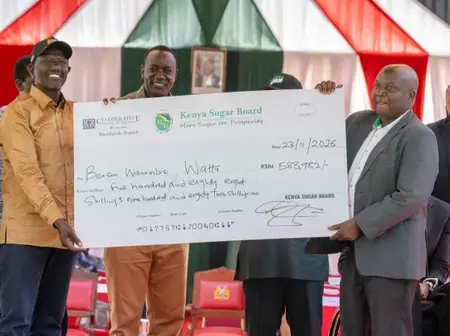
    The President has announced that the government will pay KSh195 million in bonuses to sugarcane farmers, a move that could bring relief to thousands of families depending on the sugar industry.

    Speaking about the developments at Nzoia Sugar Factory, Ruto said the money would go towards rewarding farmers who have continued supplying sugarcane despite the challenges facing the sector.

    The announcement has attracted attention because sugarcane farming remains one of the major sources of income for many households in Western Kenya.

    For years, farmers have complained about delayed payments, production costs and difficulties affecting sugar factories. Some have struggled to support their families as they wait for money earned from their hard work.

    The KSh195 million bonus announcement could therefore offer a welcome boost, especially to farmers who have been hoping for better returns from their produce.

    Nzoia Sugar Factory has also remained an important economic institution in the region, supporting farmers, workers and businesses that depend on sugar production.

    Ruto's announcement is likely to generate fresh debate about the government's efforts to revive the sugar industry and improve the lives of people who depend on it.

    Many people were left talking about the promise, while the incident sparked reactions online. Supporters appeared divided, with some welcoming the announcement and others likely to demand lasting solutions to the challenges facing sugarcane farmers.

    What happened next surprised many as attention shifted to the possible impact of the promised payment on farmers and the wider sugar industry.

    However, farmers will be watching closely to see when the money will reach them.

    Do you believe the KSh195 million bonus will significantly improve the lives of sugarcane farmers in Western Kenya? Share your views in the comments.

  • Ruto to flag off first Turkana crude oil exports on December 2

    Ruto to flag off first Turkana crude oil exports on December 2

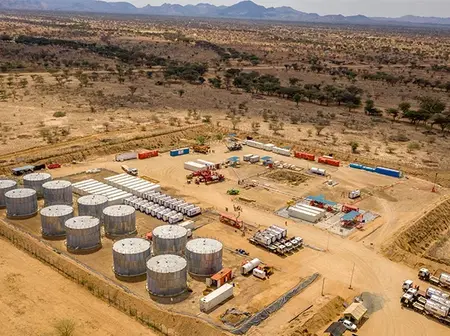
    President William Ruto is expected to preside over the flag-off of Kenya’s first crude oil exports from Turkana’s South Lokichar Basin on December 2, marking a major milestone in the country’s petroleum development.

    Petroleum Principal Secretary Harsama Kello said all arrangements had been completed for the inaugural export, with a multi-agency team putting the final preparations in place for production and transportation.

    “We intend to have the flag-off scheduled on December 2,” Kello told the National Assembly Energy Committee on Monday.

    The PS disclosed that the crude oil would be transported by road to Mombasa, where it would be prepared for export, as Kenya awaits the development of a pipeline to facilitate the movement of the commodity from the oilfields.

    “The product will be transported by road to Mombasa. There is no pipeline yet to move it to the depot in Mombasa,” he said.

    The planned flag-off will mark the beginning of Kenya’s crude oil export journey, following years of exploration, appraisal and preparations to commercialise the petroleum resources discovered in Turkana.

    The South Lokichar Basin is at the centre of the country’s oil development ambitions, with the government seeking to turn the discovery into an economic asset through production and eventual exports.

    However, the use of road transport highlights the infrastructure challenges facing the project, particularly the absence of a dedicated pipeline linking the oilfields to the coastal export facilities.

    The government has been working on arrangements to move the crude from Turkana to Mombasa, where the oil will be stored before being shipped to international markets.

    Kello made the disclosure while appearing before the committee to discuss the 2027 Budget Policy Statement, where lawmakers raised concerns about the readiness of the project and the interests of the local community.

    Members of the committee called on the State Department for Petroleum to ensure that all outstanding matters affecting the immediate beneficiary community are resolved before the December 2 ceremony.

    The MPs said the government should not proceed with the historic event without addressing issues affecting residents of the oil-producing region, who have long anticipated benefits from the discovery.

    The concerns reflect the delicate balance between the national government’s push to commence oil exports and the expectations of communities living around the petroleum fields.

    Turkana residents have consistently demanded a fair share of the benefits from oil exploration and production, including employment opportunities, infrastructure development and compensation for land affected by petroleum operations.

    The government has maintained that the project will contribute to economic growth, create jobs and strengthen Kenya’s position in the regional energy sector.

    The December 2 flag-off is expected to provide a public demonstration of the country’s readiness to begin exporting crude oil, even as questions remain over the long-term transportation infrastructure and the settlement of community concerns.

    With the multi-agency preparations nearing completion, the government is now working towards ensuring that the inaugural shipment proceeds as scheduled.

  • Ruto disburses Sh195m to Nzoia Sugar Factory farmers

    Ruto disburses Sh195m to Nzoia Sugar Factory farmers

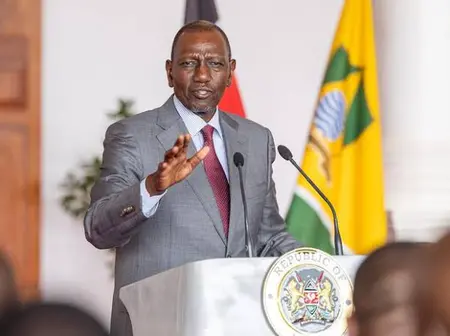
    President William Ruto on Monday announced the disbursement of Sh1.2 billion in bonuses to farmers supplying public sugar factories, alongside a raft of measures he said were transforming the sugar sector.

    Speaking at Nzoia Sugar Factory in Kanduyi, Bungoma county, Ruto said growers supplying the factory had received Sh195 million, with farmers in Mumias, Chemilil, Muhoroni and Sony sugar factories expected to receive their bonuses the following week.

    He attributed the sector's recovery to the leasing of public factories to private investors, which has enabled weekly payments to farmers and regular salaries for employees.

    Ruto also cited Sh1.9 billion invested by the Rai Group in Nzoia's modernisation, including factory renewal, estate rehabilitation and irrigation of 3,600 acres.

    Ruto also credited the write-off of Sh117 billion in factory debts and subsidised fertiliser costing Sh2,000 per 50kg bag for the revival of sugar millers.

    He said sugar production was expected to reach 900,000 metric tonnes this year, with the country targeting 1.2 million tonnes to achieve self-sufficiency.

  • Ruto hails Sh400m Sio Port project as Kenya moves to revive Lake Victoria transport

    Ruto hails Sh400m Sio Port project as Kenya moves to revive Lake Victoria transport

    President William Ruto has hailed the Sh400 million development of Sio Port in Busia County, saying the project will strengthen regional trade, improve connectivity and unlock the economic potential of the Lake Victoria Basin.

    Speaking during an inspection tour of the project, President Ruto said the investment was part of the government's broader plan to revive inland water transport and position Lake Victoria as a strategic transport and logistics corridor linking Kenya, Uganda and Tanzania.

    The project, being implemented by the Kenya Ports Authority, with Kenya Shipyards Limited as the contractor, commenced in February 2026 and is expected to be completed in 2027.

    Construction has gathered pace, with major civil works underway, including piling activities that will support the development of the port's main facilities.

    The project involves the construction of a 250-metre jetty, land reclamation and supporting infrastructure to facilitate the movement of passengers and cargo while providing better access to markets for fishing communities.

    “The investment will help reconnect communities around the lake, expand economic opportunities and deepen trade integration within the East African Community,” the President affirmed.

    The development comes amid renewed efforts to restore Lake Victoria's role as a regional trade and transport hub, building on the revival of Kisumu Port, which has increasingly emerged as a key gateway for cargo movement across the lake.

    Improved port infrastructure, vessel operations and logistics services at Kisumu have helped strengthen connections between Kenya and its regional neighbours, facilitating the movement of agricultural produce, industrial inputs and other goods.

    Sio Port is expected to complement these efforts by expanding the network of operational maritime facilities around Lake Victoria.

    KPA is also pursuing plans to modernise and develop other strategic ports and piers, including Kendu Bay, Asembo Bay, Homa Bay Pier, Sena Pier on Mfangano Island, Muhuru Bay and Sori-Karungu Bay.

    The planned investments are expected to improve access to markets for fishing communities, support tourism and stimulate economic activities across western Kenya.

    They will also provide alternative transport links for businesses and communities that depend on road networks to move goods and passengers across the region.

    The government has identified inland water transport as an important component of its economic transformation agenda, citing its potential to provide a cost-effective and environmentally sustainable alternative for moving people and cargo.

    For KPA, the investments signal an expansion of its operations beyond the Indian Ocean coastline into inland maritime infrastructure, with the authority seeking to strengthen Kenya's position in regional logistics and trade.

    Once completed, Sio Port is expected to add capacity to Lake Victoria's maritime network, improve cross-border connectivity and create new opportunities for trade, fishing and investment across the basin.

  • Ruto’s PS Dr. Omollo Highlights Makongeni Housing Project Set to Transform Nairobi’s Historic Estate

    Ruto’s PS Dr. Omollo Highlights Makongeni Housing Project Set to Transform Nairobi’s Historic Estate

    Principal Secretary for Internal Security and National Administration Dr Raymond Omollo has highlighted the ongoing transformation of Makongeni Estate in Nairobi's Eastlands through a major affordable housing development expected to change the area's residential landscape.

    The ambitious project is part of the government's Slum Eradication and Urban Renewal Programme, which seeks to replace overcrowded living conditions with modern homes and improved community facilities.

    Makongeni has a rich history dating back to the early 1920s, when it was established as a planned residential neighbourhood for African railway workers during the colonial period. Over the decades, the estate experienced significant changes, eventually developing into a densely populated settlement facing challenges associated with inadequate housing and infrastructure.

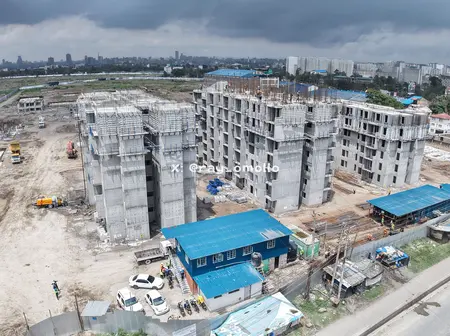
    The ongoing construction is expected to deliver 5,369 residential units spread across 27 high-rise buildings under two development phases.

    Phase 1A consists of eight twin blocks containing 2,258 housing units, while Phase 1B will provide another 3,111 units through 19 additional blocks.

    Beyond providing accommodation, the development incorporates several facilities intended to support residents' everyday needs and improve the quality of life within the estate.

    These amenities include childcare and early childhood development centres, clubhouses, a community centre, a swimming pool, basketball court, sanatorium, parking facilities and landscaped recreational spaces.

    Dr Omollo's department has also emphasised the connection between decent housing and public security, noting that well-organised residential neighbourhoods can help address conditions that create opportunities for criminal activities.

    The provision of properly planned roads, adequate street lighting and accessible public spaces is expected to strengthen security while making the estate more suitable for families.

    The Makongeni development represents a significant chapter in the government's urban renewal ambitions, with the historic neighbourhood poised for a new chapter after decades of physical and demographic changes.

    The project is expected to give residents access to improved housing while creating a more organised, secure and dignified urban environment.

    https://www.facebook.com/100094618572113/posts/1014443878386222/?app=fbl

  • Nzoia Sugar Farmers Set for Bigger Payday as Ruto Promises to Double Sh195m Bonus in 2027

    Nzoia Sugar Farmers Set for Bigger Payday as Ruto Promises to Double Sh195m Bonus in 2027

    Speaking during an event at Nzoia Sugar Factory in Bungoma County on Monday, November 23, Ruto said the current payment was only the beginning, promising farmers a bigger reward in the next financial cycle as the government works to improve the sugar industry.

    The President said the Sh195 million being distributed this year would be doubled next year, attributing the expected increase to improved planning and arrangements aimed at strengthening the sector.

    “I want to tell Nzoia sugarcane farmers, this year, we are paying Sh195 million in bonus. Next year, since we will have made proper arrangements, the bonus will be double what you have received this year,” Ruto said.

    He urged farmers to increase cane production, arguing that the sugar industry presented significant opportunities for growers as the government continued implementing plans to revive local sugar factories.

    Ruto defended his administration's development agenda, saying its commitments were guided by structured plans rather than speculation. He maintained that some of the projects and promises previously questioned by critics were now beginning to take shape.

    The President encouraged farmers to take advantage of the opportunities in sugarcane farming, saying the government was working towards improving the industry's performance and ensuring growers benefit from its recovery.

    The current Sh195 million bonus payout translates to Sh597.10 for every tonne of sugarcane delivered to Nzoia Sugar Company, providing additional earnings to farmers beyond payments for their cane.

    The announcement was made during a ceremony in Kanduyi, Bungoma County, attended by Ruto and Agriculture Principal Secretary Paul Kipronoh Ronoh.

    The Nzoia payment is part of a wider Sh1.2 billion bonus package announced for farmers supplying public sugar factories. The programme follows an earlier Sh50 million bonus payment to growers supplying Mumias Sugar Factory.

    For Nzoia farmers, the promise of a doubled bonus in 2027 raises expectations of improved earnings, although the proposed increase will depend on the government's planned arrangements and implementation of its commitments in the coming financial cycle.

    Source

  • President Ruto Says Kenya Could Stop Sugar Imports and Begin Exporting Within Three Years

    President Ruto Says Kenya Could Stop Sugar Imports and Begin Exporting Within Three Years

    Speaking on Monday, November 23, 2026, during an engagement with sugarcane farmers at the Nzoia Sugar Factory in Bungoma County, the President credited ongoing government reforms and increased domestic output for the sector's turnaround.

    According to the Head of State, national sugar production has surged significantly in 2026, with output already nearing 790,000 metric tonnes and projected to hit a historic 900,000 tonnes by the end of the year. He noted that the long-term target is to raise annual production to between 1.1 million and 1.2 million metric tonnes.

    To sustain the momentum and support growers, President Ruto highlighted key interventions implemented by his administration, including:

    Farmer Bonuses: The rollout of a KSh 195 million bonus payout for sugarcane farmers this year, with plans to double the amount next year.

    Debt Relief: The clearance of KSh 117 billion in historical debts owed to farmers and millers.

    Subsidized Inputs: A reduction in fertilizer prices from over KSh 7,000 to KSh 2,000 to lower production costs.

    The President emphasized that these measures—alongside management restructuring at state-owned mills like Nzoia Sugar—are designed to make cane farming profitable once again and secure Kenya's position in the regional export market.

    https://www.facebook.com/100040319114203/posts/2066828281337789/?mibextid=rS40aB7S9Ucbxw6v

  • Kenyans to Pay More for Electricity as EPRA Introduces Three New Charges for November Consumption

    Kenyans to Pay More for Electricity as EPRA Introduces Three New Charges for November Consumption

    Electricity consumers across Kenya are set to face higher power bills following the introduction of three additional charges by the Energy and Petroleum Regulatory Authority, further increasing the cost of living for households and businesses.

    The latest adjustments will see consumers pay an additional KSh4.56 per unit of electricity consumed in November, adding to the financial pressure on Kenyans already struggling with rising household and operational expenses.

    According to the announced adjustments, the additional costs comprise three components: a KSh3.54 fuel energy cost charge, a KSh1.0031 foreign exchange rate adjustment and a KSh0.013606 Water Resources Management Authority levy.

    The fuel charge accounts for the largest portion of the increase, reflecting the additional costs associated with electricity generation, particularly power produced using fuel-powered generators.

    Meanwhile, the foreign exchange adjustment is linked to fluctuations in the exchange rate, which affect the cost of electricity-related expenses incurred in foreign currencies.

    The WRMA levy is another component included in electricity billing, bringing the total additional charges to approximately KSh4.56 for every unit consumed.

    The latest development is likely to concern households, small businesses, manufacturers and other electricity-dependent enterprises, which may have to spend more to maintain their normal operations.

    For ordinary consumers, the increase means that the more electricity a household uses, the higher the additional amount reflected in its monthly bill.

    Businesses that rely heavily on electricity could also experience increased operating expenses, potentially putting further pressure on production costs and the prices of goods and services.

    The adjustments come at a time when many Kenyans are closely monitoring electricity prices and other essential expenses amid continued concerns about the rising cost of living.

    Consumers will now have to contend with the additional charges when settling their November electricity bills.

    Sources;

    https://www.facebook.com/share/p/19mtYLiAmw/