Global payments firm Visa has appointed former Safaricom Chief Financial Services Officer Esther Masese Waititu as its Senior Vice President and Group Country Manager for Southern and Eastern Africa.
The company announced the appointment on November 19, 2026, handing her oversight of its operations across 24 markets from a base in Johannesburg.
Waititu left Safaricom on July 31, 2026, with her resignation taking effect on August 1. She had held the role of Chief Financial Services Officer since February 2023, overseeing M-Pesa's payments, credit, savings, investment and insurance divisions.
In her new position, she will work with clients, partners, governments and Visa's internal teams to expand digital payments across the region.
She said Southern and Eastern Africa is a diverse region with huge potential to widen access, support businesses and bring more people into the digital economy.
Visa's regional president for Central and Eastern Europe, Middle East and Africa, Tareq Muhmood, said the region has some of the world's fastest-growing payments markets.
He added that Waititu brings deep industry expertise and a proven record of building businesses and partnerships at scale.
She comes with more than two decades in African banking. Before joining Safaricom, she was Director of Corporate Banking at KCB Bank Group from 2021 to February 2023, after a decade at Standard Bank Group and Stanbic Bank between 2011 and 2021.
Her earlier career included Standard Chartered Bank and Commercial Bank of Africa, which later merged into NCBA Group.
She holds an MBA from the University of Liverpool and a Bachelor of Business Administration from the University of Eastern Africa, Baraton.
The appointment comes as Visa steps up its African expansion. It opened its first data centre on the continent in Johannesburg in July 2025, with a reported R1 billion investment over three years, and plans new offices in Angola, Uganda and Mauritius before the end of 2026. It already operates in South Africa, Kenya, Ethiopia and Tanzania.
In a statement issued on Monday, November 23, the telecommunications giant confirmed that some customers were experiencing difficulties accessing or using the virtual payment platform.
The company apologised for the inconvenience and said its technical team was addressing the problem.
Safaricom further assured affected customers that an update would be provided once the service was fully restored.
"We're aware of the challenges on Globalpay Virtual Visa and the matter is being resolved. Once this is done you will be updated. Sorry for the inconvenience caused," the company stated.
The disruption adds to a series of technical challenges that have affected some of Safaricom's financial services in recent months.
On October 23, the company announced an interruption affecting M-Shwari, a mobile-based savings and credit service used by M-PESA customers.
At the time, Safaricom confirmed that the service was experiencing degradation and asked customers to exercise patience as its technical team worked to resolve the issue.
The telecommunications firm also previously addressed complaints from customers who encountered server exception errors while attempting to access M-PESA through its MyOneApp platform.
In its response, Safaricom explained that its technical team was investigating the problem and implementing measures to prevent similar disruptions.
Customers experiencing difficulties accessing M-PESA through MyOneApp were advised to use alternative channels, including the MySafaricom application, USSD code *334# and the SIM Toolkit.
Safaricom has not provided a specific timeline for the restoration of GlobalPay Virtual Visa services.
President William Ruto has issued bonus cheques worth KSh195 million to sugarcane farmers in Bungoma County as part of a wider KSh1.2 billion payout targeting farmers across the Western sugar belt.
The payments are intended to reward sugarcane farmers for their contribution to the country's sugar industry and provide additional financial support to households dependent on sugarcane farming.
The Bungoma allocation forms part of the government's broader initiative to support sugarcane growers in the Western region, where the sugar industry remains a major source of income, employment and economic activity.
Speaking during the payment ceremony at Nzoia Sugar Factory in Kanduyi Constituency on Monday, November 23, 2026, Ruto said the government was committed to ensuring sugarcane farmers enjoy benefits similar to those received by tea and coffee farmers.
The President also announced that the bonus rate had increased to KSh597.10 per tonne of sugarcane delivered, compared to KSh251 paid last year.
He further promised that farmers supplying Nzoia Sugar Company would receive double the current bonus in 2027, saying the government expected improved arrangements in the sector to support higher payments.
"Next year, since we will have made proper arrangements, the bonus will be double what you have received this year," Ruto said.
The Head of State attributed the changes in the sugar industry to reforms, including the leasing of public sugar factories to private investors. He said the new arrangements had enabled farmers to receive payments every seven days after delivering their cane, while factory employees were receiving their salaries monthly.
The wider KSh1.2 billion bonus package will also benefit farmers supplying Mumias Sugar Factory in Kakamega, Chemilil and Muhoroni factories in Kisumu, and Sony Sugar in Migori County. Payments to the other factories are expected to follow.
Agriculture Principal Secretary Paul Kipronoh Ronoh said the government had also written off KSh117 billion in sugar factory debts as part of efforts to restore the industry.
The announcement comes amid ongoing efforts to increase local sugar production, improve factory operations and reduce Kenya's dependence on imported sugar.
Ruto said the government wanted farmers to directly benefit from improvements in the industry, adding that the bonus payments were part of its commitment to restoring livelihoods in sugar-producing communities.
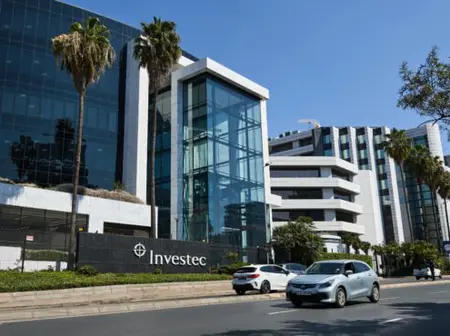
Investec is taking its corporate and investment banking capabilities into Kenya, Tanzania and Ghana through agreements with established local banks, choosing partnerships over acquisitions as South African lenders compete for a larger presence in African markets.
The agreements have already been signed, according to Cumesh Moodliar, head of Investec’s South African business, who disclosed the arrangements in an interview. The bank is also preparing a similar agreement with a Namibian lender.
Investec intends to provide specialist services that its local partners may not have developed internally, drawing on its operations in South Africa and the United Kingdom. These include global markets, corporate banking and investment banking capabilities.
“We have chosen not to go, at this point, bricks and mortar. We have chosen partnerships,” Moodliar said
The approach gives Investec access to additional African markets through existing financial institutions rather than requiring it to establish or acquire banking operations in each country.
Kenya is emerging as an important destination for South African banking groups seeking regional growth, with several lenders pursuing different approaches to building their presence.
Nedbank completed its acquisition of a controlling 66% stake in NCBA Group through a transaction valued at approximately KSh107.7 billion, giving the South African lender an established position in Kenya’s banking market.
FirstRand has also been exploring acquisition opportunities involving smaller Kenyan lenders, while Standard Bank has identified Stanbic Kenya as a central part of its ambition to become the country’s largest bank by 2030.
Absa is pursuing additional scale in Tanzania, Uganda and Zambia. Nigeria’s Access Bank has also expanded its international operations through acquisitions.
Investec’s strategy differs from these ownership-driven transactions. Its proposed model relies on agreements with banks that already possess local licences, customer relationships and operating infrastructure.
The arrangement could allow Investec to participate in corporate and institutional banking opportunities across several markets while retaining its existing organisational structure.
The strategy also comes as European banking groups reduce their African exposure. BNP Paribas, Crédit Agricole, Société Générale and Standard Chartered have sold or are selling operations across parts of the continent, with capital requirements, compliance costs and adjusted returns among the considerations behind their decisions.
South African and Nigerian lenders have been among the institutions seeking opportunities created by this withdrawal.
Investec’s latest financial results provide some context for its regional ambitions.
For the six months ended September 30, 2026, Investec Limited, which houses its Southern African operations, reported adjusted operating profit of £270.6 million, up 13.7% from £238 million in the corresponding period.
Measured in rand terms, the increase was 3.8%, reflecting the effect of currency movements on the group’s reported sterling results.
The Southern African business recorded a return on equity of 19%, compared with 18.3% a year earlier. Its return on tangible equity reached 19.1%, up from 18.5%.
Across the group, adjusted operating profit increased 5.6% to £494.5 million, while adjusted earnings per share rose 7.4% to 43.5 pence. On a neutral-currency basis, adjusted operating profit increased by just 0.3%, while adjusted earnings per share grew 2%.
Investec’s operating income reached £1.17 billion, representing 6.7% growth in sterling terms and 1.9% on a neutral-currency basis.
The group also reported annualised growth of 10.5% in net core loans to £37.4 billion and 6.9% in customer deposits to £46.3 billion.
Its Southern African wealth business recorded a 13.1% increase in funds under management to £30.5 billion, from £27 billion at the end of March 2026.
These results accompany a broader investment programme covering technology platforms, client-facing capabilities and selected strategic investments. Investec expects the programme to begin contributing incremental revenue from its 2028 financial year.
Group chief executive Fani Titi said the bank was continuing to allocate capital towards activities capable of generating returns above its cost of capital. He also identified strategic partnerships as part of its approach to expanding into adjacent markets, diversifying earnings and improving scale.
The group has projected a return on equity of approximately 16% and return on tangible equity of approximately 18% by the financial year ending March 2030.
Investec has also concluded an Alliance Banking partnership with Shoprite Group in South Africa, extending its partnership-led approach into the domestic financial services market.
Under the arrangement announced by the companies, Shoprite will use Investec’s banking licence to support its expanding financial services activities.
The partnership provides another example of Investec working with an established business to extend its banking capabilities through an existing distribution network.
In its latest financial results, Titi identified the Shoprite agreement as an important development in the group’s Southern African growth strategy.
The group is also reorganising its operations into three global segments: Private Client, Corporate and Investment Banking, and Corporate Mid-Market. Investec said the structure is intended to improve collaboration across its businesses and strengthen its client propositions.
Investec’s planned entry through local partnerships comes as Kenya’s banking industry undergoes a period of capital restructuring.
The Central Bank of Kenya’s increased minimum core capital requirements are putting smaller lenders under pressure to raise additional funding, consolidate or pursue other strategic arrangements.
The banking sector’s recapitalisation process has also attracted attention from larger regional institutions looking to acquire established lenders and expand their market positions.
For Investec, working with existing banks offers another way to participate in this changing financial landscape. Its proposed Kenyan partnership will bring corporate and investment banking expertise from its established operations into a market where larger financial institutions are pursuing expansion through ownership and consolidation.
The bank has already signed agreements covering Kenya, Tanzania and Ghana, with Namibia next on its regional expansion agenda.
President William Ruto has sparked fresh debate after making controversial remarks about the 2024 Finance Bill, a legislation that triggered nationwide Gen Z protests and deadly confrontations between demonstrators and security agencies.
Speaking during a public rally in Bungoma County on Monday, November 23, 2026, the Head of State claimed that the Finance Bill was eventually passed and did not cause any harm to the country.
"The 2024 Finance Bill was eventually passed, and there was no harm to our nation," Ruto stated.
His remarks are likely to reignite painful memories of June 2024, when thousands of young Kenyans took to the streets to oppose proposed tax increases contained in the Finance Bill.
The demonstrations, popularly known as the Gen Z protests, spread across several parts of the country, with young people demanding the withdrawal of the proposed legislation and greater accountability from the government.
On June 25, 2024, protesters breached Parliament in Nairobi as demonstrations escalated into deadly confrontations. Several people were killed, while others sustained serious injuries during the protests and subsequent security operations.
The crisis attracted international attention, with human rights organisations raising concerns over alleged excessive use of force, unlawful killings, abductions and enforced disappearances.
Following mounting public pressure, Ruto announced on June 26, 2024, that he would not sign the Finance Bill into law and that it would subsequently be withdrawn.
Although Parliament had passed the Bill, it never became law after the President declined to assent to it.
The President's latest remarks have therefore reopened questions about how the government remembers and interprets one of the most consequential moments of his administration.
For families who lost their loved ones during the demonstrations, the events of 2024 remain a painful chapter in the country's history.
Ruto's comments also come amid continued political discussions surrounding his administration's relationship with young Kenyans and demands for accountability over the handling of the protests.
His Bungoma statement is expected to attract reactions from opposition leaders, human rights activists and Kenyans who continue to demand justice for victims of the Gen Z demonstrations.
The project has stalled for six yearsPart 1When he retired as a civil servant in Nairobi sometime in 2019, 60-year-old Yusuf Abdi did not want to go back to Wajir County where he was born.He yearned to live in Nairobi and raise his children; that year, he heard about an affordable housing project in Ngara, this sparked his curiosity.
Visa appointed Waititu as its Senior Vice President and Group Country Manager for Southern and Eastern Africa, a role that places her in charge of the company's operations across 24 markets.
The appointment was announced on November 19, 2026, with Johannesburg, South Africa, serving as her regional base.
Waititu left Safaricom at the end of July, with her resignation taking effect on August 1, 2026. She had joined the company's senior leadership team in February 2023 as Chief Financial Services Officer.
During her tenure, she oversaw key M-Pesa operations, including payments, credit, savings, investments and insurance, making her departure a significant change within Safaricom's financial services leadership.
Waititu's new responsibilities at Visa
At Visa, Waititu will work with financial institutions, business partners, governments and other stakeholders to expand digital payments and strengthen the company's presence across Southern and Eastern Africa.
Her appointment comes at a time when digital transactions, mobile money services and financial technology are increasingly shaping how businesses and consumers move money across the continent.
Visa said the region offers considerable opportunities for expanding financial access and supporting businesses as more people participate in the digital economy.
Waititu expressed optimism about the region's potential, noting that its diversity and growth create opportunities to develop financial services, support businesses and widen access to digital payments.
Her new position will place her at the centre of Visa's regional expansion strategy, particularly as the company seeks to strengthen relationships with banks, mobile money providers, fintech firms and merchants.
Her career in banking and financial services
Waititu brings more than two decades of experience in banking, corporate finance and digital financial services to her new position.
Before joining Safaricom, she worked at KCB Bank Group, where she served as Director of Corporate Banking from 2021 until February 2023.
She previously spent approximately a decade working at Standard Bank Group and Stanbic Bank between 2011 and 2021. During that period, she held several senior positions, including Head of Client Coverage, Executive for Strategy Development and Regional Head of Transactional Products and Services for East Africa.
Her earlier professional experience also includes roles at Standard Chartered Bank and Commercial Bank of Africa, which later merged with NIC Bank to form NCBA Group.
Her experience across banking, corporate finance, transaction services and mobile money has given her exposure to different areas of Africa's financial sector.
Waititu holds a Master of Business Administration from the University of Liverpool and a Bachelor of Business Administration from the University of Eastern Africa, Baraton.
Visa steps up investment in Africa
Waititu's appointment comes as Visa continues to expand its investments and operations across Africa, targeting the growing demand for digital financial services.
In July 2025, the company opened its first data centre on the African continent in Johannesburg, South Africa. The facility was backed by a reported investment of R1 billion over three years and is intended to support payment services, including digital wallets, e-commerce and card transactions.
Visa has also outlined plans to establish additional offices in Angola, Uganda and Mauritius before the end of 2026, adding to its existing presence in countries including Kenya, South Africa, Ethiopia and Tanzania.
In Kenya, the company has expanded its Visa Accept product, targeting merchants and small businesses seeking to receive digital payments.
It has also introduced initiatives aimed at connecting consumers with travel and commerce opportunities, including Visa Destinations in South Africa.
Her appointment places a former Safaricom executive in a major regional leadership position at one of the world's largest payment companies, with responsibility extending across 24 African markets.
Saudi Arabia has announced plans to increase the number of local workers employed in 94 technical engineering professions, a move expected to intensify competition for foreign workers seeking employment in the country.
The Ministry of Human Resources and Social Development said the minimum Saudisation requirement for the affected professions would increase from 30% to 35%.
The new directive, announced jointly with the Ministry of Municipalities and Housing, will take effect on May 9, 2027. It will apply to private-sector establishments employing at least five workers in the designated occupations.
The affected positions fall under technician-level occupations in the Saudi Standard Classification of Occupations. They are separate from degree-qualified engineering positions, which are governed by different regulations.
Some of the professions covered include civil engineering technicians, electrical engineering technicians, mechanical engineering technicians, electronic engineering technicians, surveying technicians and mechanical maintenance technicians.
Architectural draftsmen are also among the occupations listed in the new requirements.
The ministry advised employers and workers to consult its official procedural guide to establish whether specific job titles fall under the affected categories.
Under the revised regulations, companies will be required to maintain the 35% Saudi employment threshold across all workers in the covered professions at establishment level.
For instance, a company employing 100 technicians in the affected categories must have at least 35 Saudi nationals working in those positions.
The government will support businesses through recruitment, training, professional qualification and employment programmes to help them comply with the requirements.
For foreign workers, the changes do not amount to an immediate ban on expatriate employment or an order to dismiss existing foreign employees.
However, employers may increasingly prioritise Saudi nationals when recruiting for vacancies as the implementation deadline approaches.
The previous 30% requirement for the affected professions came into effect on July 27, 2025.
Meanwhile, Saudi Arabia has announced another change to its Saudisation programme, increasing the minimum salary used to calculate Saudi employees under the Nitaqat system.
The threshold will rise from SAR 4,000 to SAR 5,000 on April 25, 2027, before increasing to SAR 6,000 in April 2028.
The changes could influence recruitment and workforce planning as companies adjust to the government's growing local employment requirements.
Kenyan and other foreign professionals seeking opportunities in Saudi Arabia may therefore face increased competition in the affected occupations.
Royal Mabati Factory has sent a clear message to Citizen TV after the station introduced a paywall for its online livestreams. The roofing company posted on Facebook that it will place its products wherever viewers end up going.
The post was written in Swahili and carried the hashtag RoofNiRoyal. It suggested that the company would put its roofing sheets on whichever station Kenyans choose to move to.
The reaction follows a decision by Royal Media Services to introduce a monthly YouTube membership of KSh 350 for Citizen TV and Inooro TV and Ramogi TV. The change took effect around 21 November and ended the free access viewers had enjoyed for years.
Many Kenyans voiced their frustration online and said they would switch to free options such as NTV and KTN News. Those stations quickly reminded the public that their livestreams remain free.
The numbers showed a clear shift. NTV reportedly recorded more than 30000 concurrent viewers on YouTube during its prime time bulletin while KTN reached nearly 27000 viewers on the first major evening after the change.
Advertisers pay for reach. Brands like Royal Mabati buy airtime and digital slots to get in front of large and engaged audiences. When viewers leave a platform in big numbers the value of advertising space on that platform drops.
The Royal Mabati post is an early public signal that at least one major brand is ready to move its money to the stations Kenyans are actually watching.
If the migration continues Citizen TV could lose more than viewers. It may also lose the advertising income that pays for its programmes and supports jobs across the newsroom.
The paywall may bring quick money but at a lasting cost.
President William Ruto's government has taken on fresh loans worth billions of shillings within a short period, raising new questions about Kenya's growing public debt and the country's ability to meet its financial obligations.
A report submitted to the National Assembly by the National Treasury shows that the government signed seven new foreign loan agreements between May 1 and August 31, 2026, valued at approximately KSh 233.37 billion.
The amount translates to an average of KSh 58.34 billion every month, or approximately KSh1.94 billion daily during the four-month period.
According to the report, which was prepared by the Treasury and dated November 9, the loans were obtained from multilateral and bilateral lenders.
However, only two of the seven loans had been disbursed by the time the report was submitted to Parliament. This means the KSh233.37 billion represents the total value of the signed loan agreements rather than money already received in full.
Treasury Cabinet Secretary John Mbadi explained that the loans would support several government programmes and development projects.
Some of the planned projects include government reforms, consultancy services, improvements in water supply in Mombasa and Kwale counties, and road infrastructure development.
According to the National Treasury's August 2026 Public Debt Bulletin, Kenya's total public debt had reached KSh 13.47 trillion by the end of August.
External debt accounted for KSh5.80 trillion, while domestic borrowing stood at approximately KSh7.67 trillion.
The figures highlight the financial pressure facing the government as it seeks money to finance development programmes while meeting existing debt obligations.
The latest borrowing also follows an earlier Treasury report covering January to April 2026, which showed that the government had secured seven foreign loans worth KSh416.2 billion.
As the country's debt continues to grow, attention is likely to remain on how the borrowed money is spent and whether the projects funded will deliver benefits to ordinary Kenyans.