
Category: Economy&Finance

  • Kenya Government Issues Crucial Fuel Price Update Ahead of November and December Review Cycle

    Kenya Government Issues Crucial Fuel Price Update Ahead of November and December Review Cycle

    Drivers are expected to continue purchasing fuel containing higher levels of sulphur for six more months following the administration's decision to prolong a temporary easing of restrictions, citing ongoing disruptions in worldwide petroleum supply chains.

    In a statement issued on November 11, 2026, the Ministry of Investments, Trade and Industry revealed the ruling. The move followed advice from the National Standards Council along with a petition from the Ministry of Energy and Petroleum.

    The regulatory framework stipulates that automotive gas oil (diesel) and premium motor spirit (petrol) must not exceed a sulphur concentration of 50mg/kg. Compliance is governed by Kenyan standards KS EAS 177:2025 and KS EAS 158:2025 for each fuel type, respectively.

    Secretary for Trade Lee Kinyanjui explained that the move came after a technical review of the disturbances, specifically examining the Middle East's geopolitical climate and the tensions surrounding the Strait of Hormuz.

    The ministry states that broadening the supplier base reduces the chance of domestic fuel shortages by increasing the variety of import origins for Kenya.

    Kinyanjui characterized the policy as purely short-term, explaining that its goal is to maintain uninterrupted fuel supplies and safeguard the economic landscape. He noted that the plan will be reassessed upon the expiration of the six-month period, or sooner should international supply conditions improve.

    The declaration arrives just days ahead of the Energy and Petroleum Regulatory Authority’s (EPRA) scheduled monthly fuel cost assessment on November 14, 2026. This timing situates the ruling within the broader context of Kenya’s immediate fuel pricing and supply strategies.

    Authorities emphasized that no lasting alterations to fuel quality benchmarks are under consideration. They stated that the temporary easing of rules will expire or be reassessed once supply circumstances permit a restoration of the original thresholds.

    Source: https://www.facebook.com/share/p/1DuA1idqrK/
  • Oil Prices Fall More Than $1 as Iran and Ukraine Peace Hopes Weigh on Markets

    Oil Prices Fall More Than $1 as Iran and Ukraine Peace Hopes Weigh on Markets

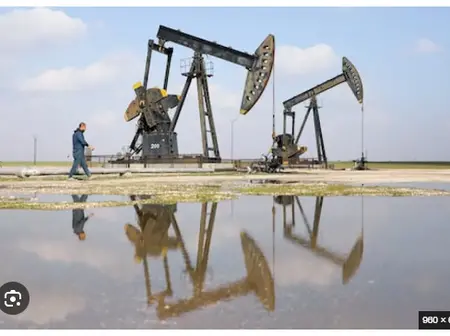
    The decline followed gains recorded on Wednesday, when Brent crude increased by approximately 1.4 per cent while WTI rose by 0.6 per cent. Both benchmarks had reached their lowest levels in about two months earlier in the week, according to market reports.

    Market analysts attributed the latest losses partly to expectations that diplomatic efforts could help reduce geopolitical tensions. Hiroyuki Kikukawa, chief strategist at Nissan Securities Investment, told Reuters that behind-the-scenes efforts were underway to secure a ceasefire between Russia and Ukraine. He also noted expectations that the conflict involving Iran would not escalate ahead of next week's US-China summit.

    In the Russia-Ukraine conflict, negotiators from both countries agreed to a major prisoner exchange following two days of peace talks in Abu Dhabi. However, US mediators indicated that significant disagreements remained, particularly over territorial issues. Ukrainian President Volodymyr Zelenskyy expressed hope that concrete progress towards resolving the war could be achieved before the end of the year.

    Meanwhile, tensions involving Iran continued to create uncertainty in the Middle East. Iranian security chief Mohsen Rezaei warned that there would be consequences if the United States launched further strikes against Iran. Washington maintained that nuclear issues must form part of initial negotiations aimed at ending the conflict.

    Supply concerns also remained important in determining market movements. Reuters reported that OPEC+ crude oil production increased significantly in October, largely driven by higher output from Saudi Arabia, despite continued disruption to shipments through the Strait of Hormuz.

    Additionally, US crude oil inventories increased by approximately nine million barrels during the latest reporting week, according to data from the American Petroleum Institute (API), cited by market sources. The US Energy Information Administration was expected to release its official inventory figures later on Thursday.

    Despite the price decline, uncertainty surrounding Middle Eastern oil shipments and the outcome of diplomatic negotiations continued to influence investor sentiment.https://web.facebook.com/share/p/1QFwPhqHFr/

  • Crystal Asige questions KRA over new tax rules for Persons with Disabilities

    Crystal Asige questions KRA over new tax rules for Persons with Disabilities

    Crystal Asige questions KRA over new tax rules for Persons with Disabilities

    Nominated Senator Crystal Asige has challenged the Kenya Revenue Authority (KRA) over proposed tax exemption rules for persons with disabilities, warning that the changes could undermine rights and increase the financial burden on affected families.

    In a post shared on her X account on Thursday, November 12, 2026, Asige criticised provisions in the Draft Income Tax (Persons with Disabilities, Parents or Guardians Tax Exemptions) Regulations, 2026, particularly those relating to disability classification, assessment fees and tax relief for parents and guardians.

    “Nothing about us, without us, yet here we go again,” Asige said, describing the proposed regulations as a direct attack on gains made by persons with disabilities.

    One of her main concerns is Regulation 10(2), which she says introduces different exemption levels based on the severity of a person’s disability.

    Under the proposed framework, tax exemptions would vary according to disability classifications, with some categories qualifying for partial relief while others would receive full exemptions.

    Asige argued that the approach risks disadvantaging people whose disabilities are classified as mild, saying access to tax relief should not be determined by a hierarchy of human suffering.

    “Equity isn’t a ladder,” she said, calling for an approach that recognises the needs and rights of persons with disabilities.

    Asige also questioned a proposed Ksh1,000 processing fee for parents or guardians seeking tax exemptions for caring for persons with severe disabilities.

    She argued that the requirement conflicts with the Persons with Disabilities Act, 2025, which she says repealed assessment fees.

    Times Tower, the head offices of Kenya Revenue Authority. PHOTO/@3AKRACorporate/X

    The draft regulations provide for a separate tax exemption for a parent or guardian caring for a person with a certified severe disability who cannot meet their basic needs. However, the application would be restricted to one parent or guardian for each person with a disability.

    Asige questioned whether the arrangement adequately recognises families in which both parents share caregiving responsibilities or those raising more than one child with a disability.

    The senator further opposed a proposed requirement for people with permanent disabilities to undergo reassessment every five years, arguing that it would impose unnecessary costs and inconvenience.

    “Permanent means permanent,” she said, insisting that rights should not require repeated proof and payment to remain accessible.

    KRA invited members of the public, professionals and other stakeholders to submit comments on the draft regulations by November 24, 2026, before they are finalised.

    The authority says the proposed rules are intended to establish procedures for implementing tax exemptions provided for under the Persons with Disabilities Act, 2025.

    Asige said she would submit formal interventions to challenge provisions she considers inconsistent with the constitutional rights of persons with disabilities.

  • Sudan Lifts Ban on Kenyan Tea Imports, Reopening Sh9 Billion Export Market

    Sudan Lifts Ban on Kenyan Tea Imports, Reopening Sh9 Billion Export Market

    The lifting of the restriction ends a trade disruption that began in March 2025, when Sudan suspended imports from Kenya following diplomatic tensions between the two countries.

    Khartoum imposed the ban after Kenya hosted leaders of the Rapid Support Forces (RSF), a paramilitary group involved in Sudan's ongoing conflict with the Sudanese Armed Forces. Sudan accused Nairobi of interfering in its internal affairs, while Kenya maintained its position on regional diplomatic engagement.

    The reopening followed diplomatic engagements between Kenyan and Sudanese officials. President William Ruto announced the breakthrough on November 11, 2026, following discussions with Sudanese Prime Minister Kamil Idris on the sidelines of the Common Market for Eastern and Southern Africa (COMESA) summit in Harare, Zimbabwe.

    In welcoming the decision, Ruto said it would restore opportunities for Kenyan exporters and support farmers and their families.

    The restrictions significantly affected Kenya's tea industry, with exporters losing access to an important destination for their products.

    According to the Tea Board of Kenya, tea export volumes to Sudan declined during the restrictions, while export earnings also fell. The disruption left shipments stranded and forced traders to seek alternative markets.

    The East African reported that more than 3.44 million kilograms of Kenyan tea, valued at over Sh1.34 billion, remained in Mombasa warehouses by August 2026.

    Although the lifting of the ban restores formal market access, Sudan has not yet announced the expected volume of new imports or when the first shipments will resume.

  • Simbisa Brands Acquires Full Ownership of Kenyan Delivery Firm Kutuma for Sh86 Million

    Simbisa Brands Acquires Full Ownership of Kenyan Delivery Firm Kutuma for Sh86 Million

    The transaction, equivalent to about US$663,882, was disclosed in the company's financial accounts, according to reports published on November 11, 2026. Simbisa previously held a 75 per cent stake in Kutuma before completing the buyout.

    Kutuma operates several delivery platforms, including Dial a Delivery, which handles food orders from Simbisa's restaurant chains. It also operates Yum, an online marketplace for restaurants and grocery stores, and Swyft, which provides delivery and logistics services to businesses.

    The acquisition comes as delivery services become an increasingly important part of Simbisa's Kenyan operations. According to the group's financial results for the year ended June 30, 2026, delivery orders in Kenya increased by 59 per cent compared with the previous financial year.

    The company completed approximately 3.23 million deliveries during the period, up from 2.03 million in the previous year. Delivery sales accounted for 27.4 per cent of the group's Kenyan turnover, compared with 21.7 per cent a year earlier.

    Simbisa's increased investment in delivery services reflects changing consumer preferences towards online ordering and home delivery, as restaurant operators seek to expand customer access beyond physical outlets.

    Through Kutuma, the group also has an opportunity to expand its logistics services beyond its own restaurant brands by serving independent restaurants, retailers and other businesses.

    The company has indicated that delivery and digital ordering remain important areas of investment, particularly where they offer opportunities for improved customer convenience and sustainable returns.

    The latest acquisition consolidate simbisa's ownership of a business that has become an increasingly significant part of its Kenyan operations, although the company has not publicly detailed any immediate changes to Kutuma's management or operating structure.

  • Kenyans Receive Fresh Fuel Update as Mbadi Reveals Government Plan to Reduce Pump Prices

    Kenyans Receive Fresh Fuel Update as Mbadi Reveals Government Plan to Reduce Pump Prices

    Kenyans have received a fresh update on fuel prices following remarks by Treasury Cabinet Secretary John Mbadi about the government's plans to reduce the cost of petroleum products in the coming weeks.The announcement has attracted attention from motorists, public transport operators and businesses that have been struggling with the high cost of fuel.

    Speaking during an interview with Ramogi FM on November 3, Mbadi explained that the government was planning to use money from the fuel stabilisation fund to help reduce pump prices during the November-December pricing period.

    According to the Cabinet Secretary, the government deliberately avoided using the stabilisation fund during the October fuel price review. This was because officials expected international fuel prices to increase as European countries prepared for the winter season.Mbadi explained that increased energy demand in Europe and other Western countries could put pressure on global petroleum prices, eventually affecting Kenyan consumers.

    He said the government wanted to preserve the available funds so that they could be used to protect Kenyans from possible sharp increases.The development comes after the Energy and Petroleum Regulatory Authority (EPRA) increased fuel prices in October 2026.Under the current prices, motorists in Nairobi are paying KSh226.96 per litre for super petrol, KSh227.76 for diesel and KSh219.87 for kerosene.

    These prices took effect on October 15 and are expected to remain in place until November 14, 2026.The next fuel price review is expected to take effect on November 15.Mbadi explained that the stabilisation fund helps the government support oil marketers through subsidies, reducing the amount of international price increases passed on to consumers.However, the Cabinet Secretary did not reveal the exact amount by which fuel prices could decrease in the next revie

    soures:https://www.facebook.com/share/p/1bJ1TR9bS8/

  • Why the Govt Will Be Visiting Every Home, Business Starting Next Week

    Why the Govt Will Be Visiting Every Home, Business Starting Next Week

    Kenyans should expect a knock on the door from Social Health Authority (SHA) officials in the coming weeks, as the agency launches a month-long nationwide drive to get more people registered and paying their contributions.

    Unequal Scenes - Nairobi

    She said officers will be deployed across the country to take services closer to the public and offer direct help with registration and employer compliance.

    Officers will first target Kenyans who have not yet signed up, helping them enrol together with their eligible dependants and resolving any problems that stopped them from registering.

    They will also check the contribution records of existing members, guiding them on reconciling their accounts and clearing unpaid amounts. Employers will be briefed on registering workers, making deductions and remitting contributions on time.

    Members will also be told about the Lipa SHA Pole Pole facility, which lets them pay their contributions in instalments.

    The drive comes as the government tries to close the gap between registration and payment of contributions under the Social Health Insurance Fund, which replaced the National Hospital Insurance Fund (NHIF) in October 2024.

    Health Principal Secretary Ouma Olunga said that by the end of October 2026, about 70 per cent of Kenyans had been registered. SHA data shows Nairobi leading with 1.6 million members, followed by Kiambu with 800,000, then Nakuru and Mombasa.

    SHA also warned the public against fraudsters posing as its officers to demand money during the exercise. It said all authorised officials carry official identification badges that can be verified.

    Source; https://www.facebook.com/share/p/18ifvHsE9i/

  • Meet a Woman Who Quit Her High-Paying Job in Canada to Start Selling Baskets in Kenya

    Meet a Woman Who Quit Her High-Paying Job in Canada to Start Selling Baskets in Kenya

    Every time Jackie Kasandy returned from a trip to Kenya, her friends and colleagues in Canada asked her the same thing: where could they buy the handmade items she brought back? That simple question eventually changed the direction of her life.

    In 2014, she left her corporate job and put her marketing experience into a venture she believed in. She founded Kasandy Locally Global, a business that sources handcrafted products directly from artisan communities in Kenya and other African countries and sells them to customers across North America.

    Fair trade sits at the centre of her approach. She says the artisans behind each product must be fairly paid for their skill and labour, so every kiondo or beaded necklace that reaches a Canadian home comes with the story of the people who made it.

    Her work has also changed how the products are viewed. Items that many Kenyans associate with daily life, roadside stalls or airport gift shops are presented to her customers as home décor and fashion accessories, valued for their craftsmanship and authenticity.

    For the artisans, that shift means access to a wider market and a more stable income, with their stories delivered to buyers’ doorsteps.

    Kasandy’s journey shows that building a business across borders does not always need a groundbreaking idea. Sometimes it is about recognising the value in what has always been there and finding the right audience for it.

    Source; https://www.facebook.com/share/p/1GspQZZRpz/

  • Govt Makes Major Petrol, Diesel Update as Kenyans Await New Fuel Prices for November and Decemeber

    Govt Makes Major Petrol, Diesel Update as Kenyans Await New Fuel Prices for November and Decemeber

    Motorists will keep buying fuel with a higher sulphur content for another half year after the government extended a temporary relaxation of the limits, blaming continued disruption in global petroleum supply chains.

    Under the arrangement, the maximum sulphur content in both automotive gas oil (diesel) and premium motor spirit (petrol) remains at 50mg/kg. The limits are applied under the Kenyan standards KS EAS 177:2025 and KS EAS 158:2025 respectively.

    Trade Cabinet Secretary Lee Kinyanjui said the extension followed a technical assessment of the disruptions, with particular focus on the geopolitical situation in the Middle East and tensions around the Strait of Hormuz.

    According to the ministry, the adjustment widens the range of sources from which Kenya can import fuel, lowering the risk of shortages on the local market.

    Kinyanjui described the measure as strictly temporary, saying it is meant to keep fuel flowing without interruption and protect the economy. He added that it will be reviewed when the six months end, or earlier if global supply conditions improve.

    The announcement comes days before the Energy and Petroleum Regulatory Authority (EPRA) carries out its monthly fuel price review on November 14, 2026. That timing places the decision within the wider picture of Kenya’s short-term fuel pricing and supply management.

    The government stressed that no permanent change to fuel quality standards has been proposed. It said the relaxation will lapse or be revisited once prevailing supply conditions allow a return to the standard limits.

    Source; https://www.facebook.com/share/p/1DuA1idqrK/

  • Kenyans Await New Fuel Prices as Government Announces Major Diesel and Petrol Update

    Kenyans Await New Fuel Prices as Government Announces Major Diesel and Petrol Update

    The government has issued a new fuel update, citing uncertainty in the Middle East and disruptions to global oil supply chains as reasons for taking precautionary measures to safeguard the country's petroleum supply.

    The announcement comes ahead of the next fuel price review by the Energy and Petroleum Regulatory Authority (EPRA), which is expected to determine the cost of petrol, diesel and kerosene for the coming pricing period.

    According to the government, the move is aimed at preventing possible fuel shortages and ensuring a steady supply of petroleum products across the country.

    The uncertainty in the Middle East has raised concerns in international oil markets, with fears that disruptions could affect the availability and transportation of petroleum products. Such developments can have significant consequences for countries that depend on imported fuel, including Kenya.

    The latest government update comes at a time when fuel prices remain a major concern for many Kenyans. Changes in the cost of petroleum products often have a direct impact on transport fares, businesses and the prices of essential commodities.

    Motorists and other consumers are now waiting for the upcoming EPRA announcement to establish whether the latest developments in the global oil market will influence local pump prices.

    The government has maintained that its measures are intended to protect the country's fuel supply and reduce the risk of disruptions as uncertainty continues in the international market.