According to sources familiar with the matter confirmed that the board was meeting late Wednesday to determine Huang's future at the artificial intelligence chipmaker.
The allegations involve two separate reported relationships. The New York Times reported that Huang had a relationship with Kimberly Powell, Nvidia's vice-president of healthcare, citing five people familiar with the matter.
The second allegation concerns Alice Huang, a businesswoman associated with Singapore-based data centre company Megaspeed. Reports have raised questions about her alleged links to Chinese intelligence, prompting concerns about possible national security implications.
Report says that Nvidia had launched an internal investigation and engaged outside legal counsel to examine the circumstances surrounding the allegations.
In a message to employees on Sunday, Huang acknowledged being unfaithful to his wife and accepted responsibility, although he did not publicly provide details of the relationship.
The board's latest deliberations mark a shift from its earlier position. On November 8, Nvidia's directors publicly expressed confidence in Huang and the company's management team.
According to Nvidia's corporate bylaws allow directors to remove the chief executive through a majority vote. Huang, 63, co-founded the company in 1993 and owns approximately 3.6% of its shares.
His potential departure would create uncertainty over succession, with no officially confirmed replacement announced.
Nvidia has not publicly confirmed a decision to remove Huang. The company is scheduled to release its quarterly financial results on November 17, adding to investor attention surrounding the leadership uncertainty
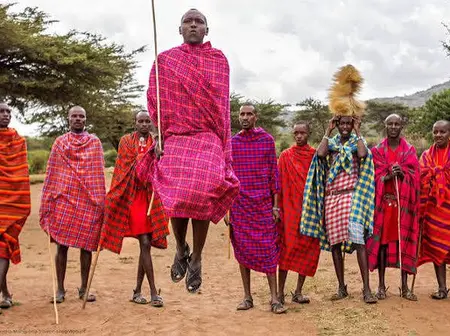
The annual event has provided an opportunity for Maa-speaking communities to showcase their traditions, customs, food, music and way of life through various cultural activities.
The festival has also featured traditional dances, songs and cultural performances, with participants dressed in colourful traditional attire. Different groups have taken turns presenting their cultural practices, giving visitors an opportunity to learn more about the history and identity of the Maa-speaking communities.
Traditional homesteads have also been established at the event, offering visitors a glimpse into the communities' traditional ways of living, including their housing arrangements, social practices and daily activities.
The gathering also provides an opportunity for cultural exchange among participants from the three countries. Through music, food, storytelling and traditional displays, the festival highlights the similarities and unique practices found among the different communities.
The festival comes at a time when cultural tourism continues to attract interest from visitors seeking experiences beyond conventional wildlife safaris.
As the celebrations continue, the Maa Cultural and Tourism Festival remains an important platform for passing traditions to younger generations and promoting the cultural identity of Maa-speaking communities across national borders.
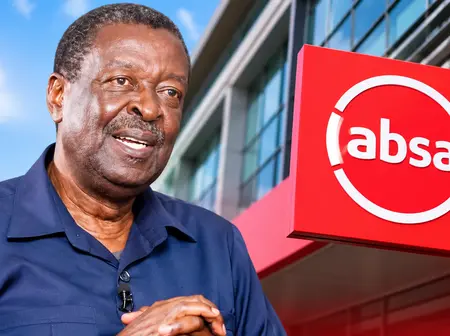
First Assurance Investments has completed its acquisition of Absa Group’s insurance business in Kenya, taking full control of two insurance companies in a transaction that marks the lender’s exit from the country’s insurance market.The acquisition, which gives the investment firm ownership of First Assurance Company and Absa Life Assurance Kenya, was finalised after regulatory approvals and the fulfilment of customary closing conditions.
East African Legislative Assembly (EALA) MP David Ole Sankok has criticised the Kenya Revenue Authority (KRA) over plans to assess the degree of disability before granting tax exemptions, warning that the move could undermine benefits intended to help persons with disabilities live dignified lives.
Sankok described the proposed approach as regressive and discriminatory, arguing that determining the extent of someone’s disability based on their physical appearance could disadvantage people with invisible disabilities and those who rely on expensive assistive devices.
Speaking on K24 TV’s Politalks with Brian Amwai, on Thursday, November 12, 2026, Sankok questioned why KRA officials should determine the degree of disability before allowing individuals to enjoy tax exemptions.
“It is regressive and unacceptable for persons with disabilities that KRA will now determine the degree of your disability before they accept that you are tax-exempt,” he said.
He further described the proposed arrangement as “retrogressive, archaic, unpalatable, ignominious and unacceptable” to persons with disabilities.
Sankok, who previously served as chairman of the National Council for Persons with Disabilities and as a nominated MP between 2017 and 2022, said tax exemptions were introduced to help persons with disabilities meet the additional costs associated with their conditions.
He argued that the benefits were meant to enable them to purchase assistive devices and other essential equipment without the burden of additional taxation.
According to Sankok, persons with disabilities face expenses that are often overlooked when their needs are assessed based on their physical appearance.
He cited the cost of assistive devices used by blind people, saying a Braille writing instrument could cost as much as Ksh180,000, compared to an ordinary pen that costs about Ksh50.
“The pen that you use in your office is 50 shillings. For a blind person, the pen is a Braille, which is Ksh180,000. I have an extra expense. That is why we came up with this issue of tax exemption,” he explained.
The former legislator also questioned how KRA officials would establish the degree of disability, arguing that physical mobility does not necessarily reflect the financial burden associated with a person’s condition.
He compared his experience using crutches with that of another person who relies on hearing aids, noting that the latter could incur significantly higher expenses despite appearing physically able.
“My crutches cost Ksh5,000. A hearing aid costs Ksh500,000. So when you determine who is more disabled, you will be tempted to give me a tax exemption and deny somebody who uses Ksh500,000 for him to be able to hear what we are saying,” he said.
Sankok further pointed out that wheelchair users also incur significant costs, including expenses associated with making their homes and toilets accessible.
He warned that relying on how someone walks or appears could result in people with less visible disabilities being denied benefits despite facing substantial financial challenges.
Sankok maintained that the tax exemption framework was designed to address the additional financial demands faced by persons with disabilities and promote equal participation in society.
He said the objective was to ensure that persons with disabilities could afford essential equipment and enjoy a dignified life without being subjected to unnecessary financial barriers.
In a public notice issued on Monday, November 9, 2026, KRA invited members of the public, tax professionals and other stakeholders to submit their views on the proposed Income Tax (Persons with Disabilities, Parents or Guardians Tax Exemptions) Regulations, 2026.
The authority, acting on behalf of the Cabinet Secretary for the National Treasury, said the draft regulations had been published on its website for review before they are finalised.
Kenyans have until November 24, 2026, to submit their comments and recommendations.
“In compliance with the Statutory Instruments Act, Cap. 2A, the Commissioner General on behalf of the Cabinet Secretary for the National Treasury has developed the draft Income Tax (Persons with Disabilities, Parents or Guardians Tax Exemptions) Regulations, 2026,” KRA stated.
“In compliance with the same Act, the Commissioner General, on behalf of the Cabinet Secretary for the National Treasury, invites interested members of the public, professionals and stakeholders to submit their inputs and comments for consideration in finalizing the Regulations. The draft Regulations have been posted on the KRA website. You may download the the Regulations for your reference.”
Rono is a digital journalist with a proven track record in newsroom leadership and content creation. Currently a Digital Writer for People Daily Digital, Emmanuel’s career is rooted in a lifelong passion for storytelling. Let's talk here: emmanuel.rono@mediamax.ke or ronoemmanuel685@gmail.com
The company received 18,492 applications covering 2,454,598,686 shares, exceeding the 2 billion shares available in the offer by approximately 454.6 million shares.
Quickmart offered the shares at Sh7.50 each, with the transaction structured as an offer for sale of existing shares held by its shareholder, Sokoni Retail Kenya Limited.
The listing will involve all 4 billion issued ordinary shares of the company on the NSE's Main Investment Market Segment. The two billion shares offered to investors represent 50 per cent of the company's issued share capital.
According to the company's allocation announcement, Kenyan and East African retail investors, including eligible company staff, and regional institutional investors received full allocation of their valid applications.
Foreign investors submitted applications worth Sh3.58 billion, representing 298 per cent of the shares initially reserved for their category. The offer also attracted interest from international cornerstone investors.
Quickmart's proposed market entry follows its expansion across Kenya's retail sector. The company reported operating 72 stores across 16 counties and recorded revenue of Sh50.4 billion in the 2025 financial year, according to its October 26 corporate announcement.
The IPO provides an opportunity for investors who did not participate in the initial share offer to purchase the company's shares through secondary-market trading once trading commences.
Unlike the IPO, subsequent purchases will be determined by prevailing market demand and supply rather than the original Sh7.50 offer price.
As of November 11, the company's published timetable identifies November 12 as the scheduled commencement date for public trading.
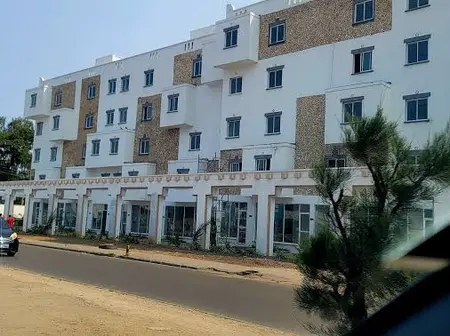
County Executive Committee Member (CECM) for Lands, Urban Planning and Housing, Mohamed Hussein, announced the suspension on Tuesday, November 10, 2026.
Hussein said construction would remain stopped until the developer fulfils its obligations to the county government and addresses concerns raised by families who were displaced to pave the way for the project.
The county claims it is yet to receive its agreed share of the houses and commercial spaces under the joint venture agreement.
According to the agreement, Mombasa County is entitled to 10 per cent of the housing units and commercial spaces developed under the project. This would give the county approximately 180 houses from the planned 1,800 units.
The dispute has also raised concerns among former residents of Buxton Estate, who say they were moved out more than seven years ago with promises that they would return to new houses after construction.
Some residents claim they were given KSh240,000 instead of the KSh300,000 they expected to receive to help them pay rent during the relocation period.
They are now demanding that the developer and the government honour the promises made to them.
However, the developer, GulfCap Real Estate, has defended its position, saying the project should be allowed to continue. Its Chief Executive Officer, Chris Ochieng, said 492 homeowners were expected to receive their houses in December.
He also said the county's 10 per cent share would be handed over at the end of the project.
The suspension could delay the completion of the housing project and affect hundreds of workers.
The dispute has left prospective homeowners and former residents waiting for a solution as both sides disagree over how the project should proceed.
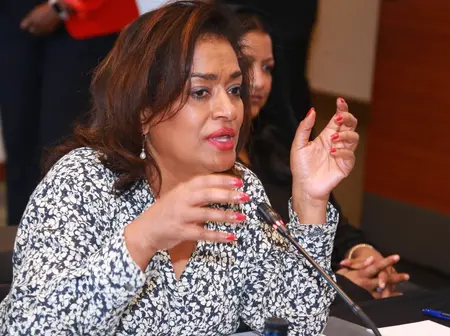
She emphasised that public participation should involve the actual beneficiaries, arguing that decisions affecting vulnerable citizens should not be made without hearing their concerns and collecting their views.
Her remarks come amid renewed attention to proposed changes to tax exemptions for persons with disabilities in Kenya.
On November 9, 2026, the Kenya Revenue Authority (KRA) published draft Income Tax (Persons with Disabilities, Parents or Guardians Tax Exemptions) Regulations, 2026, inviting members of the public, professionals and relevant stakeholders to submit their recommendations. The deadline for submissions is November 24, 2026.
Under the proposed framework, tax exemptions would be determined partly by the nature and severity of an individual's disability, with the maximum exemption capped at KSh150,000 of monthly income.
The draft introduces different exemption categories. For instance, moderate visual impairment would attract 30 per cent of the maximum exemption, severe impairment 60 per cent, while blindness would qualify for the full exemption. Mild visual impairment is assigned zero exemption under the proposed schedule.
Currently, eligible registered persons with disabilities can apply for income-tax exemption on the first KSh150,000 of their monthly income under the existing framework.
The draft also contains transitional provisions under which existing exemption certificates would generally remain valid until expiry. However, beneficiaries who fail to meet the proposed eligibility requirements could lose their exemptions once the regulations are gazetted.
The proposals have yet to become law. KRA has invited public submissions before finalising the regulations, leaving room for stakeholders, including organisations representing persons with disabilities, to present their concerns.https://www.facebook.com/share/v/19ofMHXzaD/
Kenyans will soon receive assistance with their Social Health Authority (SHA) accounts following the announcement of a nationwide registration and compliance exercise.
Under the arrangement, SHA officials will conduct field visits to help citizens register, check their contribution records and resolve outstanding compliance issues.
The exercise will also target employers, with officials expected to assist businesses in understanding and meeting their social health insurance obligations.
Of particular interest is the provision for Kenyans who have accumulated unpaid contributions.
SHA has encouraged affected members to take advantage of the Lipa SHA Pole Pole facility, which allows outstanding contributions to be settled through instalments.
The arrangement is intended to make it easier for individuals struggling with accumulated arrears to regularise their accounts.
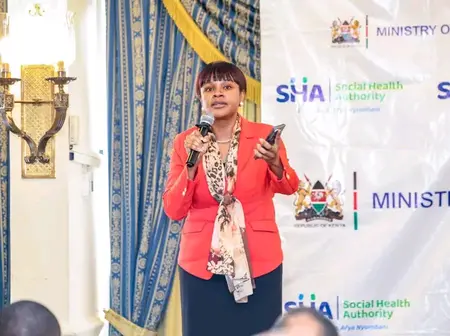
SHA Chief Executive Officer Mercy Mwangangi has urged Kenyans to cooperate with the visiting officials and use the opportunity to address their insurance obligations.
She noted that the exercise would help more citizens access assistance while strengthening participation in the country's social health insurance programme.
Mwangangi further emphasised that maintaining updated contribution records was important in supporting the government's broader Universal Health Coverage agenda.
The authority maintains that achieving Universal Health Coverage requires collective participation from citizens, employers and other stakeholders.
The campaign is also expected to improve public awareness about registration procedures, contribution requirements and available payment arrangements.
With the visits scheduled across the country, Kenyans are encouraged to prepare their relevant details and seek clarification from authorised SHA representatives.
The exercise provides an opportunity for individuals and businesses to review their compliance status before the December 15 deadline.
The service targets merchants registered on Pochi La Biashara, Safaricom's M-PESA service that allows business owners to receive customer payments directly into their business wallets.
Through Fuliza ya Pochi, eligible traders can access short-term overdraft facilities when their business accounts have insufficient funds to complete certain transactions. The facility is expected to benefit small-scale traders, shopkeepers, market vendors and other entrepreneurs who frequently experience cash-flow challenges.
Interested business owners can access the service by following a few simple steps. They need to dial *334# using their Safaricom line, select option 8 for Pochi La Biashara, choose option 1 for Join Pochi Fuliza, read and accept the terms and conditions, and enter their M-PESA PIN to confirm registration. Eligible customers can also access the facility through the Pochi Mini App on My OneApp.
Repayment is designed to be automatic, with outstanding amounts recovered from subsequent payments received through the merchant's Pochi wallet.
The introduction of Fuliza ya Pochi highlights Safaricom's continued efforts to support small businesses through digital financial solutions. For entrepreneurs who depend on daily sales, access to emergency working capital could help them restock products, pay suppliers and meet urgent business expenses.
However, borrowers are encouraged to understand the applicable charges, repayment conditions and borrowing limits before using the facility.
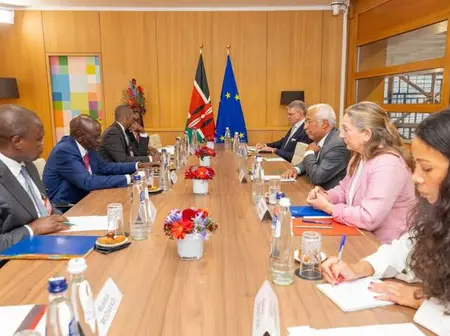
President William Ruto has called on European investors to increase their investments in Kenya, particularly in key sectors of the economy. The President said Kenya is ready to work with international investors to support economic growth and create more opportunities for its people.
Ruto made the appeal while highlighting the investment opportunities available in the country. He urged European businesses to consider investing in manufacturing, infrastructure, agriculture, energy and healthcare.
The President noted that these sectors play an important role in Kenya's development. He said increased investment would help improve services, create jobs and strengthen the country's economy.
In the manufacturing sector, more investments could support the growth of local industries and increase the production of goods. This would also help Kenya reduce its dependence on imported products while creating employment opportunities for young people.
On infrastructure, the government is seeking more partnerships to improve roads, transport systems and other important facilities. Better infrastructure is expected to support businesses and make it easier to move goods and services across the country.
Agriculture was also highlighted as an important area for investment. The sector supports millions of Kenyans and contributes greatly to the country's economy. More investment could help farmers access modern farming equipment, better technology and improved markets.
In the energy sector, investors are being encouraged to support projects that will increase electricity supply and promote clean energy. Healthcare is another key area where additional funding could help improve medical facilities and access to quality services.
Ruto's appeal comes as Kenya continues to seek partnerships with foreign investors to support its development plans.
The government hopes that stronger economic ties with European countries will attract more businesses, create employment and improve the living standards of Kenyans.