Category: Economy&Finance

  • Ruto courts European investors to boost manufacturing, infrastructure

    Ruto courts European investors to boost manufacturing, infrastructure

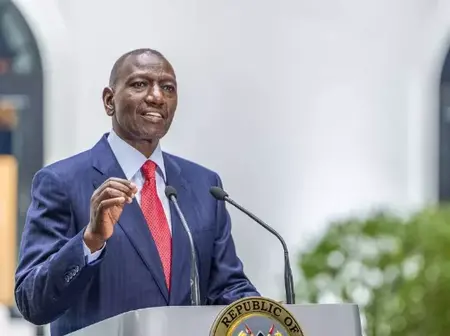
    President William Ruto has urged European investors to increase investments in Kenya's manufacturing, infrastructure, agriculture, energy and healthcare sectors.

    The President stated that deeper economic cooperation should translate into jobs and improved livelihoods.

    Ruto said Kenya was seeking to move beyond trade relations with the European Union (EU) towards partnerships that support local production, technology transfer and industrial growth.

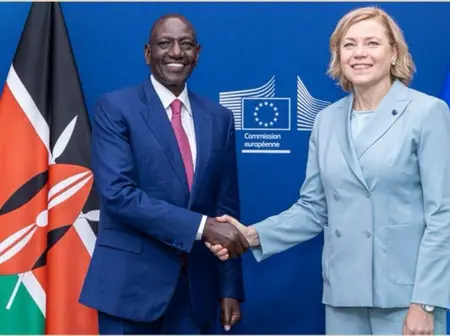
    Speaking at State House, Nairobi, during a meeting with EU delegations serving across Africa, the President said European investments would be critical in unlocking Kenya's economic potential.

    "We seek greater European investments in manufacturing, infrastructure, agriculture, energy and healthcare that expands local production, transfer of technology and create jobs," Ruto said.

    He identified the EU Global Gateway Initiative as an important platform through which Kenya could attract affordable financing for transformative projects.

    The President urged European partners to mobilise resources through concessional and blended financing instruments while ensuring meaningful participation of African enterprises.

    "Its success must be measured by infrastructure delivered, jobs created, technology transferred and local industries strengthened," he said.

    Ruto welcomed the designation of Nairobi as the EU's fourth regional hub in Africa, describing it as an important development in strengthening diplomatic and economic relations between Kenya and Europe.

    He said the partnership should ultimately be assessed through its impact on ordinary citizens rather than the number of agreements signed.

    "Ultimately our relationship will be measured by opportunities we create, investments we mobilise and improvements we make in the lives of the people," he said.

    The President noted that the European Union remained Kenya's largest export market, accounting for 21 per cent of the country's global exports.

    He cited agricultural products, including tea, coffee, horticultural produce and cut flowers, as among the key exports sustaining hundreds of thousands of livelihoods.

    Ruto said the Economic Partnership Agreement (EPA), which came into force in June 2024, had opened opportunities for Kenyan products in the European market.

    He called for its effective implementation alongside the 10-year strategy launched in July, saying the arrangements must translate market access into tangible economic benefits for Kenyan businesses and producers.

    The President also identified digital transformation as another promising area for cooperation, urging the EU to support Kenya's efforts to expand its digital economy.

    He further called for more affordable financing, saying developing economies needed access to resources that could support their development priorities without imposing unsustainable financial burdens.

    On regional security, Ruto appreciated European support for African-led peace missions, noting the importance of international cooperation in addressing conflicts and promoting stability across the continent.

    He also addressed Kenya's preparations for the 2027 general election, reaffirming the government's commitment to the rule of law, accountability and human rights.

    Ruto said Kenya welcomed consultations with the EU on the possibility of deploying an election observer mission, provided the engagement was consistent with the country's laws and established procedures.

    "We welcome consultation on an EU observer mission consistent with our laws and procedures," he said.

  • Quickmart PLC set to list shares on the Nairobi Securities Exchange

    Quickmart PLC set to list shares on the Nairobi Securities Exchange

    Quickmart PLC set to list shares on the Nairobi Securities Exchange

    Quickmart PLC is listing its shares on the Nairobi Securities Exchange (NSE) on Thursday, November 12, 2026, opening the door for Kenyans who missed its initial public offering (IPO) to buy into the supermarket chain.

    In a post shared on its X account on Thursday, November 12, the NSE announced the listing, marking the next stage for investors seeking to own shares in the retailer.

    Quickmart’s KSh15 billion IPO closed on October 30, attracting applications worth Ksh18.41 billion against the target, representing an oversubscription of 22.7 per cent.

    The supermarket chain announced on November 6 that it had received 18,492 applications for 2.45 billion shares against the two billion shares offered to investors.

    Investors who did not participate in the IPO can now seek to purchase Quickmart shares through licensed stockbrokers and investment banks as trading begins on the NSE.

    During the IPO, the retailer offered shares at Ksh7.50 each, with a minimum application of 500 shares, equivalent to Ksh3,750.

    However, the IPO price does not automatically apply once trading begins. The market price will depend on buying and selling activity and may rise above or fall below the original offer price.

    Quickmart has not announced a second IPO or another public subscription window. Investors who missed the initial offer will therefore need to buy shares on the secondary market.

    Kenyans interested in investing will need a Central Depository System (CDS) account, which holds shares traded on the NSE.

    Those without one can open an account through a licensed stockbroker or investment bank before instructing the broker to purchase their preferred number of shares.

    The final cost will depend on the prevailing share price and applicable transaction charges.

    NSE CEO Frank Mwiti speaking during the listing of TRIFIC SEZ Green USD Income REIT June 29, 2026. PHOTO/@NSE_PLC X

    According to the revised IPO timetable, shares allocated to successful applicants were scheduled to be transferred to their CDS accounts on November 11, 2026 while refunds for unsuccessful or partially successful applications were expected to begin on the same date.

    Quickmart’s listing offers Kenyans an opportunity to own a stake in the supermarket chain, but investors should assess the company’s financial performance, operating costs, expansion plans and dividend policy before committing their money.

    The company has indicated a target dividend payout of 95 per cent of profit after tax for the 2026 financial year and 90 per cent for 2027, before targeting at least 80 per cent thereafter. Actual payments remain subject to the board’s discretion and the company’s financial position.

    Investors should not assume that the IPO price or proposed dividend payouts guarantee future returns.

    The listing gives investors who missed the initial offer another opportunity to acquire Quickmart shares, with the market determining the price they pay.

  • Protecting Disability Relief: Asige Raises Alarm Over Graded Income Tax Exemptions by KRA

    Protecting Disability Relief: Asige Raises Alarm Over Graded Income Tax Exemptions by KRA

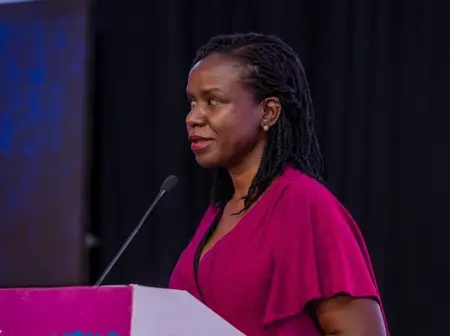
    Crystal Asige questions KRA over new tax rules for Persons with Disabilities

    Speaking on Thursday, November 12, 2026, the disability rights advocate questioned the rationale behind introducing graded exemption percentages that could reduce financial relief for thousands of Kenyan workers and caregivers.

    Under KRA’s draft income tax regulations, the taxman seeks to replace uniform relief frameworks with tiered exemption bands based on medical severity classifications.

    While individuals with profound or complete disabilities would still qualify for a 100 per cent exemption up to the statutory cap of Ksh150,000 monthly income, those categorized with moderate or severe visual, hearing, speech, or intellectual impairments face reduced tax relief bands ranging between 30 and 60 per cent.

    Senator Asige, who sponsored the landmark Persons with Disabilities Act of 2025, warned that subjecting citizens to fragmented severity grading undermines the progressive spirit of disability legislation.

    She noted that the draft rules also impose burdensome documentation hurdles, including mandatory specialist medical reports from public hospitals, employer introductory letters detailing how a disability affects job performance, and potential physical appearances before assessment committees.

    Disability rights organizations and legal observers have echoed Asige’s concerns, warning that restrictive verification procedures risk locking out eligible beneficiaries and escalating healthcare expenses for low-income households.

    Stakeholders further emphasized that tax exemptions serve as vital economic equalizers offsetting high medical, assistive device, and caregiving costs.

    As public participation and legislative scrutiny over the draft regulations continue, Asige pledged to engage Treasury officials and parliamentary committees to protect existing disability entitlements.

    Balancing rigorous tax compliance with inclusive social protection remains essential to upholding constitutional rights and safeguarding vulnerable citizens across Kenya.

    What are your thoughts about this articles? Share your reactions in the comment section and don't forget to share and follow for more updates.

    https://peopledaily.digital/inside-politics/crystal-asige-questions-kra-over-new-tax-rules-for-persons-with-disabilities

  • Reimagining Highway Stopovers: Cable Cars and Luxury Hotels Earmarked for Great Rift Valley

    Reimagining Highway Stopovers: Cable Cars and Luxury Hotels Earmarked for Great Rift Valley

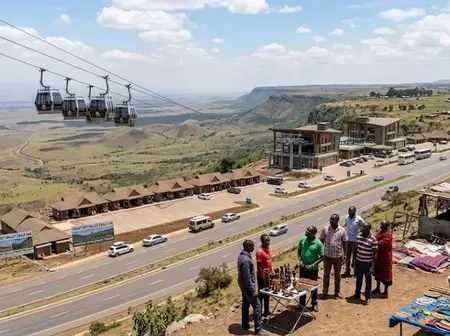
    Rironi-Mau Summit: How Ruto plans to turn Kenya’s famous Rift Valley viewpoint into a cable car tourism hub

    Disclosing the blueprint during a project inspection tour, Roads and Transport Cabinet Secretary Davis Chirchir announced that the site will feature suspended passenger cable cars, modern curio shops, and upscale hotels.

    At the center of the redevelopment is a motorized cable car network designed to link the main A8 Nairobi–Nakuru highway section with the A8 South escarpment corridor.

    Rather than serving purely as a brief roadside pull-off, the elevated transit system will carry visitors across steep terrain, offering uninterrupted aerial views of the Great Rift Valley floor, Mount Longonot, and the surrounding landscape.

    To encourage motorists and international tourists to linger longer, the government intends to reorganize commercial spaces and attract private hospitality investors.

    Chirchir noted that existing roadside stalls fall short of modern safety standards, prompting plans to build structured retail outlets alongside boutique hotels that capitalize on the natural beauty of the escarpment.

    The viewpoint transformation forms a strategic component of the broader Ksh170 billion Rironi–Mau Summit public-private partnership road project launched by President Ruto in November 2025.

    While contractors focus on completing primary highway sections ahead of the 2027 target, officials indicated that procurement details, project costs, and implementation timelines for the cable car system will be finalized subsequently.

    Integrating world-class tourism infrastructure along one of East Africa's busiest transit corridors aims to generate new revenue streams and stimulate local enterprise.

    Balancing modern commercial redevelopment with the livelihoods of nearly 300 existing small-scale vendors will remain essential to realizing inclusive economic benefits across the region.

    What are your thoughts about this articles? Share your reactions in the comment section and don't forget to share and follow for more updates.

    https://peopledaily.digital/business/rironi-mau-summit-how-ruto-plans-to-turn-kenyas-famous-rift-valley-viewpoint-into-a-cable-car-tourism-hub

  • Ruto Woos European Investors to Boost Manufacturing and Infrastructure in Kenya

    Ruto Woos European Investors to Boost Manufacturing and Infrastructure in Kenya

    President William Ruto has stepped up efforts to attract European investors to Kenya, calling for stronger partnerships that can create jobs, expand local industries and improve the country's infrastructure.

    The President has urged European companies to move beyond buying raw materials from African countries and instead establish factories in Kenya where products can be processed before being exported to international markets.

    During the Kenya-Belgium Business Roundtable in Brussels in June 2026, Ruto told investors from Belgium, the Netherlands and Luxembourg that Kenya was ready to work with businesses interested in manufacturing, technology, agriculture and clean energy.

    He argued that Kenya should benefit more from its natural resources by increasing local production and value addition rather than exporting raw materials for processing abroad.

    Details of the Kenya–Belgium agreements on digital economy and trade

    Ruto also encouraged European firms to take advantage of Kenya's renewable energy resources, particularly geothermal power, to support environmentally friendly manufacturing.

    The President noted that Kenya's Economic Partnership Agreement with the European Union gives Kenyan products duty-free and quota-free access to the European market. He said the arrangement provides investors with an opportunity to manufacture goods locally and sell them across Europe.

    The government also wants to strengthen infrastructure to support industrial growth. Ruto proposed closer cooperation between the Port of Antwerp-Bruges in Belgium and the Kenya Ports Authority to improve cargo handling, cold storage and the movement of agricultural exports.

    On technology, he encouraged partnerships in artificial intelligence, cloud computing, cybersecurity and semiconductor skills development.

    The investment discussions also produced commitments in the digital sector. During his Brussels visit, Ruto welcomed €102 million in investments under the EU-Kenya Digital Partnership, alongside €37 million in EU support for the Blue Raman submarine cable extension connecting Djibouti, Somalia, Kenya and Tanzania.

    The European Union has described Kenya as an important economic and strategic partner in Africa. Its Global Gateway programme supports investments in transport, renewable energy and digital connectivity.

    According to the European Commission, the partnership also targets improved trade links and stronger private-sector investment to support Kenya's economic development.

    Ruto's latest investment push comes as Kenya seeks to attract more foreign capital, expand manufacturing and create employment opportunities for its growing population.

    The challenge will now be turning the investment discussions into actual factories, infrastructure projects and jobs for Kenyans.

    Sources:https://www.the-star.co.ke/news

  • “Regressive and Unacceptable” Ole Blast KRA Plan to Grade Disabilities Before Granting Tax Exemption

    “Regressive and Unacceptable” Ole Blast KRA Plan to Grade Disabilities Before Granting Tax Exemption

    EALA MP David Ole Sankok has attacked proposed tax rules that would see the severity of a person's disability assessed before they qualify for income tax exemption, calling the move regressive and unacceptable.

    "It is regressive and unacceptable for persons with disabilities that KRA will now determine the degree of your disability before they accept that you are tax-exempt," he said.

    The Kenya Revenue Authority published the draft Income Tax (Persons with Disabilities, Parents or Guardians Tax Exemptions) Regulations, 2026 for public consultation on November 9.

    Under the draft, registered persons with disabilities who earn an income could qualify for a monthly exemption of up to Ksh150,000, but the amount would depend on the severity of the disability, and people with mild disabilities would not qualify.

    At present, eligible persons with disabilities qualify for exemption on up to Sh150,000 of monthly income under a 2010 order, and KRA proposes replacing that blanket amount with relief linked to assessed severity.

    The draft uses disability assessments based on the International Classification of Functioning, Disability and Health framework, with medical reports from a government health facility and applications routed through the National Council for Persons with Disabilities.

    KRA says the aim is a fair, transparent and accountable framework guided by the Persons with Disabilities Act, 2025.

    It follows a nationwide vetting exercise that KRA, the National Council for Persons with Disabilities and the Ministry of Health began in June 2025 to determine who qualifies.

    Sankok has previously weighed in on disability tax issues, explaining that PWDs are exempt from PAYE up to Sh150,000 but not from VAT.

    On leadership accountability, Sankok said: "An aspiring leader has the right to make promises in exchange for your vote, but an elected leader must deliver on the promises they already made because votes were already given to them."

    Read together, his comments amount to a call for leaders to honour commitments to persons with disabilities.

    The draft is now out for public consultation, giving stakeholders a chance to push back.

    Link:

    https://www.facebook.com/share/v/1CeyfRZkR7/

  • Dennis Makori: How Kenyan Entrepreneur Built Millions From Sending Love Messages

    Dennis Makori: How Kenyan Entrepreneur Built Millions From Sending Love Messages

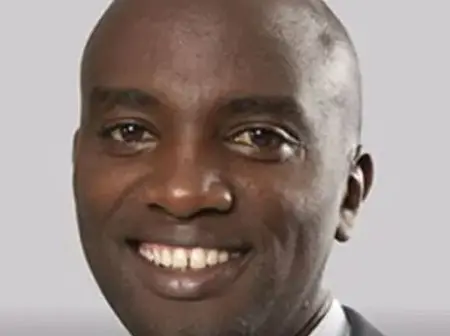
    His entrepreneurial journey was not an easy one. Driven by an interest in technology, Makori relied on self-teaching to acquire software development skills. Together with his partners, he co-founded Onfon Media, a software development company focused on providing premium content and value-added mobile phone services.

    The company sought to offer services such as romantic text messages, ringtones and bulk SMS messaging, targeting mobile phone users who wanted entertainment and convenient communication services.

    However, before the business could become operational, the founders encountered a major setback. They needed regulatory approval to offer their services, but the licensing process took approximately one year.

    During this period, the entrepreneurs continued incurring expenses without generating any income. Their savings gradually dwindled as they waited for the necessary approval.Despite the financial pressure, Makori and his partners refused to abandon their dream.

    Their breakthrough eventually came in April 2007 when Onfon Media secured the required licence and signed a connectivity agreement with Safaricom, allowing the company to begin offering its services.

    Although the approval marked a major milestone, the business still faced financial difficulties because the founders had exhausted much of their savings during the waiting period.In September 2007, the company secured its first deal, earning approximately KSh44,000.

    The achievement gave the founders hope that their idea could become a sustainable business. By the end of 2007, Onfon Media had generated approximately KSh500,000 in revenue.

    Makori's journey highlights how a simple business idea, combined with persistence and technical skills, can create opportunities in Kenya's growing technology industry.

  • Beyond Political Promises: Siaya Senator Challenges Investors to Build Regional Tech Hubs

    Beyond Political Promises: Siaya Senator Challenges Investors to Build Regional Tech Hubs

    Oburu Oginga reveals how Nyanza can create jobs through technology

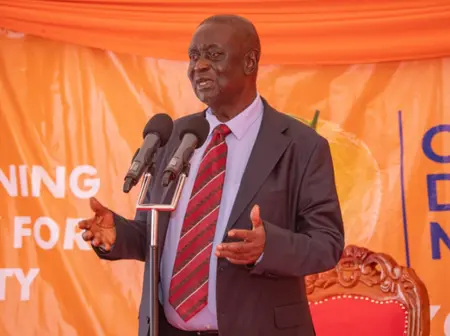
    Speaking during the launch of the Nyanza Digital Summit 2026 in Nairobi on Wednesday, November 11, Oginga challenged leaders across Siaya, Kisumu, Homa Bay, Migori, Kisii, and Nyamira counties to collaborate under a unified "One Digital Nyanza" framework.

    According to Oginga, unlocking the region's economic potential requires targeted investments in software development, business process outsourcing (BPO), digital health innovation, and agricultural technology.

    He emphasized that modernizing traditional sectors like farming and fishing through digital solutions can stimulate local commerce while opening global remote work opportunities for young graduates living outside traditional urban tech centers.

    The lawmaker urged private investors and technology companies to move beyond political promises by establishing physical innovation hubs and employment-generating enterprises across the six counties.

    With technical support from the ICT Authority, the regional initiative aims to expand affordable internet connectivity, strengthen digital literacy programs, and align local university training with evolving industry demands.

    Scheduled for December 3–4, 2026, the upcoming regional summit will bring together county governments, policymakers, and private sector stakeholders to formalize investment commitments and infrastructure partnerships.

    Observers note that the ultimate success of the initiative depends on translating summit resolutions into functional digital infrastructure and measurable household income growth across rural communities.

    As Nyanza counties prepare to host the landmark technology conference, regional leaders remain focused on leveraging public-private partnerships to tackle youth unemployment.

    Expanding digital infrastructure and equipping young people with marketable technical skills remain essential steps toward fostering inclusive economic transformation across Western Kenya.

    What are your thoughts about this articles? Share your reactions in the comment section and don't forget to share and follow for more updates.

    https://peopledaily.digital/inside-politics/oburu-oginga-reveals-how-nyanza-can-create-jobs-through-technology

  • Jane Seymour Net Worth

    Jane Seymour Net Worth

    thumbnail

    Jane Seymour’s net worth is estimated at $60 million. The British-American actress, artist, author and entrepreneur has built her fortune through a career spanning more than five decades. She is best known for playing Solitaire in the 1973 James Bond film Live and Let Die and Dr. Michaela Quinn in the television drama Dr. Quinn, Medicine Woman.

  • Kenyans Given Six-Month Update on Petrol and Diesel Sulphur Levels

    Kenyans Given Six-Month Update on Petrol and Diesel Sulphur Levels

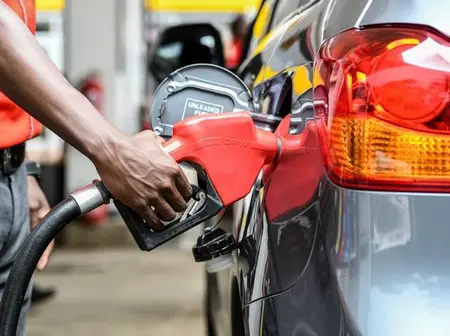
    The Kenyan government has announced a six-month extension of temporary higher sulphur limits in petrol and diesel, citing growing uncertainty in international petroleum markets and concerns over possible fuel supply disruptions.

    The Ministry of Investments, Trade and Industry confirmed the decision in a statement issued on Wednesday, November 11, following a request from the Ministry of Energy and Petroleum and a recommendation by the National Standards Council.

    Trade Cabinet Secretary Lee Kinyanjui explained that the extension was necessary to protect the country from potential fuel shortages caused by ongoing geopolitical tensions and disruptions affecting global petroleum supply chains.

    According to the government, instability in the Middle East, particularly tensions surrounding the Strait of Hormuz, has continued to create uncertainty in international oil transportation and supply networks.

    The government says allowing higher sulphur levels will enable Kenya to access fuel from a wider range of international suppliers, reducing the possibility of disruptions affecting local availability.

    Under the temporary arrangement, the maximum permitted sulphur content in petrol and diesel will remain at 50 milligrams per kilogram (mg/kg).

    The limits apply under the Kenyan standards KS EAS 158:2025 for petrol and KS EAS 177:2025 for automotive gas oil (diesel).

    Kinyanjui maintained that the decision was not a permanent change to Kenya's fuel quality requirements but an emergency measure intended to maintain uninterrupted supplies and protect economic stability.

    The ministry further indicated that the arrangement would be reviewed after six months or earlier if international petroleum supply conditions improve.

    The announcement comes as motorists and other fuel consumers await the Energy and Petroleum Regulatory Authority's next monthly fuel price review, scheduled for November 14, 2026.

    The extension is likely to attract public attention because fuel quality and availability remain important concerns for motorists, transport operators and businesses that depend heavily on petroleum products.

    For now, the government insists that maintaining reliable fuel supplies remains its priority as Kenya navigates uncertainty in the international energy market.

    Sources;

    https://www.tuko.co.ke/business-economy/energy/646498-govt-explains-kenya-extending-higher-sulphur-levels-petrol-diesel-6-months/?fbclid=IwdGRjcAViNi9jbGNrBWI1imV4dG4DYWVtAjExAHBkb2YFc3J0YwZhcHBfaWQMMzUwNjg1NTMxNzI4AAEfJbWuGvpFV-Fwy3U2Se9AVgUlCSzjGtrOhnadLMlADW-ANlB-_72QxzkdwkY_aem_KDaxluYun72bngNRIeiVaA