Kenya will keep its relaxed sulphur limits for petrol and diesel for a further six months, the Ministry of Investments, Trade and Industry announced on 11 November 2026.
The extension was approved after the Ministry of Energy and Petroleum made a request and the National Standards Council recommended it, according to a ministry press release. The measure is intended to broaden the range of fuel Kenya can import and reduce the risk of supply shortages.
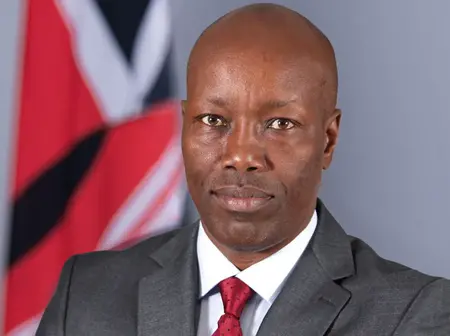
Trade Cabinet Secretary Lee Kinyanjui said the decision followed a technical assessment of strains on global petroleum supply chains, the geopolitical situation in the Middle East and tensions around the Strait of Hormuz.
The current maximum allowable sulphur content in automotive gas oil and premium motor spirit is 50mg/kg. The applicable standards are KS EAS 177:2025 for automotive gas oil and KS EAS 158:2025 for premium motor spirit.
The government described the adjustment as strictly temporary. It will be reviewed at the end of the six-month period, or sooner should global supply conditions stabilise. No permanent change to fuel quality standards is proposed, and the measure will lapse or be revisited once supply conditions allow a return to the standard limits.
The ministry said the objective is to maintain uninterrupted fuel availability and protect economic stability.
The announcement comes ahead of the Energy and Petroleum Regulatory Authority’s scheduled monthly fuel price review on 14 November 2026.
The operational shift follows an executive directive issued by President William Ruto through the National Transport and Safety Authority (NTSA), detailed in an internal circular from KRA’s Customs and Border Control Department.
“The President issued a directive through NTSA that vehicles imported by licensed dealers be released upon payment of all applicable customs duties, taxes and levies pending completion of the vehicle registration process,” the circular stated.
Under the revised framework, the clearance sequence follows a streamlined multi-stage path.
First, licensed dealers lodge an import declaration through the Integrated Customs Management System (iCMS) upon a vehicle’s arrival. Dealers pay standard customs duties, taxes, and levies at this initial stage, while NTSA registration fees and associated administrative levies remain deferred until the unit sells.
Following confirmation of payment, customs officers perform a physical inspection of the vehicle. A centralized release officer then evaluates the entry records and grants official authorization for release.
Before moving any vehicle out of the customs precinct, dealers apply for a Kenya Dealer (KD) identifier via the NTSA digital platform. NTSA generates a unique identifier pairing the dealer’s KD number with the vehicle’s specific chassis number, which automatically synchronizes with KRA’s customs database.
Finally, a border control officer verifies that the identifier logged in iCMS mirrors the physical details displayed on the vehicle.
“If the details match, then the motor vehicle can be released to the dealer for onward transfer to the dealer’s yard,” KRA noted.
Vehicles can now remain on display at dealer premises while businesses secure buyers. Once a transaction is completed, the dealer submits a formal registration application to NTSA and settles the outstanding registration fees via the eCitizen portal.
KRA confirmed that the newly assigned registration number will transmit directly to the customs system through an application programming interface (API), ensuring real-time data reconciliation and comprehensive audit tracking.
Counties would be barred from projecting own-source revenue more than 15 per cent above their last reported and audited collections under a bill now before the Senate Finance and Budget Committee.
The Public Finance Management (Amendment) Bill, 2026 is sponsored by Kiambu Senator Karungo Thang’wa. It targets three provisions of the Public Finance Management Act: Section 107(2), Section 131 and Section 135, where it would insert a new subsection.
The case for the ceiling rests on collection shortfalls. Counties raised Sh96.08 billion in own-source revenue last financial year against a target of Sh106.08 billion, leaving a gap of roughly Sh10 billion.
The County Governments Budget Implementation Review Report for 2025-26 points to a wider pattern: 20 counties collected less than three-quarters of the revenue they had approved in their budgets.
Under the proposal, county assemblies reviewing budget estimates from county executives would have to confirm that projected own-source revenue sits within the 15 per cent limit. Where a county collects more than it projected, it would be required to take a supplementary budget back to its assembly.
The bill remains under consideration. It has not been passed, and the committee has not set out a timeline for its decision.
A deduction appearing on your payslip does not necessarily mean the money has reached your retirement account.
This is a warning Kenyan employees should take seriously, as the National Social Security Fund (NSSF) urges workers to verify their monthly pension contributions.
NSSF has directed salaried workers to compare their payslips with their NSSF contribution statements to establish whether employers are remitting all the money deducted from their salaries.
The advisory raises an important concern for employees across the country: what happens when an employer deducts NSSF contributions every month, but the payments fail to appear in a worker’s pension records?
NSSF says employees should not assume that deductions reflected on their payslips have automatically been credited to their accounts.
Instead, workers should independently verify their records and seek clarification whenever they identify missing payments.
Employees can start by accessing the official NSSF Member Self-Service Portal, where registered members can obtain their contribution statements.
The statement should then be compared against monthly payslips to establish whether the deductions made by an employer correspond with the contributions recorded by the Fund.
Workers can access the official portal through this link: https://selfservice.nssf.or.ke/member/
NSSF also provides mobile services through the USSD code *303#.
Employees should pay particular attention to months when their payslips show NSSF deductions, but their contribution statements do not reflect corresponding payments.
However, a missing entry does not automatically establish that an employer has withheld the money. Workers should first establish whether the payment is delayed or whether some contributions are being remitted through an approved Tier II retirement benefits arrangement.
NSSF has advised employees who identify missing contributions to contact their employers and request confirmation of the remittance.
Workers should begin by identifying the specific months affected and calculating the amounts deducted from their salaries.
They should then contact their human resources or payroll departments and request clarification on the missing payments.
Employees should also retain copies of their payslips, NSSF statements and any communication with their employers as supporting evidence.
Where the employer operates an approved Tier II arrangement, workers should confirm with the employer or the relevant retirement benefits scheme whether those contributions have been received.
If the discrepancy remains unresolved, employees can escalate the matter to NSSF through its official customer service channels or visit a branch for assistance.
Another important detail employees should understand is that NSSF contributions are shared between workers and their employers.
Under the Year Four contribution rates introduced in February 2026, both parties contribute six per cent of an employee’s pensionable earnings.
The contributions are divided into two categories, Tier I and Tier II.
Tier I covers the first Ksh9,000 of monthly pensionable earnings, while Tier II applies to earnings above Ksh9,000 up to the upper limit of Ksh108,000.
For example, an employee earning Ksh30,000 monthly should contribute Ksh1,800 towards NSSF.
The calculation is as follows:
The employer must then contribute an equal Ksh1,800, bringing the combined monthly retirement contribution to Ksh3,600.
This means that over 12 months, Ksh43,200 should be contributed towards the employee’s retirement savings, comprising both the employee’s and employer’s portions, assuming the same pensionable earnings throughout the year.
Employees should therefore verify not only their own deductions but also whether the employer’s matching contribution has been accounted for.
NSSF has also set an upper earnings limit of Ksh108,000 under the 2026 Year Four contribution structure.
Employees earning this amount or more contribute a maximum of Ksh6,480 monthly, with employers required to contribute an equal amount.
The combined maximum monthly contribution is therefore Ksh12,960 per employee.
Earnings above Ksh108,000 do not attract additional mandatory NSSF contributions under the current rates.
These figures can help higher-income employees establish whether their monthly statutory deductions are consistent with the applicable limits.
The advisory follows a separate warning issued by NSSF on November 9, 2026, directing employers to remit outstanding contributions deducted from employees’ October salaries.
The Fund reminded employers that monthly contributions must be remitted by the ninth day of the following month.
It further warned that late payments attract a penalty of five per cent of the outstanding amount for every month, or part of a month, that the money remains unpaid.
The penalty applies to delayed remittances, reinforcing the importance of employers submitting both employee deductions and their matching contributions within the stipulated period.
For employees, the latest warning is a reminder that pension contributions require regular monitoring rather than being left unchecked until retirement.
A payslip may show that money has been deducted, but the NSSF statement provides an important way of confirming whether the contribution has actually been recorded.
For every Kenyan employee, checking an NSSF statement could help uncover missing retirement contributions before the problem becomes harder to resolve.
What you need to know:Folorunsho 'Fleur' Ogbara was born on July 15, 1951, in Ikorodu, Nigeria, into a respected Yoruba family of high standing. Her mother, Oyindamola, a wealthy fabric trader, was the first of eight wives to her father, Chief Alhaji Lamidi Ogbara.
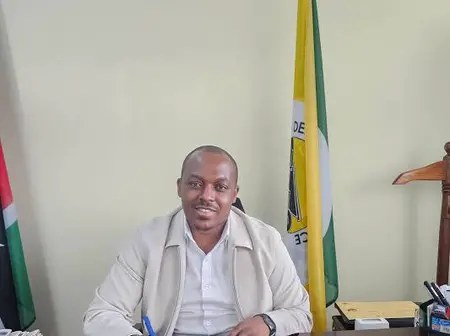
Nathaniel Mong'are has defended the government's decision to raise taxes, saying the money is needed to finance national development and fund the country's ambitions.
Speaking on Citizen TV's JK Live programme during a segment titled "Tomorrow's Voices Today in which youth leaders confronted the issues shaping their future, Mong'are said the country had for a long time made peace with mediocrity and that this had to change.
He argued that raising taxes was a deliberate choice aimed at paying for development rather than settling for limited goals. By linking revenue collection to national ambitions, he presented the policy as an investment in the country's future rather than a burden on citizens.
Mong'are also called for a shift in the country's political culture, saying the politics of exclusion must come to an end and be replaced by a policy of inclusion.
He did not, in the remarks quoted specify which groups he believed had been shut out, but the call fits into a wider national conversation about representation, access to opportunities and the distribution of public resources.
His comments are likely to draw mixed reactions. Taxation has been among the most contentious issues in recent years, with many Kenyans, particularly young people, voicing concern over the cost of living and the pressure of new levies on household and business incomes.
Government supporters, on the other hand, maintain that higher revenue is necessary to reduce borrowing, service debt and pay for infrastructure, education and health programmes.
The JK Live segment brought together young leaders to discuss the issues shaping the country's future, with taxation, jobs, technology and political participation featuring prominently in the conversation.
Mong'are's remarks add to a series of statements from the panel in which he has defended the administration's record, including on the pace of digitisation.
As the country moves towards the 2027 General Election, debate over how the government raises and spends public money is expected to remain central to political discourse
The Kenya Revenue Authority (KRA) is preparing to address concerns from taxpayers who have discovered unexpected debts, penalties and interest charges on their iTax accounts without understanding how they arose.
The authority has invited Kenyans to submit questions ahead of an online discussion scheduled for Thursday, November 12, 2026. The session will bring together experts to explain outstanding tax obligations, the tax amnesty programme and procedures for resolving disputes.
In a statement issued on Wednesday, November 11, KRA asked taxpayers to share the questions they would raise after finding unfamiliar penalties on their accounts.
The discussion is expected to clarify how such liabilities arise and what steps taxpayers can take when they disagree with amounts displayed on the iTax platform.
The announcement comes as KRA continues to publicise its 100 per cent waiver on eligible penalties, interest and fines. The relief targets taxpayers with outstanding obligations who want to settle their principal tax without paying qualifying additional charges.
To benefit, taxpayers must submit all outstanding returns and pay any unpaid principal tax by December 31, 2026. The waiver applies to eligible penalties, interest and fines, rather than the principal tax itself.
KRA has urged taxpayers to complete the required payments and filings before the deadline instead of waiting until the final days of the programme.
The November 12 discussion will provide an opportunity for Kenyans to seek clarification on the amnesty conditions and understand how to challenge or resolve disputed tax assessments.
For taxpayers facing unexplained iTax balances, the session could help identify the appropriate steps to take. However, individual debts and penalties will still need to be examined against each taxpayer's records and circumstances.
Nairobi Governor Johnson Sakaja has ordered an end to unnecessary night raids on entertainment establishments, warning county enforcement officers against harassment, intimidation and extortion of business owners.Sakaja said the county government had agreed on a raft of reforms aimed at addressing longstanding challenges facing the liquor and entertainment industry following a stakeholders’ meeting held at Charter Hall, City Hall.
Investments, Trade and Industry Cabinet Secretary Lee Kinyanjui announced the decision on Wednesday, November 11. The approval will remain in force for six months, from November 2026 to April 2027.
The move followed a request from the Ministry of Energy and Petroleum and a recommendation by the National Standards Council after an assessment of petroleum supply conditions.
Kinyanjui said tensions in the Middle East and disruptions along major shipping routes have made fuel sourcing less predictable. He pointed to challenges affecting the Strait of Hormuz, a major oil route.
By retaining the 50mg/kg limit, the government hopes to widen the range of suppliers able to provide fuel that meets the temporary requirements. The measure is intended to reduce shortages and maintain availability for motorists and businesses.
The decision covers automotive gas oil, commonly known as diesel, and premium motor spirit, which is petrol. It does not mean every batch entering Kenya will contain the maximum permitted sulphur level.
Kenya first adjusted the limit on April 30, 2026, raising it from 10mg/kg to 50mg/kg. The extension means the temporary arrangement will continue rather than revert to the earlier requirement.
The ministry said the measure will be reviewed after six months, or sooner if international supply conditions improve.
The announcement comes ahead of the Energy and Petroleum Regulatory Authority's November price review. EPRA is expected to set pump prices for the next cycle, running from November 15 to December 14.
However, the change concerns fuel quality standards and does not automatically lower petrol or diesel prices. Motorists will have to await EPRA's separate announcement for any adjustment at the pump.
In a notice issued on Wednesday, November 11, the authority cautioned businesses against exploiting their purchasing power to dictate unfavourable terms to suppliers, particularly in the retail sector.
CAK identified several practices that could amount to abuse of buyer power, including delaying payments, demanding rebates, requiring suppliers to finance promotional activities and transferring operational expenses to them.
The regulator also raised concerns over retailers imposing extended payment deadlines and unfavourable conditions through joint business plans with suppliers.
According to the authority, businesses cannot use their stronger market position to force suppliers into accepting contractual conditions without giving them room to negotiate.
"Terms should not be dictated by a buyer merely because it enjoys buyer power," CAK stated.
The authority further clarified that retailers have not been directed to introduce joint business plans with their suppliers. Instead, such arrangements should be voluntary and mutually negotiated.
CAK also warned that signing a supply agreement does not necessarily prove that the conditions were fairly negotiated or that the contract complies with competition laws.
Businesses found violating the Competition Act could face criminal fines of up to Ksh10 million, imprisonment for a maximum of five years, or both.
Additionally, the regulator has the power to impose administrative financial penalties of up to 10 per cent of a company's gross annual turnover recorded in the preceding financial year.
The authority said it was closely monitoring commercial dealings in the retail industry and would investigate specific businesses suspected of violating the law before taking enforcement action.
Suppliers who suspect they are being subjected to unfair contractual conditions have been encouraged to report the matter to CAK.
The regulator also urged suppliers to preserve important records, including signed and draft agreements, payment statements, correspondence and joint business plans.
These documents could help establish whether contractual terms were imposed by retailers or reached through genuine negotiations.