Category: Economy&Finance

  • Kenya Extends Relaxed Fuel Standards as Global Supply Concerns Persist

    Kenya Extends Relaxed Fuel Standards as Global Supply Concerns Persist

    Trade Cabinet Secretary Lee Kinyanjui announced on Wednesday, November 11, that the country would maintain a maximum sulphur limit of 50 milligrams per kilogram (50mg/kg) for both petrol and diesel between November 2026 and April 2027.

    The decision means the government will retain the temporary fuel standards introduced in April 2026, when the permissible sulphur content was raised from the previous 10mg/kg limit.

    Kinyanjui said the extension followed a request from the Ministry of Energy and Petroleum and recommendations by the National Standards Council after an assessment of international petroleum supply conditions.

    He attributed the decision to geopolitical tensions in the Middle East and disruptions affecting global fuel supply chains, particularly around the strategically important Strait of Hormuz.

    According to the CS, maintaining the adjusted standards would allow Kenya to access fuel from a wider range of international suppliers and reduce the risk of shortages.

    He explained that the measure was temporary and would be reviewed after six months or earlier if international supply conditions improved.

    The initial adjustment was introduced on April 30, 2026, following concerns from petroleum industry players who reported difficulties sourcing fuel that met Kenya's stricter sulphur requirements.

    Meanwhile, the extension comes as the Energy and Petroleum Regulatory Authority (EPRA) prepares to announce new pump prices for the November 15 to December 14 pricing period.

    The upcoming review has attracted attention after Treasury Cabinet Secretary John Mbadi suggested that the government could use the fuel stabilisation fund to reduce the burden of high petroleum prices on consumers.

    Motorists are therefore awaiting EPRA's announcement to establish whether the proposed intervention will translate into lower prices at petrol stations.

    https://www.kenyans.co.ke/news/129309-trade-cs-extends-50mg-sulphur-limit-petrol-and-diesel

  • Nairobi Halts Night Raids, Opens 14-Day Talks on Bar Taxes

    Nairobi Halts Night Raids, Opens 14-Day Talks on Bar Taxes

    Nairobi Governor Johnson Sakaja has announced an end to night raids targeting liquor outlets and entertainment establishments across the county as City Hall moves to address concerns raised by operators in the hospitality industry.

    The announcement followed a meeting between Sakaja and representatives of the Nairobi Liquor and Entertainment Industry Stakeholders on Wednesday, November 11, 2026. The discussions focused on challenges affecting businesses, enforcement procedures and revenue collection.

    According to the governor, the meeting reached several agreements aimed at improving relations between county enforcement officers and entertainment business owners.

    Among the resolutions was an end to arrests targeting disc jockeys (DJs) and the confiscation of their sound equipment during enforcement operations. The county also agreed to address complaints of harassment against revellers, which industry representatives said had increasingly become a concern, particularly involving police officers.

    The meeting further addressed complaints about noise pollution from entertainment venues. It was agreed that individuals reporting excessive noise, including residents living near clubs and bars, would be required to provide evidence to support their complaints.

    However, the county maintained that entertainment establishments found to be violating regulations would still face appropriate action through established legal procedures.

    Another major outcome was the decision to allow a 14-day consultation period concerning entertainment and event taxes introduced under the Nairobi County Finance Act 2026.

    The consultation is expected to give industry players an opportunity to raise concerns and engage the county on the implementation of the taxes.

    Sakaja's administration also urged liquor business operators to embrace the LiquorPay platform, a digital system introduced by Nairobi City County to simplify liquor licensing and renewal processes.

    The platform is designed to automate licensing services and make transactions more efficient for business owners.

    In another measure aimed at addressing harassment and improving enforcement, the county published a list of 364 authorised inspection officers deployed across all 17 sub-counties.

    The officers were reportedly vetted and approved by the county to help distinguish legitimate enforcement personnel from rogue officers and impostors.

    The deployment is also intended to decentralise revenue collection, improve business compliance and address revenue leakages.

    Starehe and Kamukunji have each been allocated 28 officers, while Mathare has 28. Other allocations include Ruaraka with 19, Embakasi South, North, Central, East and West with 12 each, and Njiru with 12.

    The changes are expected to provide clearer enforcement procedures while allowing Nairobi County to improve revenue collection without unnecessary disruption to legitimate entertainment businesses.

    source

  • Safaricom Reveals Number of Investors Holding Billions of Shares

    Safaricom Reveals Number of Investors Holding Billions of Shares

    The disclosure is contained in the company's 2026 Annual Report, which provides a breakdown of its shareholders and the number of shares held by different investment categories.

    According to the report, Safaricom had 533,549 shareholders as of March 31, 2026. However, the ownership structure was heavily concentrated among two major investors.

    Vodafone Kenya Limited emerged as the largest shareholder, holding 16 billion ordinary shares.

    The National Treasury and Economic Planning followed with 14,022,572,580 shares.

    Together, the two institutions held 30,022,572,580 shares, equivalent to 74.93 per cent of Safaricom's total issued shares.

    The report further showed that 15 shareholders held between 100 million and one billion shares each. Collectively, they owned approximately 3.15 billion shares, representing 7.87 per cent of the company.

    Another 144 investors held between 10 million and 100 million shares, accounting for 9.50 per cent of the issued shares.

    Interestingly, the company also had a substantial number of smaller investors.

    A total of 359,086 shareholders owned between one and 1,000 shares each. Another 159,444 investors held between 1,001 and 10,000 shares.

    Despite their large numbers, the two categories collectively accounted for only 1.65 per cent of Safaricom's issued shares.

    Vodafone's increased ownership

    Safaricom's ownership structure subsequently changed following a transaction completed on June 30, 2026.

    Vodafone Kenya acquired an additional 15 per cent stake from the Government of Kenya, increasing its holding to 55 per cent. The government's direct stake consequently fell to 20 per cent, while public investors retained 25 per cent.

    However, the transaction later faced a legal challenge. In September 2026, the High Court ordered the return of the 15 per cent stake to the government. Both the government and Vodacom appealed the decision.

    The Court of Appeal subsequently directed that the existing ownership position remain in place pending determination of the appeal.

    The shareholding figures offer an important picture of Safaricom's ownership, showing how thousands of investors participate in the company while a small number of major shareholders control most of its issued shares.

  • Richard Waitumbi: Meet 35-Year-Old Kenyan Earning Ksh 4 Million Salary As Goldman Sachs Managing Director

    Richard Waitumbi: Meet 35-Year-Old Kenyan Earning Ksh 4 Million Salary As Goldman Sachs Managing Director

    thumbnail

    At 36, Richard Waitumbi has risen to the highest echelons of his investment and banking career.He currently works as the managing director of Goldman Sachs Asset Management in New York, United States.He credits his success to hard work and dedication, saying that his parents have given him the best they could from an educational point of view.

  • CAK Announces Tough Penalties for Retailers Found Exploiting Their Suppliers

    CAK Announces Tough Penalties for Retailers Found Exploiting Their Suppliers

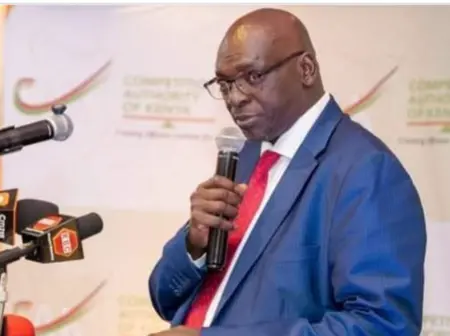
    In a notice released on Wednesday, November 11, 2026, the Authority raised concerns over businesses allegedly using their stronger bargaining positions to impose unfavourable conditions on suppliers.

    CAK said its market surveillance had identified several practices in the retail industry that could violate the Competition Act. These include forcing suppliers to shoulder operational expenses and business risks, demanding rebates and promotional contributions, and delaying payments beyond agreed periods.

    The regulator explained that such conduct could amount to Abuse of Buyer Power (ABP), which occurs when a buyer exploits its superior negotiating position to impose unreasonable conditions on a supplier.

    Other prohibited practices include terminating supply contracts without proper justification, threatening to end agreements unilaterally and refusing to receive goods contrary to contractual obligations.

    The Authority also cautioned buyers against demanding preferential commercial terms that disadvantage suppliers or restricting them from supplying competing businesses.

    CAK emphasised that supply agreements should be reached through genuine negotiations and mutual understanding rather than dictated by retailers simply because they have greater financial or market influence.

    It further clarified that although it encourages written supply agreements, it has never directed suppliers to sign joint business plans with retailers. Such arrangements must remain voluntary, and signing a contract does not automatically establish that its terms were fairly negotiated or are legally acceptable.

    The regulator announced that it was increasing surveillance of the retail sector to establish whether the reported practices amount to violations of competition laws. Businesses found to have breached the law could face investigations and enforcement action.

    Under the Competition Act, companies found guilty of abusing buyer power risk a criminal fine of up to Ksh10 million, imprisonment for a maximum of five years, or both.

    CAK may also impose administrative financial penalties of up to 10 per cent of a business's gross annual turnover in the preceding financial year, alongside other corrective measures.

    The Authority has urged suppliers who believe they are being subjected to unfair commercial conditions to retain relevant documents that could support complaints.

    These include draft and signed supply agreements, joint business plans, email exchanges, payment records and other correspondence showing how the terms of their business arrangements were negotiated.

    Retailers and other buyers have also been asked to review their existing contracts and ensure their dealings with suppliers comply with the law.

    The warning comes several months after CAK conducted simultaneous inspections targeting six foam mattress manufacturers and distributors in Nairobi, Machakos, Kiambu and Kisumu counties.

    During the March 31 operations, investigators collected electronic storage devices, laptops, mobile phones, management reports and sales records for forensic examination as part of an investigation into suspected anti-competitive practices in the mattress industry.

    The latest move signals increased regulatory scrutiny of how powerful businesses deal with smaller suppliers, with companies now facing the possibility of substantial financial penalties and criminal prosecution if investigations establish violations of the law.

    https://www.facebook.com/100040319114203/posts/2051052392915378/?app=fbl

  • Kenya Power Announces Planned Thursday Blackout In Parts Of Eastleigh

    Kenya Power Announces Planned Thursday Blackout In Parts Of Eastleigh

    According to the announcement, the interruption will begin at 9:00 a.m. and is expected to run until 5:00 p.m., meaning residents and businesses in the listed areas will experience approximately eight hours without electricity.

    The affected locations include Hombe Road, Quarry Road, Kariokor Flats and Nairobi Technical New Campus.

    Other areas listed in the notice are Ushirika Estates, Jam Street and Don Bosco, alongside neighbouring customers connected to the affected electricity supply network.

    Kenya Power said the planned interruption forms part of its scheduled activities, which are intended to facilitate work on the electricity distribution system.

    The company periodically announces temporary power interruptions to allow technicians to undertake maintenance, upgrade infrastructure and improve the reliability of electricity supply to customers.

    Residents, business owners and institutions operating within the affected neighbourhoods have been advised to take note of the scheduled interruption and plan their activities accordingly.

    Kenya Power regularly publishes planned interruption notices through its official communication channels, identifying the locations and expected duration of scheduled outages.

    https://www.facebook.com/100064528186715/posts/1687514270076163/?app=fbl

  • Retailers Face Ksh10 Million Fine, Five-Year Jail Term Over Supplier Exploitation

    Retailers Face Ksh10 Million Fine, Five-Year Jail Term Over Supplier Exploitation

    The Competition Authority of Kenya (CAK) issued the warning on Wednesday, November 11, following concerns over growing cases of buyers imposing unfavourable conditions on suppliers in the retail sector.

    In a notice, the authority revealed that some retailers had been shifting operational costs and business risks to suppliers, demanding rebates and promotional contributions, and extending payment periods without fair negotiations.

    CAK said such practices could amount to abuse of buyer power, particularly where businesses take advantage of their stronger bargaining positions to impose conditions that disadvantage suppliers.

    The authority identified several prohibited practices, including delaying payments, terminating supply contracts without proper justification, rejecting delivered goods contrary to agreed terms and demanding preferential commercial arrangements.

    Other concerns include restricting suppliers from selling their products to competing buyers and forcing them to shoulder expenses that should ordinarily be handled by retailers.

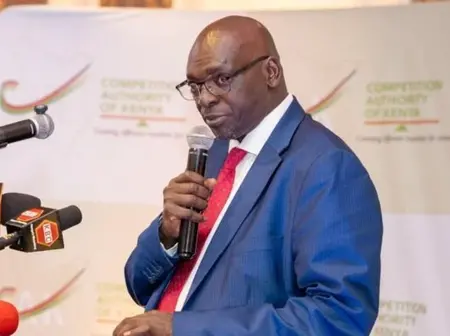
    CAK Director General David Kemei's authority emphasised that supply agreements must be reached through genuine negotiations and mutual engagement rather than buyers dictating terms because of their market influence.

    The regulator also clarified that suppliers were not legally required to sign joint business plans with retailers, insisting that such arrangements must remain voluntary.

    It further cautioned that having a signed agreement does not automatically establish that its conditions were fairly negotiated or comply with competition laws.

    CAK announced that it was intensifying market surveillance and examining commercial arrangements within the retail industry. Businesses found to have violated the law will face investigations and possible enforcement action.

    Under the Competition Act, offenders risk a criminal fine of up to Ksh10 million, imprisonment for a maximum of five years, or both.

    The authority can also impose administrative financial penalties of up to 10 per cent of a company's gross annual turnover in the preceding financial year.

    CAK urged suppliers experiencing unfair treatment to retain relevant evidence, including contracts, payment records, correspondence and joint business plans, which could support investigations.

    Retailers and other buyers were also directed to review their supply agreements and ensure their dealings comply with competition regulations.

    https://nairobileo.co.ke/news/article/31403/govt-warns-retailers-of-ksh10-million-fine-jail-over-unfair-deals-with-suppliers

  • Quickmart Attracts Speculators Ahead of its NSE Trading Debut

    Quickmart Attracts Speculators Ahead of its NSE Trading Debut

    thumbnail

    Quickmart Plc has attracted huge number of speculative traders, who are keen to ride on any price gains when the counter begins trading Thursday at the Nairobi Securities Exchange(NSE).This follows reasonably informed prediction that the Quickmart counter will behave like that of Family Bank, which opened at KSh 18 and peaked to KSh 51 on its debut.

  • Kenya rolls out five-year plan to protect food exports from aflatoxin contamination

    Kenya rolls out five-year plan to protect food exports from aflatoxin contamination

    thumbnail

    Listen to articleThe National Codex Strategic Plan 2026–2031 seeks to strengthen food safety monitoring, prevent contamination in nuts and cereals and protect Kenya's agricultural exports.Kenya is stepping up its fight against deadly aflatoxin contamination in food, unveiling a five-year strategy to protect consumers, safeguard food security and boost the competitiveness of its agricultural exports.

  • How Devki tycoon dodged a Sh5.4bn bill in KRA fight

    How Devki tycoon dodged a Sh5.4bn bill in KRA fight

    DnNMGDevki2809ed

    Billionaire Narendra Raval has dodged a Sh5.4 billion tax bill after securing court victories against the Kenya Revenue Authority (KRA), shining a spotlight on a botched deal he signed with the Jubilee administration to secure duty relief for three of his companies.

    In the latest of the three triumphs, Mr Raval, the Devki Group founder and chairman, won a legal fight against the KRA over Sh1.44 billion in unpaid value-added tax (VAT) that the taxman demanded from his Maisha Mabati Mills.