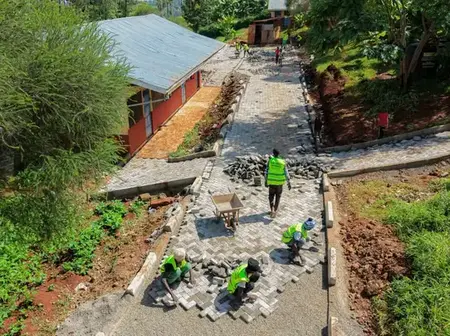
Rather than spreading construction works thinly across several calendar years, the Kiharu National Government Constituencies Development Fund (NG-CDF) office is utilizing the November and December break to overhaul learning facilities before learners return for the new academic term.
According to disclosures shared by the legislator, the massive rollout spans the construction of brand-new schools, modern science laboratories, extra classrooms, multipurpose halls, and comprehensive renovations of aging blocks.
Among the institutions already undergoing active upgrades this holiday are Kayuyu Primary School, Marewa Primary School, Gitungano Primary School, Mamumbu Primary School, and Kaigwa Primary School.
The scale of executing nearly a hundred separate construction sites at the exact same time has raised questions among observers over how a single constituency can finance and supervise such a workload.
Nyoro addressed this directly after convening a joint planning forum with school principals, headteachers, foremen, procurement professionals, and Project Management Committee (PMC) members.
He explained that Kiharu avoids awarding tenders to traditional private contractors, opting instead for a strict labour-based construction model managed directly at the school level.
Under this framework, NG-CDF funds are sent straight to the beneficiary institution's account, where publicly elected Project Management Committees oversee the purchase of building materials and hire local artisans.
Nyoro noted that cutting out commercial contractors eliminates private profit markups and prevents the double payment of Value Added Tax (VAT) on construction budgets.
As a result, every shilling allocated to a school translates directly into bricks, roofing, floor tiles, and wages for local masons and casual workers within the community.
In recent updates, the Kiharu MP has maintained that previous phases of this model enabled the constituency to tile classrooms across all 112 public primary schools and introduce cabro paving in dozens of compounds.
With current efforts expanding aggressively into day secondary schools and remaining primary institutions, school heads in the constituency say improved classrooms and laboratories are helping create a more conducive learning environment.
SOURCE