Blog

  • Safaricom HY2027 earnings set for 29% growth as Ethiopia approaches breakeven

    Safaricom HY2027 earnings set for 29% growth as Ethiopia approaches breakeven

    Safaricom Vodacom Governance Rights

    Safaricom PLC is expected to report a 28.9% increase in shareholder-attributable profit for the first half of its 2027 financial year, with analysts projecting earnings of KSh55.16 billion as the company’s Ethiopian operation moves closer to operating breakeven. The Safaricom HY2027 results, scheduled for announcement on Thursday, November 5, will come against expectations of double-digit growth in service revenue and a stronger improvement in operating profitability.

    Weighted analyst consensus puts group service revenue at KSh222.53 billion for the six months, representing an 11.3% increase from KSh199.87 billion in the corresponding period of the previous financial year. EBITDA is projected to rise 19.8% to KSh121.36 billion, while earnings per share (EPS) are expected to increase from KSh1.07 to KSh1.38.

    Four analysts contributing to the forecasts expect shareholder-attributable profit to reach between KSh52 billion and KSh57.2 billion. Gichuki Kahome of Wealth Atlas projects KSh54.90 billion, while Brian Nzioki of Castright Solutions estimates earnings within a KSh52 billion to KSh56 billion range. Robert Ochieng, ACIFA, of Abojani expects KSh55.60 billion, while independent analyst Bildad Joash Barasa has the highest individual estimate at KSh57.20 billion.

    The weighted consensus of KSh55.16 billion represents an additional KSh12.38 billion in shareholder earnings compared with the KSh42.78 billion recorded in HY2026. The projected improvement comes alongside expectations of stronger operating earnings, with reported group EBIT forecast to reach KSh86.17 billion from KSh65.21 billion a year earlier. Profit before tax is projected at KSh75.5 billion, compared with KSh55.24 billion in HY2026.

    Safaricom Ethiopia is expected to make a substantial contribution to the group’s improved financial performance, with analysts forecasting its EBITDA loss to narrow to KSh1 billion from KSh12.5 billion in HY2026. That represents an improvement of KSh11.5 billion, or approximately 92%, as the operation continues to build its customer base and generate more revenue from telecommunications services.

    The forecast builds on the subscriber and revenue growth documented in Safaricom Ethiopia’s earlier operating performance. By June 2026, the business had surpassed 15 million 90-day active subscribers, supported by more than 3,500 network sites covering approximately 60% of Ethiopia’s population. Its FY2026 service revenue reached KSh14.08 billion, with data contributing KSh9.56 billion compared with KSh3.01 billion from voice services.

    The difference between the two revenue streams illustrates the importance of mobile data to the Ethiopian operation. Safaricom Ethiopia’s data business has become its principal service revenue contributor as the company expands network coverage and attracts more customers to its telecommunications services.

    For HY2027, analysts project Ethiopia service revenue of KSh10.2 billion, up from KSh6.19 billion in the corresponding period. The projected EBITDA loss of KSh1 billion would also bring the operation closer to the EBITDA breakeven target for the financial year ending March 2027.

    The improvement is particularly important given the financial burden Ethiopia has placed on the group since its commercial launch. The operation recorded an EBITDA loss of KSh27.9 billion in HY2025 before narrowing it to KSh12.5 billion in HY2026. Its projected HY2027 performance would mark a further substantial reduction in the cost of building and operating the telecommunications business.

    However, the Ethiopian operation is still expected to record negative earnings before interest and tax. Analysts project reported EBIT excluding IAS 29 adjustments at a loss of KSh7 billion, compared with an expected EBITDA loss of KSh1 billion. The distinction reflects the additional impact of depreciation and amortisation on a business that has invested heavily in establishing its network infrastructure.

    While Ethiopia accounts for a substantial part of the expected improvement in group profitability, Safaricom’s Kenyan business continues to provide the foundation for its revenue generation. M-PESA remains central to that operation, with its payments infrastructure supporting consumer transactions, merchant payments, digital lending and investment products.

    Safaricom’s FY2026 operating figures showed that M-PESA processed 46.4 billion transactions worth KSh41.68 trillion during the financial year ended March 2026. Transaction volumes increased by 25.1%, while the merchant network expanded to 3.13 million businesses. The company also increased M-PESA’s processing capacity from 4,500 to 6,000 transactions per second to accommodate growing activity across the platform.

    The expansion of M-PESA’s services also extends into wealth management. By March 2026, the platform’s wealth management business had 2.2 million active customers and KSh21.1 billion in assets under management. Safaricom has added investment products including Ziidi MMF, Ziidi Trader and Ziidi Shari’ah to its financial services portfolio, giving customers additional ways to access investment opportunities through M-PESA.

    Chief Executive Officer Peter Ndegwa has outlined the company’s ambitions to expand beyond traditional telecommunications, with financial services, merchant solutions and artificial intelligence forming part of its broader growth strategy. The expansion builds on M-PESA’s existing customer and merchant network, which provides Safaricom with an established platform for introducing additional services.

    Digital lending is another component of the financial services business. Safaricom’s FY2026 reporting showed that the number of customers eligible for Fuliza borrowing had risen to 18.1 million from seven million, while M-PESA consumer credit customers increased to 17.7 million from 7.9 million. The company has also identified tighter exposure controls and improved behavioural scoring among its priorities for managing digital lending.

    These developments provide context for Safaricom’s projected service revenue growth, although the financial results will offer the more direct measure of how its telecommunications and financial services businesses are contributing to earnings.

    The forecasts underline the financial importance of Safaricom’s established Kenyan operation as the group continues to invest in Ethiopia. Analysts expect Kenya EBIT to reach KSh97 billion in HY2027, compared with an estimated Ethiopia EBIT loss of KSh7 billion excluding IAS 29 adjustments.

    The two figures produce an estimated KSh90 billion in combined operating earnings, matching the consensus forecast for group EBIT excluding IAS 29. Reported group EBIT is projected at KSh86.17 billion after the relevant accounting adjustments.

    Kenya’s operating contribution is supported by its established telecommunications infrastructure and M-PESA ecosystem. Mobile data, voice, mobile money, merchant services and enterprise connectivity provide multiple sources of revenue, while the company continues investing in network capacity to accommodate rising demand.

    Ndegwa has previously put Safaricom’s annual Kenyan infrastructure investment at approximately US$400 million to US$500 million, with around half directed towards the network. He also reported annual data volume growth of approximately 30%, highlighting the investment requirements associated with maintaining capacity as customers consume more mobile data.

    The expansion of the merchant network also creates opportunities for Safaricom to provide services beyond payment processing. The Kenya Revenue Authority has discussed an arrangement with Safaricom to generate electronic tax invoices for businesses receiving payments through M-PESA tills and paybills, extending the platform’s potential role in merchant operations and business administration.

    These investments and service developments form part of the company’s wider effort to strengthen its position in Kenya while building another telecommunications and financial services business in Ethiopia.

    The HY2027 forecasts come after a decade of substantial growth in Safaricom’s financial performance. Half-year service revenue increased from KSh98.01 billion in HY2017 to KSh199.87 billion in HY2026, representing growth of approximately 104%.

    EBITDA followed a similar trajectory, rising from KSh50.81 billion to KSh101.29 billion over the same period, an increase of approximately 99.3%. The figures illustrate how Safaricom has expanded its revenue base and operating earnings while developing M-PESA into a major financial services platform and entering the Ethiopian telecommunications market.

    The latest forecasts point to further expansion, with service revenue expected to reach KSh222.53 billion and EBITDA projected at KSh121.36 billion. The anticipated 19.8% EBITDA growth compared with 11.3% service revenue growth suggests an improvement in operating margins as the group converts a larger proportion of its revenue into operating earnings.

    For investors, the relationship between revenue growth and profitability will be an important measure of Safaricom’s financial performance. The Ethiopian operation’s narrowing losses could support that improvement, while the Kenyan business remains responsible for the larger share of group operating earnings.

    Safaricom’s HY2027 announcement will provide an opportunity to assess the group’s performance against the analysts’ forecasts, particularly its ability to translate revenue growth into higher earnings. The KSh222.53 billion service revenue estimate and KSh121.36 billion EBITDA projection provide two important benchmarks for evaluating the group’s operating performance.

    Ethiopia’s financial performance will also attract attention, with the projected KSh1 billion EBITDA loss offering a measure of progress towards the company’s breakeven ambitions. Its service revenue growth will help establish whether the improving operating performance is being supported by a larger telecommunications business.

    M-PESA’s contribution will remain another important consideration as Safaricom expands its payments, merchant and investment services. The company’s ability to grow these businesses alongside its traditional telecommunications operations will shape its earnings performance and future revenue opportunities.

    The four analysts expect shareholder-attributable profit to reach KSh55.16 billion, with EPS of KSh1.38 for the six months. Their forecasts point to another period of strong earnings growth for Safaricom, supported by its established Kenyan business and a substantial reduction in the losses associated with its Ethiopian expansion.

    Go to TECHTRENDSKE.co.ke for more tech and business news from the African continent and across the world.

    Follow us on WhatsApp, Telegram, Twitter, and Facebook, or subscribe to our weekly newsletter to ensure you don’t miss out on any future updates. Send tips to info@techtrendsmedia.co.ke
  • Man Utd set to face former academy goalkeeper who launched rap career after leaving Old Trafford

    Man Utd set to face former academy goalkeeper who launched rap career after leaving Old Trafford

    Man Utd set to face former academy goalkeeper who launched rap career after leaving Old Trafford

    A former Manchester United academy graduate will return to Old Trafford on Tuesday night, more than a decade after playing alongside the likes of Jesse Lingard and Adnan Januzaj.

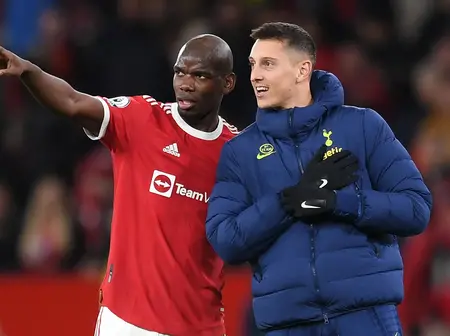
    Pierluigi Gollini, who spent two years at United between 2012 and 2014, is expected to start for Roma when they come up against Michael Carrick's side in the Champions League.

    The 31-year-old is currently Roma's second-choice goalkeeper, but with Mile Svilar still recovering from a broken finger, Gian Piero Gasperini will likely hand Gollini the gloves for Tuesday's game.

    It will be a memorable evening for the Italian shot-stopper, who spent two years at United between 2012 and 2014 after joining the youth ranks from Fiorentina as a 17-year-old.

    He played under Paul McGuinness at under-18 level before helping Warren Joyce’s side lift the under-21 Premier League title alongside Lingard, Januzaj and Tom Lawrence.

    Gollini was offered a new deal but decided against taking up the offer. He joined Italian side Hellas Verona in the summer of 2014.

    A few years later, Gollini explained his reasons behind leaving United. "I needed to grow and aim to become a first-choice goalkeeper one day," he told Vavel.

    "In Manchester, they offered me another contract, but I thought it was better to return to Italy after three years, to a major club like Verona. I also think the Italian school of goalkeeping is superior."

    The goalkeeper spent two years at Verona before returning to England with Aston Villa in 2016. He later joined Atalanta on loan for the 2017-18 season before making the move permanent.

    Gollini went on to make over 100 appearances for Atalanta under Gian Piero Gasperini, the manager he currently works under at Roma, and even picked up an Italy cap in 2019.

    Gollini made over 100 appearances for Atalanta. Image credit: Getty

    He also enjoyed loan spells at Tottenham, Fiorentina, Napoli and Genoa between 2021 and 2015 before joining the ranks at the Stadio Olimpico.

    “I obviously haven’t played much in recent years, but I see myself in training, my team-mates see me, so obviously football is a world that moves super fast,” Gollini said after last week's game against Cagliari.

    “Maybe six months [ago] you don’t play much, you don’t do anything and it seems like you’re dead, right? You’re finished."

    He added: “But when you work every day, you know what you’re doing and in any case, even if I haven’t played, I’ve always been in a team, in a high-level environment, with great players, so I’ve always known my value.”

    Off the pitch, Pierluigi Gollini has become somewhat of a music sensation, performing under the stage name Gollorius.

    Back in 2018, he released a rap single titled Rapper coi guanti (Rapper with Gloves) and donated all of the proceeds to help renovate a football pitch near his hometown.

    "I did this because my personal story is the same as loads of children who want to play football, who dream of making it from the streets," he told the Champions Journal.

  • Trans Nzoia Governor Natembeya Transfers 11 CECs and Chief Officers

    Trans Nzoia Governor Natembeya Transfers 11 CECs and Chief Officers

    thumbnail

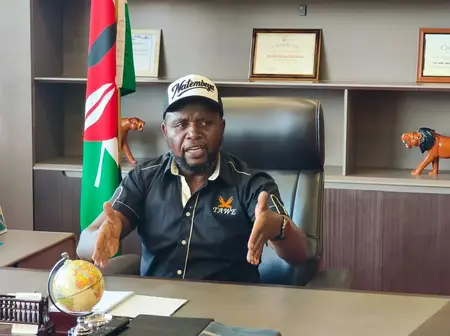
    Trans Nzoia Governor George Natembeya has reshuffled his county government administration, moving 11 county executive committee members (CECMs) and chief officers to different departments.In an update on Monday, November 2, County Secretary Truphosa Amere said the changes affected several departments, including Health, Finance, Public Service Management, Governance, Public Works, Roads, Water, Environment, Education, Trade, Agriculture and Lands.

  • Chebet Ronoh Reveals How She Blew Her First KSh1.5 Million on Alcohol at 19

    Chebet Ronoh Reveals How She Blew Her First KSh1.5 Million on Alcohol at 19

    Content creator Chebet Ronoh has opened up about her struggles with sudden fame and wealth, revealing that she spent much of her first million shillings on alcohol when she was just 19 years old.

    Ronoh made the revelations during an interview with BBC News Africa, where she reflected on the challenges of navigating fame, friendships and financial responsibility as a teenager.

    The content creator rose to prominence through viral social media videos, with her humour and quick wit earning her a growing following and attracting lucrative brand partnerships.

    However, her rapid success came at a time when she was still trying to understand herself and navigate the pressures of adulthood without the guidance of established role models in Kenya’s emerging digital content industry.

    “I didn’t real have role models, at that time especially in Kenya, there weren’t really a lot of creators. They were handful, they were having comedian from TV, and very few content creators. So, I was going through it as a teenager for the first time while also navigating friendship and alcohol and all these things. It was a disaster,” she revealed.

    Ronoh said her introduction to alcohol had a significant impact on her personal life, opportunities and public image.

    “As a teenager, I got introduced to alcohol and that really affected me, affected my opportunities, my selfhood as a person that in return was a big part of my public image. I’d say it wasn’t really easy but it was beautiful to experience.”

    During the interview, Ronoh recalled making substantial amounts of money from brand deals, at one point working with four to five brands in a single month.

    She said the earnings reached approximately KSh1.5 million, leaving her convinced that she was on her way to becoming a major star.

    “I made my first million as a teenager at 19 and I mismanaged it. In one month, I think I was doing 4 to 5 brands and it reached like Ksh 1.5 million and I remember telling my mom, ‘Oh my God, this is it, I am going to be a star’ but my mom was trying to tell me we should invest,” Ronoh recalled.

    Her mother, she said, recognised the importance of investing the money and tried to encourage her to make sound financial decisions. However, Ronoh admitted that she was not ready to listen.

    “I didn’t want to hear none of that advice. So, I remember a lot of my money went to alcohol. I was still a kid, I’d say I was a teenager desperate for validation. I didn’t even know who I was, I just loved that people liked me and I wanted to prove so much to my friends,” she added.

    Ronoh’s account highlights the difficulties young entertainers can face when financial success arrives before they have developed the experience or support systems needed to manage it.

    She described her teenage years as a period of experimentation and a search for acceptance, during which public attention and the desire to impress friends influenced her decisions.

    The content creator has since focused on personal growth and recovery, using her experiences to reflect on the consequences of her earlier choices.

  • Simba Arati Invites Matiang’i to Join ODM, Issues Stern Warning to Gachagua

    Simba Arati Invites Matiang’i to Join ODM, Issues Stern Warning to Gachagua

    thumbnail

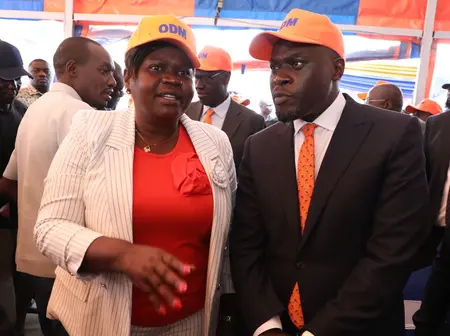
    Charm OffensiveArati told Gachagua that he would not be allowed to fly out of the country through JKIA.On Tuesday, November 3, Kisii Governor and ODM Deputy Party Leader Simba Arati has urged Jubilee Leader Fred Matiang'i to ditch the United Opposition and join the Orange Party.

  • DTB’s Isiolo branch brings banking services closer to underserved market as lender approaches 100-branch target

    DTB’s Isiolo branch brings banking services closer to underserved market as lender approaches 100-branch target

    thumbnail

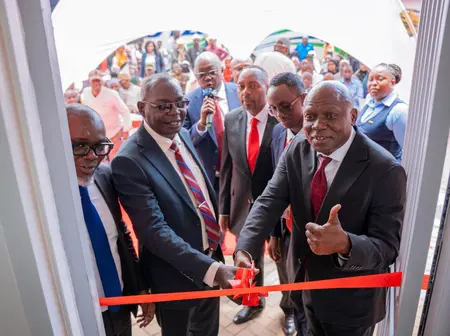
    Diamond Trust Bank (DTB) opened a branch in Isiolo today, bringing its branch network in Kenya to 94, with six more scheduled to start operating by the end of 2026, taking the total number to 100.With only seven banks currently serving Isiolo, DTB’s entry into the county is expected to bring banking services closer to individuals, small businesses, traders and enterprises seeking reliable financial solutions to support their growth.

  • CS Mugaa urges young people to seek opportunities in sports amid unemployment concerns

    CS Mugaa urges young people to seek opportunities in sports amid unemployment concerns

    CS Mugaa urges young people to seek opportunities in sports amid unemployment concerns

    Young people in Meru have been urged to use their talents to earn a living as concerns grow over unemployment and the limited opportunities available to many youths.

    Water Cabinet Secretary Eric Mugaa said young people should explore their abilities beyond formal education and consider turning skills such as football into economic opportunities.

    Mugaa spoke in Meru on Tuesday, October 3, 2026 after being named patron of Tulivu FC, saying talent development could help young people become financially independent.

    “Youth are key to economic growth in this country. If they are empowered, guided and supported in the right way, they can play a great role in shaping the economy of the nation,” Mugaa said.

    He said sports should not only be viewed as recreation but also as an avenue through which young people can develop skills, find employment and earn an income.

    South Imenti Member of Parliament (MP) Shadrack Mwiti said organised activities could help keep young people occupied and reduce their exposure to alcoholism and drug abuse.

    He called on political leaders, churches, charitable organisations and both levels of government to support initiatives that give young people productive opportunities.

    “If leaders, charitable organisations, churches and the two arms of government support the youth, I believe this nation can greatly reduce alcoholism and drug abuse among our children because they will not be idle anymore,” Mwiti said.

    The remarks come amid wider calls for practical opportunities to address youth unemployment. Meru has previously explored talent development through initiatives such as its county talent academy, while national leaders have also proposed [sports academies to identify and train young talent

    Tulivu Limited director Francis Mworia said the company had donated Ksh3 million to support Tulivu FC’s operations.

    The club is also planning to establish a sports academy to identify and train young footballers who could progress to its senior team.

    Mugaa said the proposed academy would provide young players with an opportunity to develop their abilities through structured training.

    Mworia said the club hopes to move from Division Two to the National Super League by 2030, a target that will require investment and continued player development.

    The club’s plans form part of a wider effort to create more opportunities for young people interested in pursuing football.

  • FKF crisis deepens as Fifa blocks disputed NEC meeting

    FKF crisis deepens as Fifa blocks disputed NEC meeting

    The crisis at the Football Kenya Federation (FKF) has taken a fresh turn after Fifa moved to block a controversial National Executive Committee (NEC) meeting scheduled for November 4 at Nairobi’s Tamarind Hotel.

    The meeting had been convened by a faction of NEC members led by FKF Vice President McDonald Mariga in a move that challenged the leadership of federation president Hussein Mohammed.

    However, Fifa ruled that the proposed meeting did not comply with the requirements of the FKF Constitution, particularly Article 38, which outlines the procedures for convening and holding NEC meetings.

    “Article 38 of the FKF Constitution governs the convening and holding of NEC meetings and sets out the relevant statutory requirements to be observed in this respect,” Fifa stated.

    The world football governing body also questioned the validity of the request used to convene the meeting, noting that it had originally been submitted on May 26, 2026, several months before the November 4 meeting.

    Fifa pointed out that FKF had subsequently held an NEC meeting on July 11 and issued notices for other meetings after the initial request was made.

    “The documentation indicates that following that request, the FKF convened an NEC meeting held on 11 July 2026 and subsequently issued notices for further NEC meetings,” Fifa stated.

    The position of the group led by Mariga was further weakened by the withdrawal of two members who had initially signed the request to convene the meeting.

    “Moreover, two of the original signatories have formally withdrawn their support for the aforementioned request,” Fifa added.

    Fifa observed that these developments meant that the May 26 request could no longer serve as a valid basis for convening the November 4 meeting.

    “It would appear that the request of 26 May 2026 can no longer be relied upon as a valid procedural basis for convening the meeting of 4 November 2026,” the governing body stated.

    Fifa also questioned whether the NEC members had satisfied the constitutional requirements allowing them to convene a meeting independently under Article 38.2.

    “Consequently, the conditions under which NEC members may themselves convene a meeting pursuant to Article 38.2 do not appear to be fulfilled,” Fifa stated.

    In its communication, Fifa urged FKF to call off the planned meeting, citing the need to uphold the federation’s constitution and protect the proper functioning of its statutory organs.

    “In light of the foregoing and in order to ensure compliance with the FKF Constitution and safeguard the proper functioning of the Federation’s statutory bodies, we request that FKF refrain from holding the NEC meeting scheduled for 4 November 2026,” Fifa said.

    The latest intervention comes amid growing divisions within FKF, raising fresh concerns about the stability of football administration in Kenya.

    Attention now turns to the Special General Meeting scheduled for November 7 in Meru, where members are expected to deliberate on issues affecting the federation.

    The meeting comes at a critical moment, with the leadership dispute threatening to deepen divisions and disrupt the administration of football in the country.

  • EACC to distribute 34,000 pages of evidence in Sh1.57 billion Treasury graft case

    EACC to distribute 34,000 pages of evidence in Sh1.57 billion Treasury graft case

    thumbnail

    Listen to articleState Counsel Susan Kelly informed Magistrate Rose Ndobi that the volume of documents made it difficult for the prosecution to serve all the accused persons electronically or distribute the material physically in court.The Ethics and Anti-Corruption Commission (EACC) will require all 34 accused persons in the Sh1.57 billion National Treasury corruption case to collect thousands of pages of evidence individually from its headquarters before the trial proceeds.

  • Scramble for ODM ticket: Sakaja ditches UDA as MP Karauri set to join ahead of 2027 battle

    Scramble for ODM ticket: Sakaja ditches UDA as MP Karauri set to join ahead of 2027 battle

    thumbnail

    Nairobi Governor Johnson Sakaja has officially joined the Orange Democratic Movement (ODM) party for his re-election bid.Governor Sakaja, who was elected in 2022 on the ruling United Democratic Alliance (UDA) party of President William Ruto, said he is ready to campaign for Ruto’s second term while in ODM party.