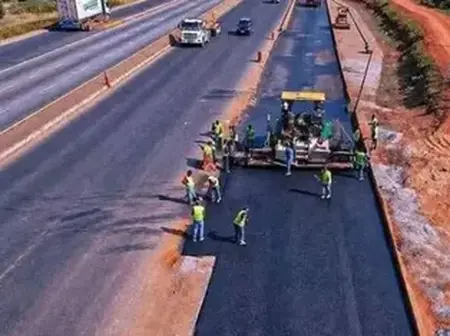
(Photo courtesy)
Kenya could soon adopt a new road construction technology that converts discarded plastic bottles into asphalt, potentially improving road durability while reducing reliance on bitumen amid growing supply challenges.
The Kenya National Highways Authority (KeNHA), in partnership with the Kenya Urban Roads Authority (KURA), is exploring the innovation through discussions with a Japanese delegation comprising representatives from the Japan International Cooperation Agency (JICA), Nippon Road Company, Kao Corporation and Shimizu Corporation.
In a statement issued on Tuesday, November 24, 2026, KeNHA said the discussions focused on research into the use of recycled polyethylene terephthalate (PET) plastics in asphalt to improve pavement performance.
The technology, known as NEWLAC, incorporates recycled plastics commonly found in discarded water and soft-drink bottles into asphalt using a chemical additive.
During the meeting, the Japanese delegation presented preliminary material-testing findings indicating that the technology could improve the performance of road surfaces.
Studies have also shown that recycled PET plastics can replace up to 10 per cent of bitumen without compromising the stability of the asphalt mixture.
According to KeNHA, adopting the technology could improve road durability, water resistance and overall resilience, offering an alternative approach to addressing challenges associated with road deterioration.
The innovation could also help tackle plastic pollution by giving discarded plastic materials a new purpose in road construction rather than allowing them to accumulate in the environment.
The discussions come at a time when Kenya is experiencing a shortage of bitumen, a black, sticky substance used to bind road construction materials and ensure roads remain firm and durable.
According to the Ministry of Roads and Transport, ongoing conflicts in the Middle East have affected bitumen supplies, contributing to delays in major infrastructure projects.
One of the affected projects is the Rironi-Naivasha section of the Rironi-Mau Summit Highway, whose opening has been delayed amid the supply challenges.
By incorporating recycled plastics into asphalt, Kenya could potentially reduce its dependence on conventional road construction materials while improving the quality and lifespan of its roads.
However, the technology is still being explored through research and material testing, with further assessment needed before its possible adoption in Kenya's road construction projects.
https://www.kenyans.co.ke/news/129632-kenha-kura-explores-japanese-technology-turn-plastic-waste-road-asphalt
Leave a Reply