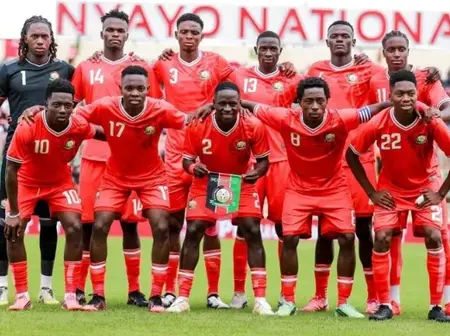
Listen to articleThe Emerging Stars coach says the pressure of defending a slim first-leg advantage took a psychological toll on his players as Kenya bowed out 3-2 on aggregate.Kenya U23 head coach Anthony Kimani believes the narrow advantage from the first leg placed additional psychological pressure on the Emerging Stars as they were eliminated by Côte d’Ivoire in the second round of the U23 Africa Cup of Nations qualifiers.
Blog
-
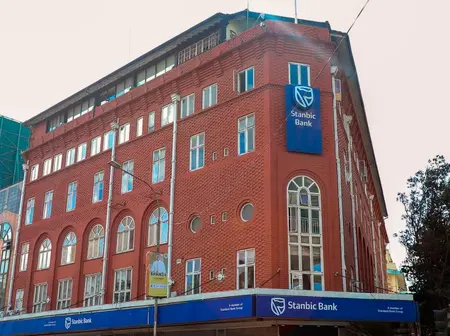
Stanbic freezes Vodacom’s Sh9bn over Safaricom sale
Stanbic Bank Kenya has frozen Sh9.1 billion (1.15 billion rand) worth of dividends that Vodacom Group received from Safaricom after a High Court decision threw the bank’s ability to recover a Sh40.2 billion loan advanced to the South African firm into uncertainty.
The loan was used to pay the Treasury an upfront dividend, which is to be recovered from future dividends accruing on the government’s remaining stake of 20 percent in the telco.
-
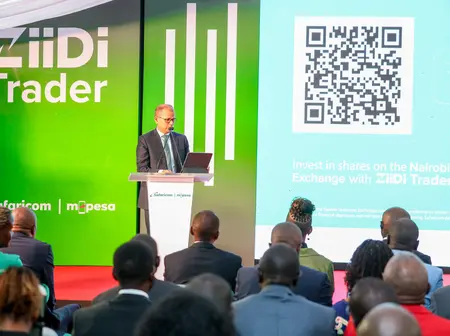
Safaricom’s Ziidi Trader channels 60% of Quickmart IPO applications as mobile investing gains ground
Safaricom’s Ziidi Trader is becoming an important distribution channel for Kenya’s securities market, with the mobile investment platform accounting for approximately 60% of applications in Quickmart’s KSh15 billion initial public offering. The disclosure by Capital Markets Authority Chairman Ugas Mohamed adds to earlier evidence of the platform’s role in bringing retail investors into major share transactions, including the Kenya Pipeline Company (KPC) IPO.
The figures point to a growing role for mobile-based investment services in connecting individual investors with the Nairobi Securities Exchange (NSE). Ziidi’s contribution to Quickmart’s offer follows its involvement in ordinary share trading, where the platform previously accounted for more than half of recorded purchase orders over a reported trading period in February and March 2026.
Between February 5 and March 10, Ziidi Trader processed 268,936 of the 433,498 share-purchase orders recorded by the NSE, according to figures reported by TechTrendsKE. This represented approximately 62.04% of purchase orders during the period. The average purchase value was KSh2,621, providing an indication of the transaction sizes passing through the platform.
The purchase-order figures measure trading activity rather than the value of shares bought. They also offer a different measure of adoption from the proportion of IPO applications submitted through Ziidi. Taken together, however, the figures show that the platform has established a substantial presence in both primary-market applications and secondary-market trading.
The Quickmart transaction follows an earlier demonstration of Ziidi’s reach during the KPC IPO. TechTrendsKE’s reporting on the offer put the number of retail applications submitted through the platform at approximately 36,000, against about 73,000 retail applications in total. This represented roughly 49.3% of applications in that investor category.
The Quickmart figure of approximately 60% suggests Ziidi accounted for a larger proportion of applications in the later offer. The two transactions provide evidence of repeat usage across separate public share offerings, although their investor classifications and application structures are not necessarily identical.
Ziidi’s adoption figures also offer context for its position in the market. Earlier reporting put its registered user base at approximately 511,000, with 84,000 accounts having actively purchased shares. The difference between those figures illustrates why registrations alone provide an incomplete measure of investment activity. Actual share purchases offer a more direct indication of customers using the service to participate in the market.
The platform was introduced in February 2026 through a partnership between Safaricom and the NSE, under the oversight of the Capital Markets Authority. It allows customers to access listed securities through the M-PESA ecosystem, with Kestrel Capital involved in the operating arrangement.
Its entry into the market also coincided with wider efforts to make share ownership accessible to smaller investors. The NSE introduced single-share trading in August 2025, lowering the minimum quantity required to purchase listed equities. In its November 17 reporting, TechTrendsKE noted that the number of junior equity investors had increased from 236 in December 2025 to 497 in September 2026, with their shareholdings valued at approximately KSh120 million.
These developments provide useful context for Ziidi’s growth. Mobile access and lower minimum purchase quantities address different barriers to participation, but both expand the routes through which individuals can enter the securities market.
Quickmart’s listing provides the latest example of the platform’s involvement in public share offerings. The supermarket’s KSh15 billion IPO involved the sale of two billion existing shares at KSh7.50 each, representing 50% of its issued share capital.
The offer attracted applications worth approximately KSh18.4 billion against the available shares, translating into a subscription rate of 122.7%, according to TechTrendsKE’s November 6 reporting. The transaction therefore attracted demand above the amount available for allocation.
The CMA chairman subsequently disclosed that local retail investors contributed approximately KSh2.9 billion to the offer, with Ziidi Trader handling around 60% of applications. His announcement places the platform within a transaction that attracted substantial participation from foreign, institutional and individual investors.
Quickmart’s IPO also provides a useful distinction between application activity and final ownership. Following the allocation, Kenyan and East African retail investors received approximately 199.64 million shares, equivalent to about 5% of the retailer’s issued share capital, according to the November 12 listing report.
The offer was a secondary share sale, meaning the proceeds went to existing shareholders rather than directly to Quickmart. The distinction is relevant when assessing Ziidi’s contribution: the platform facilitated access to an existing investment opportunity, rather than providing a funding channel for the supermarket’s operations.
Quickmart shares opened at KSh10 on their NSE debut, against the KSh7.50 offer price, giving the retailer an implied market capitalisation of approximately KSh40 billion. The listing followed an IPO valuation of KSh30 billion.
Ziidi Trader forms part of Safaricom’s broader effort to extend M-PESA into investment and wealth-management services. The company has developed a portfolio that includes Ziidi Money Market Fund, Ziidi Shari’ah and the share-trading platform, each serving a different investment purpose.
Safaricom’s financial results for the six months ended September 2026 show the scale of this wider business. The company reported 3.4 million active wealth-management customers and assets under management of KSh25.6 billion. Wealth-management revenue reached KSh100 million, representing growth of 69.8% against the comparable reporting period.
Those figures should not be attributed to Ziidi Trader alone. They cover Safaricom’s broader wealth-management activities, including money market and Shari’ah-compliant investment products. The company has not separately disclosed Ziidi Trader’s active customer numbers, trading volumes or transaction value in the results covered by the November reporting.
Safaricom’s wider financial services business also generated KSh7.1 billion in revenue during the six months to September 2026, an increase of 55.3%, according to the company’s results reported by TechTrendsKE. Chief Financial Services Officer Boniface Mungania is overseeing a business that encompasses payments, credit and investment services.
For Safaricom, the expansion into securities distribution adds another use case to its existing mobile customer network. Its partnership with the NSE gives the company a route into share trading and IPO applications without requiring it to operate as a standalone stock exchange.
The commercial opportunity lies in connecting a large existing digital financial services customer base to products that traditionally required engagement with capital-markets intermediaries. The Quickmart and KPC transactions demonstrate the platform’s ability to handle substantial application activity, while the NSE purchase-order figures show that its role also extends into routine trading.
The NSE’s investor base provides a wider measure of the market in which Ziidi operates. TechTrendsKE’s November 6 reporting put the exchange’s investor base at approximately 2.36 million, reflecting participation beyond the customer numbers associated with any single investment platform.
The CMA has also been developing its supervisory approach as participation in capital markets expands across money market funds, exchange-traded funds, real estate investment trusts and digital investment services. Its risk-based supervision approach, digital market surveillance and enforcement against unlicensed investment providers form part of the regulatory framework discussed in the authority’s November 4 reporting.
Greater digital access therefore operates alongside the need for investor protection and oversight. Platforms distributing investment products must operate within the capital-markets framework governing the securities and services they make available, while investors remain exposed to the ordinary risks associated with changes in share prices and market conditions.
For Ziidi, the record across KPC, Quickmart and ordinary NSE trading offers several measures of market adoption. Its reported share of IPO applications has grown between the two transactions, while its share of purchase orders shows that customers are also using the service outside public offers.
The development gives Safaricom a more substantial role in the infrastructure through which Kenyans access listed investments. As the NSE attracts retail applicants through major share offerings and smaller transactions, mobile distribution is becoming an important part of how those investors reach the market.
-

Eric Omondi reflects on brother’s death as he raises drug abuse awareness
Comedian and activist Eric Omondi has opened up about the painful loss of his elder brother, Joseph Onyango Omondi, following a 17-year struggle with drug addiction.On Wednesday, November 18, 2026, Eric shared an emotional account of his family’s experience with substance abuse, explaining why he is organising a concert that will combine celebrations for Georgina Njenga with conversations about drug addiction.
-

KenGen to Host 3rd Sustainable Energy Conference in Naivasha
KenGen(Kenya Electricity Generating Company) is gearing up to host the third edition of the Sustainable Energy Conference (SEC) 2026 from 24th to 27th November 2026. The event takes place at the Geothermal Spa in Olkaria, Naivasha.The three-day conference brings together energy leaders, policymakers, financiers, and industry players from across the world to advance Africa’s green energy transition under the theme Powering Africa’s Green Industrial Revolution.
-

Mauricio Pochettino’s comments after arriving at Spurs now sum up the scale of his task at Man Utd
Mauricio Pochettino's comments about Manchester United during his time as Tottenham Hotspur paint a completely different picture to the task he now faces at Old Trafford.
Pochettino arrived in Manchester to begin his role as the new United head coach on Wednesday afternoon, having taken charge of his final game at the helm of the USMNT on Tuesday evening.
The Argentinian will get straight to work at the club's training ground, Carrington, having already dispatched a select number of his backroom staff to Manchester in the days prior. He takes over a side who sit in 18th in the Premier League – and his remarks about Spurs in his first season in charge there 11 years ago now make for interesting reading.
Pochettino's first game in charge sees United travel to Anfield to take on Liverpool – a team he has only beaten three times out of 19 attempts as a manager.
His first victory over the Reds was while he was at Southampton, where the Argentinian established himself as one of the brightest managerial prospects in world football by successfully implementing a high-pressing, attacking style of play.
After he left for Spurs in the summer of 2014, his successor Ronald Koeman continued to deliver strong results for the Saints, and Pochettino's side only finished four points ahead of his former club at the end of the 2014/15 campaign.
Speaking ahead of his return to St. Mary's Stadium in April 2015, Pochettino stressed that the nature of the project at Spurs meant that they would not be challenging for top honours straight away – and distinct parallels can be drawn from his comments to the situation he faces at United today.
He said (via The Independent): "Tottenham have great potential to fight for the top four. Maybe it's not easy to fight against Manchester City or Manchester United or Chelsea, because they have behind them a big financial potential, and every year they spend a lot of money and sign real players who can perform right away.
"Maybe our project needs to be different. We need to create our own project, our own philosophy and we need to deliver it."
While his first point cannot be argued too much in terms of United's spending in recent years – they have a net spend of £644.8 million over the past five years, beaten only by Spurs as per Transfermarkt – United fans will very much argue that the spending hasn't been reflected in terms of overall quality.
The Argentinian then spoke about how Spurs needed to be 'clever and consistent' with their approach under his management, as well as stressing the need to work hard.
"We need to create our own philosophy and to be special, because we are Tottenham," he said. "We need to be clever and consistent, and we need to fight for that.
"It's a good opportunity. It's for that [reason] that I told you this season was one for transition because we need to settle our philosophy our own way to start to deliver next season.
"If you are strong, you have clear ideas and you are consistent and you work very hard, I think you can achieve everything but you need to be consistent and work hard."
Following his touchdown in Manchester for his first day at Carrington, United's official website announced confirmation of an overhaul in the first-team backroom staff.
Jonny Evans, Steve Holland, Craig Mawson and Jonathan Woodgate were all brought in during Michael Carrick's time in charge, while Travis Binnion moved up from the under-21s, but all five have now left the club.
Pochettino's long-term assistants Jesus Perez and Miguel D'Agostino have joined the Argentinian at United, along with goalkeeping coach Toni Jimenez, analyst Alec Scott and fitness coach Sebastiano Pochettino.
Strength and conditioning coach Silvia Tuya, who would become the first female coach at United, is also expected to be appointed to the backroom staff as per reports, but was not included in the list announced by the club.
-

NSSF value rises to Sh850 billion as monthly contributions top Sh8.5 billion – Ruto
Listen to articleRuto said the Fund’s value had increased from Sh288 billion in 2022 to Sh850 billion as of November 2026, putting it on course to reach the Sh1 trillion mark by June 2027.Monthly contributions to the National Social Security Fund (NSSF) have increased sixfold since 2023, rising from Sh1.4 billion to more than Sh8.5 billion, as the Fund’s total value grows to Sh850 billion, President William Ruto has announced.
-
Caf relocates 2027 Afcon coordination office from Nairobi to Dar
What you need to know:In Dar Es SalaamThe Confederation of African Football (Caf) has relocated the coordination office for 2027 Africa Cup of Nations (Afcon) tournament from Nairobi to Dar es Salaam.Caf will launch the tournament’s coordination office in Dar es Salaam on November 25, 2026, effectively relocating its operations from Nairobi.
-

7 Kenyan Chefs Who Have Landed Prestigious Jobs At Top Companies Across The World
In this storyKenya has produced several chefs who have worked at some of the world’s luxurious hotels, restaurants, and establishments.Their achievements include heading kitchens in foreign countries and developing menus for world-famous establishments.In this article, WoK features 7 Kenyan chefs who work at top International companies.
-

Beyond test scores: Why academic failure does not define intelligence
Academic failure is not necessarily a measure of intelligence, talent or hard work. Sometimes, obstacles to academic success include less visible struggles involving confidence, anxiety, motivation, fear and emotional wellbeing.One misconception in education is that students who perform poorly in examinations are necessarily less intelligent, lazy or academically incapable.